Start With The Jewellery You Mark Most Often
Begin by listing the pieces you work on every week, not the occasional special job. Rings, pendants, charms, bracelets, clasps, serial plates and small metal tags all need different approaches to clamping, focus and marking size. A good setup should handle fine text, logos, weights, carat marks and serial numbers without burning edges or distorting thin sections.
For jewellers in South Africa, it also helps to think about the metals you see most often. Gold, silver, platinum, stainless steel and titanium all respond differently, and polished surfaces can show heat effects quickly if the settings are not right. If you mark customer-owned items, ask how the machine handles mixed batches and one-off jobs, because your daily work may move from 0.3 mm text to deeper serial marking in the same morning.
- List your top 10 repeat jobs by metal type
- Note the smallest text size you need to read under magnification
- Check whether you need surface marking, dark marking or deeper engraving
- Confirm if curved items must be marked without flattening them first
Check The Work Area, Not Only The Machine
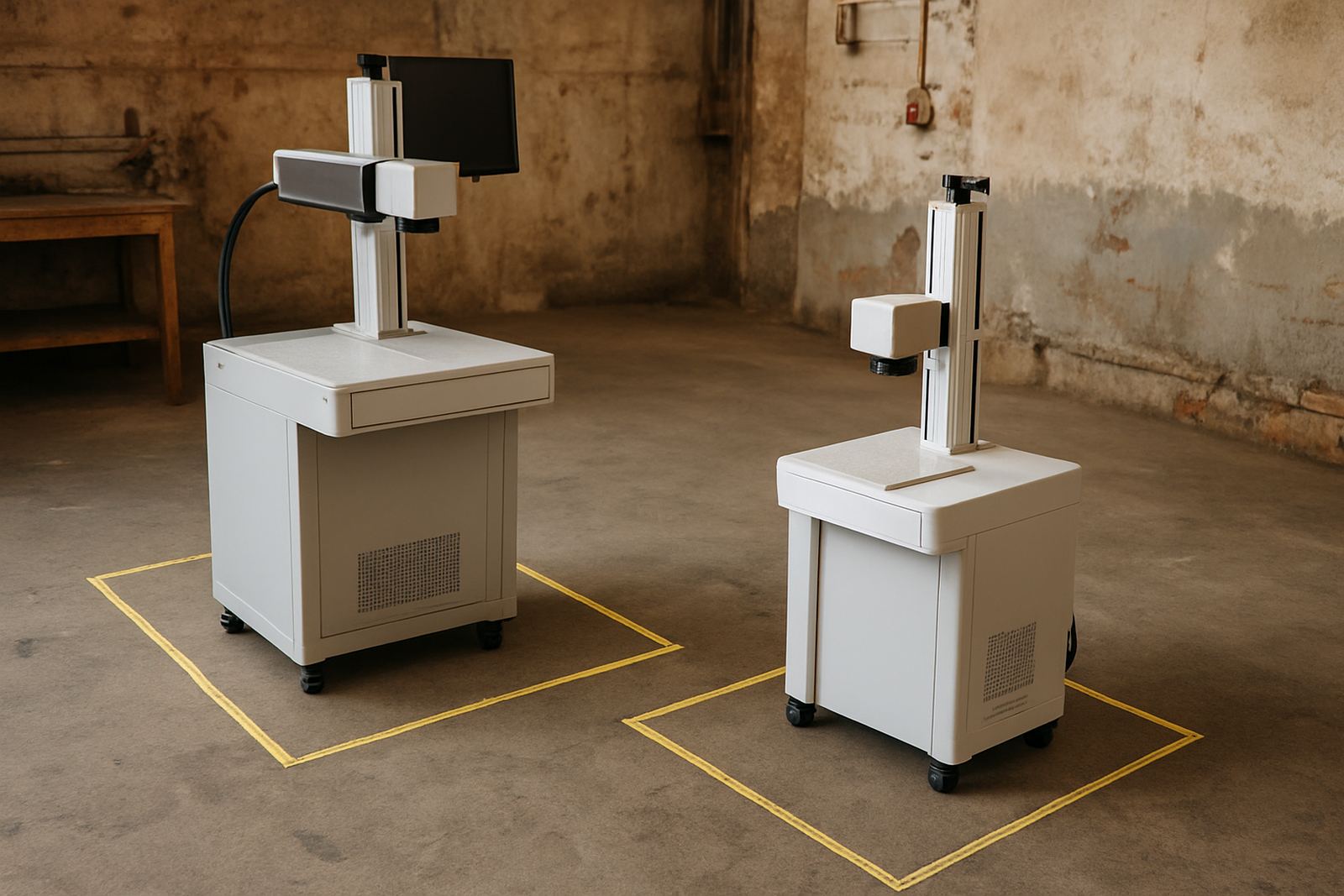
Jewellery workshops often work in tight spaces with polishing dust, suction units, microscopes and small benches close together. Measure the floor space for the unit, the laptop or controller area, and the loading zone for trays and fixtures. If your workshop runs near the coast or in humid parts of KwaZulu-Natal or the Western Cape, ask about cabinet protection and how the machine copes with moisture and fine dust.
Power is another practical point. Load-shedding and unstable supply can interrupt a job at the wrong moment, so you need a clean shutdown routine and proper protection on the electrical side. Some workshops also need a quieter setup for shared premises, or better extraction where polishing residue builds up. When a machine is being installed in Germiston, Pretoria, Durban or George, the site conditions can vary a lot and those small differences affect daily use more than many buyers expect.
- Measure bench height, door widths and access routes before delivery
- Check if the machine needs compressed air, extraction or a dedicated stand
- Ask what happens after a power cut or mid-job interruption
- Plan storage for fixtures, sample plates and marked stock
Focus, Fixtures And Repeatable Positioning
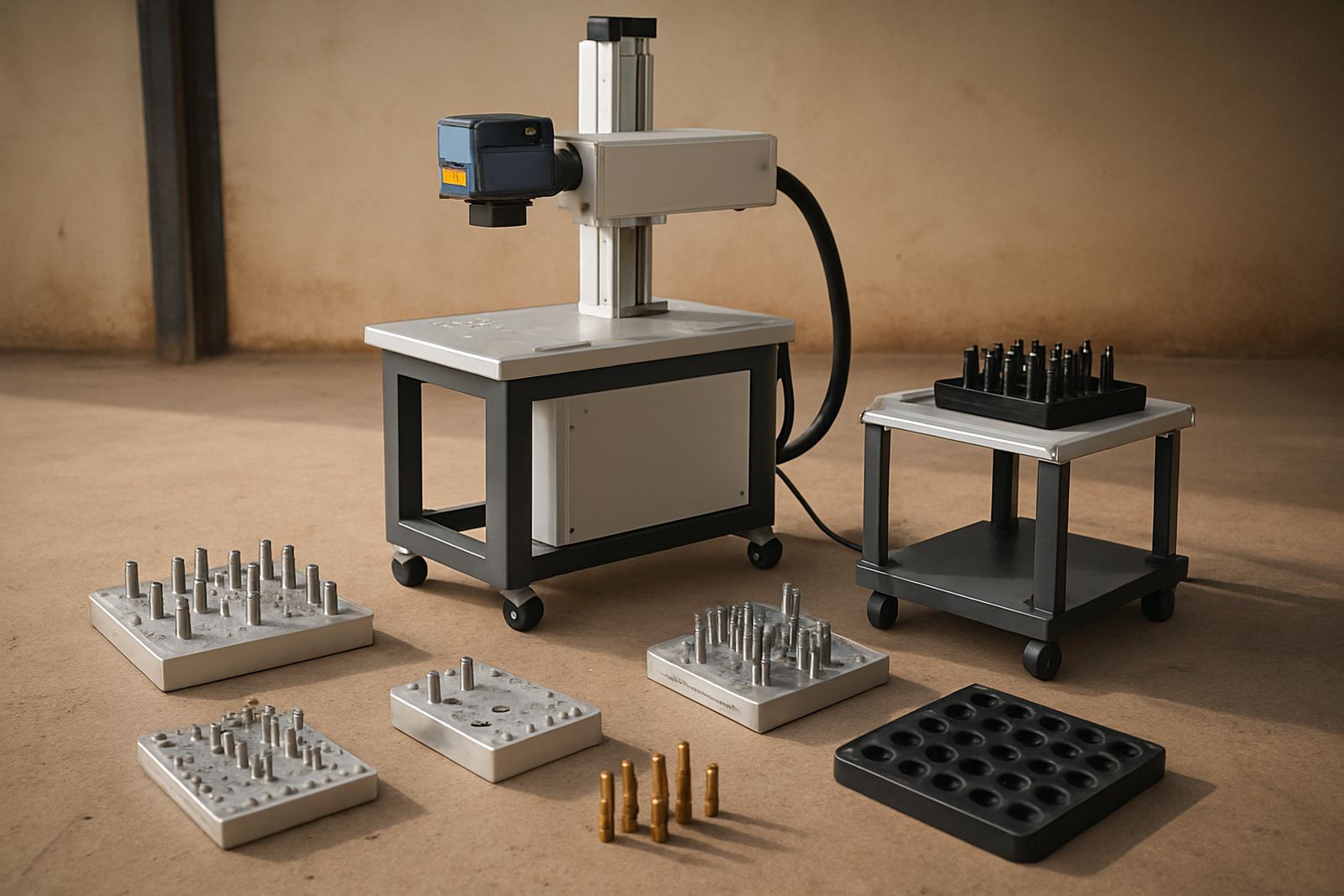
Fine-detail jewellery work depends on repeatable positioning. A ring holder, small rotary fixture or purpose-made clamp can make the difference between a clean mark and a wasted item. Ask whether the setup allows quick changeovers between ring inner walls, flat pendants and small batch tags. If your team moves from one item type to another during the day, the fixture system should not slow you down.
Focus is just as important as the laser source itself. For very small fonts or delicate logos, even a small focus error can soften the mark. A practical guide is to ask for sample marking on your own parts, not only on test plates. That shows how the beam behaves on curved edges, polished surfaces and different thicknesses. It also shows whether the machine can repeat the same result after a few hours of use, which is where many shops find the real differnce.
- Ask for sample marks on your actual jewellery items
- Test at least one curved item and one flat item
- Check how quickly fixtures can be swapped for short runs
- Confirm that fine text stays readable after polishing or cleaning
What To Look For In Software And Marking Control
Jewellery marking is not just about pressing start. The software should let you place text, import logos, set serial numbers and repeat jobs without needing a lot of training each time. If your workshop handles customer names, batch numbers and compliance marks, simple job recall saves time and reduces mistakes. For a busy team, clear menus and easy file handling matter more than fancy extras.
Ask how the system deals with curved surfaces, rotation and variable text. Some jewellery jobs need the mark centred to within a millimetre, especially on narrow bands and small plates. It also helps if the operator can preview the job before firing, because that cuts down on scrap and rework. Good software should support training for new staff without making them rely on one experienced person for every setting.
- Can the operator save and recall common jewellery jobs?
- Does the system handle serial numbers and variable text?
- Is previewing simple enough for new staff to use confidently?
- Can layouts be adjusted for rings, tags and pendants without extra steps?
Training, Maintenance And Daily Workshop Discipline
Even a well chosen machine needs correct setup and regular care. For jewellery workshops, that usually means lens cleaning, checking focus, inspecting fixtures and keeping the marking area free from dust or polish residue. If the unit is used every day, preventive maintenance should be part of the normal routine, not something that only happens after a breakdown.
Training matters too. Operators should know how to load items safely, choose the right settings for the metal, and recognise when a job needs a smaller test mark first. Remote assistance can help on simple software questions, but a proper on-site handover is still best for fine-detail work. If your team changes often, short refresher sessions can protect your output and keep mistakes low.
- Keep a clean cloth and approved cleaner near the station
- Record the best settings for each common jewellery type
- Set a weekly check for alignment and focus
- Train more than one person to run standard jobs
A Simple Buying Checklist For Jewellers
Before you commit, compare the machine against the real work you must do in the shop. The best choice is usually the one that gives clear marks, steady positioning and easy daily operation without creating extra handling steps. For small studios, that might mean a compact setup with good sample support. For larger manufacturers, it may mean a more structured station with fixtures, software control and service access.
Use this checklist during a demo or site visit. It keeps the conversation practical and helps you compare options on more than price alone. If you are in Gauteng, KZN, the Cape or a smaller town, ask about installation timing, training, support and spare parts supply before you sign off. That way the machine fits your production line, not the other way round.
- Does it mark your thinnest item without heat damage?
- Can it handle your most common metals and finishes?
- Are fixtures available for rings, tags and flat pieces?
- Is installation, training and support available in your area?
- Can the machine keep up during busy periods and load-shedding related stops?