Why enclosure marking has to last
In electrical work, a faded label is more than untidy. It slows fault finding, causes mistakes during maintenance and can create problems when panels are inspected or handed over to a client. For enclosure plates, breaker schedules, terminal strips and asset tags, you need markings that hold up in plant rooms, workshops and outdoor cabinets.
Fibre laser marking gives a permanent mark on stainless steel, aluminium, anodised parts and many coated metals. The result suits small control panels in Germiston as well as larger installations in mining, processing and commercial sites nationwide. It is clean, quick and it does not rely on consumables like ink or stickers that can peel in coastal humidity or under constant heat.
Our Wadeville team supports businesses that work on electrical enclosures every day, from panel builders to contract installers. The usual job is simple enough on paper, but the details matter: size of the plate, font height, serial numbering, cable schedule references and whether the mark must stay readable in low light or after years of cleaning.
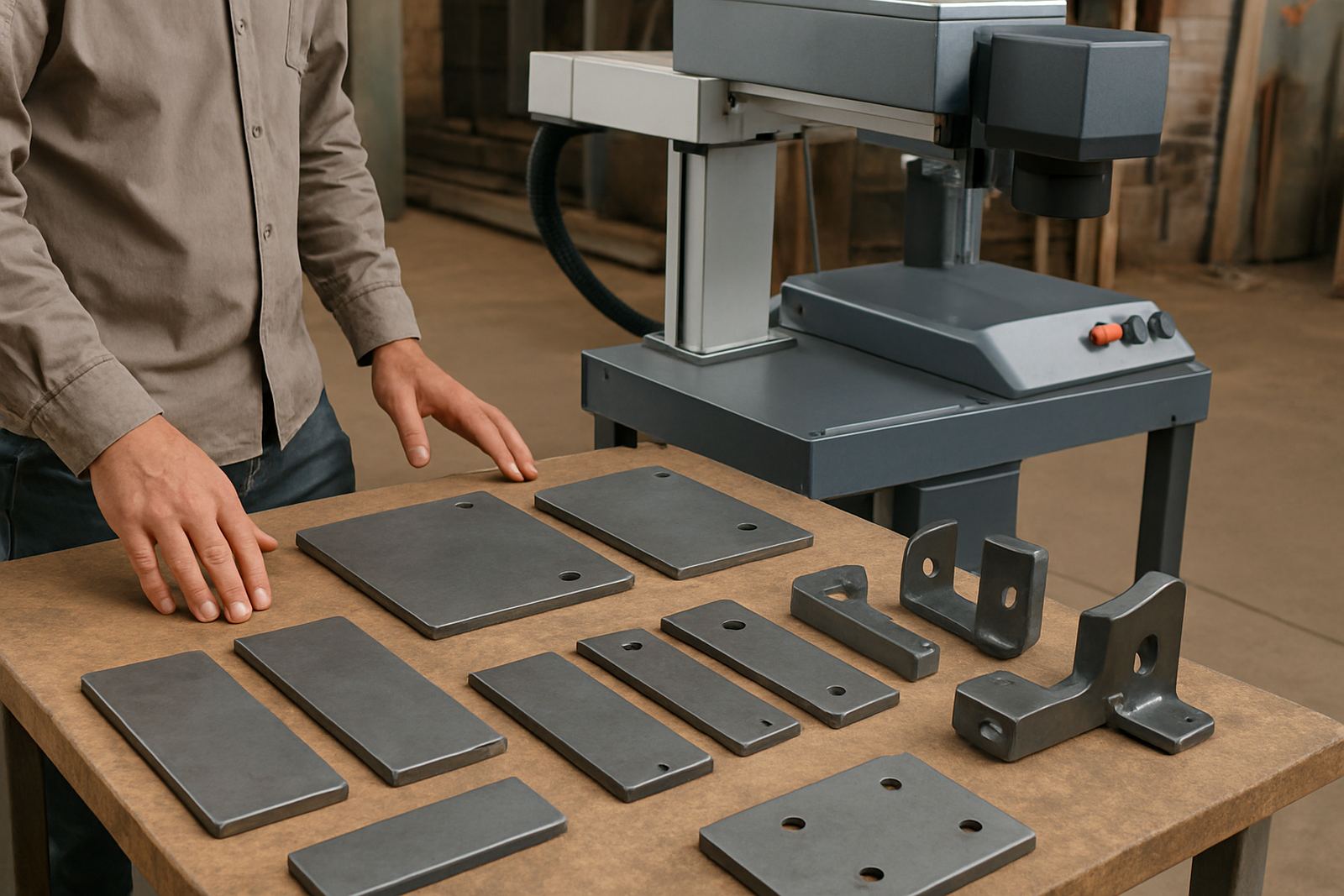
Typical parts marked in a panel workshop
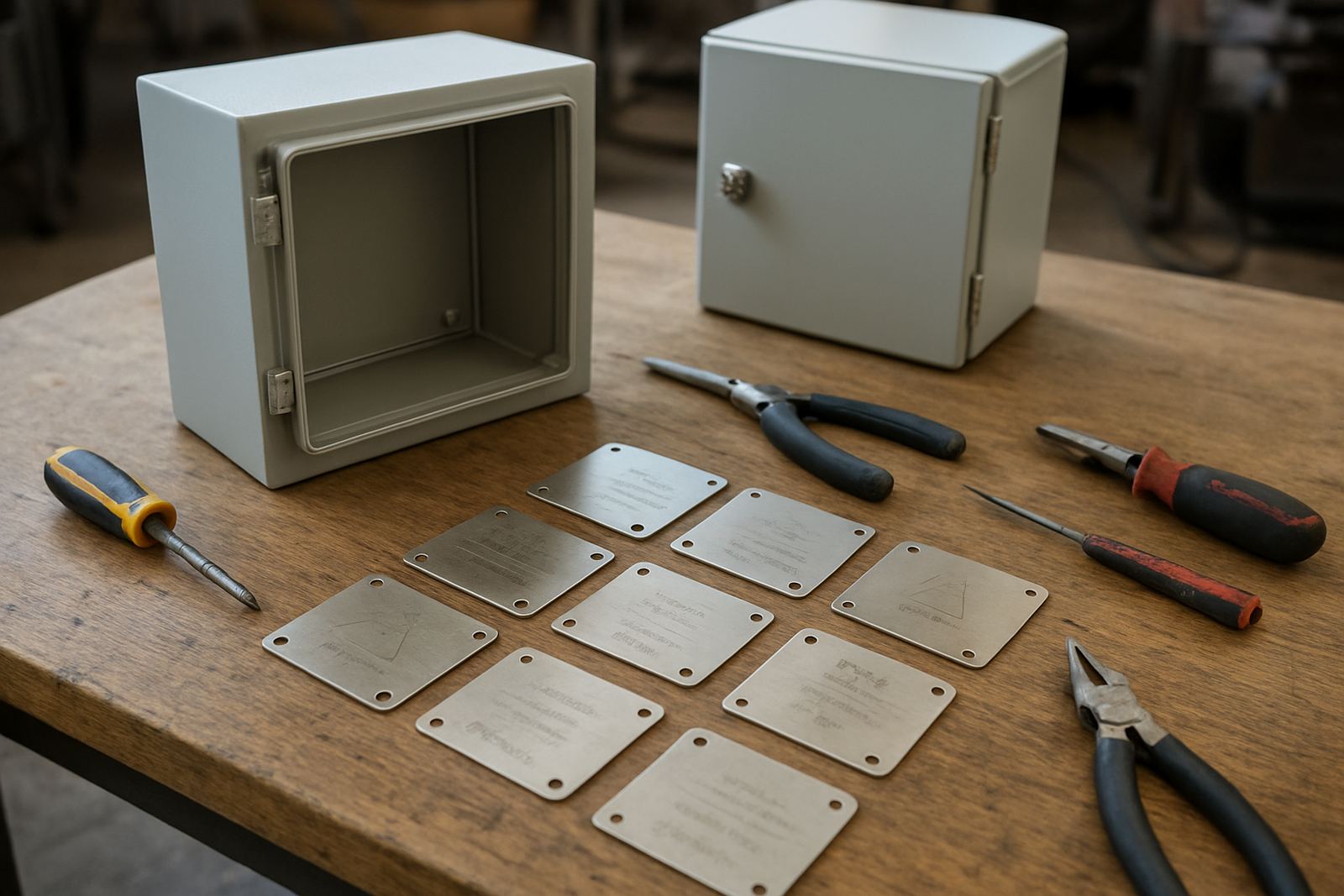
Most enclosure marking jobs include a mix of plates and small components. Some jobs are one-offs for a site upgrade, while others are repeat work for a panel shop making dozens of units a week. The best machine choice depends on the material, the mark size and how often the artwork changes.
- Front panel labels for switches, indicators and isolators
- Terminal markers for control wiring and field terminations
- Rating plates with serial numbers, voltage details and compliance notes
- Asset identification tags for cabinets, drive panels and MCC enclosures
- Small engraved plates for danger notices, breaker schedules and zone references
Many clients also mark stainless steel tags for coastal sites, because salt air can eat away at ordinary print very quickly. Others need neat detail on anodised aluminium plates for control counters and distribution panels. For these jobs, precise focus and the right marking speed matter more than raw power.
Planning the mark before the machine runs
Good results start with layout. Before a plate goes on the bed, decide what the end user must read at a glance. Keep critical words large, keep serial numbers in a fixed position and make sure there is enough margin around each line. If the enclosure is going to a plant in Richards Bay, Durban or Gqeberha, think about corrosion resistance and legibility in bright light as well.
We often advise clients to standardise text blocks for common jobs. That saves time and reduces errors when operators are under pressure during a production rush or after load-shedding has disrupted the day. It also helps if one person creates the job and another person runs it later.
- Use a clear file naming system for repeated plate sizes
- Keep font heights consistent across similar enclosure types
- Check line spacing on narrow tags before full production
- Set a sample mark on scrap before starting the actual batch
- Leave enough room for screws, rivets or adhesive mounting points
A little planning goes a long way. A plate that looks fine on screen can become cramped once it is cut to size, so it pays to test the final dimensions rather than guessing.
Common mistakes that lead to poor marks
Most bad enclosure marking comes from setup, not from the machine itself. The wrong focus height can make shallow text, and too much speed can leave patchy marks that are hard to read from a distance. On shiny parts, poor contrast makes the label look weak even when the engraving is technically correct.
Another common problem is using artwork that was built for print instead of marking. Thin fonts, tiny text and too much detail can fail on small terminal markers. We also see clients trying to run the same settings on stainless steel and painted metal, which usually gives uneven results. A panel shop should not have to rework a batch because the material changed halfway through.
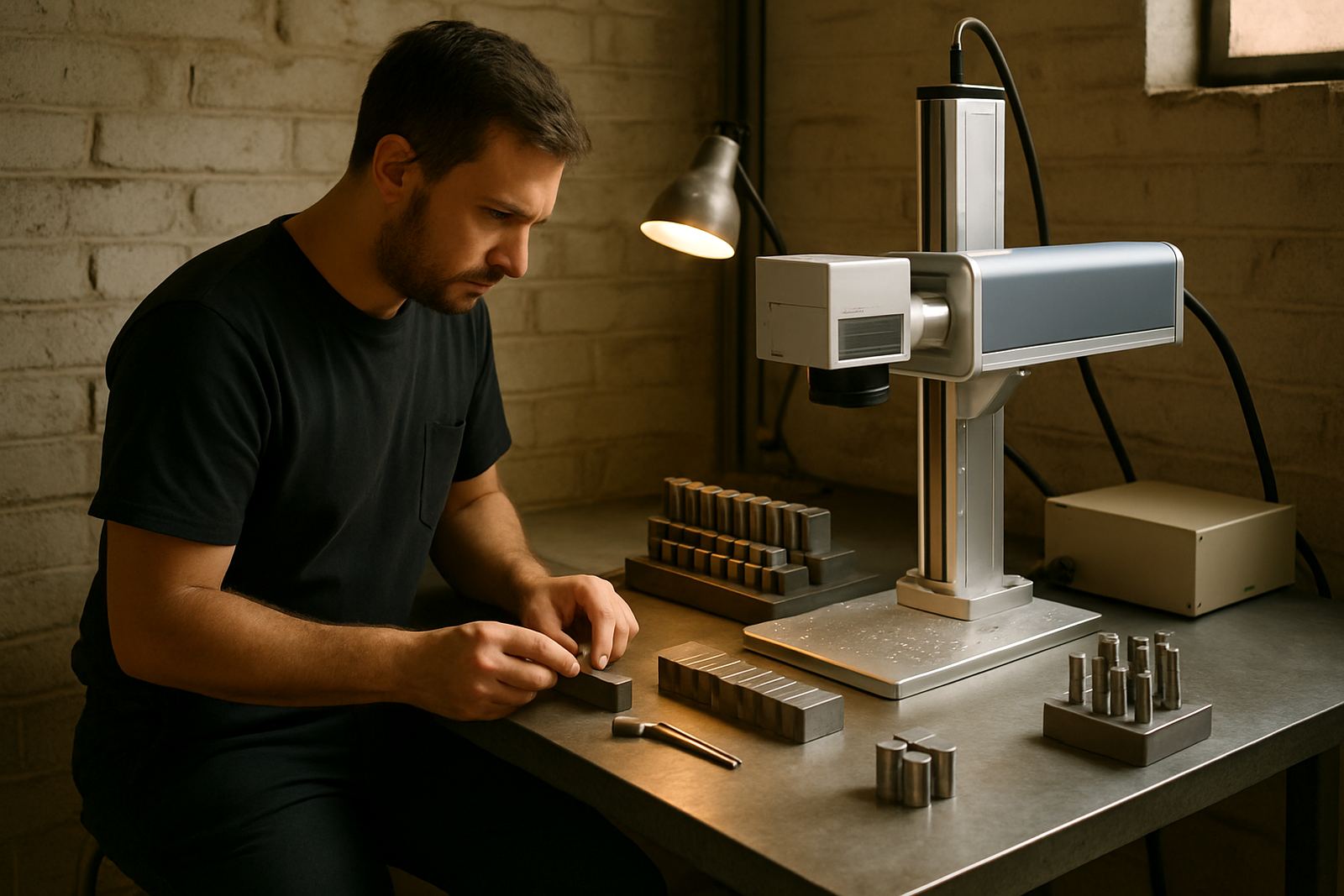
For enclosure work, a fixture is just as important as the marking head. If the plate moves, even slightly, the line positions drift. That shows up on repeat orders and it can cause real headaches when a client wants every panel to match. A simple, well-made jig often saves more time than a faster machine.
Equipment choices for workshops and panel builders
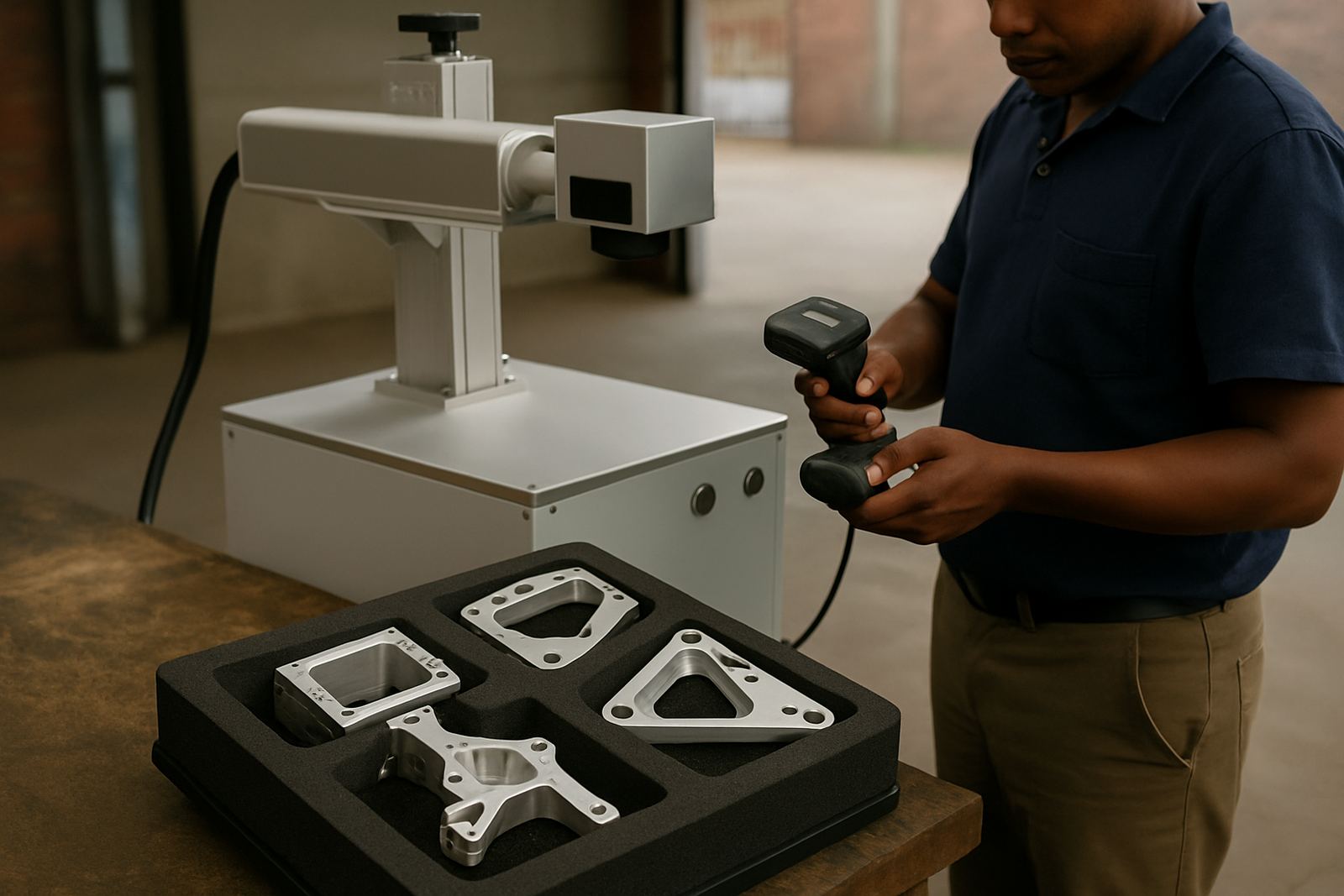
For electrical enclosures, the usual starting point is a compact fibre laser marking machine with a suitable work area for small plates and tags. Some workshops need a basic benchtop unit for occasional jobs. Others need a larger bed, rotary capability for cylindrical parts, or a more flexible setup for mixed batches and higher volume work.
We look at the parts you make, the daily quantity and the type of marking you need. A small workshop in Alberton may only need a straightforward setup for nameplates, while a manufacturer in Isando may need faster processing and a fixture designed for repeated layouts. If the operator changes often, the software must be easy to learn and the workflow must be simple.
- Benchtop fibre laser marking machine for plates and tags
- Rotary attachment for cylindrical components and sleeves
- Custom fixture or locator for repeat panel label positions
- Software setup for serial numbers, dates and batch codes
- Extraction or enclosure safety accessories where needed
Our team assists with machine installation, software setup, sample marking and training, then follows through with preventive maintenance and breakdown repairs. That matters when a workshop cannot afford downtime because a panel order is due or a site handover is booked.
Budget ranges that make sense in Rand
Budget depends on the size of the machine, the marking area, the level of automation and whether you need extras such as fixtures, extraction or a rotary unit. For basic electrical enclosure work, a smaller fibre laser marking setup may suit a workshop that is starting out or adding a new service line. More specialised production lines will need a higher budget for speed, consistency and repeatability.
As a working guide, many South African clients start planning from about R85 000 to R180 000 for a practical entry-level setup. More capable systems for higher throughput, larger fields or dedicated production can move into the R200 000 to R450 000 range, depending on specification. Custom fixtures, software setup, training and site relocation can add to the total, but they also reduce waste and rework over time.
If your business is pricing panel build work against tight margins, the real question is not just the purchase price. It is how many labels, plates and tags you can produce in a day, and whether the marks still read clearly after years in service. That is where the machine pays back.
Support from Wadeville to sites nationwide
We are based in Wadeville, Germiston and support clients across Germiston, Jet Park, Isando, Kempton Park, Boksburg and Alberton, as well as nationwide installs. For electrical enclosure marking, that means help with machine selection, focus calibration, sample marking, operator training and remote assistance when a team gets stuck on a live job.
Clients reach us through the enquiry form on our contact page, which keeps the first conversation neat and simple. From there, we can work through the type of enclosure, the material, the daily volume and the finish you need. Whether you are marking a few terminal tags or a full run of cabinet plates, the aim is the same: clean identification that lasts and is easy to read when someone opens the panel months or years later.
Electrical work leaves little room for guesswork. The right mark saves time, avoids confusion and gives the whole installation a cleaner finish.