Permanent part marking for engineering workshops
In a workshop, parts move from cutting to drilling, welding, machining, assembly and dispatch. If markings fade or rub off, jobs get mixed up, rework starts and traceability becomes a problem. Fibre laser marking is a good fit for steel, stainless steel, aluminium, brass and many coated metals because the mark is permanent and neat.
For engineering work, the usual need is not decoration. It is clear numbers, part codes, heat numbers, batch details, client names and simple logos that stay readable after handling and cleaning. That matters in fabrication shops, maintenance teams, repair yards and small jobbing workshops where one operator may be handling ten or more active jobs at once.
A typical workshop in Germiston, Wadeville or Jet Park will use the machine for plates, brackets, tags, tool components, nameplates and stock items. It also helps when a customer returns with a part months later and you need to identify it quickly without guesswork.
Typical Machine Set for a Workshop Floor
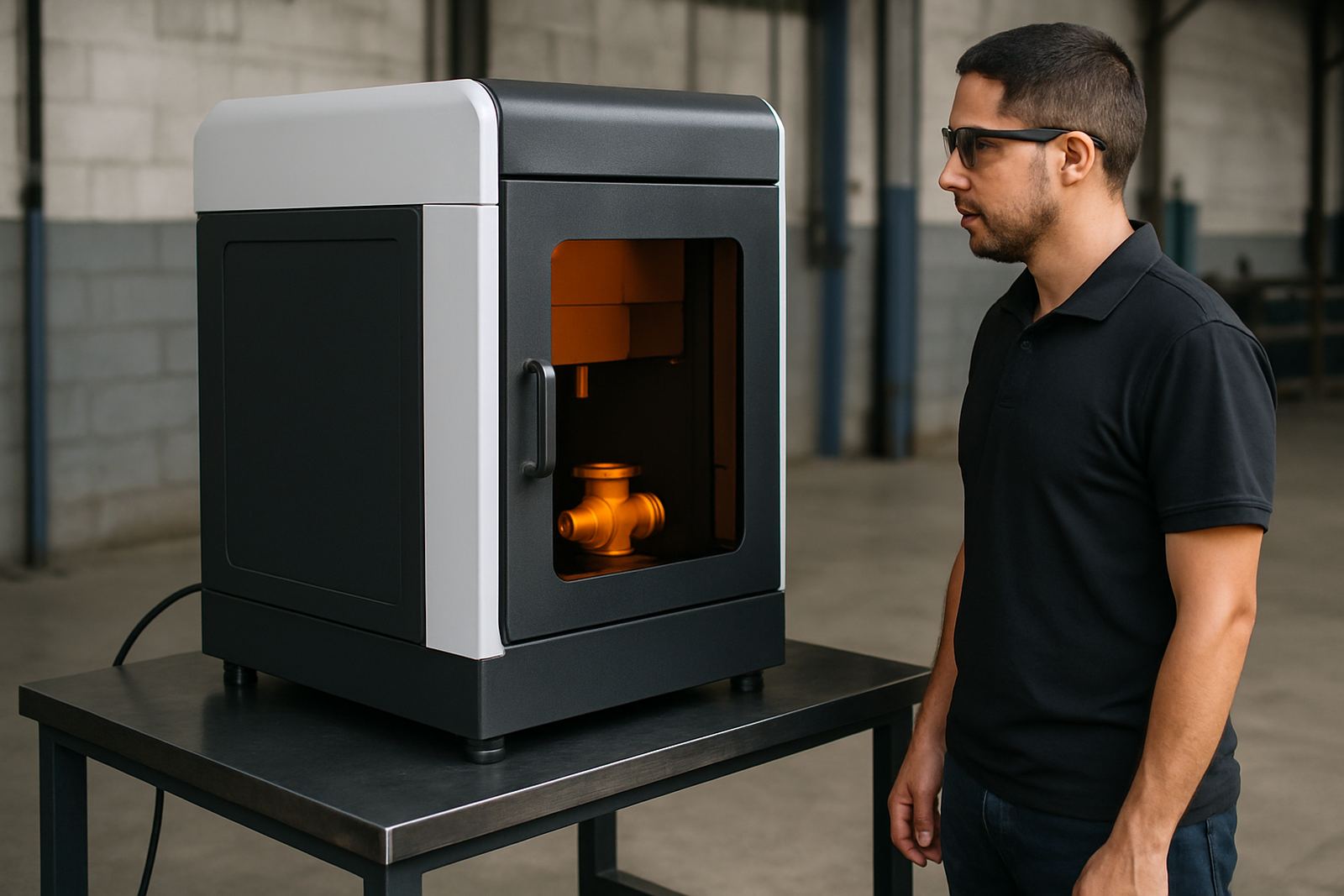
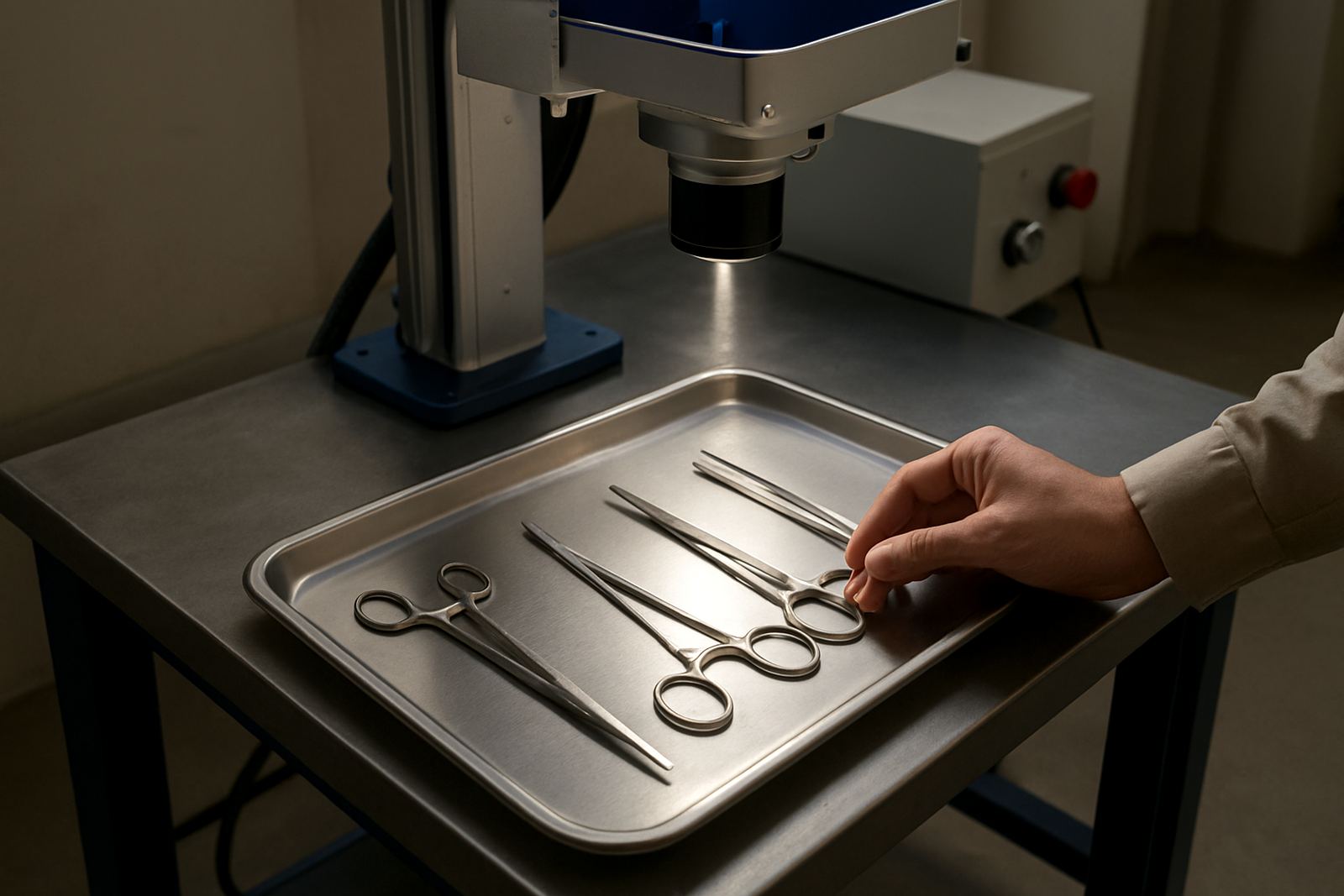
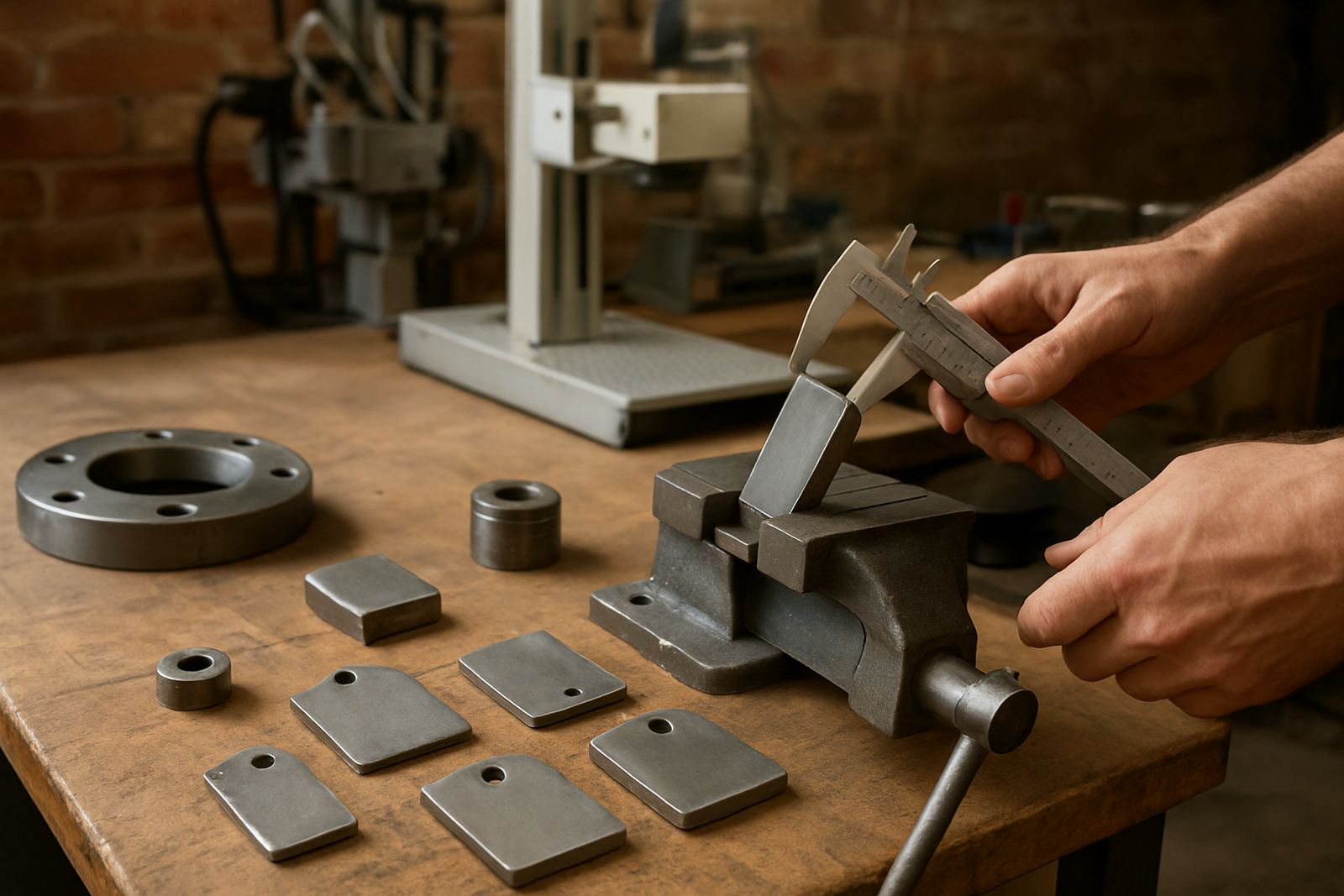
Most engineering workshops do well with a fibre laser marker sized for bench work, with a stable work surface and a simple computer setup. The machine itself is compact, but the real value is in the marking area, fixture options and control over repeat jobs. A foot pedal, rotary unit for round parts, and a few custom jigs can make daily work faster.
- Flat plates and tag marking for batches and part numbers
- Rotary marking for shafts, sleeves, pipe sections and rings
- Jigs for repeat parts so the operator loads and marks in the same position every time
- Light guarding and good extraction if the workshop runs oily or dusty jobs
- A dedicated, dust free table that is not shared with grinding or cutting
For a busy shop, the software should be easy to use by different staff members. If the marking job changes often, save templates for common work such as job cards, serial numbers and inspection codes. That reduces mistakes and keeps output consistent.
Planning the Layout Around Real Workshop Conditions
Workshop conditions are not always tidy. You may have vibration from nearby machines, power interruptions from load-shedding and metal dust in the air. The laser unit should be placed on a stable bench away from grinding sparks, welding fumes and water lines. In coastal areas, humidity can affect cabinets and electronics, so keep the unit in a dry room where possible.
Make sure the operator has space for incoming parts, a marking station and a finished goods area. If parts are small, sort trays and labelled bins help a lot. If the work includes site repairs or mobile jobs, a compact machine can be packed for relocation but it still needs careful handling and a clean setup on arrival.
It is also worth planning for access control. Not every workshop needs every staff member on the marking machine. One trained operator with a clear process often gives better results than several people making small changes to files and settings.
Common Marking Jobs in Engineering Shops
The most common jobs are simple but important. Part numbers, serial numbers, client references and inspection codes are usually enough for internal control. Some workshops also mark welding jig components, special tools, safety tags and replacement parts for municipal, mining or general industrial contracts.
For fabricated parts, a visible mark helps the fitter or installer on site. It also helps if the job goes back for repair and the workshop needs to know which item was originally supplied. On stainless steel and anodised aluminium, fibre laser marking gives a clean result without labels peeling off or paint fading.
- Fabricated brackets, plates and frames
- Repair tags, service plates and asset codes
- Batch numbers for stock control
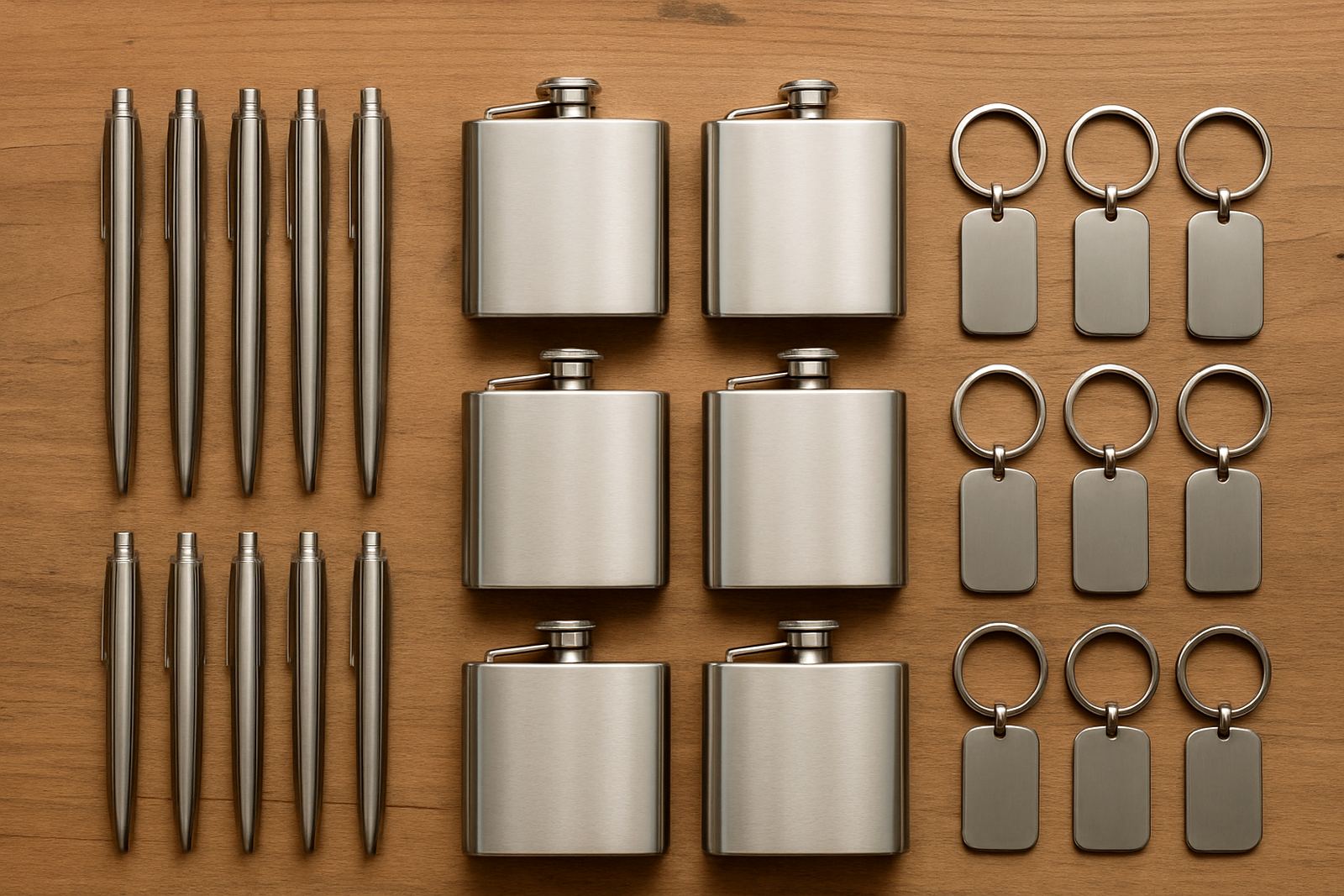
- Custom nameplates for equipment and enclosures
- Tool identification for controlled issue stores
When the job includes customer branding, the artwork should be simple and legible. Fine detail can work, but overcomplicated logos and tiny text often become hard to read on small parts. A good sample marking test saves time and avoids rework.
Mistakes That Slow Down Workshop Marking
One common mistake is buying a machine before deciding what will be marked most often. A shop that works mostly with small tags has different needs to a shop marking larger frames or round components. Another problem is underestimating fixture design. If the part moves even slightly, the mark can land off centre or repeat jobs will not line up.
Another issue is expecting every operator to get the same result without training. Fibre laser systems are straightforward once the settings are agreed, but power, speed, focus and positioning still matter. A proper handover should cover file setup, focus checking, sample marking and daily cleaning. It is also a bad idea to place the machine where welding spatter or coolant mist can reach it, becuase that shortens service life.
For workshops running on tight schedules, preventive maintenance is better than waiting for a breakdown. A short check on optics, rails, fans and cables can prevent avoidable stoppages.
Budget Ranges for South African Workshops
Budget depends on the size of the machine, the marking field, the fixture work and whether you need rotary marking, software setup and training. For a small workshop that needs basic marking on flat parts and tags, expect a practical entry budget from about R180 000 to R280 000. That usually suits general jobbing work and internal stock control.
For a more active engineering floor with repeat production, rotary marking, custom fixtures and stronger process control, budgets often sit between R280 000 and R450 000. Larger setups, more advanced accessories and site-specific integration can run above that depending on the application. If the workshop is doing frequent changeovers or marking awkward shapes, spending more on fixture design and operator training usually pays off faster than saving on the base machine.
It is sensible to budget for installation, software setup, focus calibration, sample marking and the first round of training together, not as separate later tasks. That helps the workshop start properly from day one.