Batch ID That Still Reads After Handling and Dispatch
Fastener yards and packing rooms deal with mixed stock, short lead times and a lot of rework when labels fall off or cartons get separated. A fibre laser marking machine gives each bolt, stud, washer or kit pack a permanent code that stays readable after oiling, zinc plating or warehouse handling. That matters when the same item goes to Gauteng, the coast or a site with strict traceability rules.
For many suppliers the main need is not fancy graphics. It is clean part numbers, batch references, size codes, heat numbers and simple company marks that can be scanned or read by the eye. A properly set up system helps prevent mix ups in dispatch and reduces the time spent checking returns.
Typical Machine Set-Up for Bolts, Studs and Washer Packs
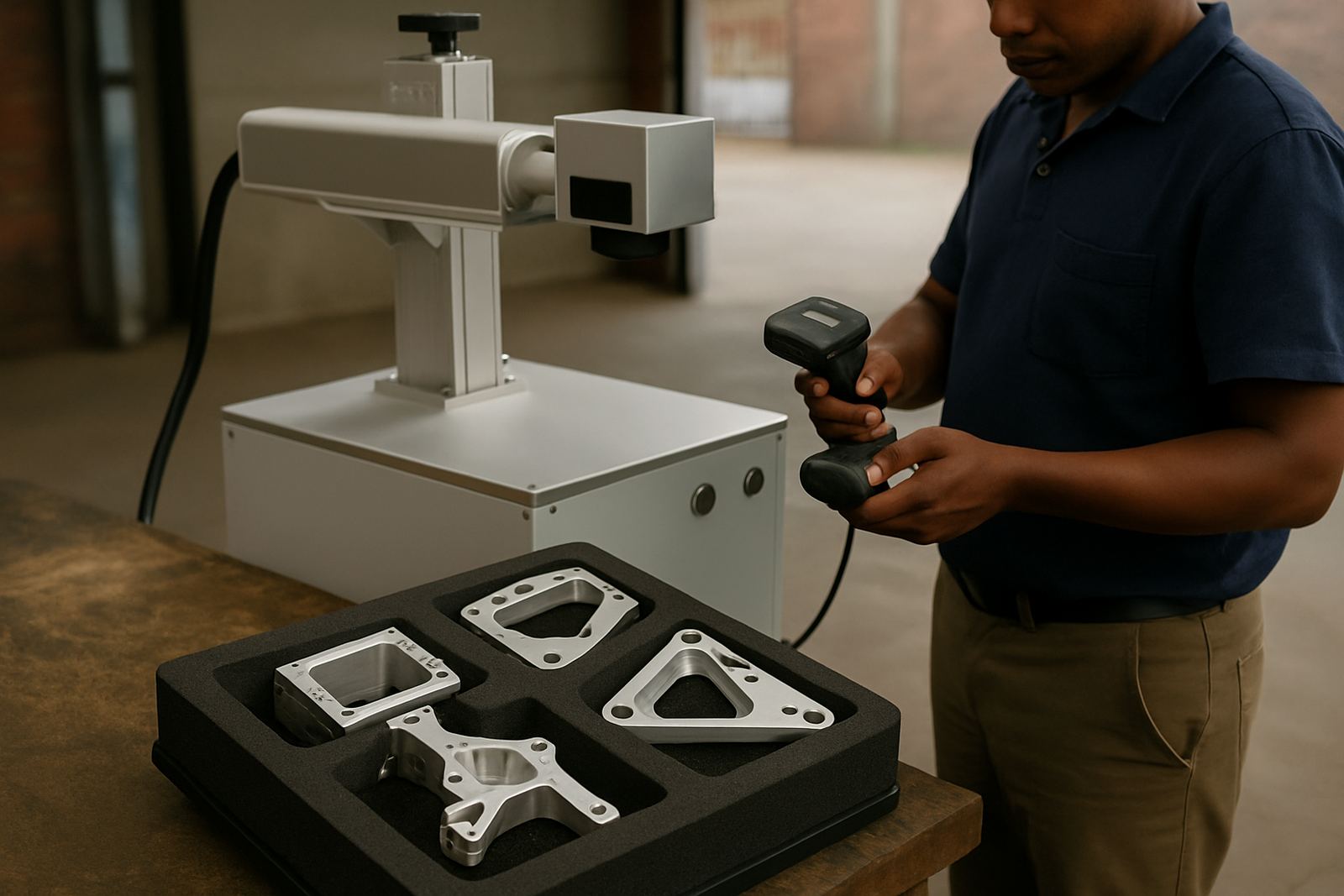
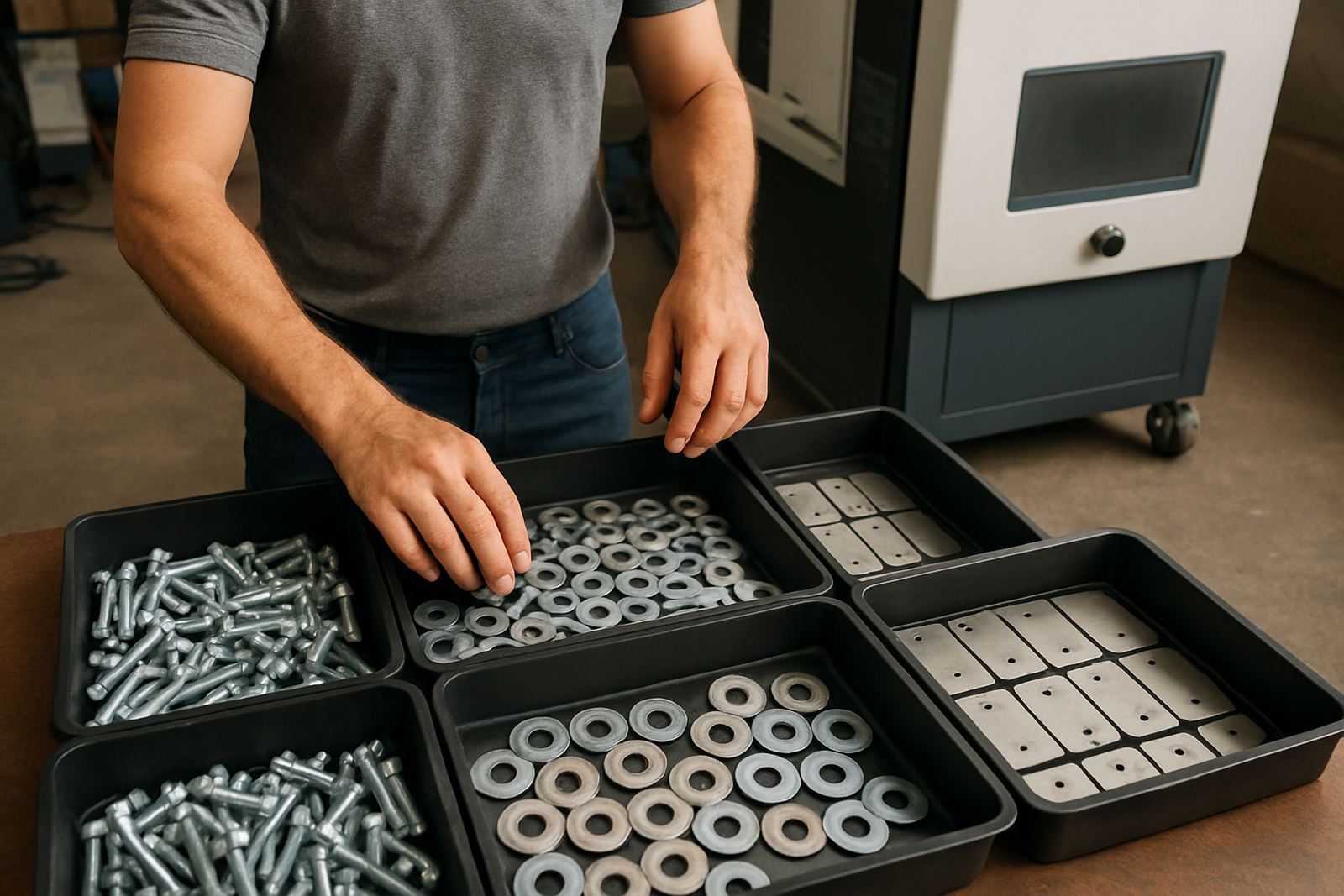
Most fastener work is done on a benchtop fibre marking system with a compact marking head, a stable worktable and fixture plates for repeat parts. For loose bolts and studs, a rotary attachment may be used for round marking on heads, shafts or nuts where the shape allows it. For washer packs and boxed items, a flat jig or tray makes loading quicker and keeps the mark in the same position every time.
- Benchtop fibre laser marking unit for small to medium volumes
- Adjustable fixture plate for bolts, studs, washers and clips
- Rotary attachment for cylindrical parts where needed
- Smoke extraction for oily or coated parts
- Barcode or DataMatrix marking where traceability is required
If you work with mixed pack sizes, ask for a fixture that can be changed over fast. On busy days a changeover that takes 10 minutes instead of 30 saves real time across the shift.
Layout Planning for a Busy Packing Area
The best result comes from planning the marking station around the packing flow, not the other way round. In a fastener business the operator usually receives bulk stock, marks selected batches, checks the code and sends the items straight to bagging or boxing. That means the machine should sit close to the packing bench but clear of forklift movement, dust and pallet traffic.
Allow enough space for input trays, finished trays and a small inspection area. If the room is tight, the machine can be placed on a sturdy table against a wall with one-sided access. In Wadeville, Germiston, Kempton Park and Boksburg we often find the best setup is the simplest one, as long as the work height is comfortable and the lighting is good.
- Keep the marking station away from vibration from presses or compressors
- Use a fixed position for each product type to avoid setting errors
- Make sure the computer or control unit is protected from dust and heat
- Plan for load-shedding with proper backup power and safe shutdown steps
Common Marking Mistakes on Fastener Lines
The most common mistake is trying to mark too deep or too large on a part that is already small. Bolts and washers need clear marks, not heavy engraving that weakens the surface or makes the code hard to read. Another error is placing the mark too close to the edge where it can distort on impact or during packaging.
Some suppliers also skip sample testing on coated or oiled stock. That leads to marks that look fine on the first batch but fade once the finish changes. For coastal customers or stock going through humid stores, it helps to test the exact material and coating before committing to a production setting.
A few other issues come up often:
- Using one setting for different materials without checking the result
- Marking too many characters onto a tiny surface
- Not allowing for part movement in the jig
- Ignoring extraction when smoke build-up affects mark quality
Budget Ranges in Rand for Fastener Marking Projects
Budget depends on the volume, part size and whether you need one marking station or a full traceability setup. A basic benchtop fibre marking solution for small workshop use can start around R180,000 to R280,000. Mid-range systems with better fixtures, stronger software options and more production control often sit between R300,000 and R550,000. Larger installations with custom handling, multiple jigs or integration into a packing line can move above R600,000.
It is worth budgeting for the extras that keep the system running properly: extractor, fixtures, sample trials, operator training and a service plan. If the machine must work through load-shedding, add backup power and a safe stop plan into the overall cost, not as an afterthought.
Installation, Training and Support Across South Africa
Fastener suppliers often need more than just the machine. They need practical support for sample marking, software setup, focus calibration, fixture design and staff training. A good rollout includes testing with your actual bolts, studs, washers and packs before full production starts. That reduces errors when the first customer order lands.
We work from Wadeville, Germiston and support installs and training nationwide, including Jet Park, Isando, Kempton Park, Boksburg and Alberton. For plants with more than one shift, remote assistance can help with quick questions while field service covers site visits, breakdown repairs and preventive maintenance. If you relocate a line, the machine can be reinstalled and checked on site so the marks stay consistent from the first job.
For fastener businesses, the goal is simple: clear identification, steady repeatability and equipment that fits the pace of the packing room. When that is in place, batch control becomes easier and the risk of costly mix ups drops sharply.