Built For Marks That Need Real Depth
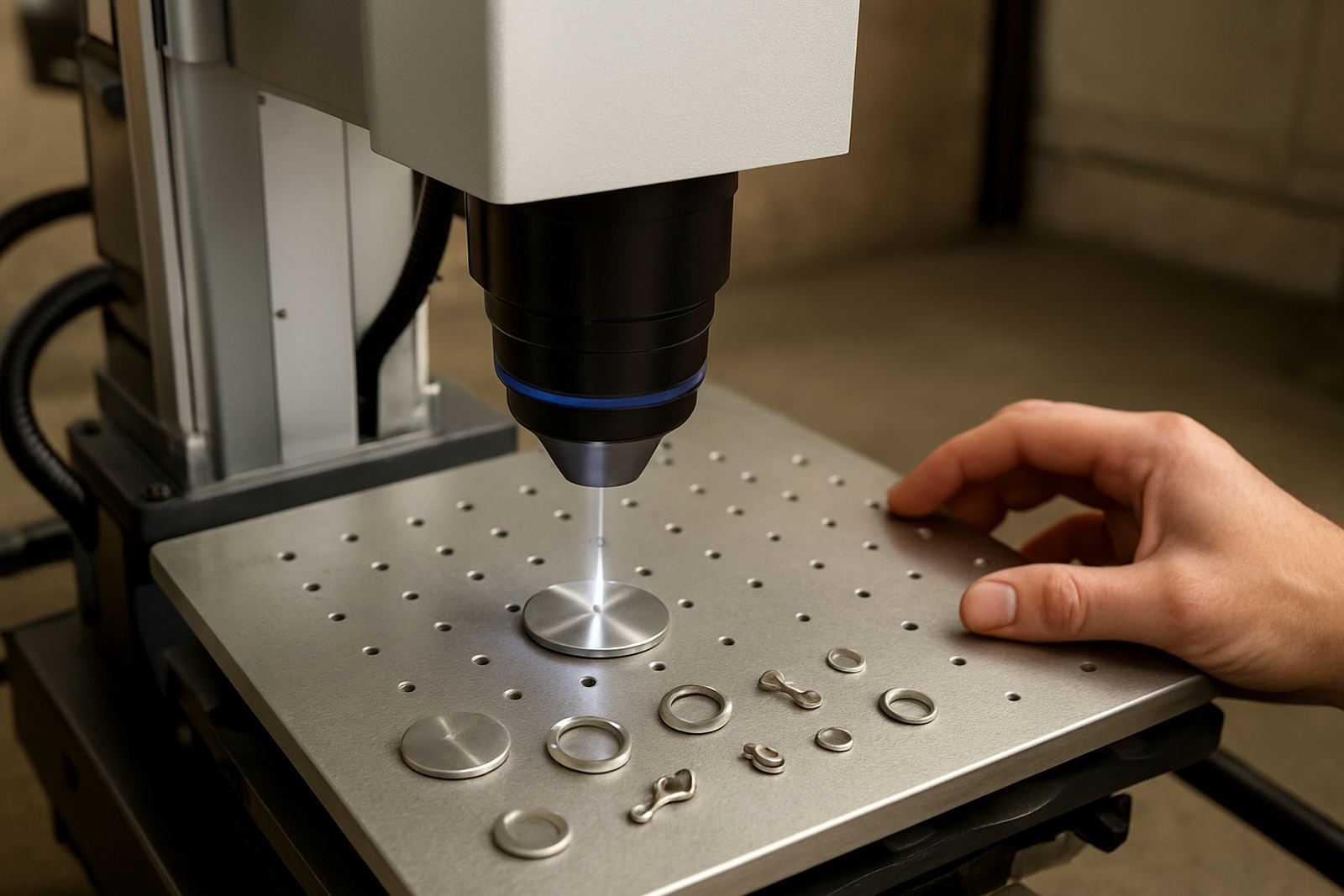
This machine is made for multi-pass engraving on metals where a surface mark is not enough. It is commonly used on stainless steel, mild steel, tool steel, aluminium, brass and some coated metals, with the focus on clean depth rather than just dark surface contrast.
Because fibre laser energy is concentrated into a very small spot, the machine can remove material in controlled layers. That makes it suitable for serial numbers, part codes, logos, calibration marks and fine jewellery detail, even when the job needs to hold up in oily workshops or outdoor conditions. The mark is permanent and not affected by solvents, handling or daily cleaning.
- Ideal for deep serial numbers and identification plates
- Suitable for multi-pass engraving where depth matters
- Works on small components and larger flat parts
- Good for traceability on parts used in mining, fabrication and repair work
Sizes, Work Area And Setup Choices
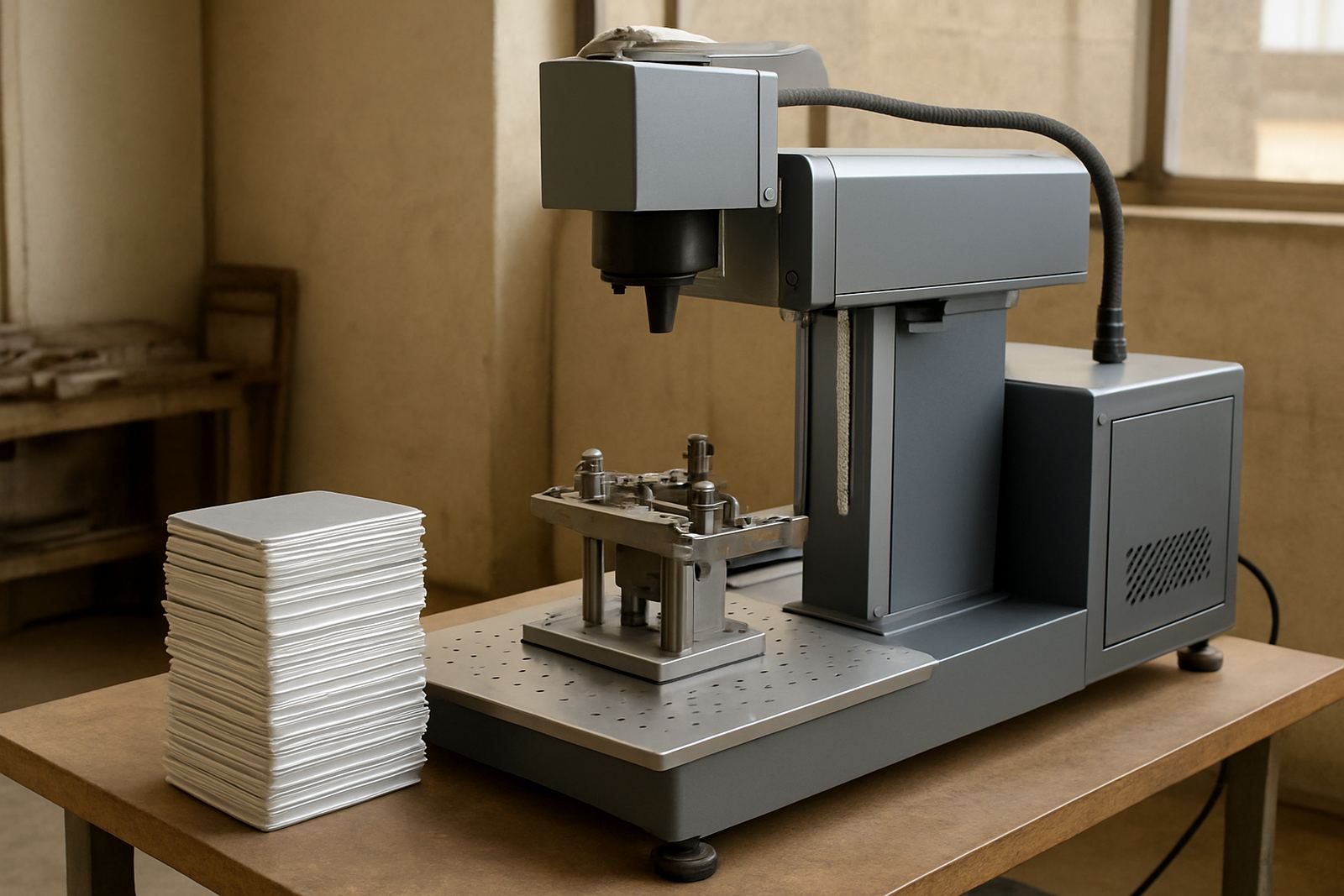
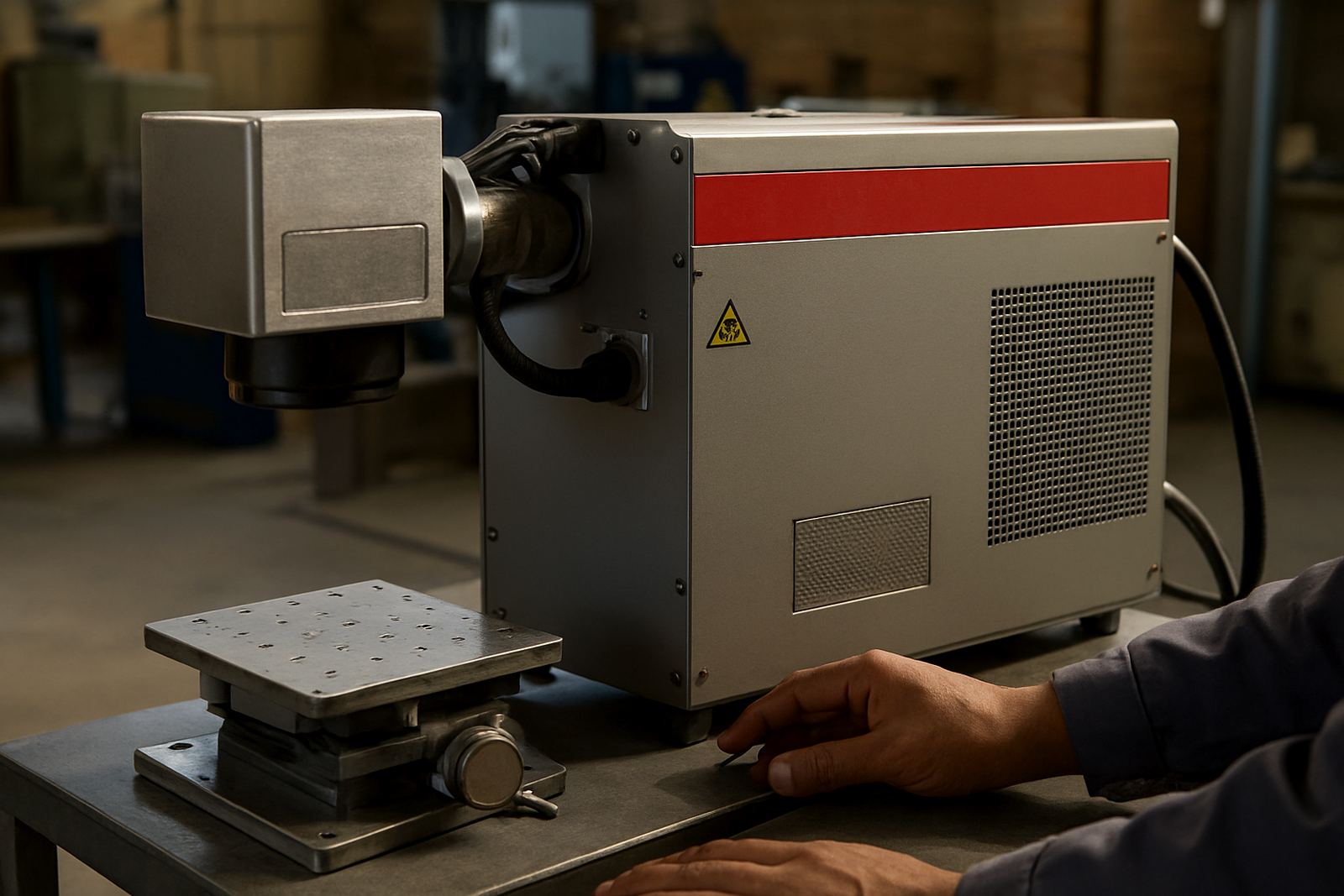
Deep engraving systems are usually supplied with a marking head and a workstation based on the part size. Common working areas include 110 x 110 mm, 150 x 150 mm, 200 x 200 mm and 300 x 300 mm, with lens choice affecting both the field size and the achievable detail. For jewellery and small components, a tighter field gives better control. For plates and larger items, a wider field can save handling time.
Options can include a manual Z axis table, rotary attachment for rings or cylinders, and a cabinet or open frame layout depending on the workshop. If you are marking mixed batches, ask for fixture design so parts sit square and repeatable from one job to the next, because that saves alot of time later.
- Open bench or enclosed workstation options
- Rotary attachment for rings, tubes and round parts
- Lens and field size matched to part size
- Fixture support for repeat jobs and short run production
Where This Marker Fits Best In South African Work
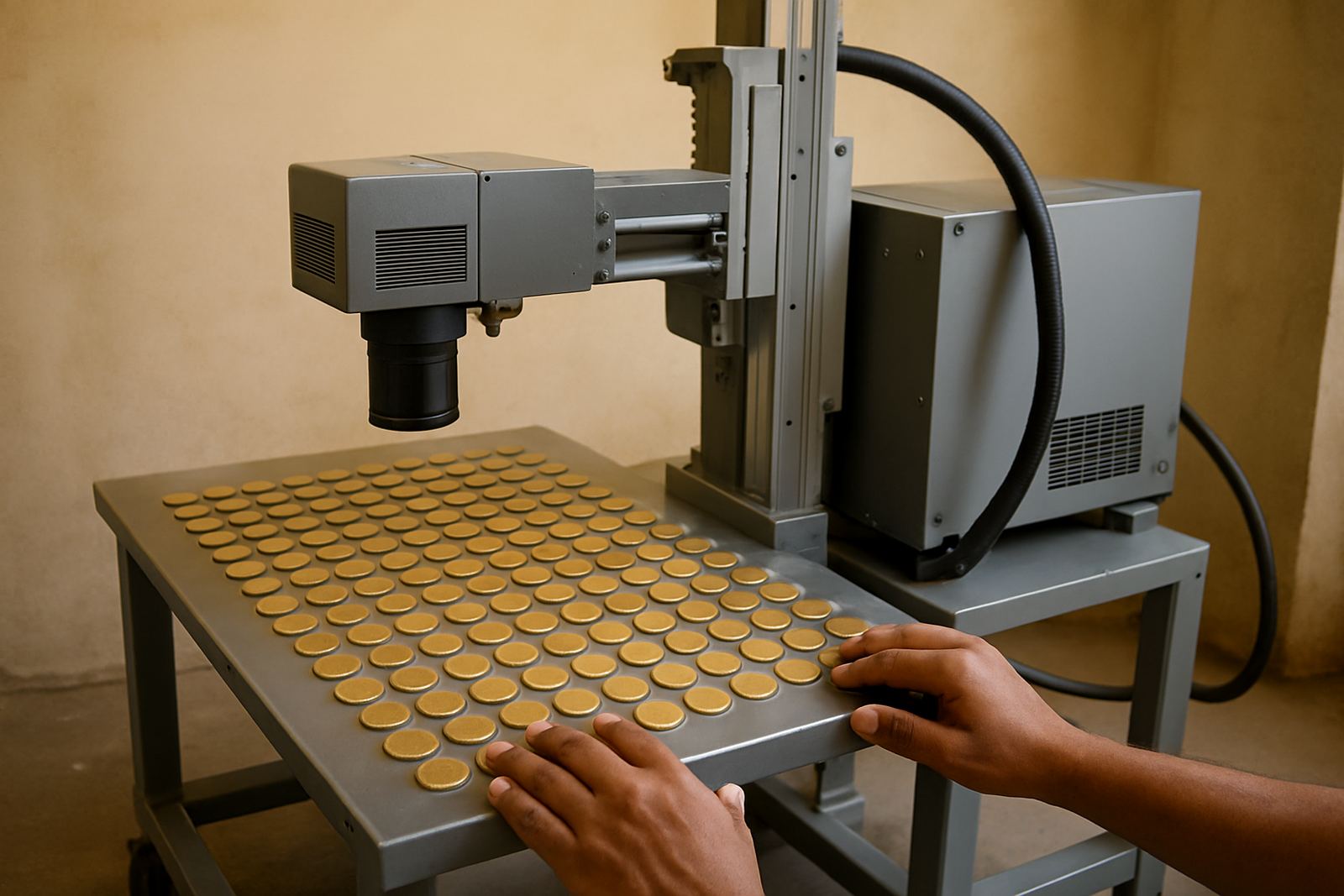
This type of machine suits small workshops, jobbing shops, industrial maintenance teams and manufacturers that need clear identification on metal parts. It is a strong fit for Durban coastal humidity, Gauteng fabrication yards, agricultural repair shops and inland production sites where marking must stay legible after heat, oil and vibration.
It also works well for jewellery makers who need controlled engraving on rings, pendants and tags, as well as for companies doing asset marking, compliance labels and part traceability. If the job is going through powder coating, anodising or blasting afterwards, deep marking should be planned early so the final finish does not bury the code.
- Fabrication and machining workshops
- Jewellery and gift item engraving
- Asset marking and traceability work
- Maintenance stores, plant rooms and repair centres
Power, Dust Control And Site Requirements
Most fibre laser marking systems run from standard single-phase power, usually 220 V, which makes installation simpler for many South African sites. A stable supply is still important, especially where load shedding or voltage dips are a daily concern. We normally advise a proper surge protector and, where needed, a backup power plan for the PC, extractor and the laser supply.
Deep engraving creates more debris than light surface marking, so dust extraction or at least a good air management setup is worth planning from the start. On aluminium and brass, fine particles can settle around the work area, and on coated metals there can be residue that needs cleaning. A clean, stable bench, decent lighting and low vibration all help with consistent depth.
- Typical power supply: 220 V single phase
- Allow space for machine, PC and extraction unit
- Use surge protection for unstable municipal supply
- Keep the workstation free of vibration and dust
Installation, Training And First Jobs
We handle installation and operator training nationwide, with support from Wadeville, Germiston for clients in Gauteng and beyond. A first setup normally includes machine positioning, software setup, focus calibration, test marking and operator handover. If the machine is going into a busy workshop, we can also help with layout so the work flow feels practical from day one.
Training covers artwork setup, power and speed settings, depth control, fixture use, file handling and basic maintenance. For teams with more than one operator, we recommend having the sample marking process signed off on the actual materials you use. That gives a repeatable result and avoids guesswork when a job comes in urgently.
- Machine installation and commissioning
- Software setup and operator training
- Sample marking on customer material
- Process optimisation for repeat production
Servicing, Care And Long-Term Use
Fibre laser systems are low maintenance compared with many marking methods, but they still need proper care. Keep the lens clean, check the focus path, inspect cables and connectors, and make sure the cooling and ventilation around the unit stay clear. In dusty or oily environments, routine wipe-downs and periodic calibration help maintain depth consistency.
If the machine is used for long shifts or in a site with heat and moisture, it is worth planning preventive maintenance rather than waiting for a fault. We support breakdown repairs, spares supply, focus calibration and remote assistance when a quick check will save a site visit. For companies moving premises or rearranging production lines, we can also assist with site relocation so the machine is set up correctly again.
- Preventive maintenance for steady marking quality
- Breakdown repairs and spares supply
- Focus calibration to keep depth consistent
- Site relocation and remote support when needed
Key facts
| Laser source | Fibre laser, air-cooled marking head |
|---|---|
| Typical power options | 20 W, 30 W, 50 W, 60 W and higher |
| Working area | 110 x 110 mm, 150 x 150 mm, 200 x 200 mm, 300 x 300 mm |
| Supported materials | Stainless steel, mild steel, aluminium, brass and coated metals |
| Power supply | 220 V single phase, with surge protection advised |
| Control options | PC software with rotary and fixture support available |