What the Fine Detail Marker does best
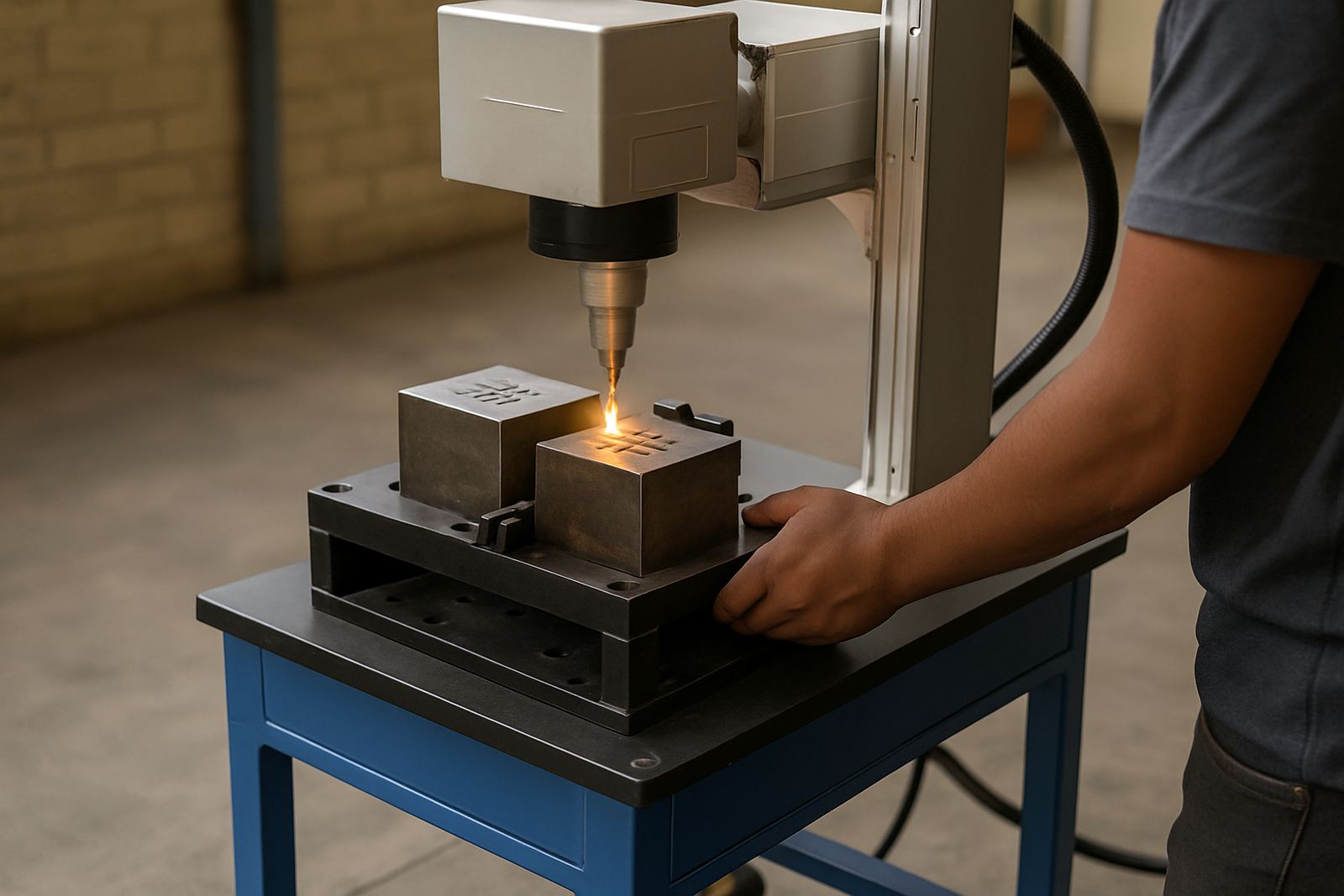
This unit is set up for work where the mark must stay crisp even when the space is tight. It handles serial numbers, QR codes, logos, batch codes, part names and decorative engraving on metal surfaces without the need for inks or consumables. Because the beam is tightly controlled, the results are clean on small areas and fine edges, which is helpful on jewellery, medical fittings, electronic housings, tool tags and precision machined parts.
For customers in Gauteng, the coast or inland sites, the big advantage is repeatability. Once the mark is set up correctly, the same file can be used again and again with the same depth and clarity. That matters when a job must pass inspection, stay legible after handling, or remain visible after cleaning, heat exposure or general wear.
- Fine text on nameplates and tags
- Micro marking on metal parts and fittings
- High-contrast codes for traceability
- Decorative detail on jewellery and gifts
Sizes, working area and available options
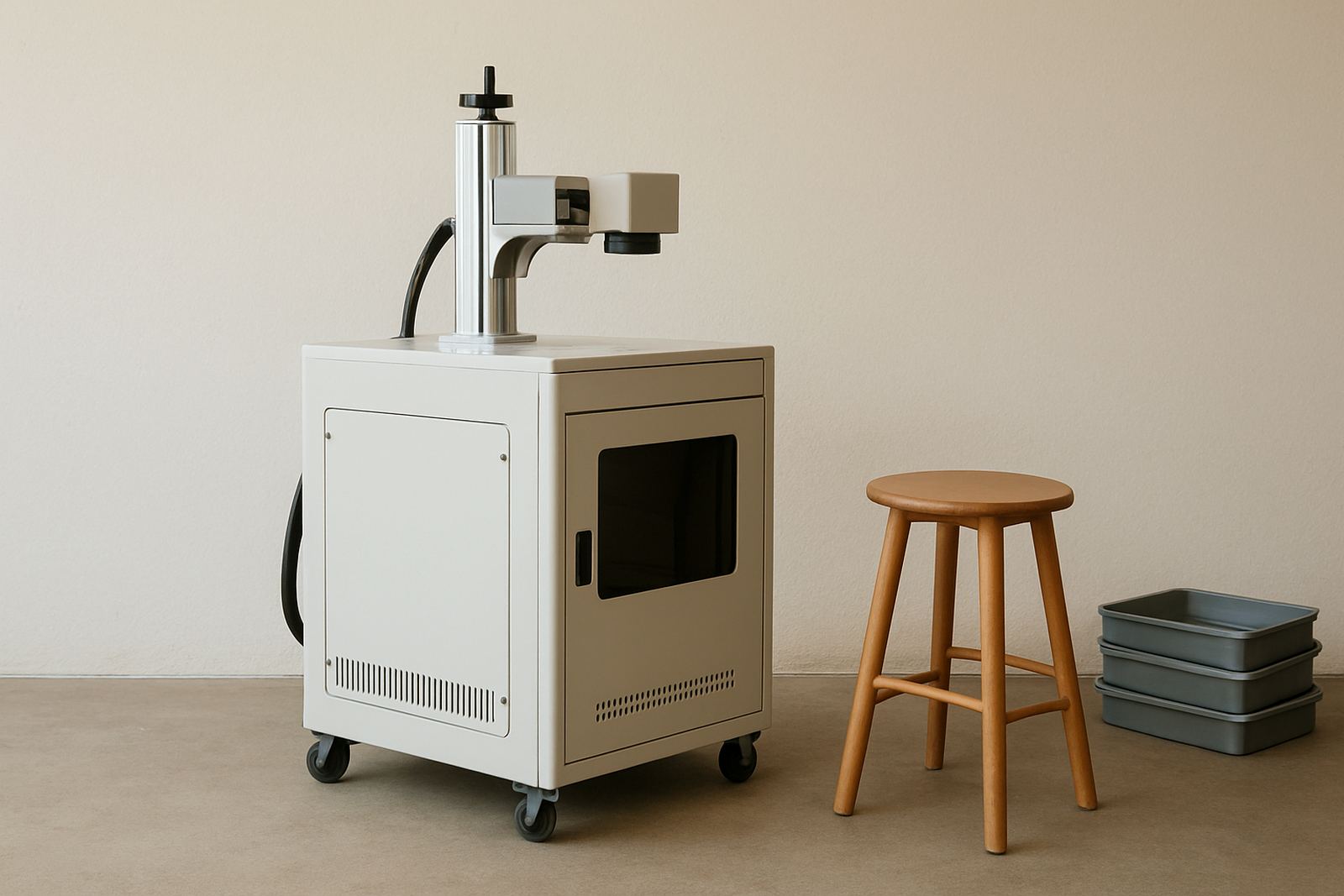
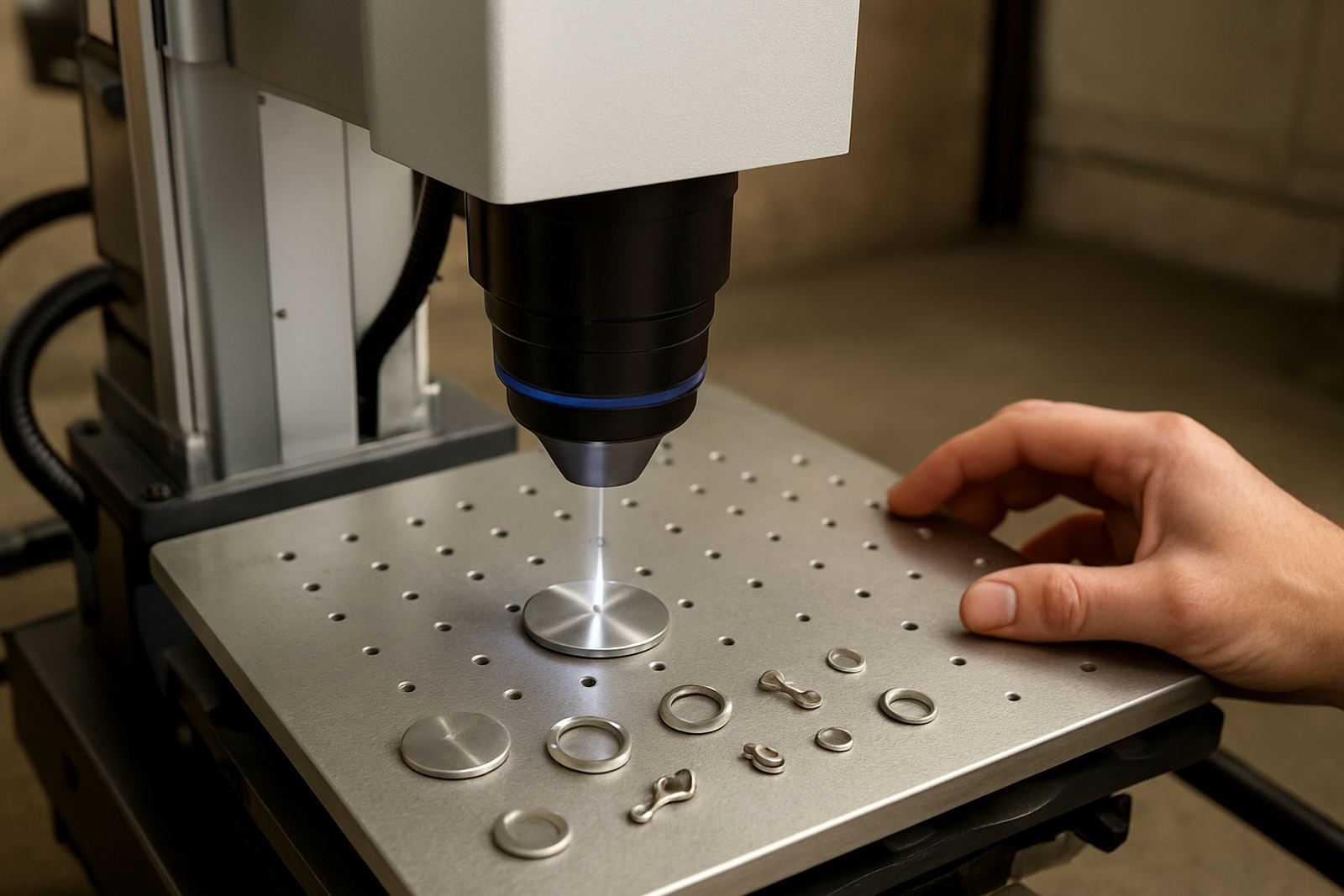
The Fine Detail Marker is usually supplied as a fibre laser marking system with a compact marking head and a controller suited to bench-top or integrated use. Working area options depend on the lens fitted, and that changes how fine the detail can be and how much of the part can be marked in one pass. For tiny characters and small artwork, a shorter focal lens is normally chosen. For slightly larger components, a broader field can be used when the job needs more coverage.
Typical setups can be supplied for small workpieces, rotary marking and fixture-based marking. If your parts are round, irregular or very small, a rotating attachment or custom holding fixture helps a lot. A good fixture prevents movement, and on fine detail work that is often the difference between a pass and a rework. We also help with sample marking so you can check the line thickness, depth and spacing before you commit to production.
- Bench-top marking unit
- Rotary attachment for rings, shafts and cylindrical parts
- Custom fixtures for repeat jobs
- Lens choices for fine or broader marking fields
Where it suits in South African workshops
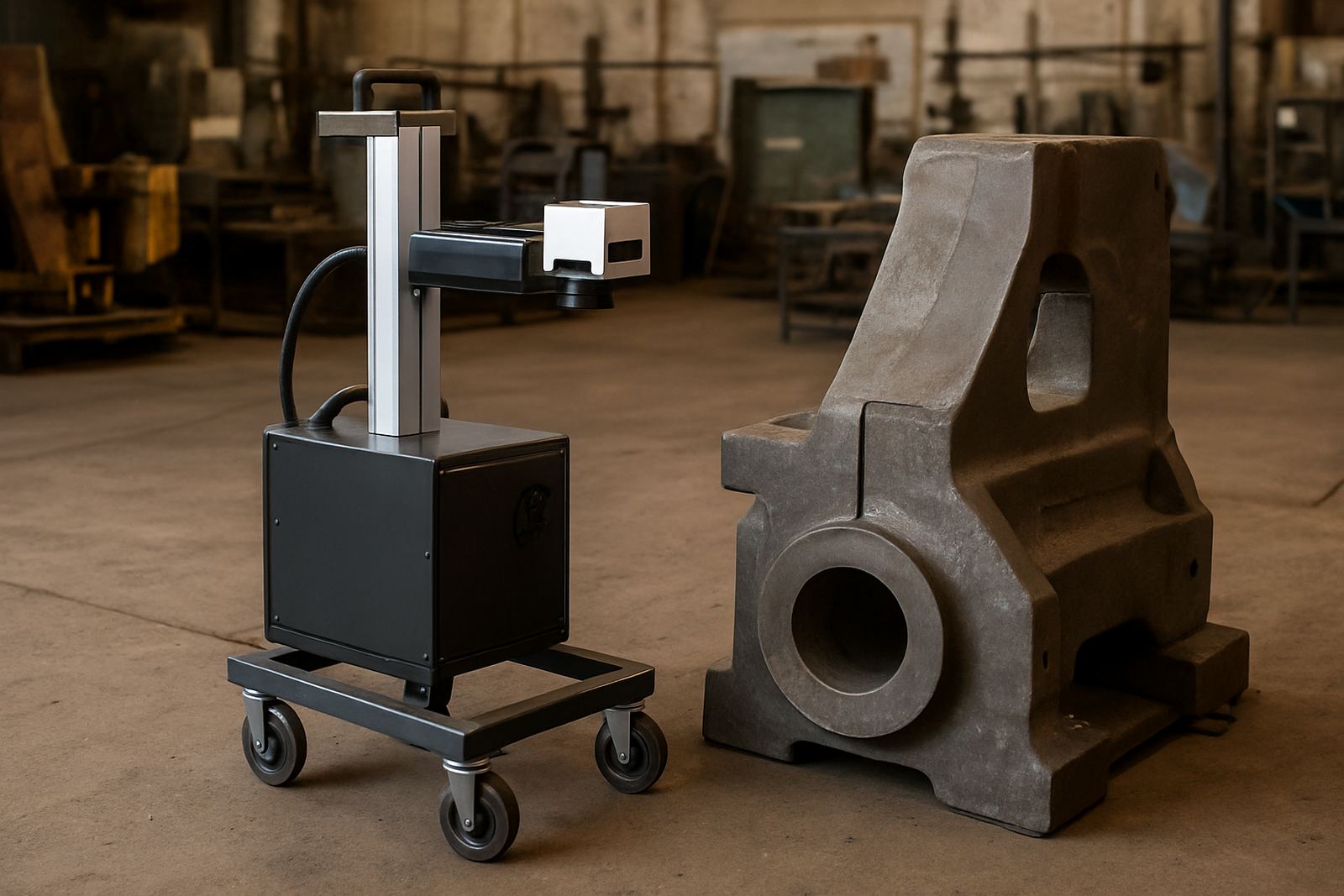
This product is a strong fit for jewellery makers in Johannesburg, Pretoria, Cape Town, Durban and smaller workshops in places like Germiston, Boksburg, Alberton and Kempton Park. It also works well for jobbing shops and production plants that need clear part identification on stainless steel, aluminium, brass, mild steel and coated metals. If your work includes small components that move through stores, assembly, testing or dispatch, having a neat permanent mark saves time later.
It also suits businesses dealing with client traceability, municipal asset tags, machine plates and controlled components. In coastal areas where humidity can cause labels to peel or fade, a laser mark gives a longer lasting result. For plants affected by load-shedding, the low-power nature of fibre laser equipment is helpful, and many sites plan marking work around backup power without much trouble.
- Jewellery and fine accessory marking
- Precision engineering and toolrooms
- Electrical and electronic component marking
- Asset tags and compliance plates
Installation, power needs and site preparation
Installation is straightforward, but the site still needs to be prepared properly. Most units need a stable table or stand, correct ventilation and a clean area free from grinding dust, oil mist and heavy vibration. Fibre laser marking machines normally run from standard electrical supply, so the exact power need depends on the configuration supplied, but they do not require gas for the marking process itself. That makes them easier to place in a busy workshop than systems that depend on consumables.
For South African premises, it helps to think about surge protection, backup power and cable routing before the machine arrives. If the marking station will sit near a compressor, laser cutting area or a wash bay, the machine should be protected from dust and moisture. Our team handles machine installation nationwide, and we can set up the software, test the focus and confirm the first sample marks on site. We also explain safe handling and what to do during power interruptions so the job flow is not interrupted more than necessary.
- Standard electrical supply, with exact load confirmed on order
- No marking gas required
- Stable bench or mounting surface needed
- Ventilation and dust control recommended
Care, servicing and keeping marks consistent
Fine detail work is not forgiving so setup matters. The lens should be kept clean, the focusing path checked, and the marking height confirmed whenever fixtures or part sizes change. A small shift in height can affect fine line sharpness more than many users expect. Operators should also keep the work area free of debris, because even a thin layer of dust can spoil a tiny code or make the edge look uneven.
Preventive maintenance is simple but important. Regular checks on cabling, cooling fans, moving parts and software settings reduce downtime and keep output steady. If the machine is used heavily, especially in a production environment, scheduled service is worth the effort. We supply spares, handle breakdown repairs and offer remote assistance for sites outside Gauteng. If a business relocates or changes layout, we can assist with site relocation and recommissioning too.
- Clean optics and work area regularly
- Check focus before starting each batch
- Schedule preventive maintenance
- Keep sample settings for repeat jobs
What to check before you order
Before placing an order, it helps to have a few sample parts and a clear idea of the finish you need. We normally ask what material you are marking, how small the text must be, whether the mark must be deep or only surface level, and how many parts you run in a shift. If the job involves rings, small tubes or odd shapes, send a sketch or photo so we can advise on the best lens and fixture. That saves time later and avoids buying the wrong setup.
You should also confirm where the machine will sit, whether you need operator training, and whether the job needs software setup or process optimisation. For small shops, the simplest layout is often the best. For larger plants, the question is how the marker will fit into the line and who will be responsible for daily checks. Wessel Vermaak and the team at Wadeville in Germiston assist customers across South Africa with sample marking, application advice and after-sales support.
- Material type and surface finish
- Smallest text size or code size
- Need for rotary marking or fixtures
- Power access, location and training needs
Key facts
| Marking type | Fibre laser marking and engraving |
|---|---|
| Best for | Tiny text, fine line art, serial numbers and small metal parts |
| Materials | Stainless steel, aluminium, brass, mild steel and coated metals |
| Power needs | Standard electrical supply, exact configuration confirmed on quote |
| Gas requirement | No marking gas required |
| Options | Rotary attachment, custom fixtures, software setup and sample marking |
| Support | Installation, training, maintenance and nationwide service |