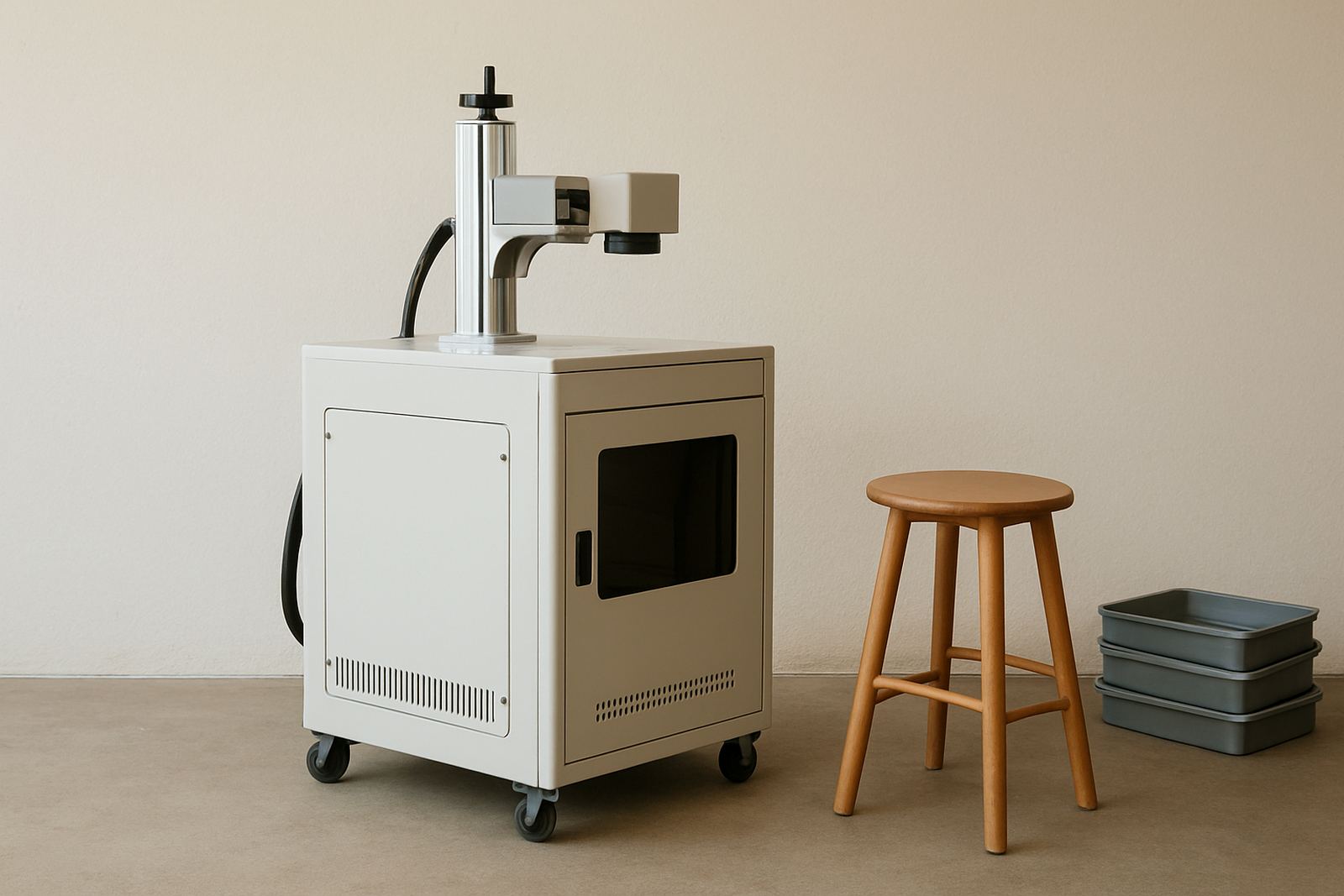
A compact enclosed machine for tidy, repeatable marking
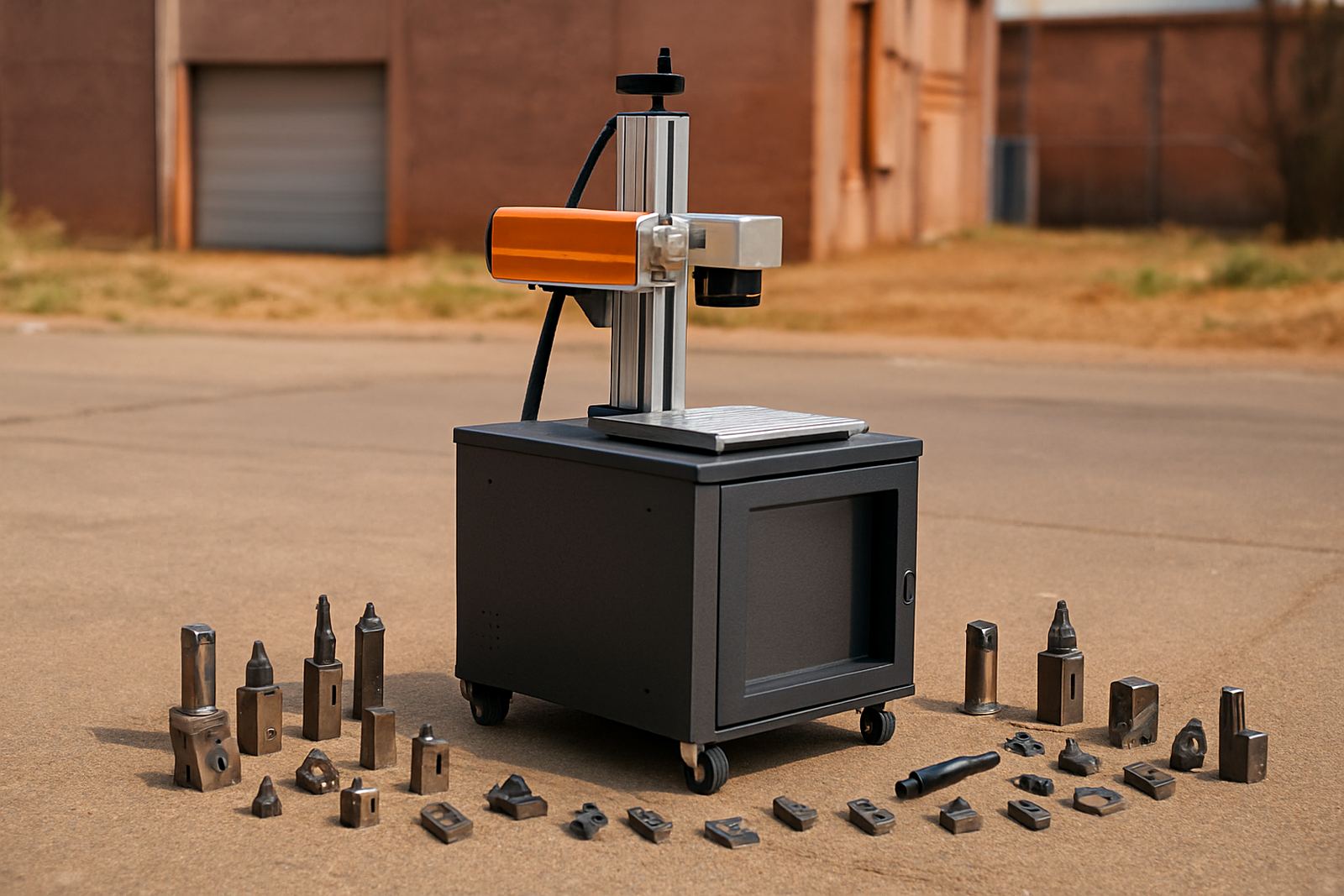
This model is built for workshops that need proper marking quality without taking over the room. The enclosed cabinet helps keep the marking area tidy, limits stray light and gives the operator a more controlled setup for day to day use. It is a good fit when you want stable results on metal parts, nameplates, small jewellery items and serial number work. For many South African sites, that matters when the marking station sits near packing, inspection or admin areas and you need less dust and less noise from the process.
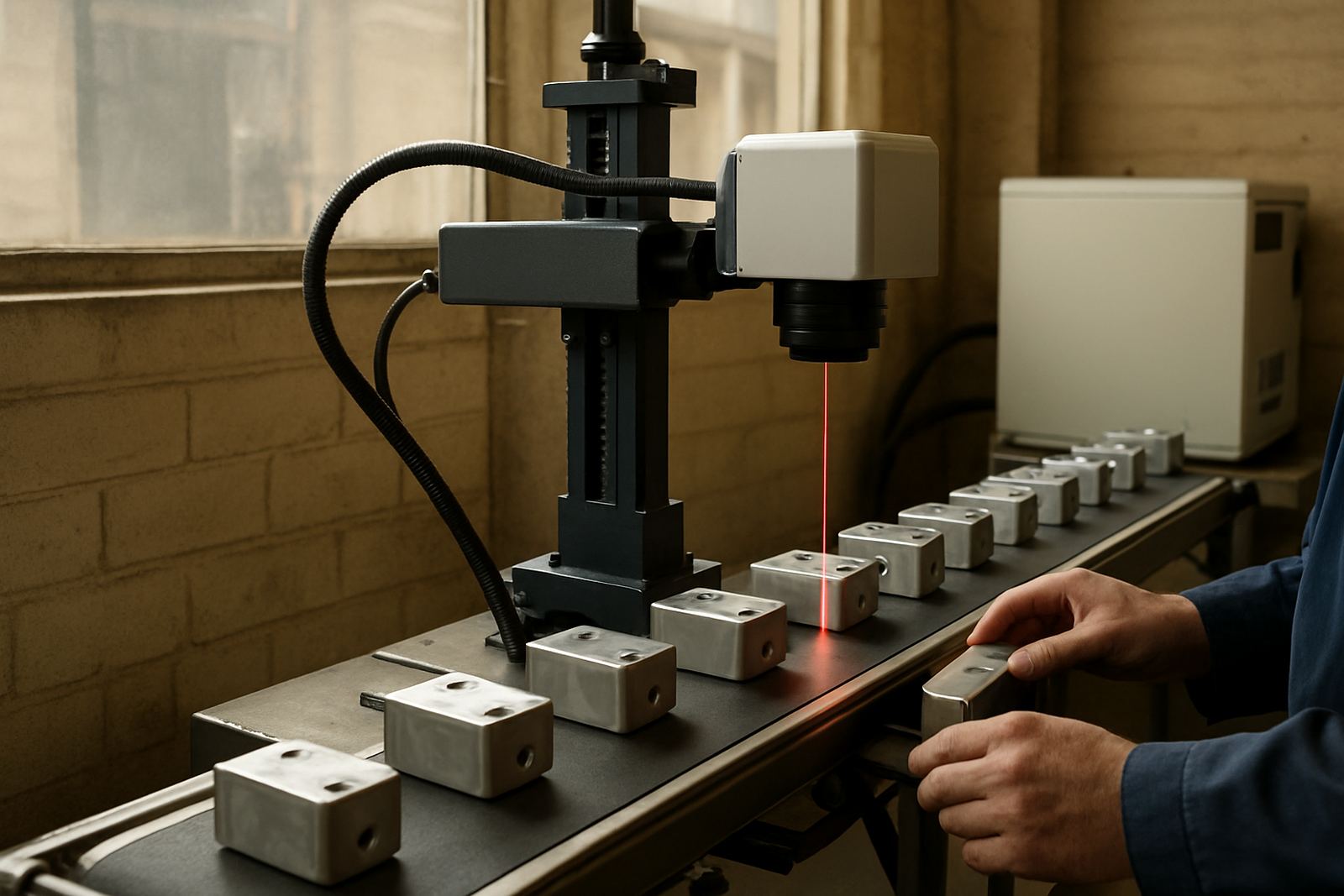
The machine uses fibre laser marking for permanent detail on steel, stainless steel, aluminium, brass and many coated metals. Marks are clear, sharp and well suited to batch work. Because the system is enclosed, it is often easier to place in spaces where a fully open station would be awkward, such as a small QA room, a back office production area or a lab with foot traffic nearby.
Sizes, table options and useful extras
Compact enclosed markers are usually supplied with a working area suited to small and medium parts, with a choice of lens setups depending on how much marking area you need. A smaller field gives finer detail, while a larger field suits bigger plates, tags and mixed production. If you mark rings, small clips or small housings, a fine focus setup can help keep the characters clean and easy to read.
- Typical marking area options: 70 x 70 mm, 110 x 110 mm or 150 x 150 mm
- Desktop footprint for tighter spaces, often around 0.5 m to 0.8 m wide depending on configuration
- Manual or powered Z axis for focus changes
- Rotary fixture option for rings, cylinders and round parts
- Vision aid or camera view option for accurate placement on small items
When customers order, the most useful choice is not only the size of the cabinet but the lens, the fixture and how the part sits inside the working bay. A small change in holder design can save a lot of time when you are marking batches all day.
Where this marker suits best in South African operations
This enclosed unit suits companies that want a cleaner work area and controlled access around the machine. It is commonly used in jewellery rooms, engineering labs, contract marking shops, tool rooms and small manufacturing cells. It also works well where municipal noise and workshop housekeeping are watched closely, because the enclosure keeps the process contained and easier to manage.
In Gauteng, many clients place this type of machine in Germiston, Wadeville, Jet Park, Isando, Kempton Park, Boksburg and Alberton where floor space is tight and shift work means the station must be simple to run. We also see strong demand from coastal towns where humidity can affect storage and handling, so the enclosed cabinet and proper care help keep the machine and fixtures in better shape. It is a practical choice for businesses that want reliable marking without setting up a full open bay.
- Jewellery and gift item marking
- Small metal part traceability
- Batch codes, serial numbers and logos
- Inspection and sample rooms
- Small workshops with limited floor area
Installation, power and site needs
Installation is usually straightforward if the site has a level floor, stable power and enough room for the operator to load parts from the front. Most enclosed markers run from standard single phase power, which makes them easier to place in light industrial spaces and office style workrooms. Exact supply needs depend on the laser source, extractor setup and any powered axis fitted to the machine.
For sites with load shedding, the main point is clean power. A proper surge protected supply and a suitable backup arrangement for the control side can help prevent interrupted jobs and software issues. Some users also add a small UPS for the computer and control electronics so the system can shut down safely. If the machine is going into a room with limited ventilation, check air flow and extraction early so fumes from marking plastics, coatings or oils do not linger.
Before installation we also check access through doors, stairs or lifts, the final table position and whether the machine needs to sit near an extraction outlet. On some sites a simple relocation plan is needed too, especially when moving from one bay to another or shifting between branches.
Care, servicing and daily use
Fibre laser systems are low maintenance compared with many other marking methods, but they still need care. The lens area should stay clean, the enclosure should close properly and the fixtures must be kept free of swarf, oil and polishing residue. A quick daily wipe and a weekly check usually saves time later. In jewellery work and fine marking, even small particles can affect the marking edge and the consistency of the finish.
We recommend planned servicing for businesses that run the machine every day or handle different materials. That can include focus calibration, fixture checks, software setup updates and preventive maintenance on the moving parts and cooling or extraction accessories. If a fault does happen, breakdown repairs and remote assistance can get you moving again faster, and on site support is available where needed.
- Keep the lens and protective glass clean
- Check clamps and fixtures before each batch
- Remove oil, dust and polishing debris often
- Review focus if marking depth or contrast changes
- Book preventive maintenance before peak periods
Important checks before you order this machine
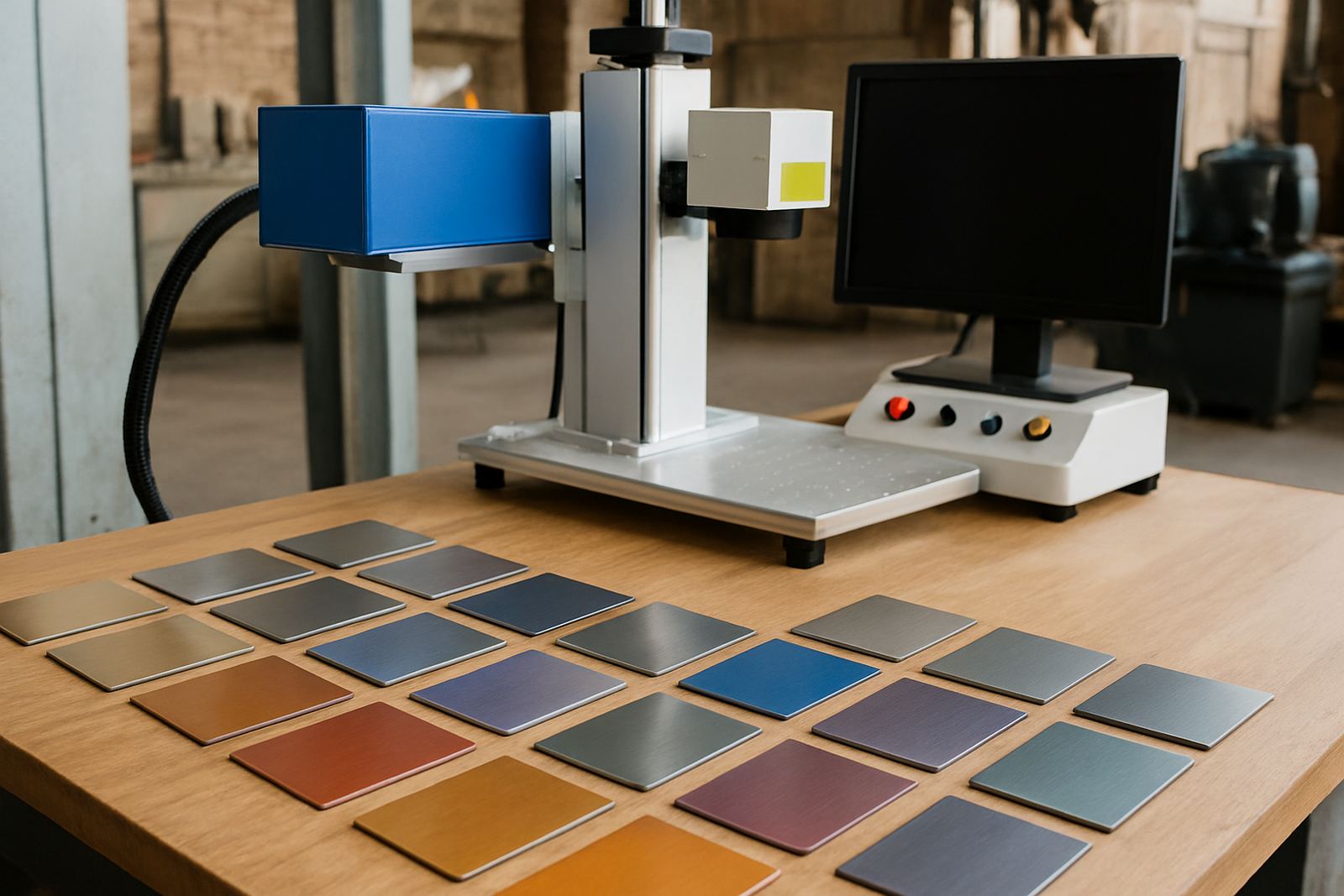
The best way to choose the right compact enclosed marker is to work from the parts you mark every week, not just the sample on the day. Bring us the material type, artwork, character height, batch size and any traceability requirement. If you need deep black marking on stainless steel, fine text on jewellery, or light engraving on anodised surfaces, that changes the lens and settings needed.
It also helps to confirm the part size, fixture needs and whether the job is one off or repeated all day. A small workshop may only need a simple tray and manual focus, while a manufacturer may want part location aids, sample marking and process optimisation. We can also advise on spares supply, fixture design and site relocation if the machine is moving later on. Getting those details right up front avoids wasted time and keeps the machine suited to the way your team actually works.
- Material type and finish
- Part size, weight and shape
- Marking area and text size
- Required depth, contrast or engraving style
- Power availability and room layout
Key facts
| Machine type | Enclosed fibre laser marker |
|---|---|
| Typical marking area | 70 x 70 mm to 150 x 150 mm |
| Power supply | Single phase, site dependent |
| Working materials | Steel, stainless steel, aluminium, brass and many coated metals |
| Control | PC based marking software with parameter control |
| Common options | Rotary fixture, powered Z axis, vision aid, extraction connection |