Portable marking for heavy parts that stay on site
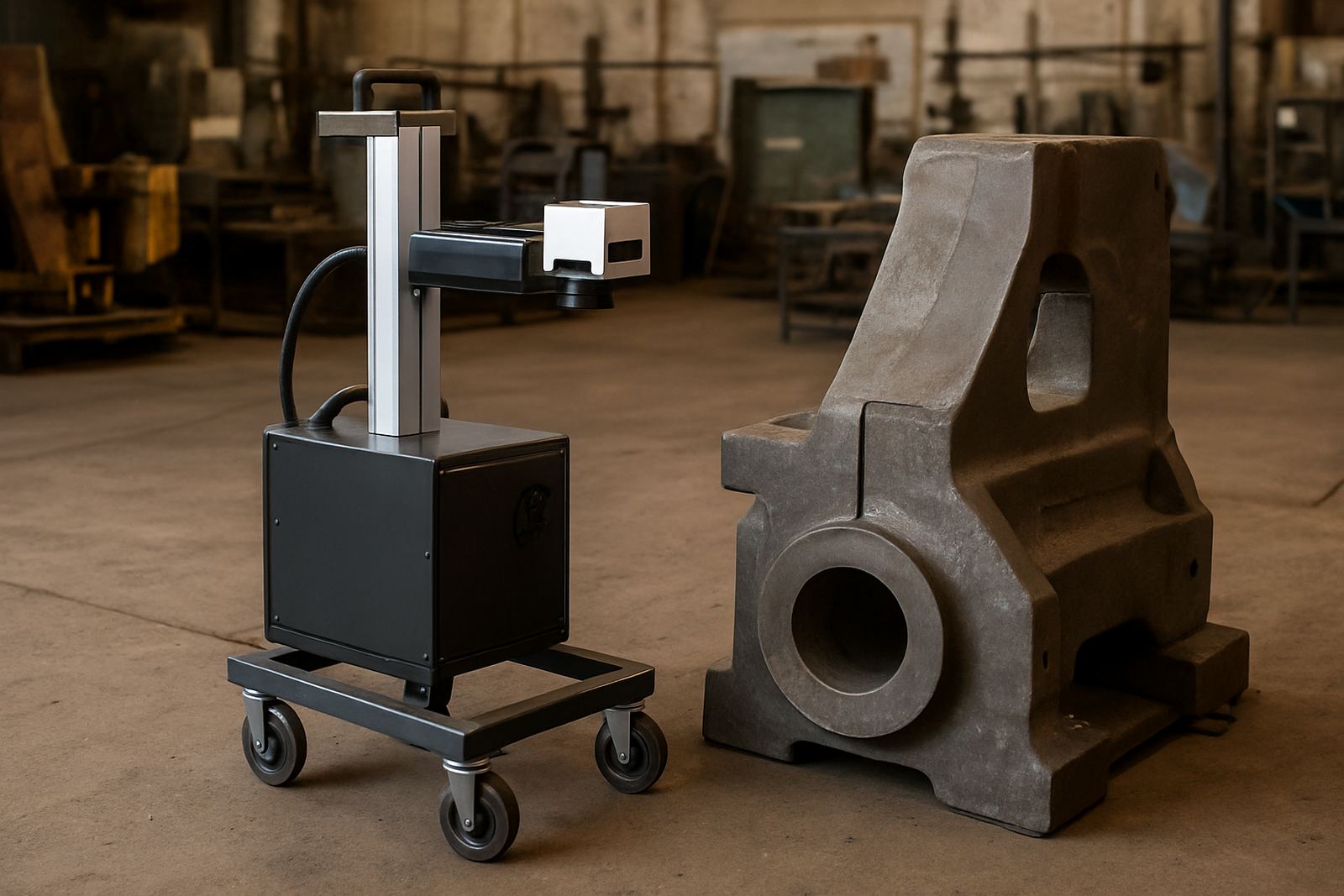
The Portable Marker is a mobile fibre laser solution for items that are better marked where they sit, rather than lifted onto another machine. It suits larger fabricated parts, assembled housings, machine frames, nameplates, castings and other fixed workpieces where handling time adds risk. The marking head and control setup are arranged for practical movement between bays, so one unit can serve more than one station if your workshop layout needs it.
For Gauteng sites with tight floor space, loading bays or mixed production lines, this setup can save a lot of handling. It is also useful where the item is too awkward, too heavy, or simply too sensitive to move after machining. In busy shops, that often means fewer scratches, less waiting, and cleaner traceability on every job.
What it can mark and where it works best
This system is suited to metals and coated metal surfaces commonly used in manufacturing, engineering, electrical, automotive and jewellery-related work. It is commonly used for serial numbers, batch codes, logos, part identification, QR codes and fine detail marking where repeatability matters. The mark is permanent and well suited to parts that need traceability through warehousing, assembly, warranty tracking or export packing.
It works well in Germiston, Boksburg, Jet Park, Isando and Kempton Park workshops, but also in regional plants, repair depots and fabrication yards across South Africa. Coastal humidity is usually not a problem for the marking process itself, though a clean dry storage area still helps protect optics and electronics. If your site runs through load-shedding, we can advise on backup power and safe shutdown steps.
- Metal components that are hard to transport
- Finished parts that must not be clamped or scratched again
- Short-run jobs with repeated part numbers
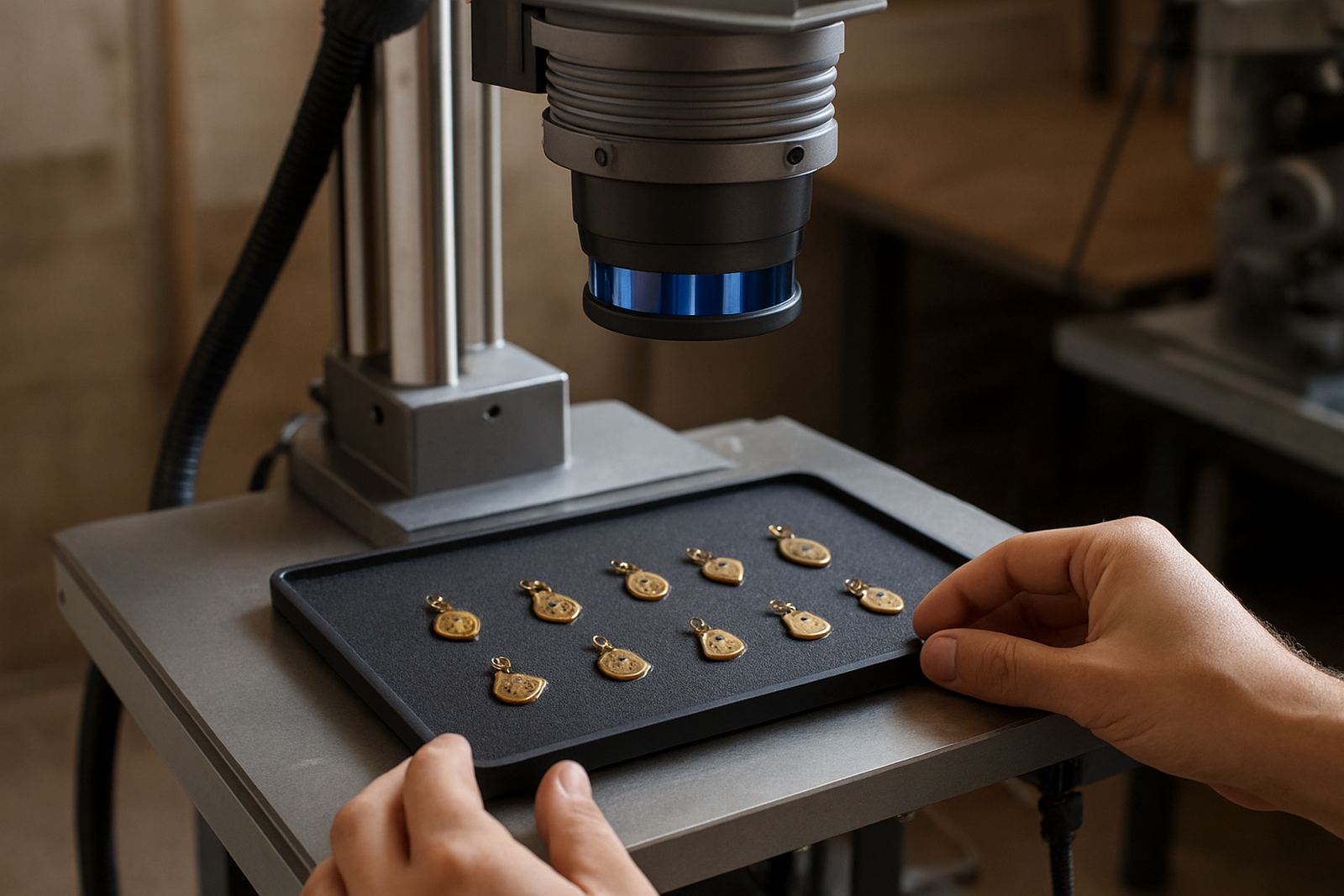
- Jewellery items and small accessories needing fine detail
- Jobbing workshops that need mobile marking between bays
Sizes, formats and configuration choices
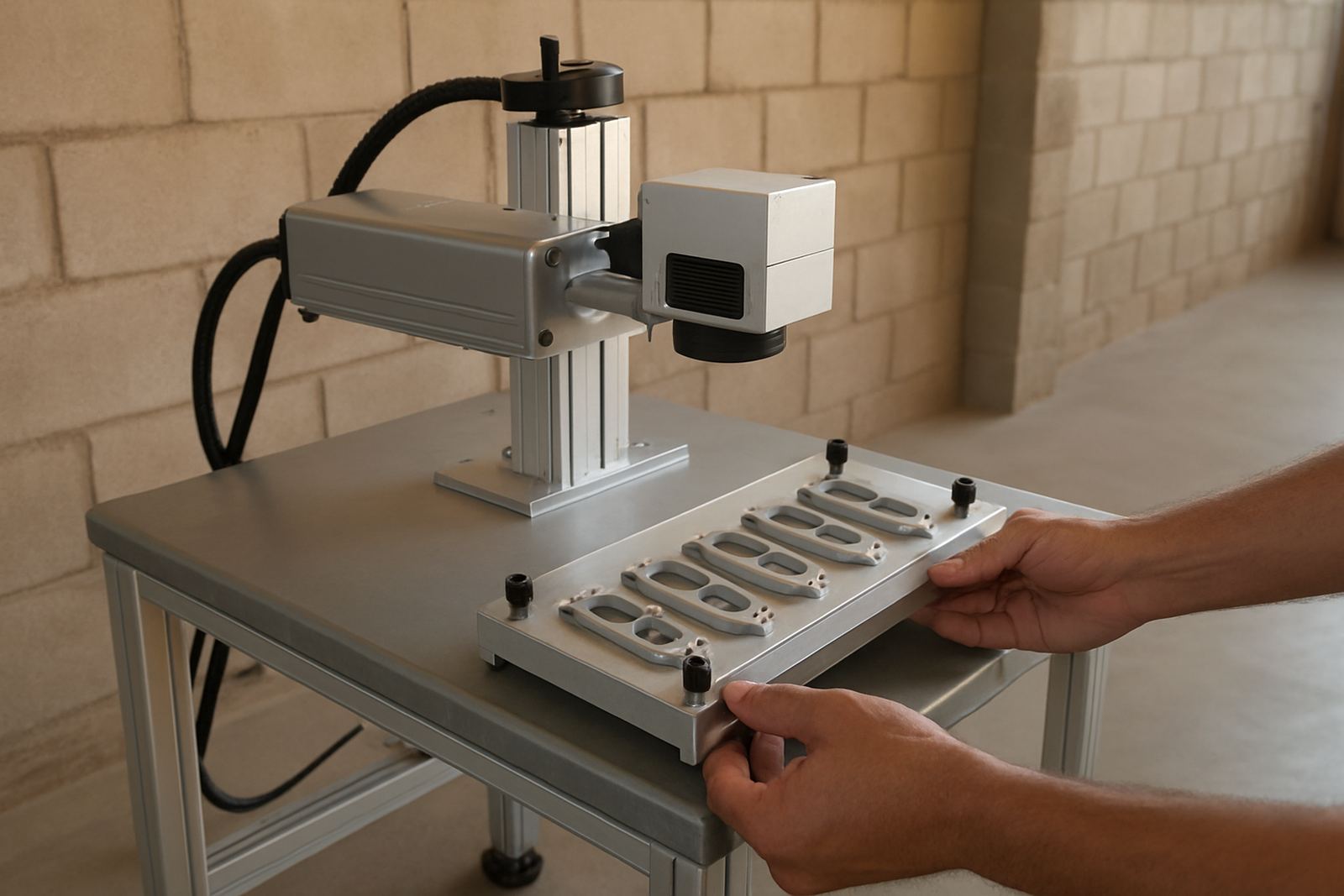
Portable marker packages are usually selected by working area, stand style and how the marking head will be positioned over the part. Common field setups include compact benches for small parts, larger stands for oversize items, and trolley based arrangements where movement between work areas matters. Marking windows are chosen to suit your component size and the amount of detail you need to place on one face.
Control options normally include a dedicated software workstation, hand-held job setup, barcode or serial input, and fixtures for repeat positioning. If you are marking rings, tags, small plates or precision components, the focus setup becomes important and should be checked against your actual samples. For larger fabricated items, fixture design and travel clearance need to be checked before delivery so the head reaches the area without strain.
- Compact portable units for small to medium components
- Mid-size frames for mixed production and workshop use
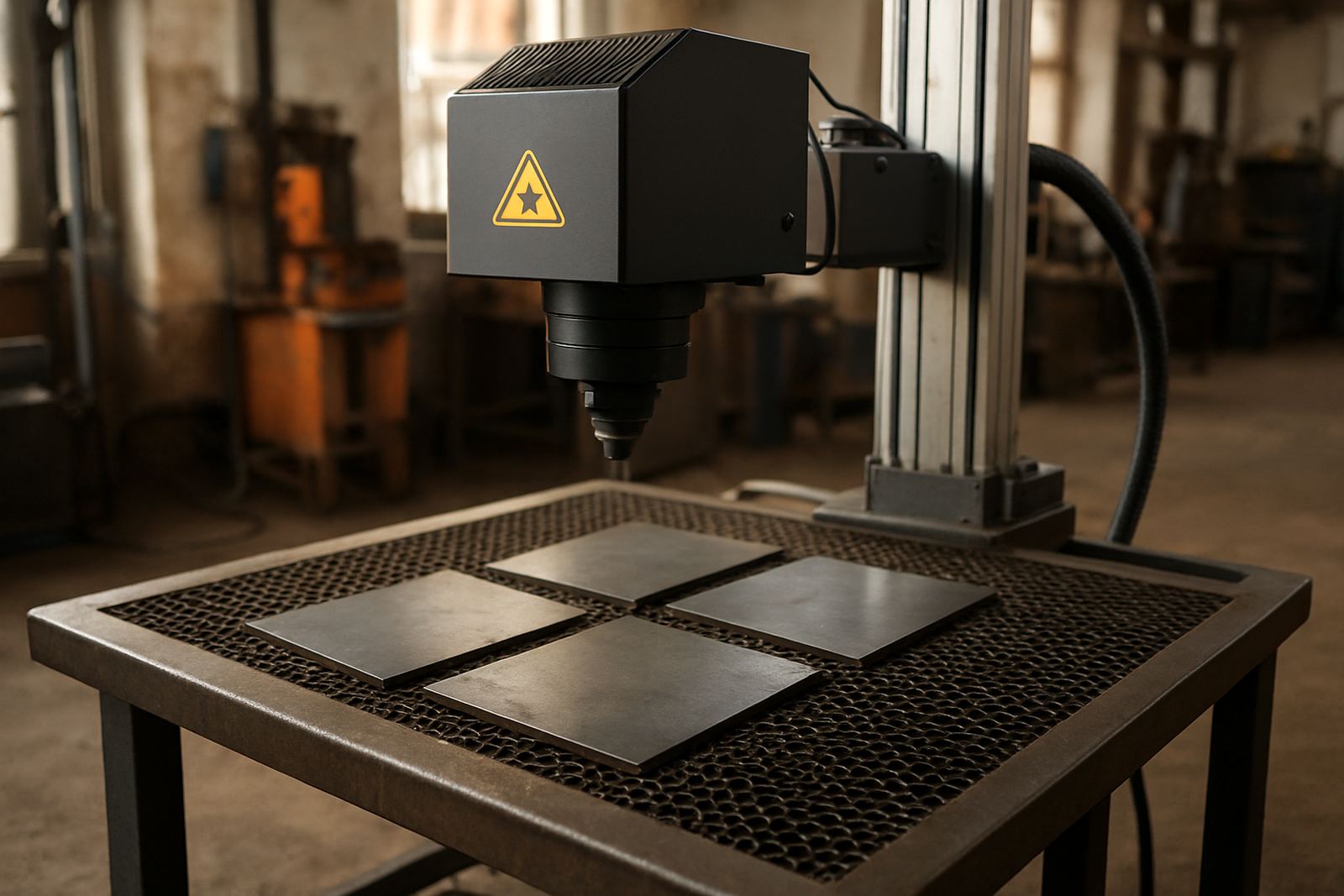
- Larger stands for fixed assemblies and bulky parts
- Optional rotary setup for cylindrical items
- Fixture and jig options for repeat accuracy
Power, site setup and practical installation needs
Installation is straightforward, but the site still needs proper planning. Most portable fibre laser markers run from standard single-phase electrical supply, with a stable earth and clean power feed. In areas where voltage dips are common, a suitable power protection setup is worth considering. The unit should stand on a level surface, with enough room for the operator, the part and safe cable routing around the marking area.
There is normally no gas requirement for the marking process itself, which keeps running costs simpler than many thermal or ink-based systems. That said, if your marking method uses assist gases for a specific application, we will confirm the requirement before install. We also check the workshop for dust, fumes and reflective surfaces so the machine is set up correctly from the start, not after the first problems show up.
Care, calibration and keeping output consistent
Fibre laser systems are generally low maintenance, but they still need routine care to keep marks consistent. The lens area should stay clean, air paths should be checked, and fixtures need regular inspection for wear or movement. If the machine is moved between bays or sites, the focus and alignment should be checked again before production resumes. That is especially important where tolerances are tight and a light shift can affect mark depth or position.
We support preventive maintenance, focus calibration, software setup and breakdown repairs from Wadeville, Germiston, with field support to surrounding industrial areas and nationwide installs. Spare parts, sample marking and process optimisation are available when a job needs fine-tuning. For users with multiple operators, refresher training also helps keep setup time down and reduces avoidable mistakes.
- Keep lenses and covers clean and dry
- Check fixtures, rails and fasteners for movement
- Confirm focus after any relocation
- Back up job files and mark settings regularly
- Plan service before production drops off
Important checks before you order this machine
Before ordering, it helps to confirm the part size, material type, marking depth required and the exact area available around the workpiece. We also recommend checking whether the part is flat, curved or already assembled, because that affects fixture design and the working height of the marking head. If you need marks that stay readable after heat, abrasion or chemical exposure, tell us upfront so the correct setup can be matched to the job.
Please also check the electrical supply, floor space, access for the machine and whether the site has any internal safety or municipal requirements for equipment placement. For customers in factories, service centres and training workshops, we can help with sample marking before delivery so you can approve the result on your own material. That step saves time and avoids costly changes after install.
- Part dimensions and available marking area
- Material type and finish
- Marking content, including serials or codes
- Required mark size, depth and contrast
- Power availability and site access
- Need for fixtures, rotary units or sample testing
Key facts
| Laser type | Fibre laser marking system |
|---|---|
| Application | Portable marking of fixed or difficult-to-move metal parts |
| Typical marking content | Serial numbers, logos, QR codes, batch codes and fine detail |
| Power requirement | Single-phase supply, site dependent |
| Installation | On-site setup, operator training and calibration available |
| Support area | Wadeville, Germiston and nationwide installs and training |