Flat-part marking for plates, blanks and covers
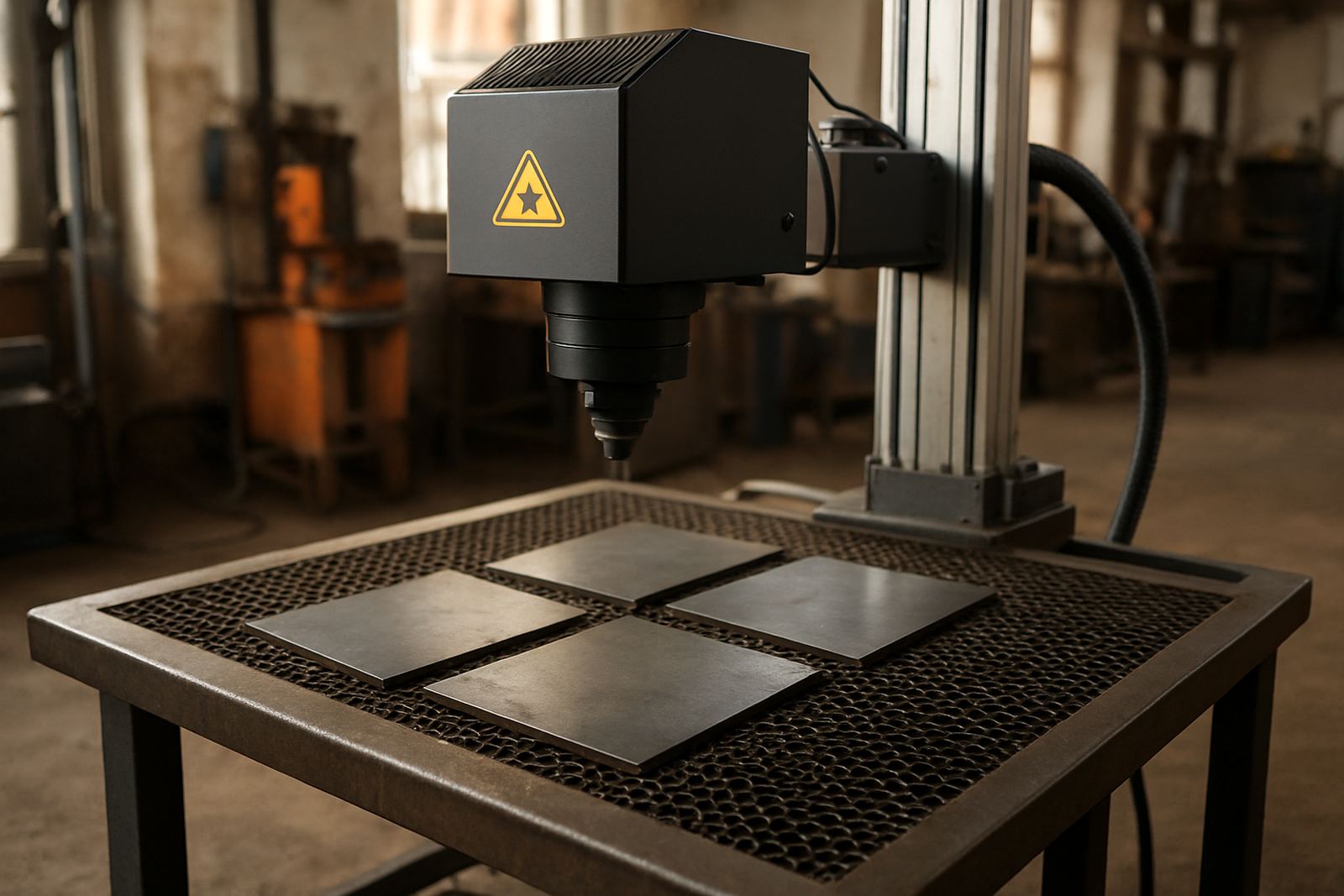
When a part is flat, firm and made from metal, a fibre laser plate marker gives you a clean way to add part numbers, serials, logos, QR codes and safety details. The marking is permanent and does not rub off with handling, coolant, oil or daily cleaning. That makes it useful on mild steel, stainless steel, aluminium, brass and many coated metals where traceability matters.
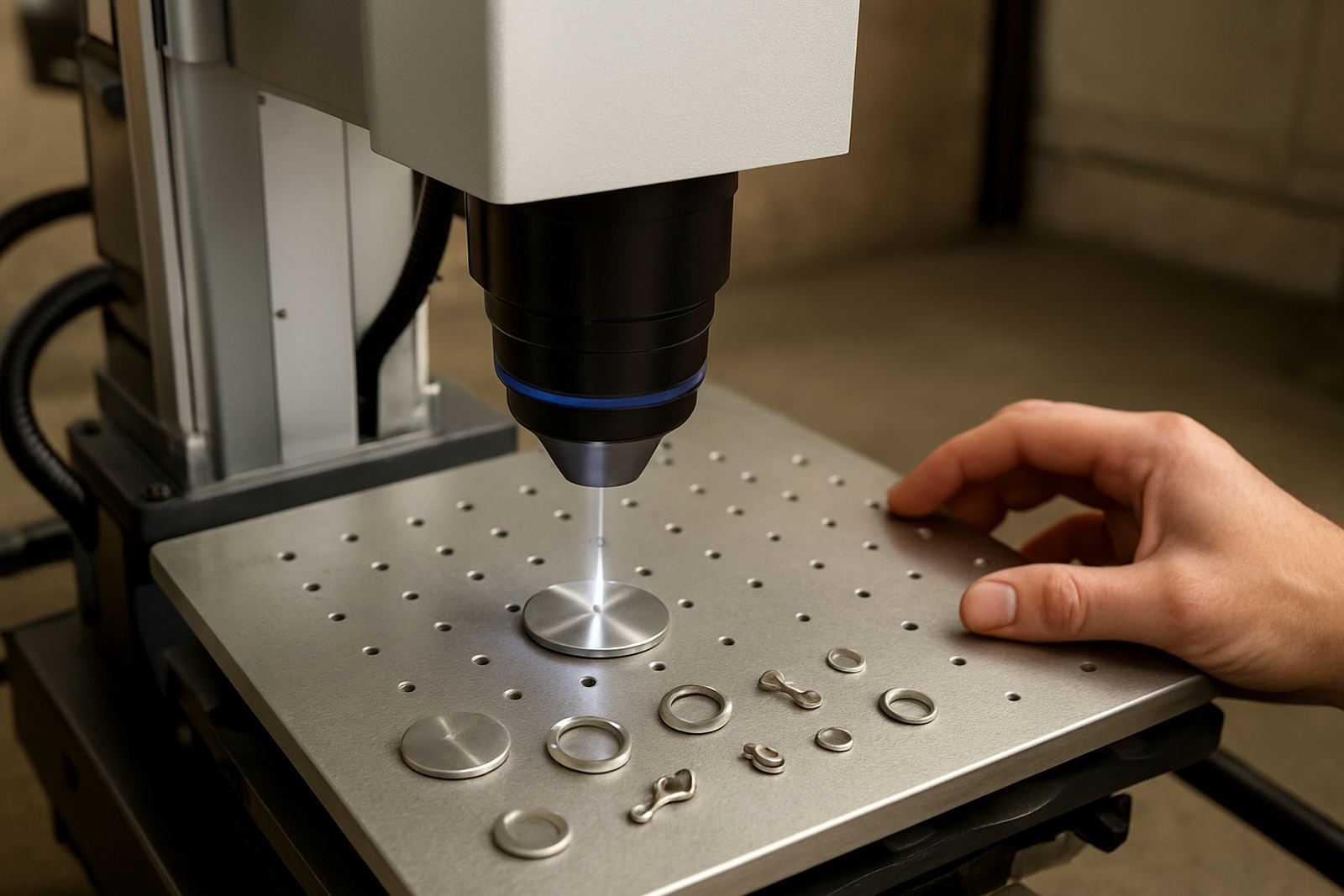
Our plate marker is commonly used on name plates, cover plates, mounting plates, brackets, tags, small fabricated panels and machine components. It is also a practical option for jewellery items and small precision parts where detail has to stay crisp. Because the beam is focused, you can mark fine text and small codes without having to clamp the part under heavy pressure. This helps reduce handling damage and keeps setup times low.
Sizes and options to suit your workload
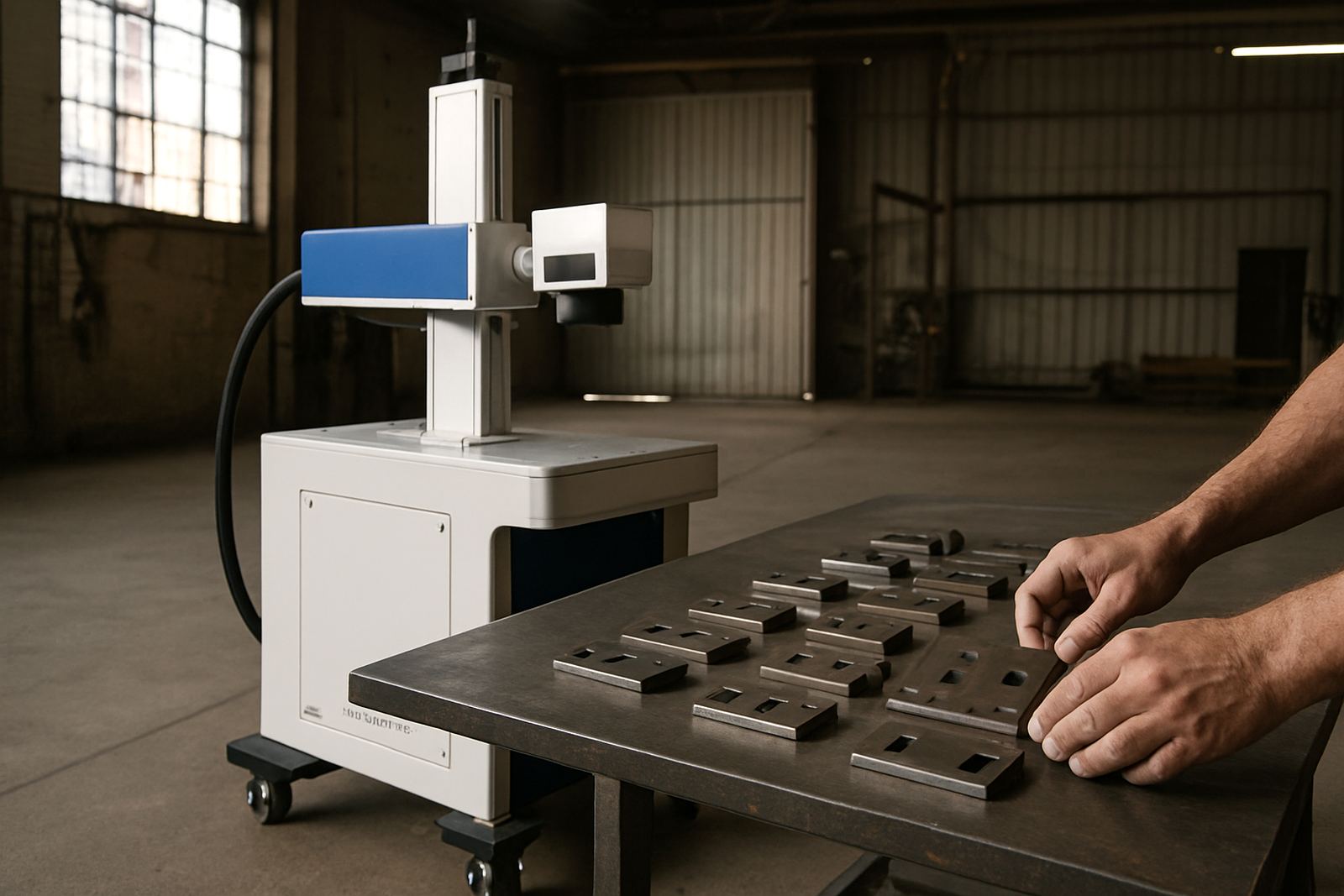
We supply plate marker setups in different working areas, so you can match the machine to the size of the part and the way you work. A compact unit suits a small workshop that marks small plates and tags every day, while a larger table or enclosed system is better for bigger fabricated pieces or batch work. If you need more than one orientation, a rotary option can be added for round items, but for flat parts the focus is usually on a stable bed and repeatable positioning.
- Working area options for small, medium and larger flat parts
- Open or enclosed machine layout depending on safety needs
- Manual or pneumatic fixture support for repeat jobs
- Optional camera guidance for accurate part placement
- Software-driven marking for text, logos, barcodes and serials
For many South African buyers, the key question is not only size but throughput. If you are marking a few plates a day, a simple bench setup may be enough. If you are handling batches for fabrication, electrical, automotive or engineering work, a faster fixture and cleaner part loading flow will save time on every shift.
Where the plate marker fits best
This system suits businesses that need repeatable marks on metal parts without slowing production. It is used in fabrication shops, maintenance departments, electrical panel builders, steel processors, tool rooms and jewellery workshops. It also suits small manufacturers that want to improve traceability before parts leave the shop. In Germiston, Boksburg and Jet Park, many buyers use fibre laser marking for batch control and internal part identification, while coastal workshops often prefer laser over ink because the mark holds up better in humid conditions.
It is a good fit where municipal or client records require visible identification on plates or covers, especially on equipment that moves between sites. If your parts must survive oil, cleaning chemicals or outdoor exposure, fibre laser marking gives you a low-maintenance option. For load-shedding planning, many clients run the machine from a protected circuit and pair it with a suitable backup power source for the PC and controls. The laser itself has low running demand compared with large process equipment, which helps in smaller workshops.
- Best for permanent identification, traceability and branding
- Works well in batch production and one-off jobs
- Suitable for indoor workshops and controlled production areas
- Useful where printed labels or stickers do not last
Installation, power supply and workshop setup
We handle installation nationwide and can assist with machine placement, software setup and operator training at your site. In Wadeville, Germiston, we often plan the machine around the available bench space, extractor route and cable runs before the unit arrives. A level, stable surface is important, and the operator should have enough room to load parts without stretching across the marking area. If your shop has dust, grinding residue or frequent vibration from nearby tools, we will normally recommend a cleaner and quieter corner for the machine.
Power requirements are straightforward for most plate marker systems, but the exact supply depends on the enclosure, control equipment and any accessory fixtures you choose. A clean single-phase supply is common, with proper surge protection and stable earthing. If you are in an area where voltage dips or load-shedding interruptions are common, a battery backup for the control PC and related equipment can help keep jobs from being lost. Compressed gas is not usually needed for standard fibre marking, which keeps the install simpler and reduces ongoing running costs.
Care, calibration and servicing that keeps marks consistent
Good marking quality depends on focus, clean optics and repeatable part positioning. The plate marker should be kept free of dust, offcuts and oily residue. A quick daily wipe-down and a proper weekly clean of the work area will help the machine stay consistent. If you are marking plated or coated items, it is worth checking sample marks at the start of each batch because surface finish can change the final result more than people expect.
We support preventive maintenance, focus calibration, breakdown repairs and remote assistance. For clients in Germiston, Alberton, Kempton Park and surrounding areas, a planned service visit can be arranged to check the beam path, fixture alignment and marking quality. If the machine starts to drift, the issue is often in focus height, lens cleanliness or the way the part is being seated. Catching that early avoids scrap and saves rework later.
- Keep the lens and work area clean and dry
- Check focus height when changing part thickness
- Inspect fixtures for wear or movement
- Store sample files and settings for repeat jobs
What to check before you order a plate marker
Before you choose a machine, work through the parts you plan to mark and the finish you need. A thin aluminium cover does not behave the same as a thick stainless plate, and a deep black mark on one alloy may look pale on another. It helps to send sample parts so we can test the marking result and confirm the most suitable lens, fixture and software setup. If you need barcodes or QR codes, check the minimum size your scanner can read reliably. It is better to confirm this before purchase than to find out after installation that the code is too small.
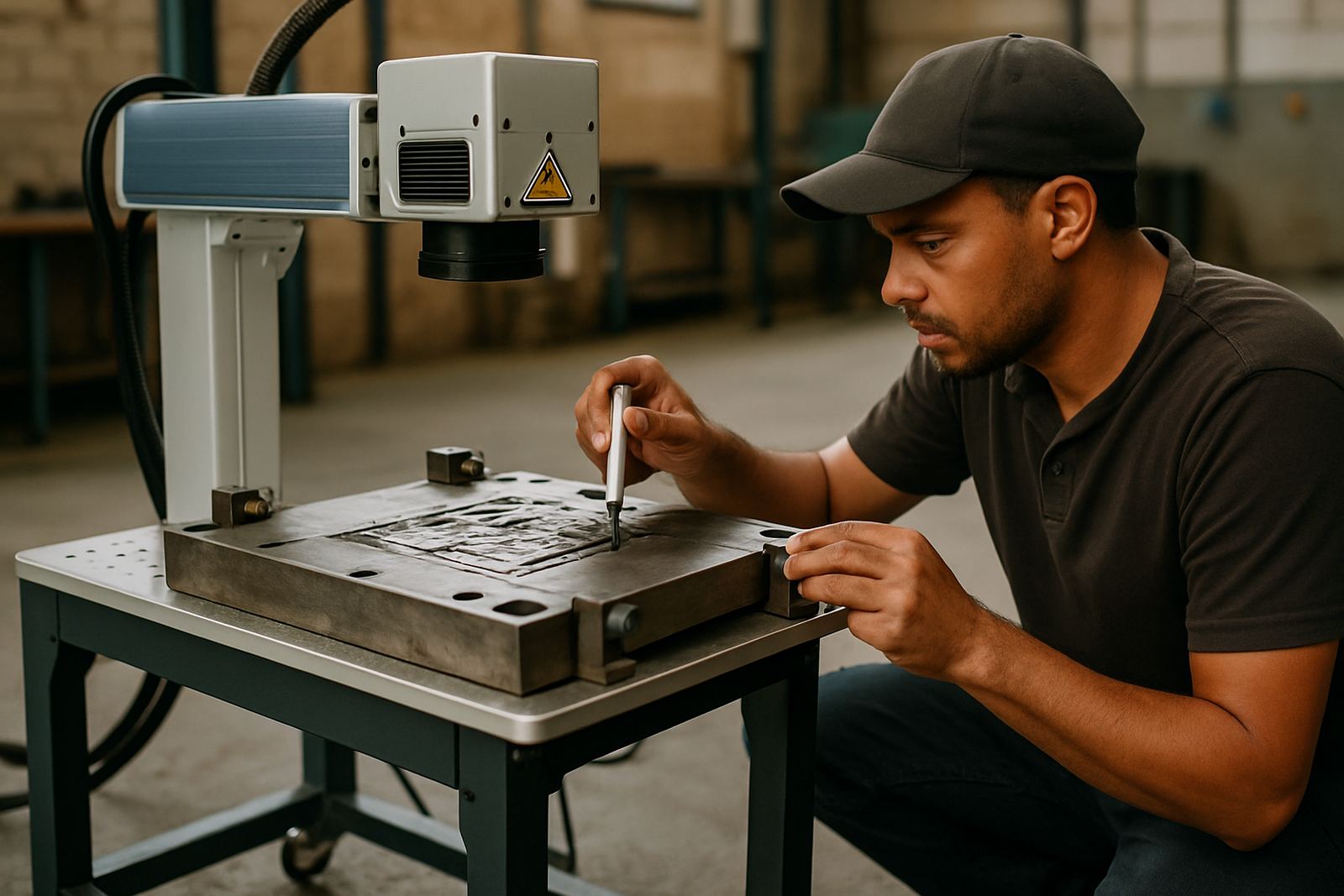
We also recommend checking how the parts will be loaded. If you mark one plate at a time, a simple fixture may be enough. If you batch mark many items, ask about a locatable jig or stop system to keep placement fast and accurate. For businesses with multiple staff, operator training matters just as much as the machine itself, because the settings must be repeatable from shift to shift. A small set of tested presets can make day-to-day work much easier, and less prone to mistakes.
- Part size and thickness range
- Material type and surface finish
- Mark content: text, logo, serial, barcode or QR code
- Required speed, batch size and shift pattern
- Need for fixtures, camera aid or enclosure
Key facts
| Marking type | Permanent fibre laser marking and engraving |
|---|---|
| Typical materials | Mild steel, stainless steel, aluminium, brass and coated metals |
| Use case | Flat plates, covers, blanks, tags and fabricated components |
| Power | Single-phase supply with surge protection, exact requirement depends on model |
| Options | Open or enclosed layout, fixtures, camera guidance, rotary add-on |
| Services | Installations, training, software setup, calibration, repairs and spares |