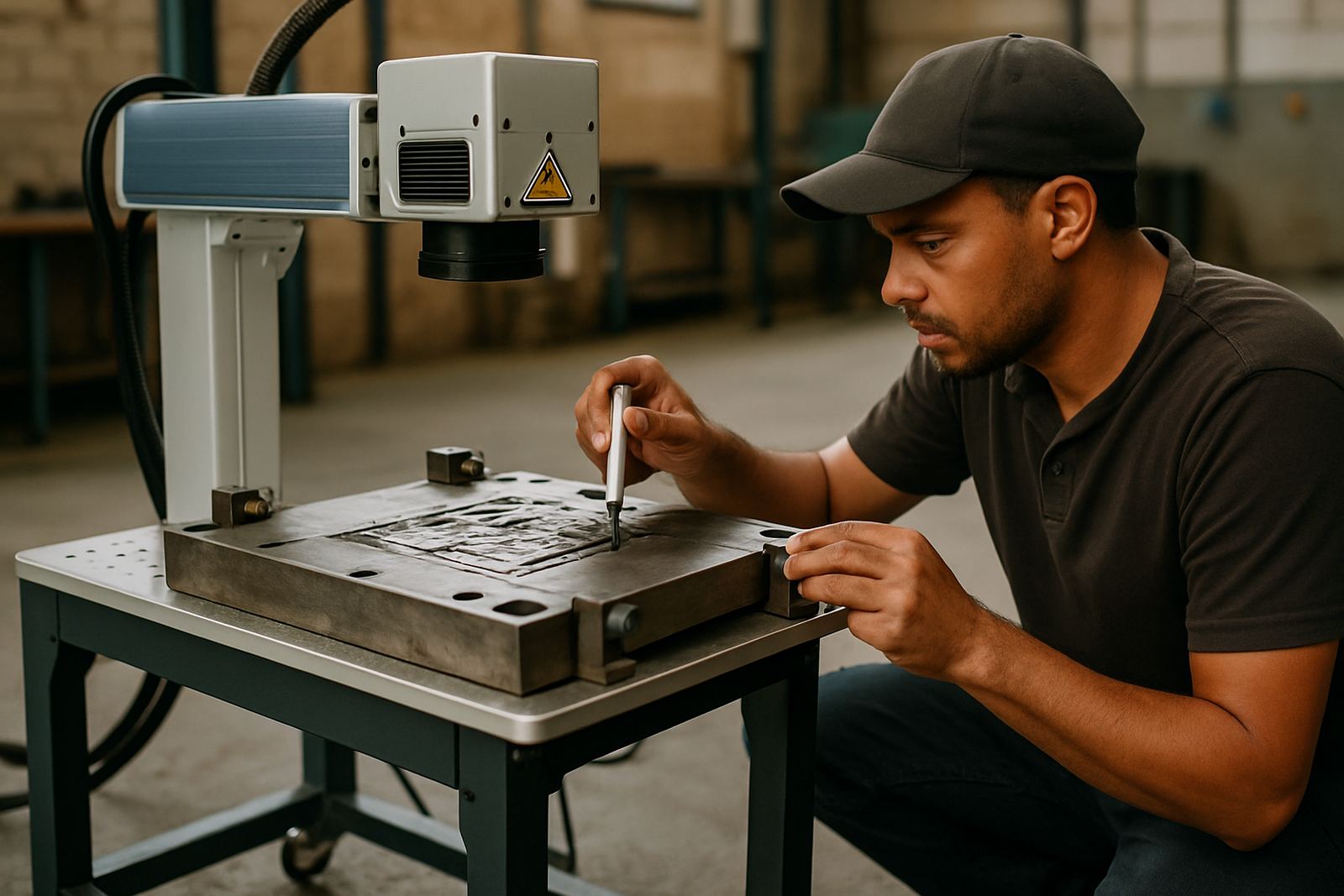
Mould marking for plates, cavities and maintenance IDs
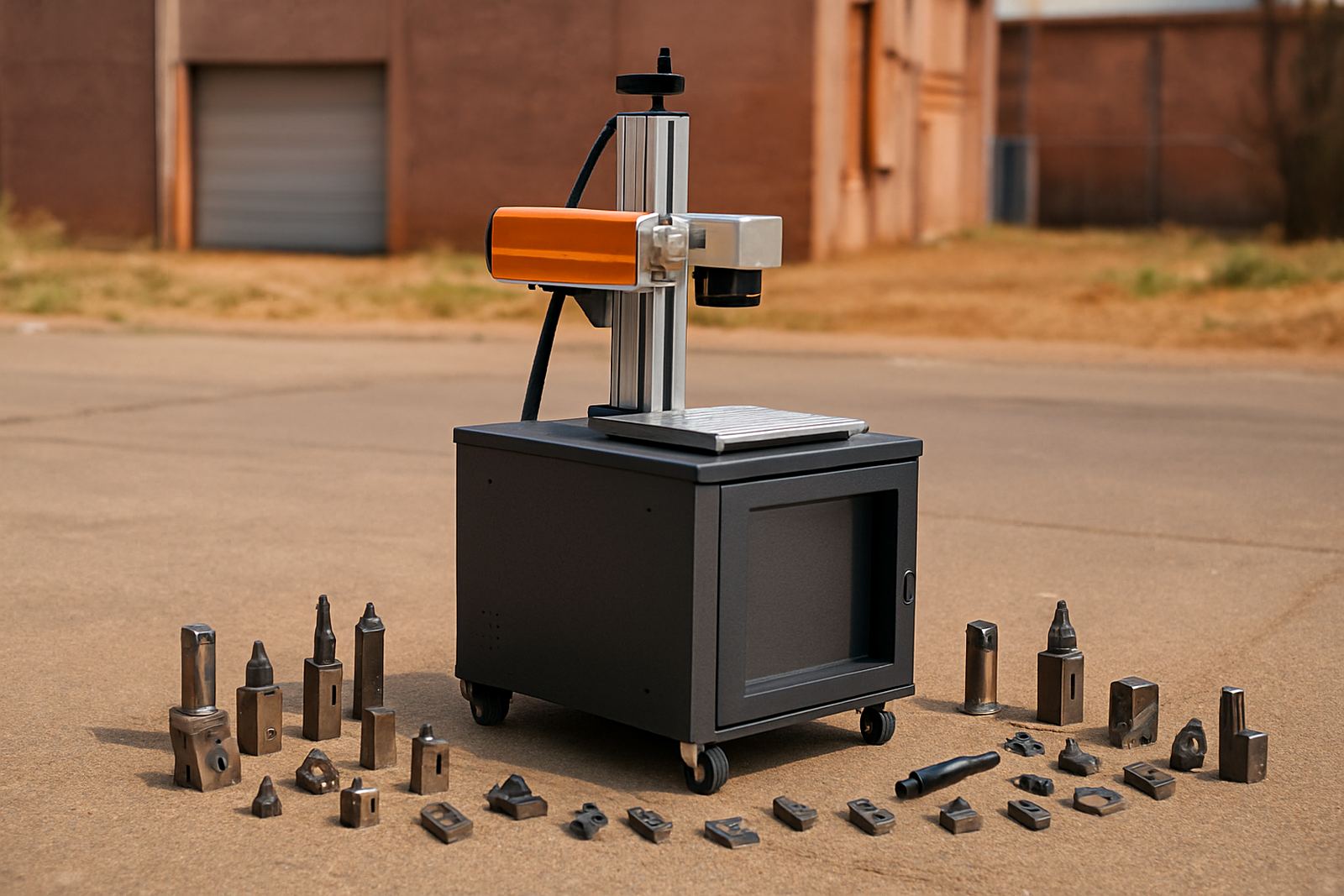
The Mould Marker is set up for fine identification work on mould plates, inserts, cavity blocks, tool numbers and service notes. In a workshop that handles repeated changes, you need marks that stay readable after cleaning, clamping, heat and handling. Fibre laser marking is suited to that because it places the mark into the metal surface with very fine control.
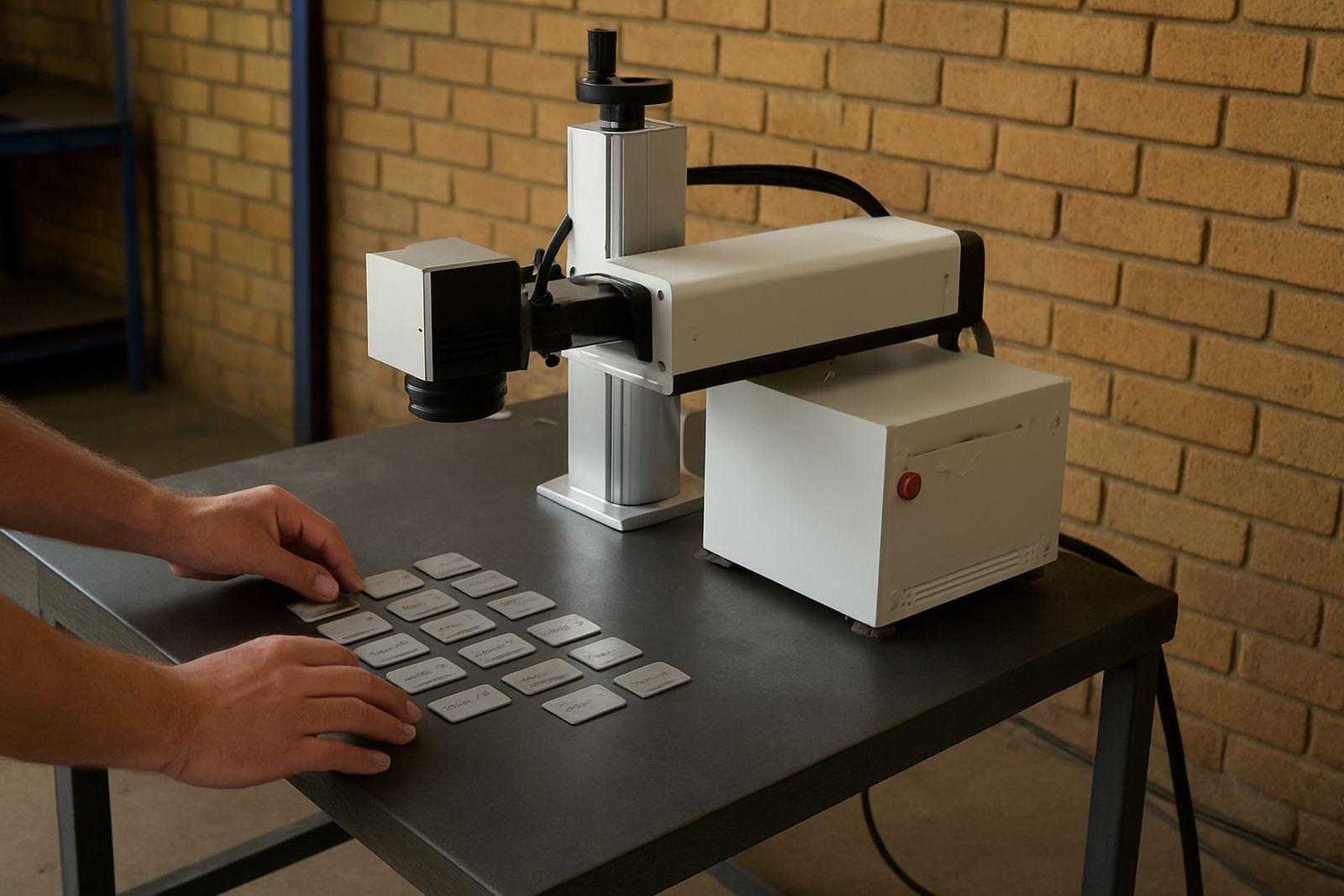
Typical uses include serial numbers, cavity numbering, direction marks, logo details, repair dates and inspection references. It is also a good fit for mould shops that need clear part identification before dispatch or after refurbishment. The mark stays neat on polished and brushed metals, and it is not washed away by coolant or oil, which helps on busy lines with regular maintenance.
Sizes, working areas and marking options
The right setup depends on the size of the mould parts you handle and how deep or fine the marking needs to be. Small mould inserts need a compact work area and a stable fixture. Larger plates may need a wider bed and more open access for loading. We supply options that can be matched to your parts list and workshop space in Wadeville, Germiston or on site anywhere in South Africa.
- Compact units for small plates, inserts and tags
- Mid-size work areas for common mould plates and tooling parts
- Open-frame and enclosed options for cleaner workshop use
- Manual focus and precise Z adjustment for different part heights
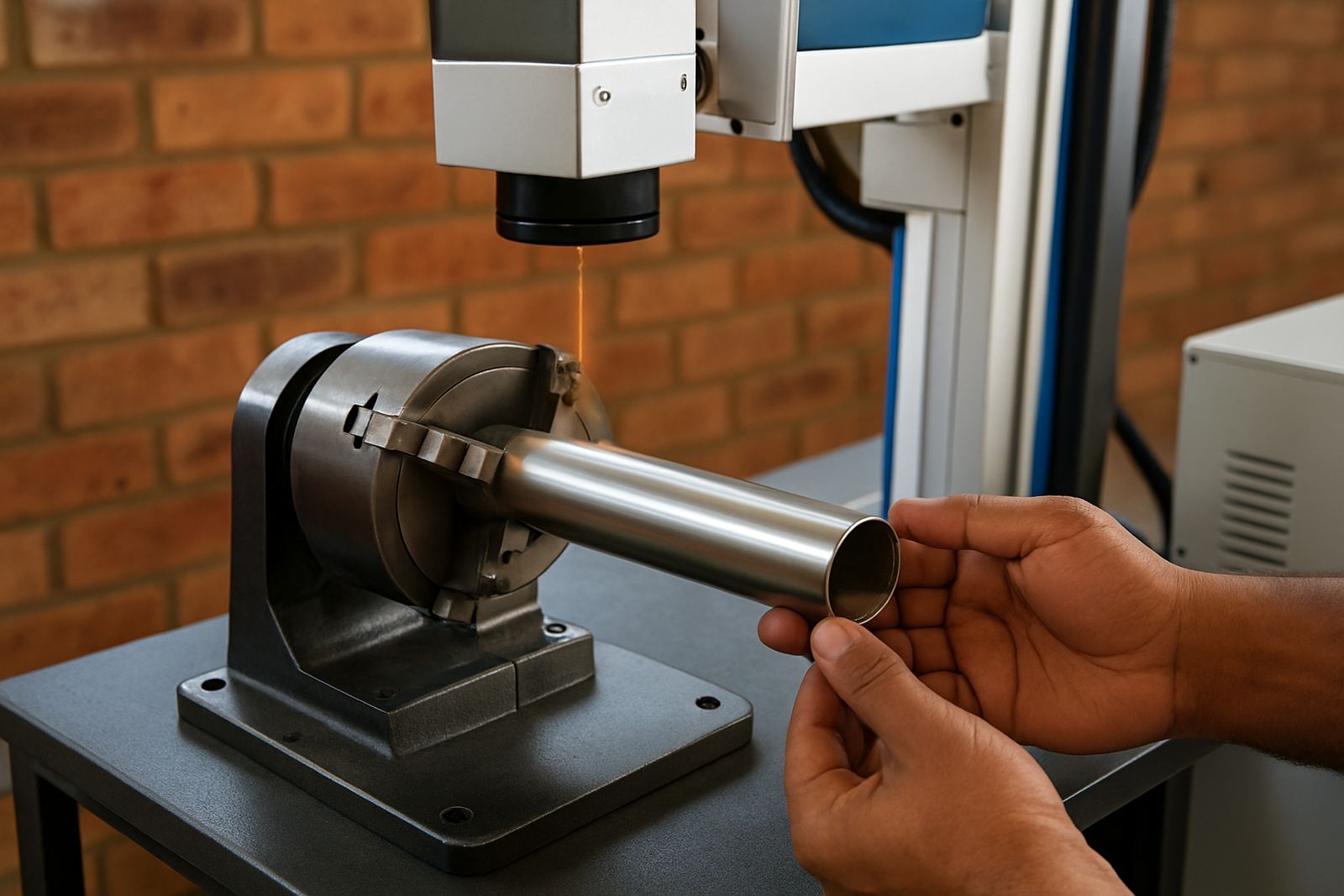
- Rotary and fixture options for curved or round components
- Software-controlled text, serial numbers, barcodes and simple logos
For mould work, the common requirement is not only marking size but repeatability. Once your fixture is set, the same cavity or plate should be marked in the same place every time. That is where sample marking and fixture design help, especially when your toolmakers need a fast handover between jobs.
Where the Mould Marker suits best
This machine suits plastic moulding shops, toolrooms, maintenance departments, repair workshops and manufacturers that need permanent metal identification. It works well on mould bases, cavity blocks, ejector plates, dies, jigs and small machine parts. If your operation runs in Gauteng, KZN, the Western Cape or coastal areas with humidity, the fibre laser setup is a practical choice because it does not rely on inks or consumables that can spoil in storage.
It is also useful where load-shedding has caused operators to stop and restart jobs during a shift. Because marking files are saved digitally, your team can return to the same mark layout when power is back. For sites with municipal audit or traceability requirements, the machine supports clear records on parts without affecting the base material more than needed.
- Plastic moulding and injection toolrooms
- Precision machining and metalworking shops
- Maintenance departments needing ID and service marks
- Prototype and short-run manufacturing
- Repair and refurbishment of moulds and dies
Installation, power needs and workshop setup
We handle installation and training nationwide from our Wadeville, Germiston base. Before setup, we check the bench, ventilation, dust control and operator access so the unit can be used safely and efficiently. Most mould marking systems need standard single-phase or three-phase power depending on the configuration, with a clean, stable supply and proper earthing. In some factories a small voltage stabiliser is useful if the supply fluctuates, especially during load-shedding recovery.
No process gas is normally required for standard fibre laser marking. That keeps running costs low and avoids the storage of cylinders in tight workshop spaces. The machine should be installed on a steady surface away from heavy vibration, grinding dust and coolant spray. If the workshop is near the coast, we also advise a sensible care routine for humidity, cable management and lens protection, because fine marking optics do not enjoy damp conditions.
- Check available power and socket type before delivery
- Allow space for the unit, PC or controller and work table
- Keep the marking area free of oil mist and metal dust
- Make sure the operator has safe loading access
- Confirm if a fume extractor or enclosure is needed for your parts
Care, calibration and servicing over time
Fibre laser machines are low on daily maintenance, but they still need care if you want steady results. The lens window should be kept clean, the focus checked, and the fixture inspected for movement. If a mark starts to look shallow or the edges lose sharpness, the issue is often focus, lens contamination or a settings change rather than a major fault.
Our support team handles preventive maintenance, focus calibration, breakdown repairs and remote assistance. For mould marking work, a small drift in focus can change the appearance of cavity numbers or tiny font sizes, so periodic checks are worthwhile. We also assist with sample marking and process optimisation when you are setting up a new part family or a repeat job. Regular care keeps the machine ready for toolroom use and reduces downtime, which is often the main pressure in smaller workshops.
What to check before you order
Before buying, it helps to know exactly what you are marking and how often. A mould plate with large flat faces has different needs to a small insert with a shallow pocket. The more information you give us up front, the better we can match the machine, fixture and software setup to your work. If you are replacing an older marking method, send sample photos or part drawings so we can advise on the correct field size and marking style.
- Largest part size and heaviest part weight
- Material type, such as tool steel, stainless steel or aluminium
- Typical text size, cavity number format and logo detail
- Whether you need flat marking only or round part marking too
- Available power supply and workshop layout
- Need for enclosure, extractor or fixture design
It also helps to confirm if the machine will be used by one operator or a shift team. For a busy shop, a simple layout and clear software setup can save time every day. If your team needs training after install, we can plan that around your production windows so you do not lose a full day of output.
Key facts
| Marking type | Fibre laser marking and engraving |
|---|---|
| Typical materials | Tool steel, stainless steel, aluminium and coated metals |
| Marking content | Text, serial numbers, cavity IDs, logos, barcodes and dates |
| Working area options | Compact, mid-size and open-frame configurations available |
| Power requirement | Depends on model, usually standard workshop electrical supply with proper earthing |
| Services included | Installation, operator training, software setup and after-sales support |