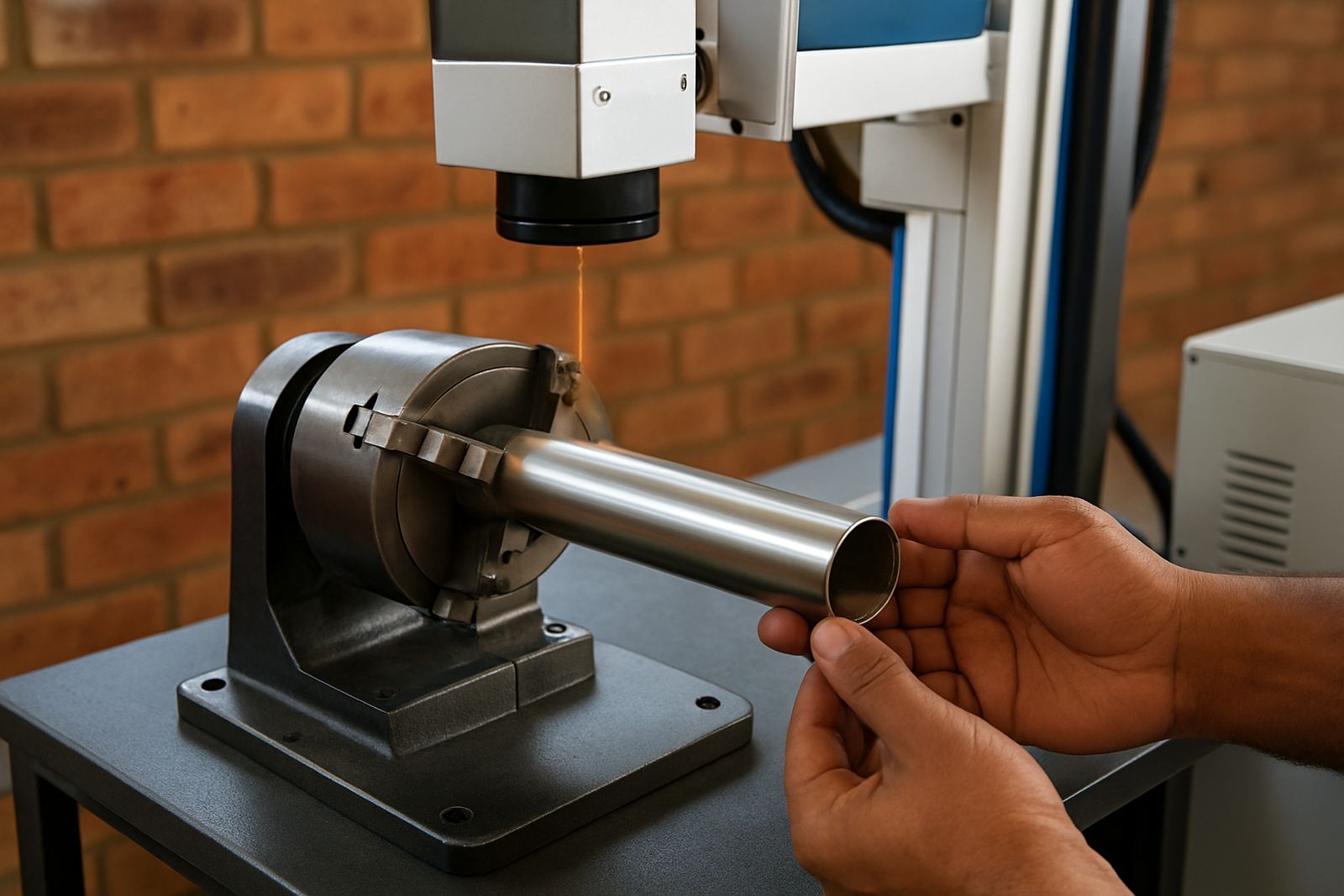
Built for round parts that must stay readable
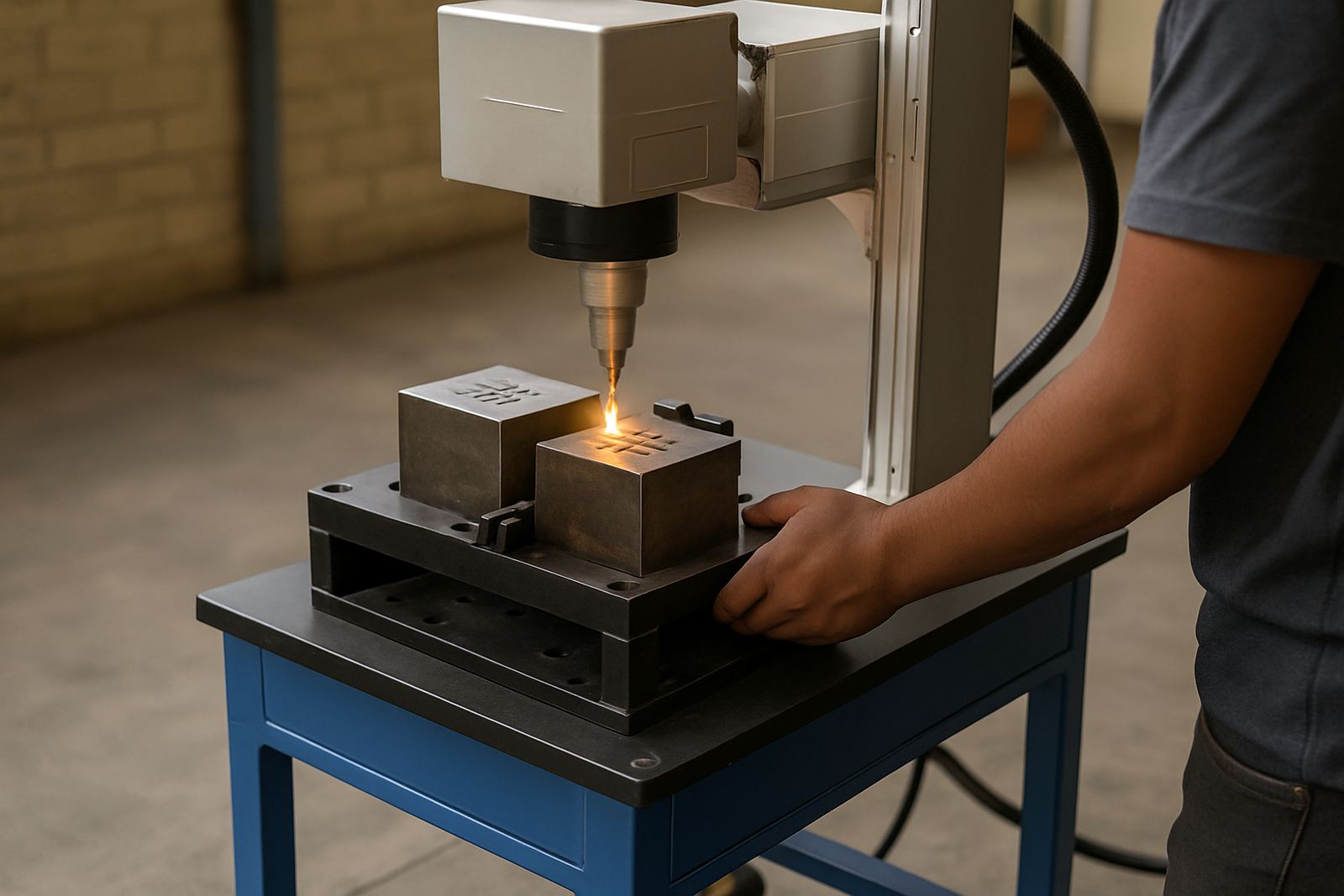
A rotary axis turns the workpiece while the laser marks along the surface, so text, serial numbers, logos, batch codes and measurement marks stay even around the full circumference. This is the right setup when a flat-bed machine is not enough for pipes, collars, jewellery bands, bushings or turned components. The marking stays permanent and does not peel, fade or wash off in normal workshop handling.
For South African workshops, that matters when parts move between machining, assembly, dispatch and site use. You want a mark that survives oil, cleaning, handling and outdoor exposure. The fibre source is suited to metals such as stainless steel, mild steel, aluminium, brass, copper and titanium, and can also be used on coated metals after a sample test.
Sizes and rotary options to match the job
The package can be set up with different working fields and rotary diameters depending on what you mark most often. Small rings and ferrules need fine control, while longer shafts and tubes need stable support and accurate rotation. We usually help customers choose the chuck style, tail support and fixture method before delivery so the machine suits the actual part size, not just the catalogue picture.
- Common field sizes include 100 x 100 mm, 150 x 150 mm and 200 x 200 mm
- Rotary chuck options for rings, shafts and stepped parts
- V-block or roller support for tubes and long cylindrical work
- Manual or software-controlled rotary indexing depending on the application
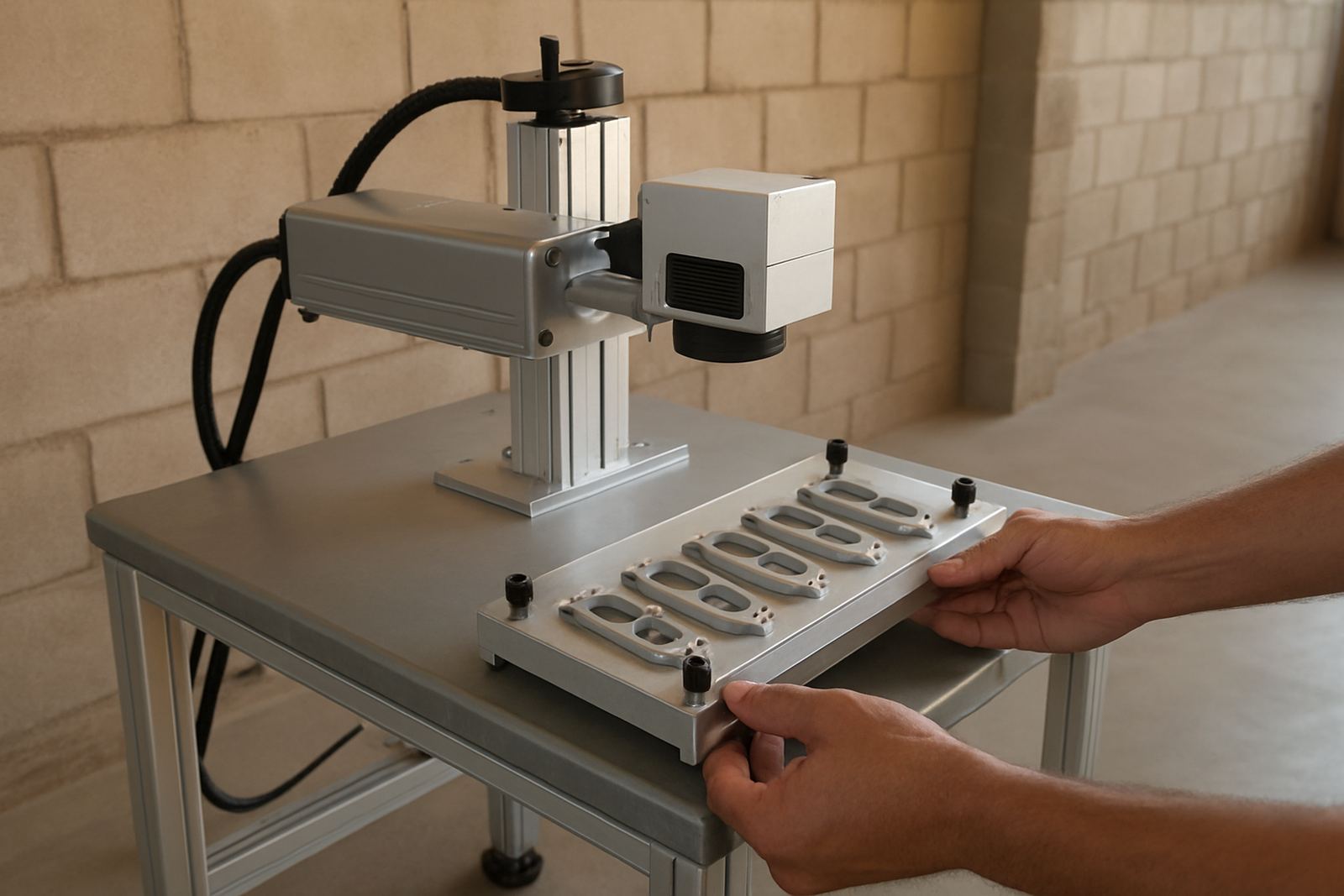
- Fixture plates for repeat work and tighter batch control
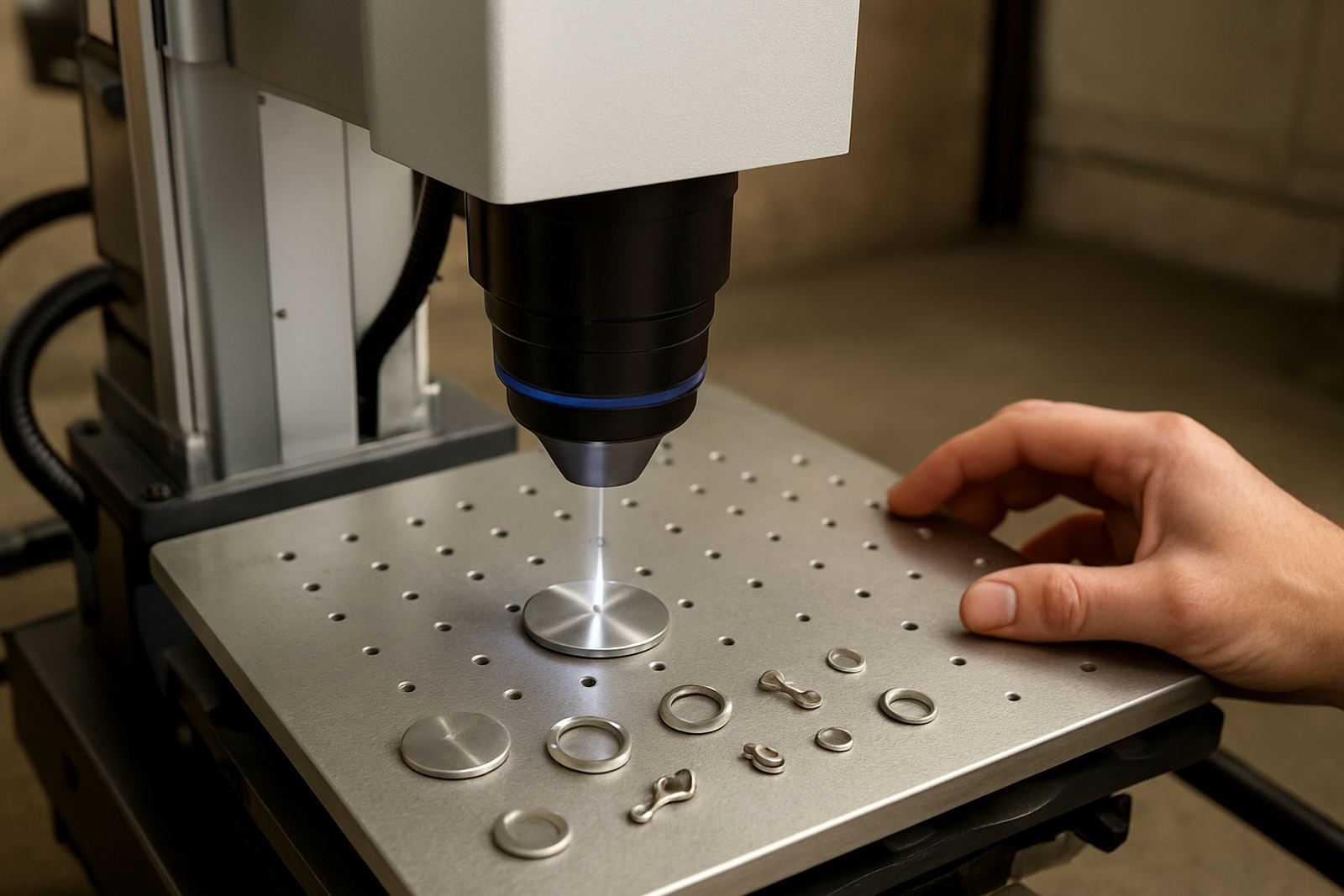
If you are marking small jewellery components, the setup can be adjusted for finer focus and slower rotation. For engineering work, bigger parts may need a longer bed or a rear support so the part stays level. A quick sample mark is often the best way to confirm the right arrangement before you place an order.
Where the rotary marker suits best
This machine package suits job shops, light manufacturing, metal fabricators, jewellery makers, tool rooms and maintenance teams that need regular marking on round parts. It is especially useful where traceability is important, such as serial numbers on shafts, part codes on tubing, batch references on medical or industrial components, and branding on finished fittings.
It also helps where you are trying to cut rework. A clean rotary mark is easier to read than hand stamping on curved surfaces, and it avoids distortion that can happen when a flat mark is forced onto a round shape. For businesses in Gauteng, KZN, the Cape and inland towns alike, that consistency helps when parts are sent between branches or to customers far from the workshop.
- Shafts, pins and rods
- Stainless steel tubes and sleeves
- Rings, bangles and jewellery bands
- Couplings, collars and bushings
- Turned parts and machined cylinders
Installation, power supply and site needs
Most rotary fibre laser marker packages run from a standard single-phase 220 V supply, which makes them practical for many workshops without special electrical work. Power draw depends on the laser source size and the controller, but the machine is generally low in running cost compared with older marking methods. There is no process gas required for the laser itself, though some setups use compressed air for cleaning the lens area or helping with dust control.
You need a stable bench, decent lighting and enough space to load the rotary attachment safely. In a dusty fabrication shop, we recommend keeping the machine away from grinding sparks and heavy airborne grit. On sites affected by load-shedding, many customers prefer to add surge protection and a small backup supply for the controller and computer. That avoids interruptions during marking runs and protects the electronics from voltage dips.
During installation we check focus height, rotary alignment, software settings and the operator workflow so the machine is ready for real production, not just a test mark. If the part profile changes often, we can set up stored jobs and fixture references to save time on repeat work.
Care, servicing and day to day upkeep
Fibre laser systems are low maintenance, but they still need basic care if you want clean marks and long service life. The lens, galvo area and rotary chuck should be kept free of dust, swarf and oil mist. A quick daily wipe and a proper weekly check is usually enough for many workshops, though busy production sites may need closer monitoring.
Preventive maintenance helps catch small issues before they turn into breakdowns. That includes checking cable strain, verifying focus, inspecting the chuck grip and confirming that the rotary turns evenly. If the machine is used on oily parts or in a coastal area with higher humidity, it is worth keeping the cabinet closed when not in use and storing spare optics correctly. A little care goes a long way, and it saves money on avoidable repair callouts.
- Keep lenses clean and covered when not in use
- Remove metal dust from the work area regularly
- Check rotary jaws and supports for wear
- Run test marks after any software update or move
- Book scheduled servicing before peak production periods
What to confirm before you order
Before you choose a rotary axis marker, it helps to define the actual parts, the expected volume and the marking depth you need. Some customers only need a light surface mark for identification, while others want a deeper, higher contrast mark for hard-wearing parts. If the wrong fixture is supplied, you can still mark the part but the job will be slower and less consistent.
Send through part samples where possible so we can check diameter, wall thickness, finish and access. That is especially important for thin rings, long tubes and parts with polished surfaces. We also check whether you need manual loading or a more repeatable batch process, because that affects the rotary setup and the software workflow. A short sample test often answers questions that a written spec sheet cant cover.
- Part diameter range and maximum length
- Material type and surface finish
- Mark size, font, logo or serial layout
- Required throughput per shift
- Whether the part needs deep engraving or fine marking
- Space available for the bench, controller and rotary unit
Support from Wadeville to sites nationwide
Fibre Laser Marking is based in Wadeville, Germiston and supports customers across South Africa with installation, training and after-sales help. Our team includes Wessel Vermaak, Zinhle Mashigo, Wynand Vosloo, Keitumetso Phalatse, Tshilidzi Sebego and Ayesha Cassim, so you have one point of contact for sales, setup, applications and service. We support clients through our enquiry form and can assist with remote troubleshooting, site relocation and spare parts when needed.
For customers in Wadeville, Germiston, Jet Park, Isando, Kempton Park, Boksburg and Alberton, local response is straightforward. For other areas, we arrange nationwide installs and remote support where suitable. If you need a rotary axis marker for shafts, tubes or rings, we can help you choose the right machine package and get it working on your floor with as little downtime as possible.
Key facts
| Laser source | Fibre laser, air-cooled |
|---|---|
| Working field | 100 x 100 mm to 200 x 200 mm options |
| Rotary attachment | Chuck or roller rotary for cylindrical parts |
| Power supply | 220 V single phase |
| Cooling | Air-cooled, no water chiller required |
| Suitable materials | Stainless steel, mild steel, aluminium, brass, copper and titanium |