What the Bench Jig Marker package does
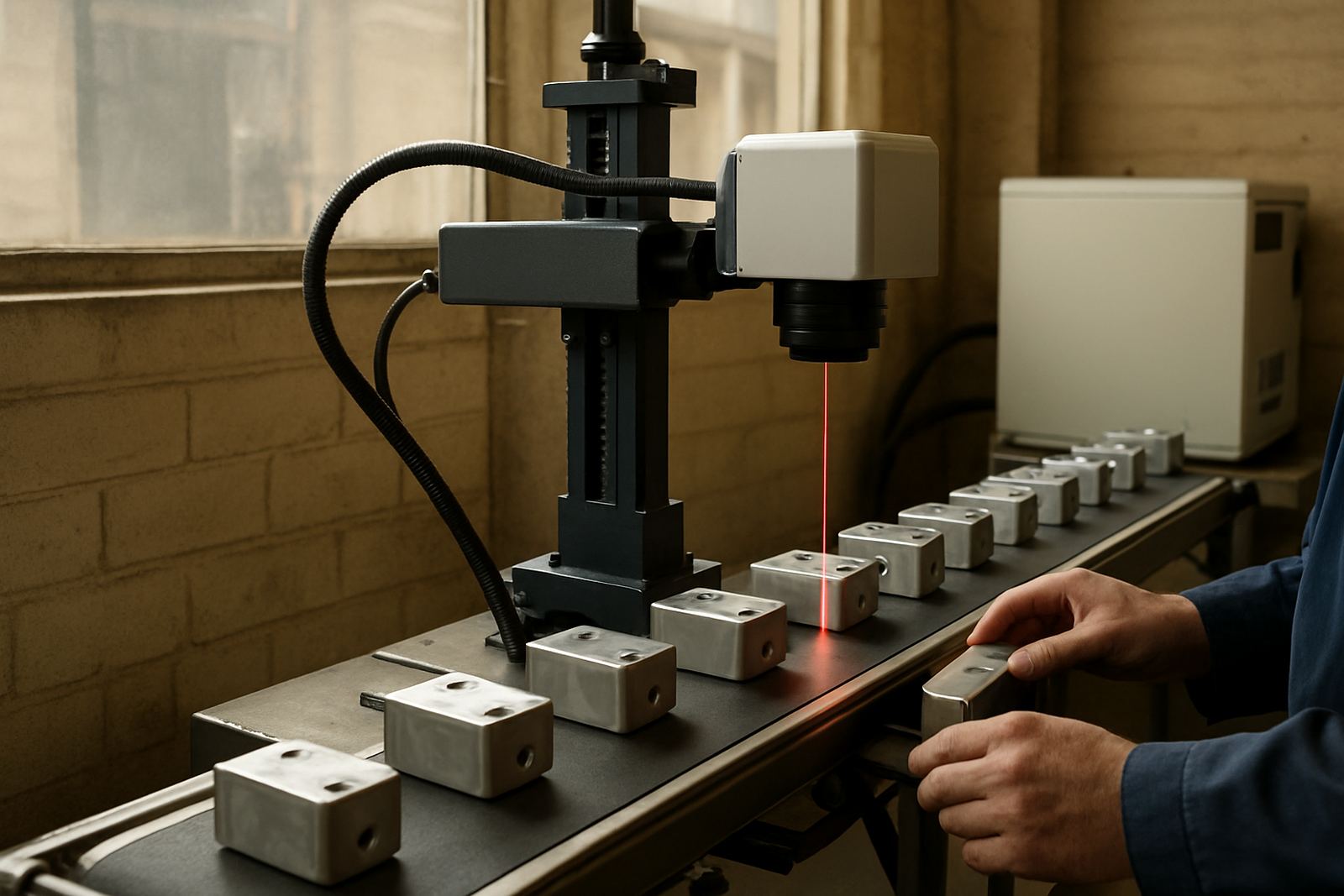
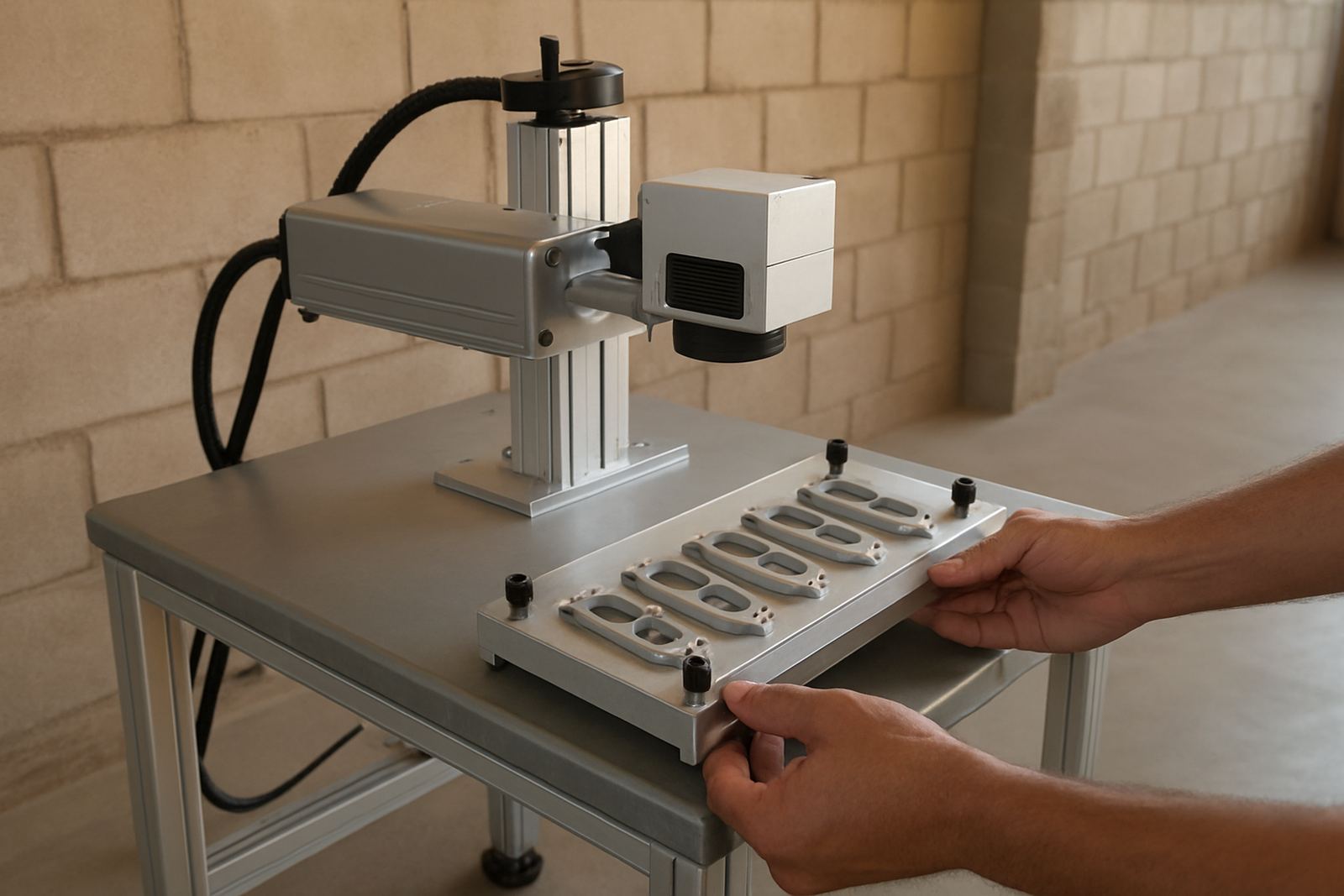
A Bench Jig Marker is a fibre laser marking system set up for quick, accurate part location on a fixed bench. The machine uses a focused laser beam to mark stainless steel, aluminium, brass, mild steel, titanium and many coated metals with clean detail that stays readable after handling, cleaning or heat exposure.
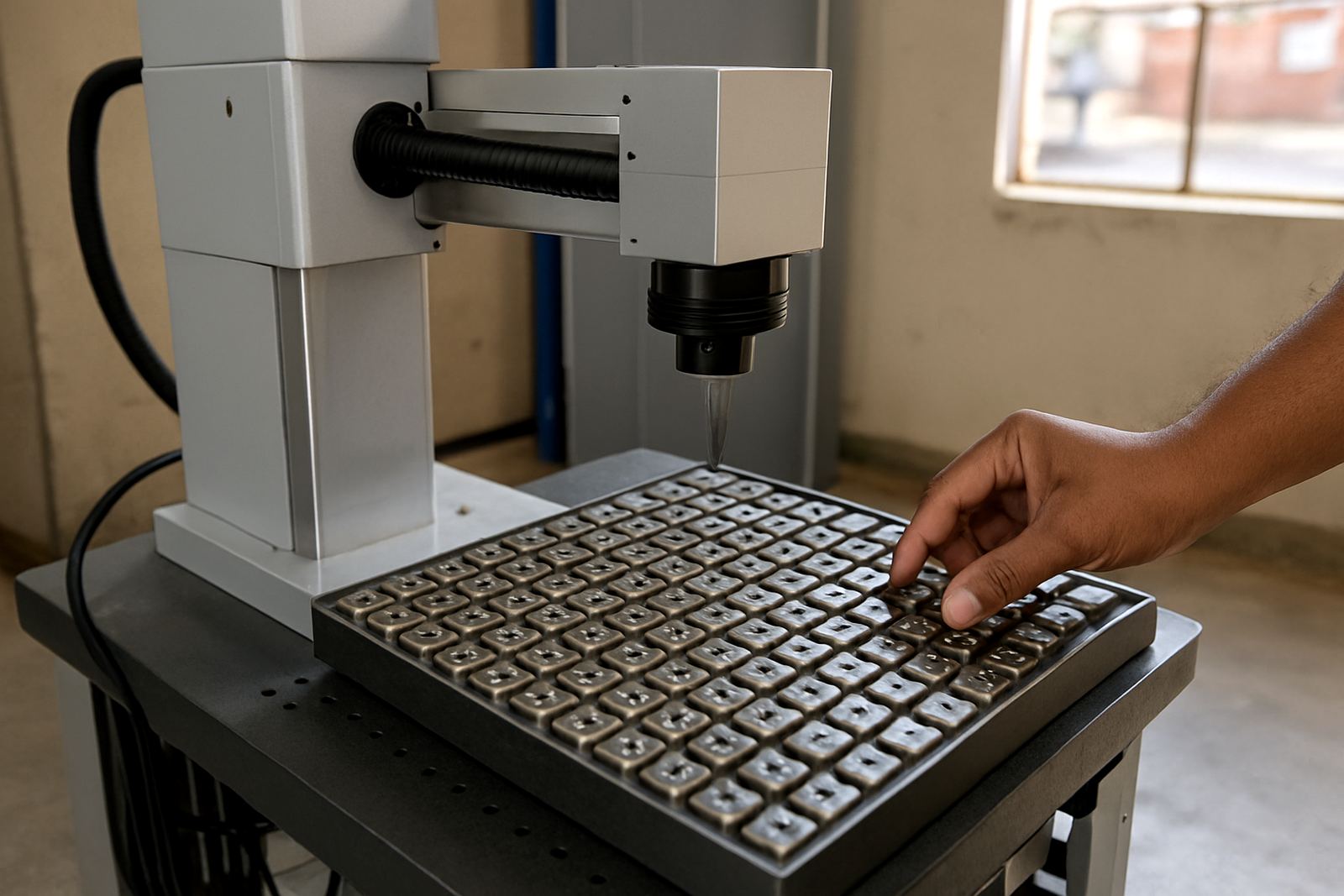
This package is supplied with custom bench jigs so the operator can place each part in the same position every time. That helps with serial numbers, batch codes, logos, QR codes and jewellery marks where alignment matters. For small runs or full day production, repeatability is the main advantage, and it saves time compared to manual positioning.
Our Wadeville team supplies the unit with training, software setup and sample marking so you can confirm the mark depth, size and finish before the job starts. For many customers, especially in Gauteng where floor space is tight, a bench mounted setup is the easiest way to add laser marking without changing the whole workshop layout.
Typical sizes, options and marking field choices
The Bench Jig Marker is usually supplied in compact bench formats for workshops, toolrooms and jewellery counters. The marking field can be matched to the part size, from small precision items up to larger nameplates and fixtures. A larger field is useful for batch work, while a smaller field is better when you want a fine spot size and crisp detail.
Common options include rotary support for rings and round parts, adjustable height benches, and fixture plates made for a specific component shape. If your work changes often, the jig can be designed with swap out inserts so you do not have to remake the whole setup every time. That is useful for contract manufacturers and repair shops that handle mixed orders all week.
- Compact bench format for small workshops and production cells
- Custom jig inserts for repeatable part placement
- Optional rotary attachment for rings, tubes and round components
- Software profiles for different jobs, operators and marking files
- Marked area matched to the part, not the other way round
If you are working in a coastal area such as Durban or Gqeberha, the metalwork still marks cleanly but the jig and fixture surfaces should be kept dry and lightly cleaned to prevent corrosion over time.
Where this setup works best
This machine package suits any site that needs reliable marking on metal parts with the same position every time. It is commonly used in jewellery workshops, subcontract machining, electrical component marking, automotive parts, spares identification, security tagging and small batch product branding. It also works well for traceability in shops that need to keep records of serials and part numbers.
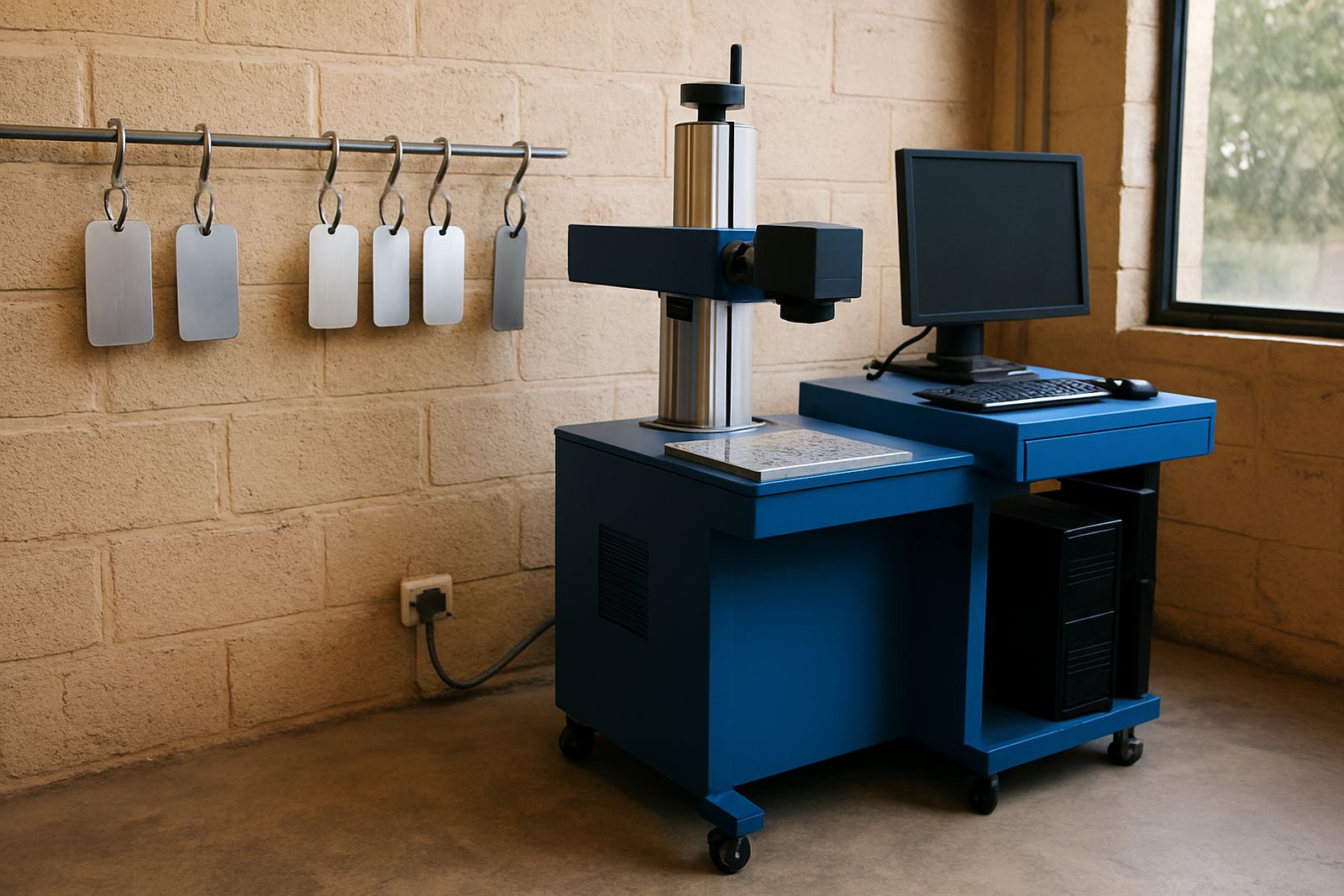
Because the machine is bench mounted, it works in spaces where a larger floor standing system would be awkward. That includes back rooms, small factories, university labs, repair counters and quality control stations. If your site has load-shedding, the low power draw makes planning easier than with equipment that needs compressors or gas cylinders.
The machine can be used in Pretoria, Johannesburg, Kempton Park, Boksburg, Alberton and across South Africa with onsite installation and operator handover. For customers outside Gauteng, we arrange transport and remote assistance if needed, then come back for final fine tuning when the line is ready.
Installation, power and site requirements
Installation is straightforward. The unit needs a stable bench or steel stand, a clean working area and a standard electrical supply. Most systems run on single phase power, which makes them practical for many South African workshops without special rewiring. No gas supply is needed for standard fibre marking work.
You will need enough space for the machine, the computer, the jig area and safe operator movement around the bench. Good lighting helps with part loading, though the marking itself is done inside the machine enclosure. If the site has dust, grinding residue or oily mist, we recommend keeping the machine away from the heaviest contamination and using regular cleaning around the work zone.
- Stable bench or welded stand with minimal vibration
- Single phase electrical supply in most cases
- Normal workshop ventilation, no gas line required
- Clean, dry loading area for jigs and parts
- Enough clearance for lid opening and safe access
On some sites we also advise surge protection and a proper backup plan for computers during outages. That keeps your marking files safe and helps the machine come back online cleanly after load shedding.
Care, servicing and repeatability over time
To keep the Bench Jig Marker producing accurate work, the lens, fixture surfaces and work area should be kept clean. Dust and metal fines can affect both the appearance of the mark and the accuracy of the jig over time. A quick wipe down at the start of the shift and after any dirty job is usually enough for most workshops.
Preventive maintenance is mostly about checking alignment, confirming focus calibration and making sure the jig still holds parts squarely. If you run the machine daily, a scheduled service every few months is a sensible plan, especially where there is vibration from nearby equipment or temperature changes through the day. That small routine can prevent bigger problems later on.
We also support breakdown repairs, spares supply and remote assistance from our Wadeville base. If a setup is moved to a new plant or a different bench layout, we can handle site relocation, re-calibration and software setup so the machine still marks in the same place after the move.
What to confirm before ordering
Before you place an order, it helps to send samples or measurements of the exact parts you want to mark. The right jig depends on the component shape, how it is loaded, and whether the mark must sit on one face, a curved surface or a recessed area. If the part changes often, we can design a more flexible fixture system instead of a fixed one.
We also need to know the marking size, the material type, the finish you want and whether the job needs deep engraving, surface marking or just a clean contrast mark. For jewellery, thickness and heat sensitivity matter. For industrial parts, the question is usually traceability and whether the code must stay readable after coating, cleaning or handling on site.
- Part dimensions and a sample if possible
- Material type, thickness and surface finish
- Mark size, font, logo or data matrix requirements
- Expected daily volume and changeover frequency
- Whether you need rotary support or a custom insert
If you are unsure, our applications consultant can test mark samples and suggest the best lens, jig layout and software settings before the machine is signed off.
Key facts
| Laser type | Fibre laser marking system |
|---|---|
| Machine format | Bench mounted package with custom jigs |
| Typical materials | Stainless steel, aluminium, brass, mild steel, titanium |
| Power requirement | Single phase electrical supply in most cases |
| Cooling | Air cooled |
| Support | Installation, training, calibration and maintenance nationwide |