Fast marking for high-volume work
The High Speed Marker is made for short cycle times where every second counts. It gives clear text, serial numbers, logos, barcodes and 2D codes on metals without slowing the rest of the process down. For factories running batches of parts, jobbing shops and smaller producers with mixed work, this kind of marker helps keep parts moving through receiving, marking, inspection and packing with less handling.
Because fibre laser marking is a dry process, there is no ink to dry, no solvent to top up and no contact tool to wear out. That makes it a practical choice for plants that work long shifts, including sites coping with load-shedding where every restart needs to be simple and repeatable. It also gives consistent mark depth and contrast on stainless steel, mild steel, aluminium, brass, copper and coated metal items.
- Fast cycle marking for batch work and line feeding
- Clean, permanent marks for traceability and branding
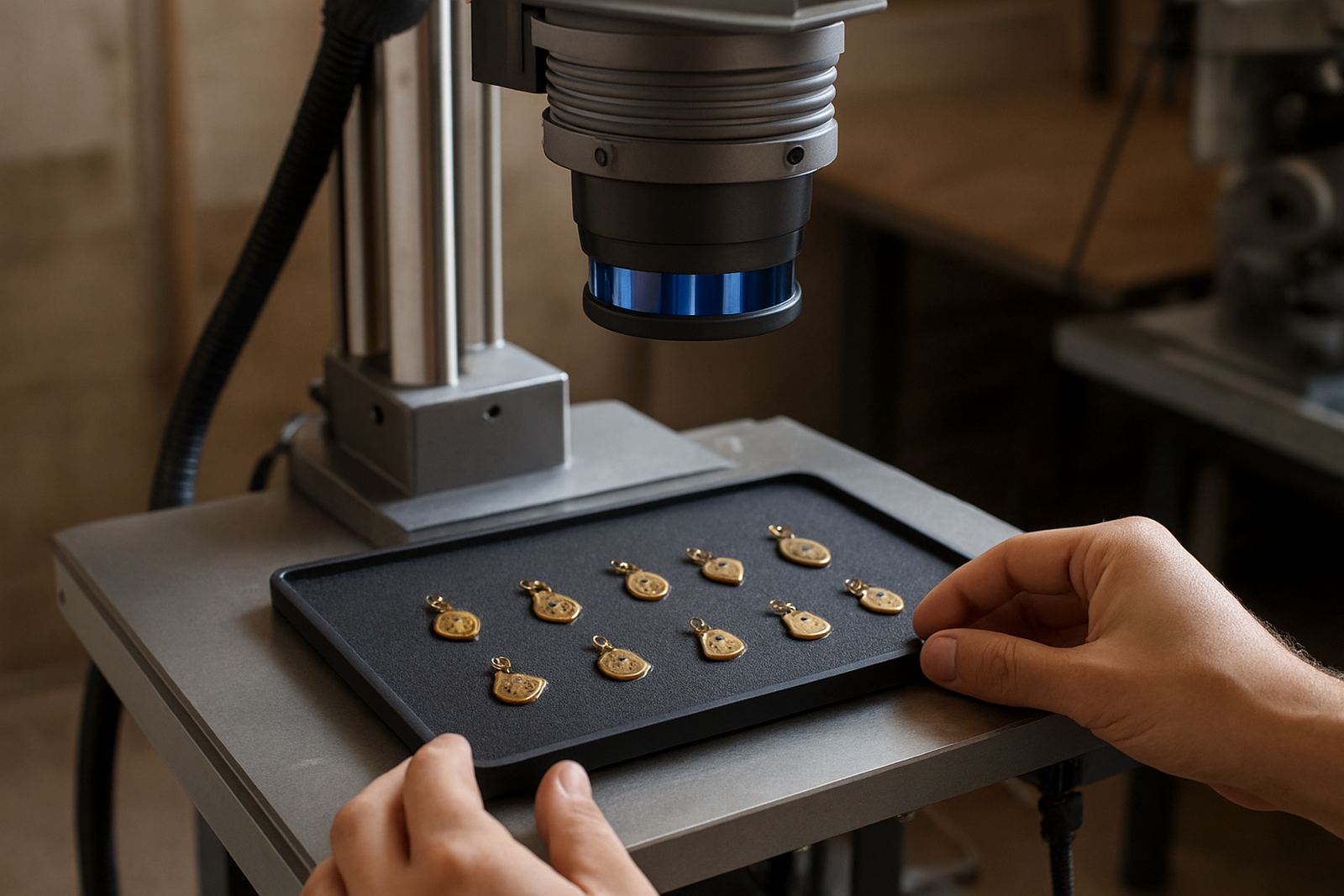
- Suitable for metals used in industrial parts and jewellery components
- Low day-to-day running effort compared with ink or tool-based systems
Where the High Speed Marker fits best
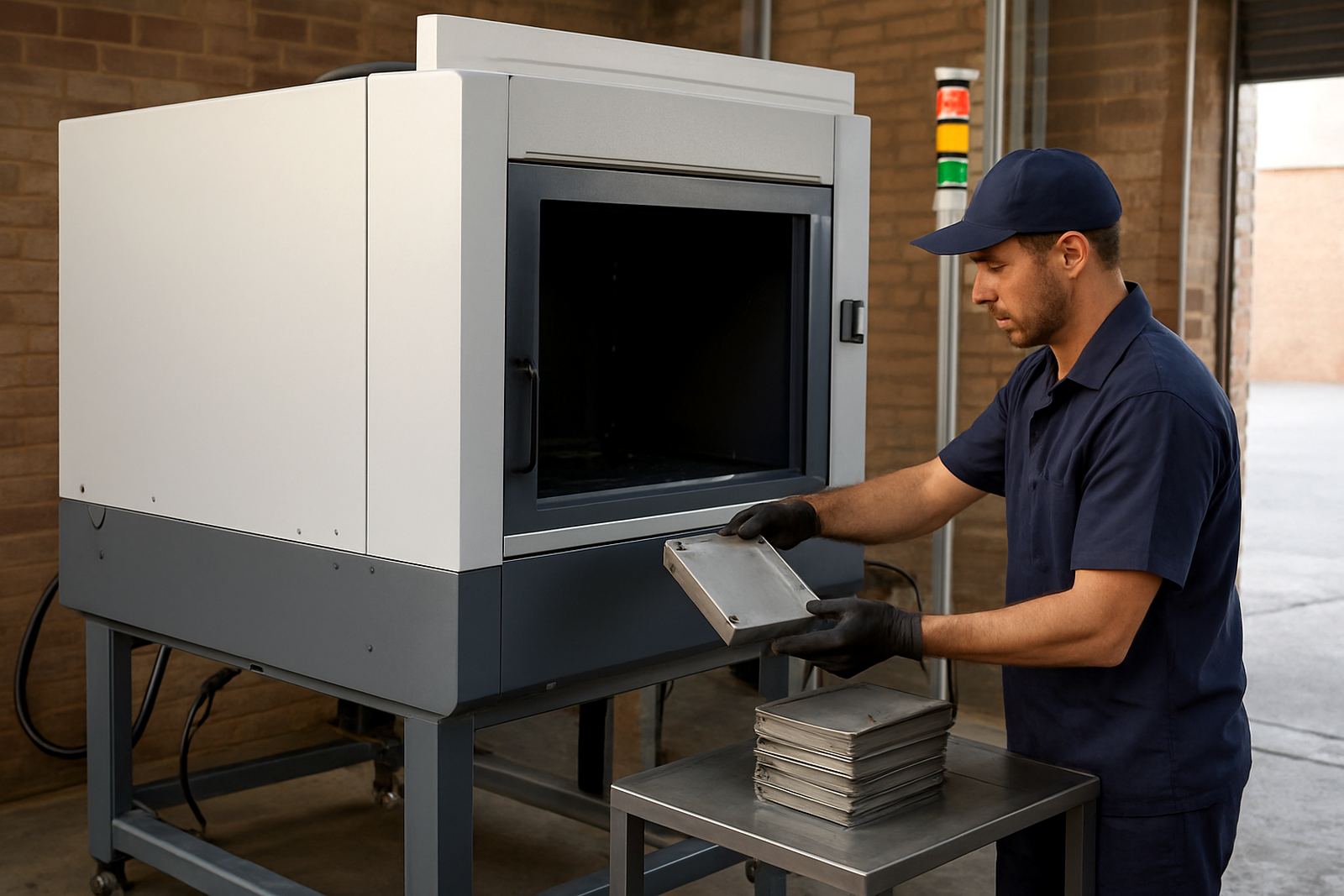
This model suits factories that need to mark parts just before dispatch, after machining or after assembly. It is a good fit for automotive suppliers, electrical component makers, sheet metal shops, medical parts suppliers, security product makers and jewellery workshops that need consistent detail on small items. It also works well where municipal and customer traceability rules require part numbers, batch codes or inspection marks to stay legible over time.
In Gauteng industrial areas like Wadeville, Jet Park, Isando, Kempton Park and Boksburg, many teams use this type of marker close to the production floor so the operator can load a tray, run the mark and move on. On coastal sites, the permanent mark is useful because it holds up better than labels in humidity and handling. If your parts are oily, polished or lightly curved, sample marking helps confirm the best settings before full production starts.
- Serialisation and traceability on production parts
- Small text on jewellery items and tags
- Part marking where labels do not last
- Workshop use where repeatability matters more than hand marking
Sizes, options and fixture choices
High speed fibre laser markers are usually supplied as compact benchtop systems or as workcell units fitted into a fixture or guarded station. The marking area can be selected to suit the part size, with common field sizes ranging from about 110 x 110 mm for fine work to 200 x 200 mm or larger for broader part coverage. For special jobs we can help with fixture design so the part sits correctly and the mark lands in the same place every time.
Options depend on the parts you mark and how they move through your process. Some users need a rotary attachment for rings, shafts or cylindrical parts. Others need a manual slide table, barcode reading support, foot switch control or a simple clamp fixture for fast loading. If your product mix changes often, it is better to choose a flexible setup rather than a fixed jig that only suits one part size. That saves time later and makes changeovers cleaner.
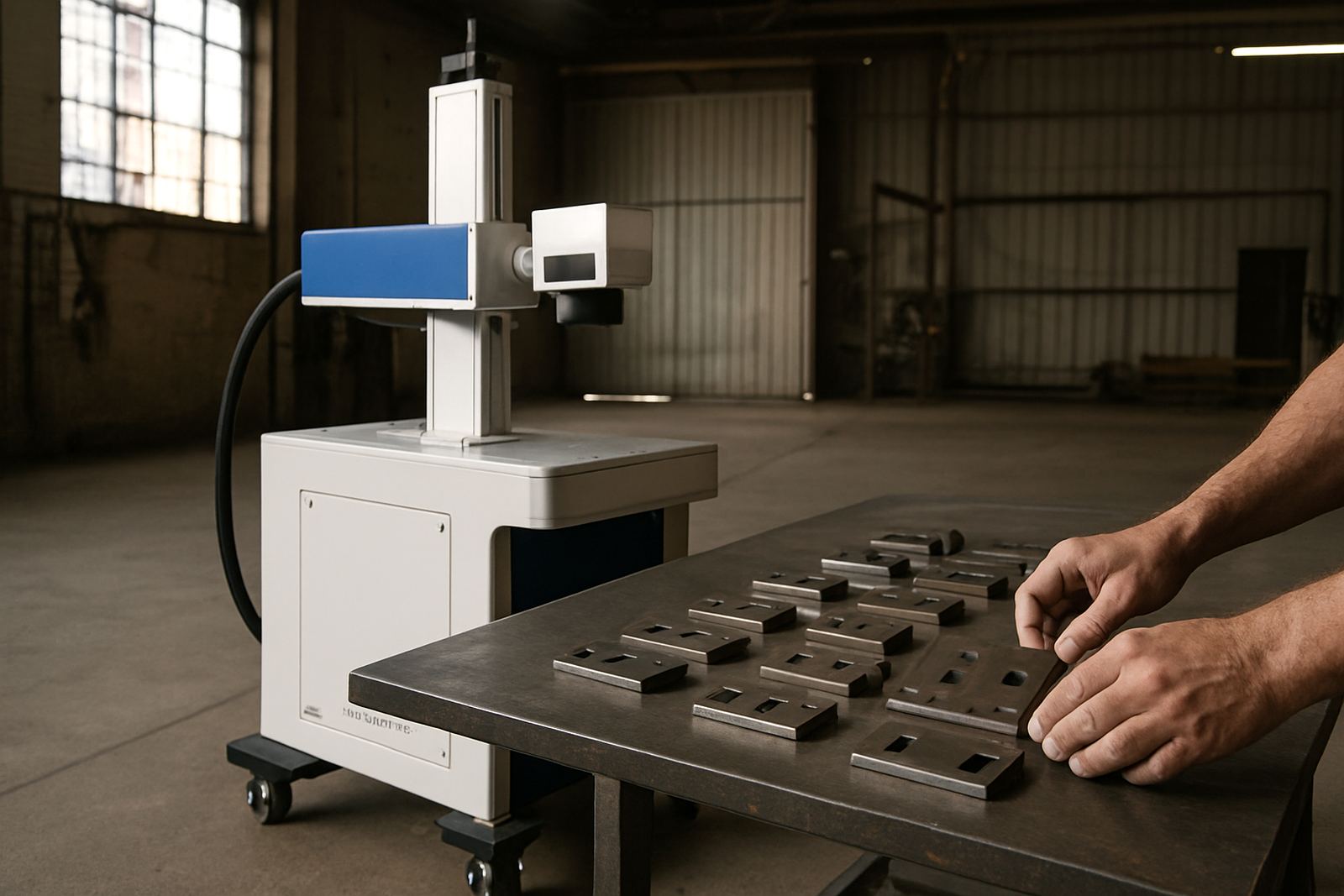
- Benchtop units for small workshops and labelling stations
- Workcell setups for high throughput factory use
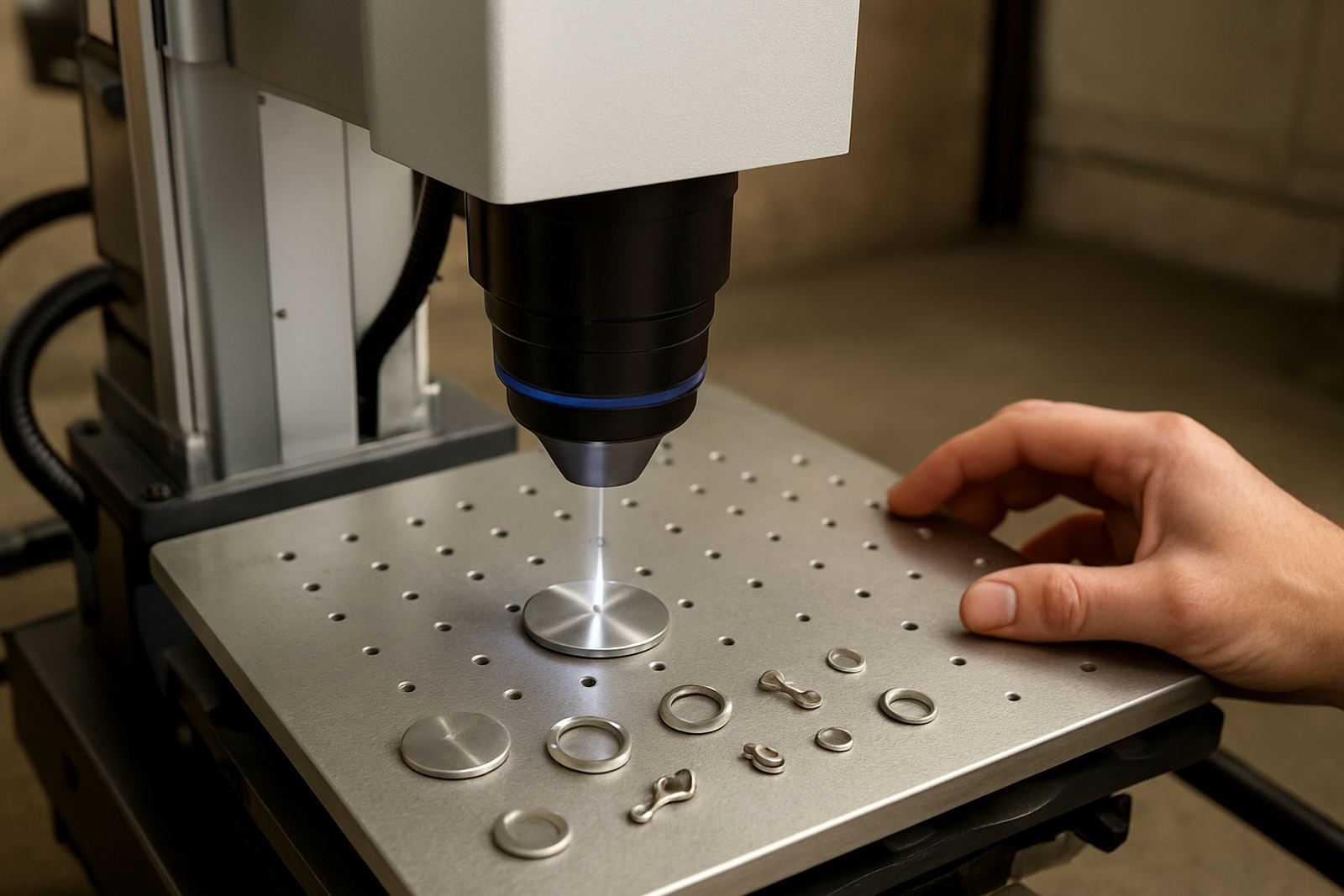
- Rotary options for round parts, rings and tubes
- Custom fixtures for repeatable loading and better focus control
Power, cooling and site needs
The High Speed Marker normally runs from standard single-phase power, which makes it easier to install in many South African workshops. A stable power source is important, so where supply is uneven we recommend a properly sized UPS or power protection setup to handle dips and sudden outages. Fibre laser marking does not need a gas supply for standard marking work, which keeps the install simpler and cuts down on consumables.
The system should be placed on a clean, dry and level surface with enough space for the operator to load parts safely. Good extraction may be required if the process creates dust, fume or fine residue from coated materials. In humid or dusty factorys the equipment should be kept closed when not in use and cleaned regularly, especially in coastal or high-traffic areas. We assist with software setup and can check the marking position, focus height and safety layout during installation.
- Standard single-phase power on most configurations
- No gas supply needed for normal fibre marking
- Power protection recommended where load-shedding affects operations
- Ventilation or extraction may be needed for certain materials
Keeping the marker accurate and reliable
Fibre laser systems need less routine attention than many older marking methods, but they still perform best with basic care. Keep lenses and protective glass clean, check cable routing and confirm that the fixture still holds the part in the same position. If the mark starts to look lighter, off-centre or uneven, the issue is often focus, contamination or fixture movement rather than the laser source itself.
Our preventive maintenance checks help catch these issues before they affect output. We also handle breakdown repairs, focus calibration, remote assistance and sample marking for new parts. For sites with several operators, training matters as much as the hardware because a correct setup on day one saves time every shift after that. Regular checks are simple, but they prevent a lot of waste and rework.
- Clean optics and check the focus regularly
- Inspect clamps, slides and fixture wear
- Use sample marks when changing material or part finish
- Book scheduled servicing for high-use machines
What to confirm before ordering
Before placing an order, it helps to confirm the material type, part size, mark area and the depth or contrast you need. A jewellery client may want a fine black mark on a small surface while a manufacturing plant may need a deeper traceable code that stays readable after coating, handling or heat exposure. Tell us whether the work is manual or part of a line, and whether you need operator training at Wadeville or on site elsewhere in South Africa.
It also helps to know if you need software setup for serial numbers, a fixture for repeat work, or a machine that can be moved later if your line changes. If the installation site has a low ceiling, limited floor space or frequent dust, those details matter too. The right setup avoids later changes and keeps changeover time low. We work with clients across Germiston, Alberton, Boksburg, Kempton Park and nationwide installs, so the order can be matched to the real shopfloor condition, not just the catalogue view.
- Material type and surface finish
- Part size, batch size and daily output
- Mark content such as text, codes or logos
- Fixture, software and training needs
Key facts
| Marking type | Fibre laser marking and engraving |
|---|---|
| Typical field sizes | 110 x 110 mm, 150 x 150 mm, 200 x 200 mm or similar options |
| Materials | Stainless steel, mild steel, aluminium, brass, copper and selected coated metals |
| Power | Single-phase electrical supply, with protection recommended for unstable supply |
| Cooling | Air cooled system on standard configurations |
| Use case | High speed part marking, traceability, jewellery marking and batch production |