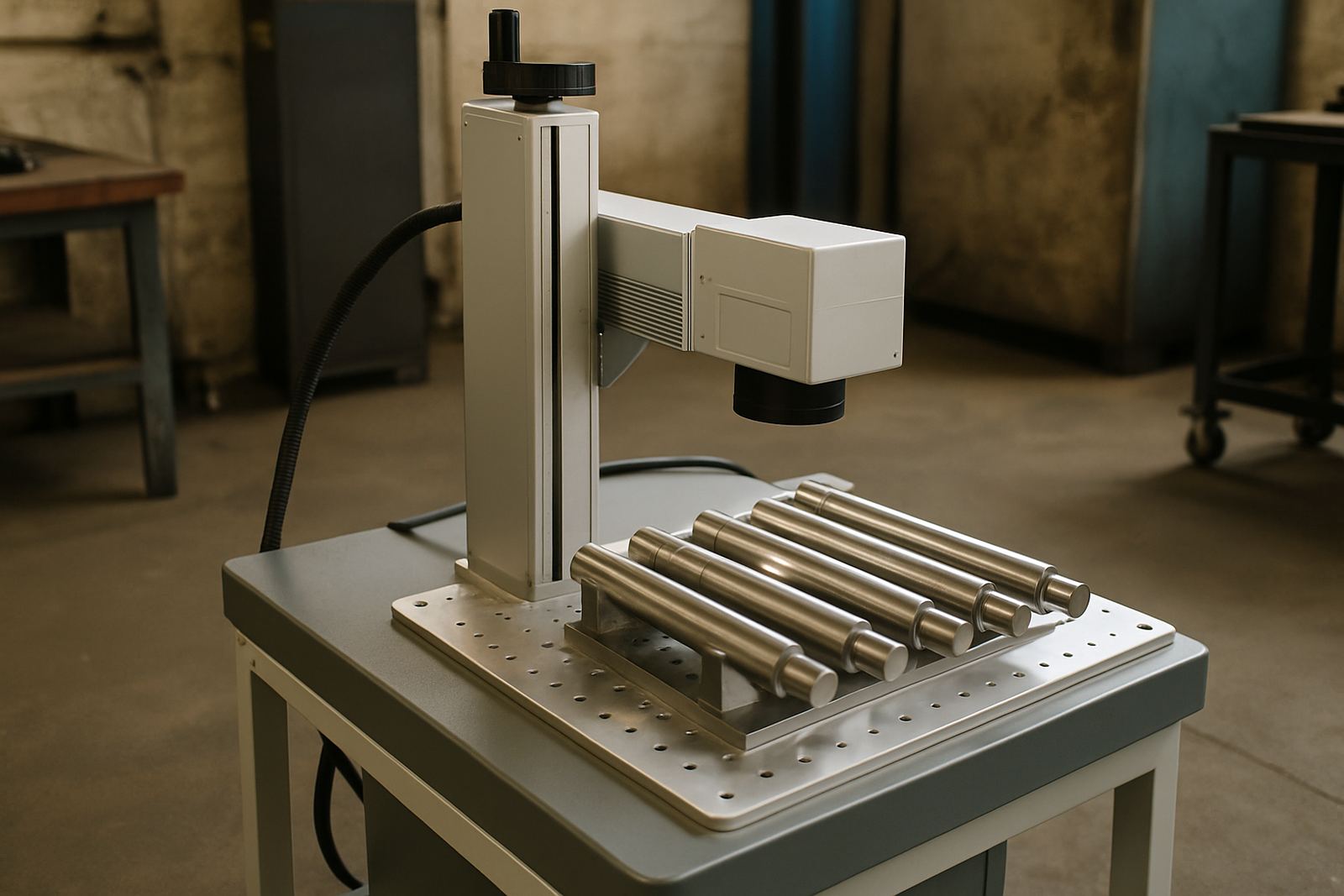
Built for numbering that must stay legible
A serialisation marker is used when every item in a batch needs its own identity. That can be a running number, part code, batch reference, date code or a mix of these. On metal parts, the mark is permanent and easy to read, which helps with traceability, warranty control, inspection records and stock management.
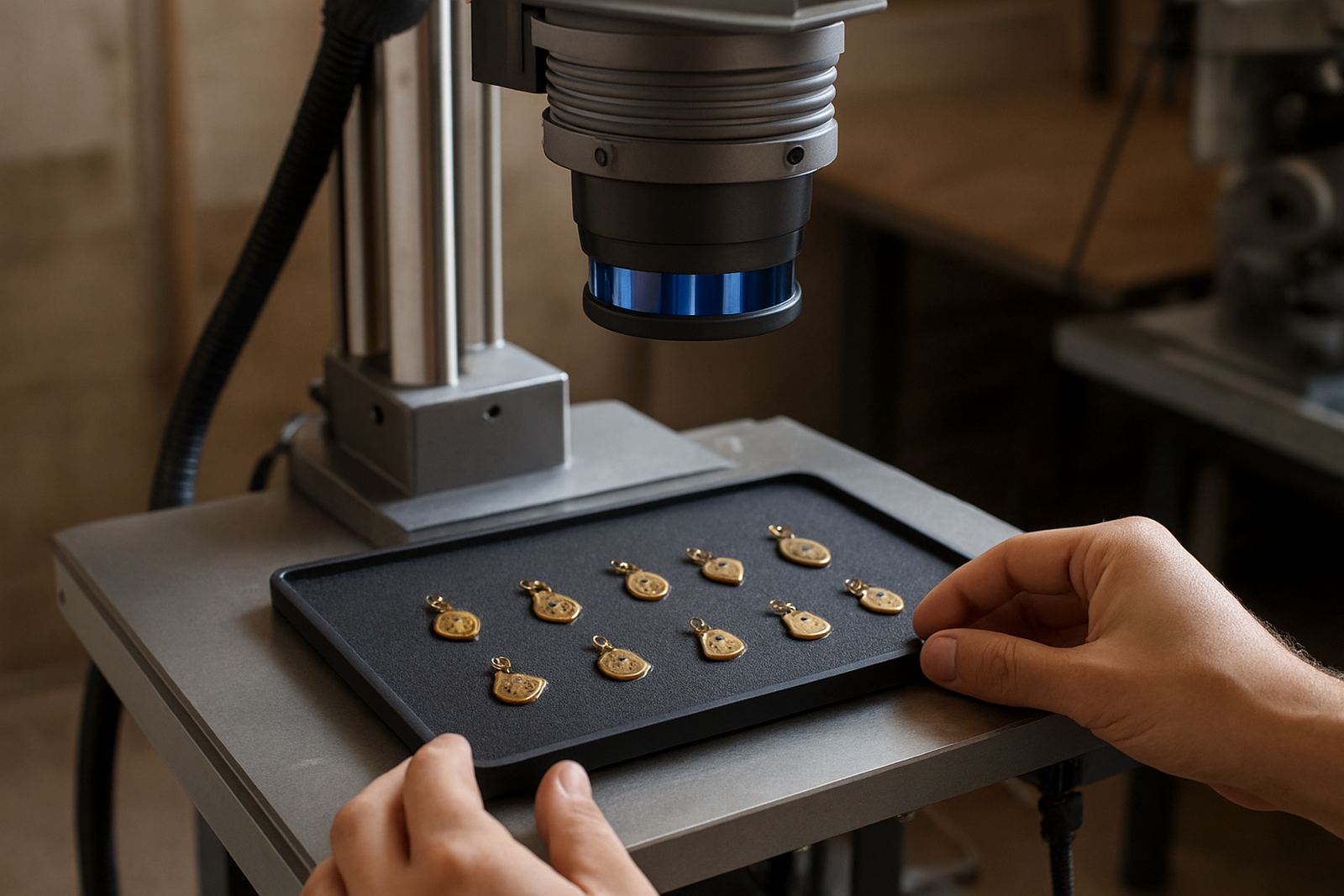
These systems use a fibre laser beam to mark directly on stainless steel, mild steel, aluminium, brass, copper and many coated metals. They suit parts that move through machining, assembly, dispatch and after-sales tracking. On jewellery work, the same machine can handle small details on rings, pendants, tags and components where fine marking matters and space is limited.
For South African workshops, the main value is simple: fewer mistakes when parts change hands. A clear serial number helps with municipal, industrial and export records where proof of identity matters, and it gives your team a practical way to link a physical part to paperwork or a production system.
Machine sizes and marking options
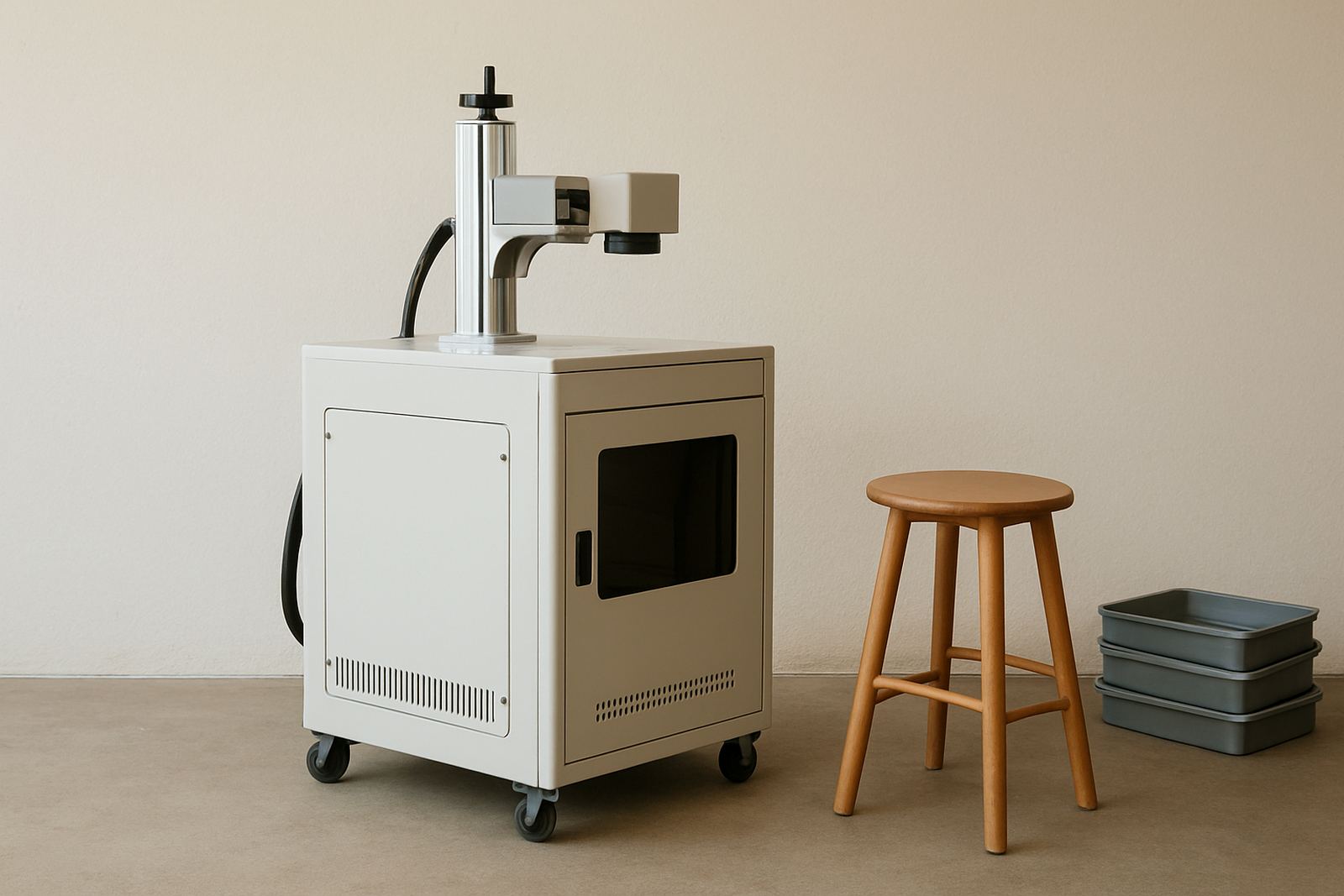
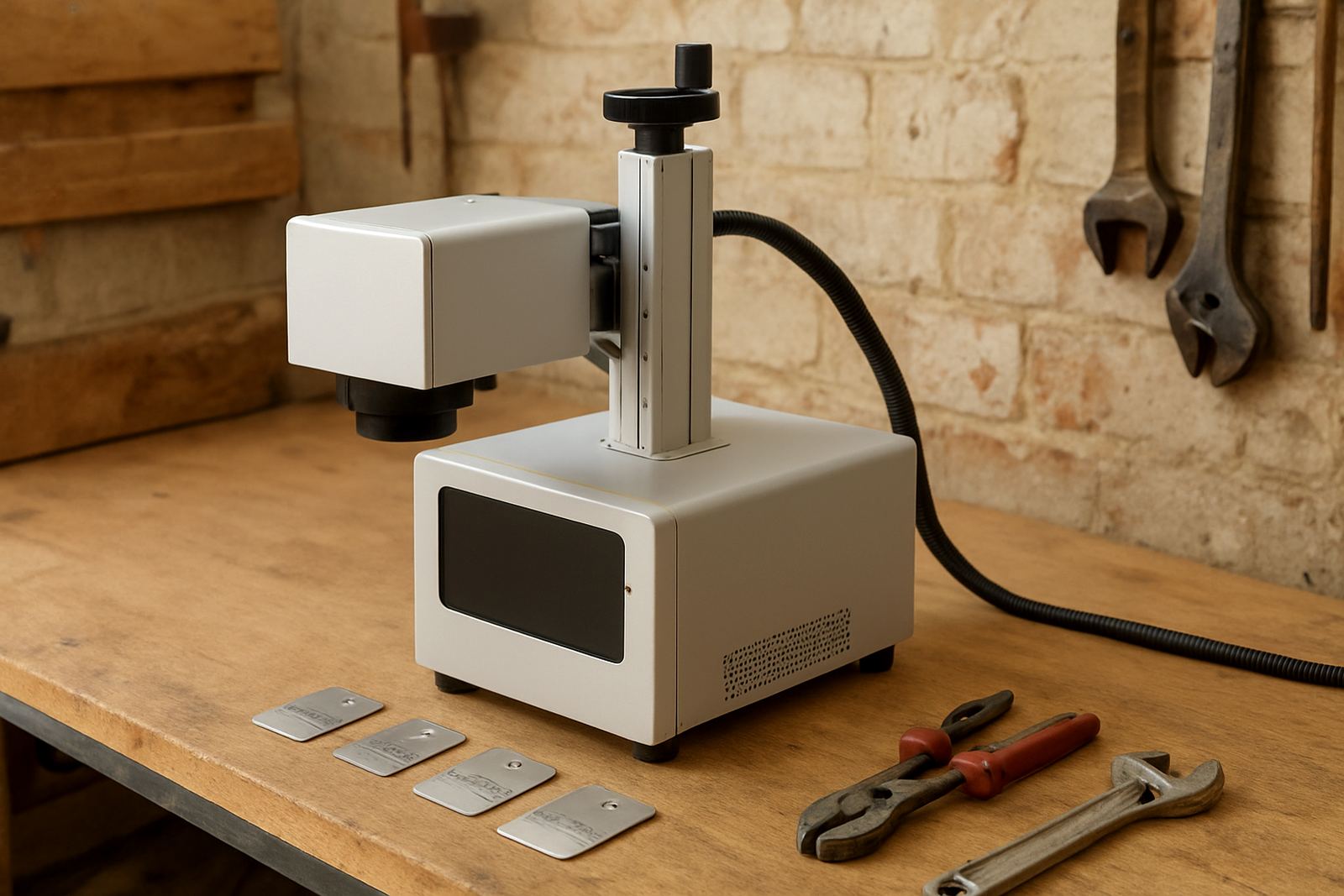
We supply serialisation marker systems in compact bench units and larger enclosed or workstation-style setups, depending on the part size and throughput you need. A small machine works well for jewellery, electronics housings and small machined parts. A larger unit with a generous working area is better for plates, brackets, tool components and trays of repeated parts.
The marking field is selected to suit the job. Common field sizes range from 110 x 110 mm for fine work to 200 x 200 mm or 300 x 300 mm where larger text or several serials must fit in one mark. Lens choice affects marking depth, line width and the area you can cover, so the final setup depends on the part, not just the machine size.
Typical options include:
- Handheld or fixed bench configuration for different workshop layouts
- Manual focus or motorised focus for faster setup
- Rotary fixture for rings, cylinders and round parts
- Enclosed marking area for operator safety and cleaner control of reflections
- Software that supports auto incrementing serial numbers, date fields and barcode or DataMatrix layouts
If you mark small batches now but expect growth later, it is worth choosing a machine with a little extra field size and table space. That saves a second purchase when volumes increase.
Where serialisation works best
This product suits workshops and factories that need repeated, accurate marking on metal parts. It is commonly used for machine components, automotive spares, electrical enclosures, medical tools, stainless steel tags, jewellery items, tool holders and production plates. If a part must be identified after painting, polishing, heat treatment or assembly, fibre laser marking is a practical option.
It also suits businesses that need to trace parts through multiple jobs or locations. A serial number can be linked to a batch sheet, inspection record or customer order. That makes it easier to manage recalls, rework, returns and service history. For some operations, the marking may be small and discreet. For others, it must be obvious enough for line staff to read without slowing production.
In coastal areas, fibre laser marking is a strong choice because there is no ink to fade and no label to lift in humidity. In inland workshops, it is also useful where dust, heat and load-shedding interruptions make consumable-heavy systems harder to manage.
Installation, power and workshop setup
We install across South Africa and support clients from our Wadeville base in Germiston. Most serialisation marker units need a stable 220 V single-phase supply, a level work surface and enough clearance around the machine for loading, software access and safe part handling. Some setups may need an extractor or fume control depending on the material and marking speed, especially where coatings or oils are present.
The laser itself does not need gas for standard marking on metal. That said, some jobs benefit from compressed air for part cleaning, smoke movement or a simple assist on the workstation. If your site has frequent outages, we can advise on a backup power plan or on how to shut down and restart the system safely after load-shedding. It is a small detail, but it can save damage to data files and reduce downtime.
We also consider the real conditions at your site. Narrow aisles, shared packing benches, dust, vibration from nearby machines and access to the electrical board all affect placement. If a unit must be moved later, we can handle site relocation and re-commissioning so the machine keeps marking to the same standard.
Care, calibration and long term use
A serialisation marker is not high-maintenance, but it does need regular care. Keep the lens clean, check the focus setting before each run and make sure the fixture holds the part square. A quick daily wipe around the work area helps prevent dust from settling on the optics and the table. On busy sites, a weekly inspection of cables, safety covers and moving parts is a good habit.
We recommend preventive maintenance at planned intervals so small issues do not become breakdowns. That can include focus calibration, software checks, fixture review and a test mark on a sample piece. If the mark starts drifting in position, changing depth or looking uneven, the machine may need adjustment or a part replacement.
When used on jewellery or polished parts, handling matters just as much as the machine. Gloves, soft trays and careful loading reduce scratches before the final mark is even made. On production lines, a simple process sheet helps operators keep the settings consistent, even when shifts change.
Key details to confirm before you order
Before ordering, start with the part itself. Check the material, size, finish and whether the mark must be deep, fine or simply visible. Then decide what information must appear in the serial: number length, prefix, date, barcode, logo or inspection code. This affects the software setup and the field size you need.
It also helps to confirm your expected volume. A small workshop that marks 20 parts a day does not need the same workstation layout as a manufacturer running several hundred pieces per shift. If you have a mix of part sizes, ask for fixture design or sample marking before final approval. That way, you can see how the mark reads on the actual component and not only on paper.
- Part material and finish
- Required serial format and character height
- Daily or weekly marking volume
- Available footprint and bench height
- Power supply and backup power plan
- Need for fixtures, rotary work or extraction
If you are unsure, we can help with sample marking, software setup and process optimisation. That often saves time at commissioning and reduces the risk of ordering a machine that is too small for the real job.
Key facts
| Marking method | Fibre laser marking for direct part identification |
|---|---|
| Typical materials | Stainless steel, mild steel, aluminium, brass, copper and many coated metals |
| Working area options | Common fields from 110 x 110 mm to 300 x 300 mm |
| Power requirement | 220 V single-phase, with site check before installation |
| Serial functions | Auto increment, date coding, batch text, logos, DataMatrix and barcodes |
| Support services | Installation, operator training, focus calibration, spares, repairs and remote assistance |