
A Benoni plant with a long asset list
The client was a facilities contractor working at a plant in Benoni where tools, cabinets, pumps, electrical panels and handling gear all needed proper identification. Their team was under pressure to bring order to a mixed equipment list and tag every item in a way that could hold up to cleaning, handling and daily site movement.
The Benoni asset tagging job looked simple, but the tolerances were not forgiving. They needed hundreds of sequential asset tags, each one legible, consistent and fixed to metal parts without fading or peeling. The site also had to keep running while the tagging work took place, so there was very little room for trial and error.
- Site: Benoni, Gauteng
- Client type: facilities contractor
- Work: plant equipment asset tags
- Volume: hundreds of sequential marks
- Key requirement: durable, readable IDs for audit control
Why ordinary labelling would not last
Asset tags in a plant environment have to survive more than first impressions. Heat, oil, dust, contact with gloves, solvent wipe-downs and general wear can make printed labels fail quickly. The client also needed each tag to match a register, which meant the numbering could not drift even when staff changed shifts or the work was split across areas.
We recommended fibre laser marking because it gives sharp detail on metal and hard-coated parts without ink or adhesive. It is a better fit for aluminium plates, stainless steel tags and machine housings than sticker-based systems, especially in places where humidity, vibration and regular cleaning are part of normal working conditions.
- Material range: stainless steel, aluminium, coated mild steel
- Mark type: permanent serial numbers and asset codes
- Environment: plant floor with dust and frequent handling
- Benefit: no labels to lift, curl or fade
What we supplied and set up
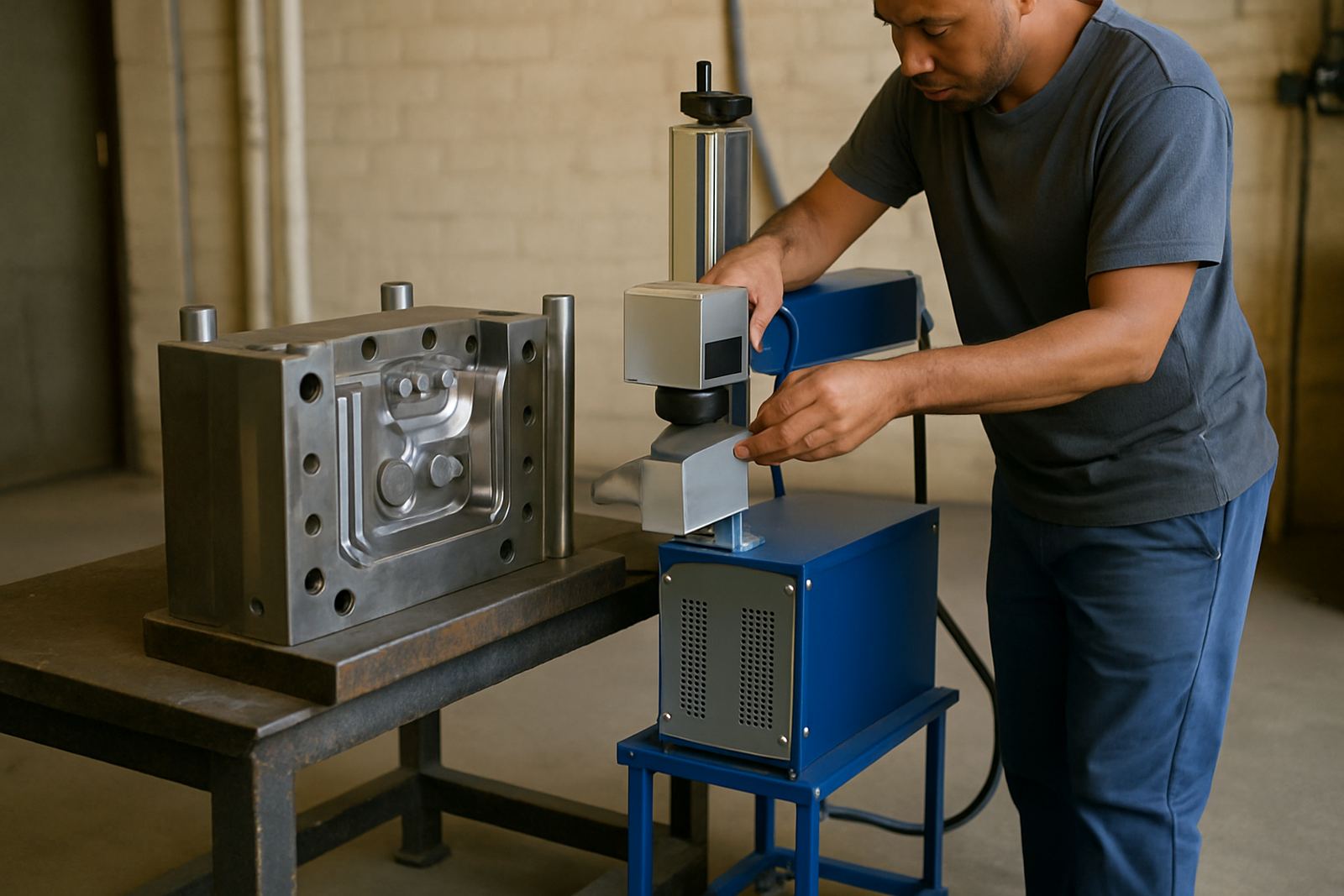
We supplied a fibre laser marking setup suited to small batches and repetitive runs. The machine was configured for fast file recall, clean positioning and consistent mark depth on flat tags and small parts. We also prepared the marking files for the serial ranges the contractor needed so the team could work through the job in the correct order without manually entering every code.
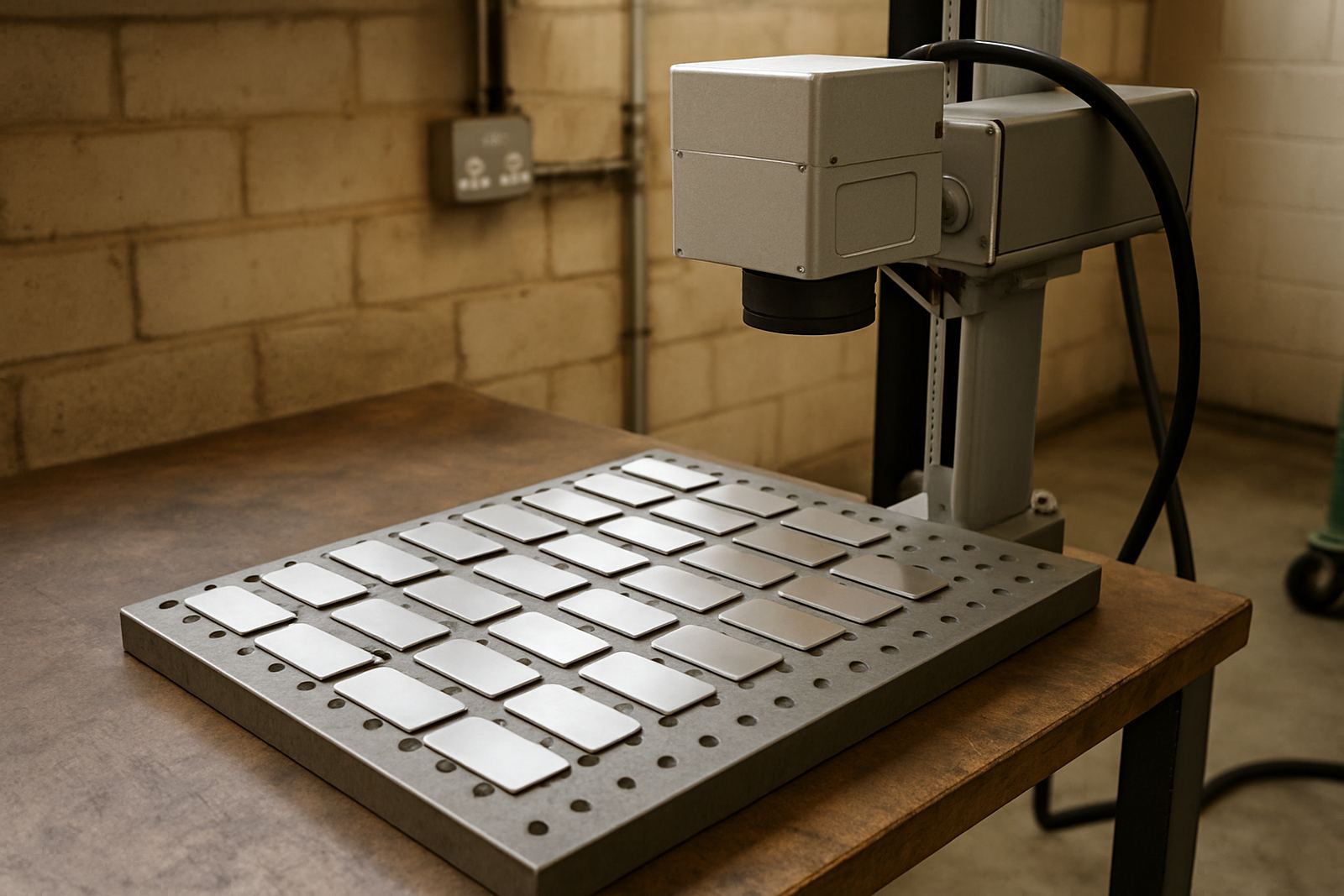
The setup included fixture guidance for holding the tags square and steady. That mattered because sequential asset work often looks easy until the parts vary slightly in size or finish. A good fixture saves time and keeps the marks aligned, especially when someone is doing hundreds of pieces in one stretch.
- Marking format: sequential asset numbers and site IDs
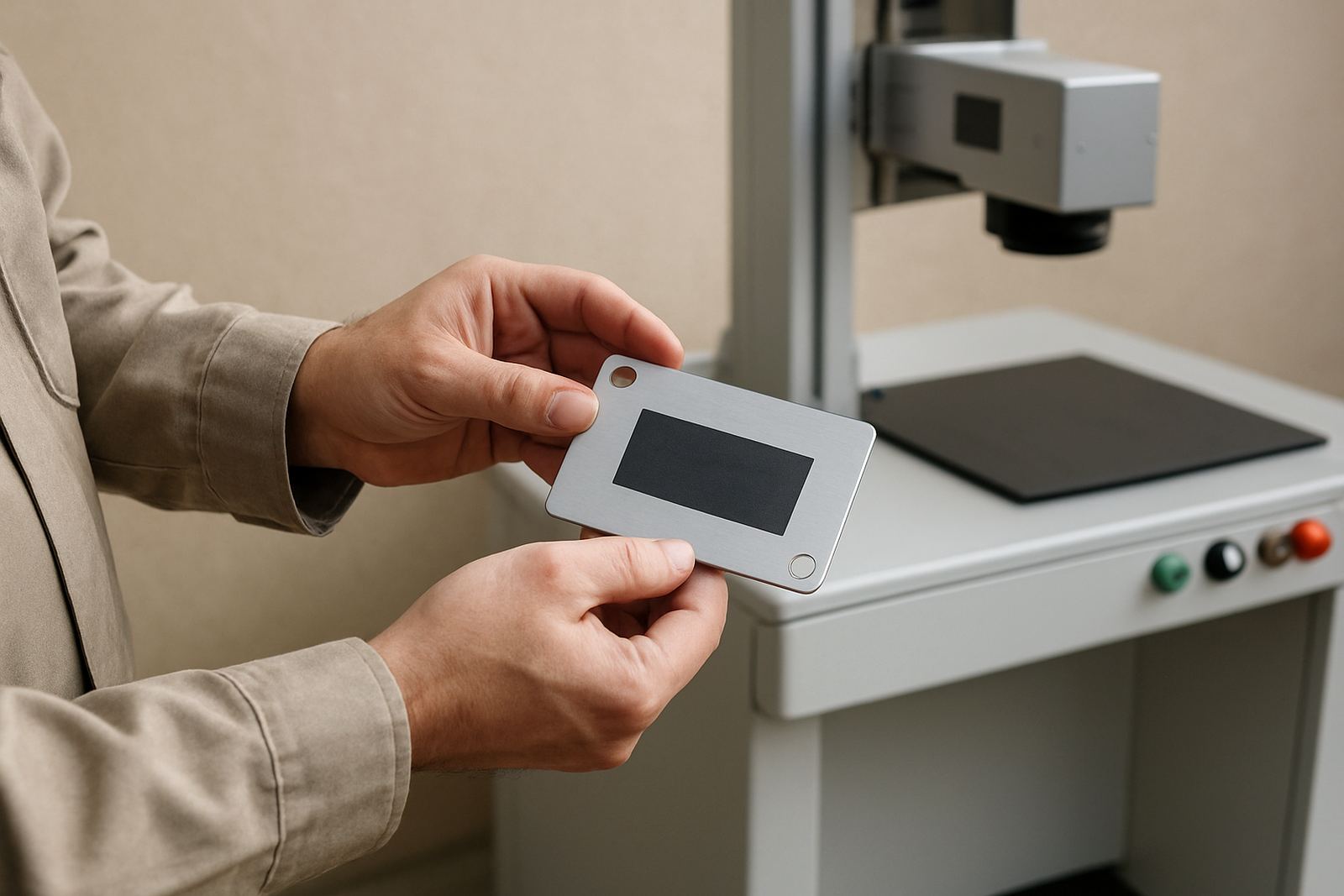
- Output: crisp black mark on treated metal and fine contrast on bare metal
- Fixture approach: repeatable positioning for small plates and tags
- Setup goal: less operator variation and fewer rejects
Timeline from first sample to handover
The full job ran over three weeks from initial sample marking to sign-off. In week one we tested a few sample tags, checked contrast and confirmed the numbering layout with the client’s asset register. Week two was used for the main production run, where the tags were marked in batches and checked against the sequence. Week three covered operator training, final adjustments and a site handover session with their facilities team.
There was some back and forth on the tag size and font height because the plant had a few cramped mounting points, but once that was settled the process moved quickly. The client was able to keep up with other maintenance work while the tagging continued in parallel.
- Week 1: sample marking and number format approval
- Week 2: production marking of the full asset run
- Week 3: operator training and final handover
- Typical tag size used: 25 mm to 60 mm wide, depending on location
Training the team to keep the sequence clean
Because the contractor wanted to continue marking future spares and replacement plates on their own, we trained their staff on daily use, file handling and simple checks before each run. We covered focus setting, tag placement, cleaning of the marking area and how to confirm the next serial number before starting a batch. That reduced the chance of duplicates and kept the asset list tidy.
We also showed them how to maintain the machine in a workshop that may not always have ideal conditions. In South African sites load-shedding can interrupt a run, so we explained how to save work safely and restart without losing sequence control. For a business that handles live plant records, that kind of practical step matters just as much as the machine itself.
- Operator training on machine use and file control
- Sequence checks to avoid duplicate asset numbers
- Restart procedure after power interruptions
- Simple maintenance for dust and day-to-day cleaning
What changed after the tags went on
The immediate result was a cleaner asset register and faster identification across the plant. Staff could read each code at a glance, which helped with inspections, stock control and maintenance sign-off. The contractor also reported fewer mistakes when moving between zones because each item now had a permanent mark that matched their records.
If we were asked to do the same job again, we would keep the same workflow: sample first, confirm the numbering format, fixture the tags properly and train the operator before the full batch starts. For this kind of work that approach saves time and keeps the result consistent from the first tag to the last one.
- Clearer asset identification for audits and maintenance
- Better consistency across hundreds of tags
- Less rework from faded or damaged labels
- Repeatable process for future plant additions
Key facts
| Project location | Benoni, Gauteng |
|---|---|
| Client type | Facilities contractor |
| Work scope | Sequential asset tags for plant equipment |
| Marking method | Fibre laser marking on metal parts and tags |
| Project timeline | 3 weeks from sample to handover |
| Support included | Fixture guidance, operator training, sequence control and handover |