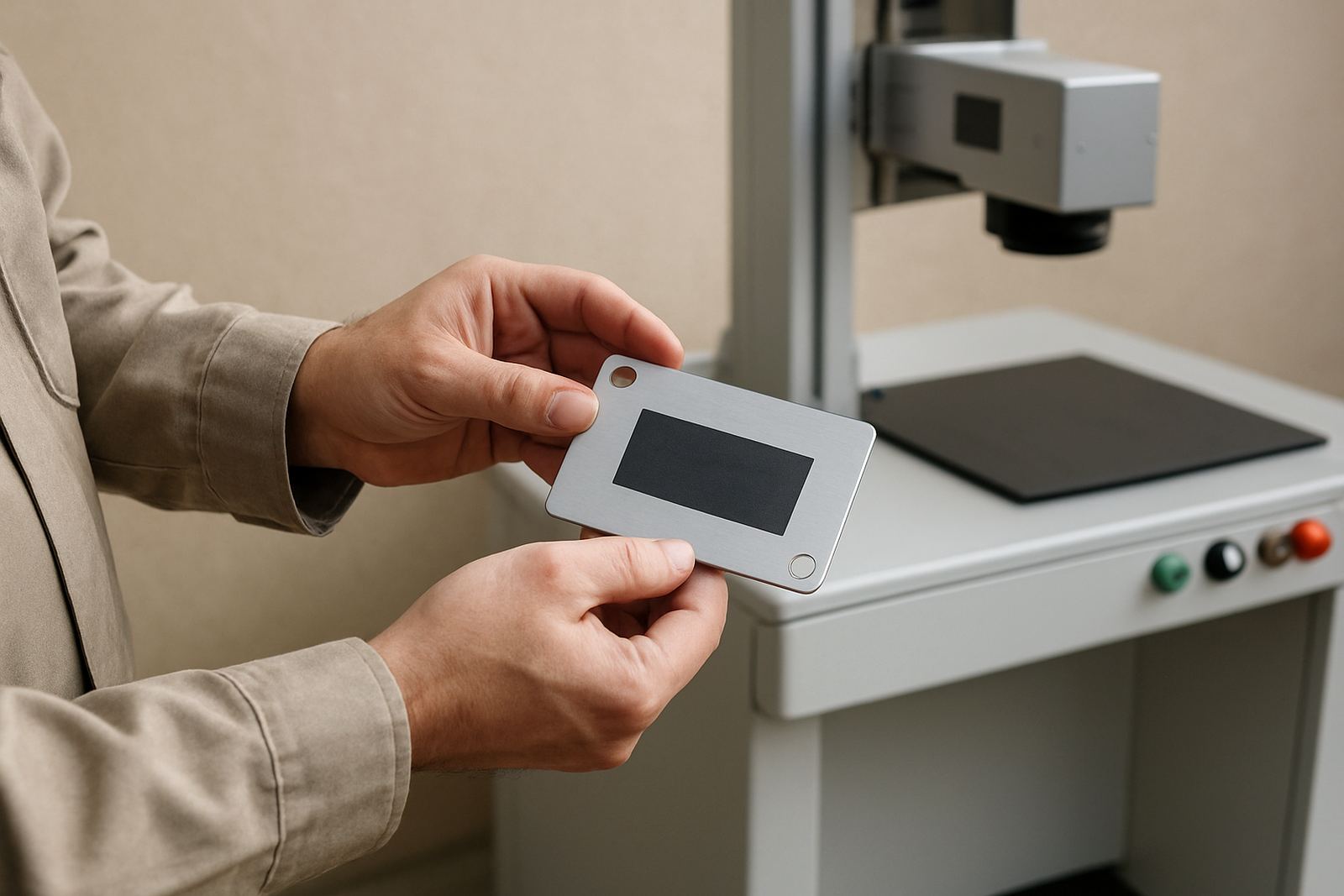
What the Durban team needed from the tags
The client was a manufacturing site in Durban with equipment that sits close to the coast and gets regular exposure to humidity, salt carryover and frequent cleaning. They needed identification tags for assets and parts that would stay readable after handling, transport and routine maintenance. The brief was simple enough on paper, but the marks had to stay sharp and consistent across a batch of stainless tags.
They wanted coded information on each tag, including part IDs and short tracking references. The tags had to be small enough for machinery use yet still readable by operators in the field. They also asked for a finish that would not smear or fade and a process that could be repeated later if the batch size changed. A plain etched mark was not enough, because the tags were going onto assets that move through a harsh coastal environment.
- Client type: industrial manufacturer in Durban
- Material: corrosion-resistant stainless steel tags
- Content: coded part information, serial references and short text
- Environment: coastal humidity, salt air and wash-down conditions
Why fibre laser marking suited the job
We recommended fibre laser marking because it gives a precise mark on stainless steel without ink, stickers or consumables that can fail in damp conditions. For this job the important part was contrast and repeatability. The marks needed to be deep enough in appearance to remain clear, but clean enough not to affect the tag edges or the mounting holes.
The marking process was set up for fine detail, including tight text spacing and compact codes. Where a tag moves through a plant, a light mark can disappear quickly and a harsh one can distort the surface. We aimed for the middle ground, with a readable finish that would stand up to everyday contact. The client also needed a solution that could be run again later with the same layout, so we kept the setup simple and repeatable.
- Marking method: fibre laser engraving on stainless tags
- Finish requirement: durable contrast for indoor and coastal use
- Detail level: compact text and coded identification
- Repeatability: same layout can be used for future batches
How we prepared the sample and production batch
Before moving into the full batch, we marked sample tags for approval so the client could check clarity, spacing and code placement. That step matters because a tag that looks fine on screen can still need adjustment once it is cut in metal. We checked the letter height, line spacing and code positioning and then refined the layout so the finished tags would be easy to read from hand-held distance.
Once the sample was signed off, we processed the production set and kept the batch grouped for delivery. The tags were marked in a way that suited their mounting pattern and the site’s internal tracking system. The work was completed over two weeks from first sample to final handover, including the setup, approval round and production marking. There was one small hold-up while the client confirmed the final code list, but it did not affect the handover date.
- Timeline: 2 weeks from sample to completion
- Approval step: sample tags checked before batch marking
- Marking layout: fixed code positions for faster sorting
- Output: production-ready tags grouped for issue and fitting
Site constraints and coastal conditions we worked around
Durban adds its own complications. Even when a plant is indoors, the air carries moisture and fine salt. That means tags can corrode or lose legibility faster than expected if the marking method is not right. We also had to account for the client’s cleaning routine, which included regular wipe-downs and chemical contact on some areas. The tags needed to hold up without the need for protective labels or extra coatings.
We also considered how the tags would be handled once they left the marking table. Some would be fitted to equipment right away, while others would stay in stores until a later shutdown. That meant the codes had to remain readable even when the tags were stacked, moved or scraped against other metal parts. The finished result was practical for the workshop and the plant floor, which is what the client needed most.
- Coastal factor: humidity and salt exposure
- Cleaning factor: wipe-downs and chemical contact
- Handling factor: storage, transport and fitting by multiple staff
- Durability goal: readable without stickers or surface coatings
What we supplied and the result on the floor
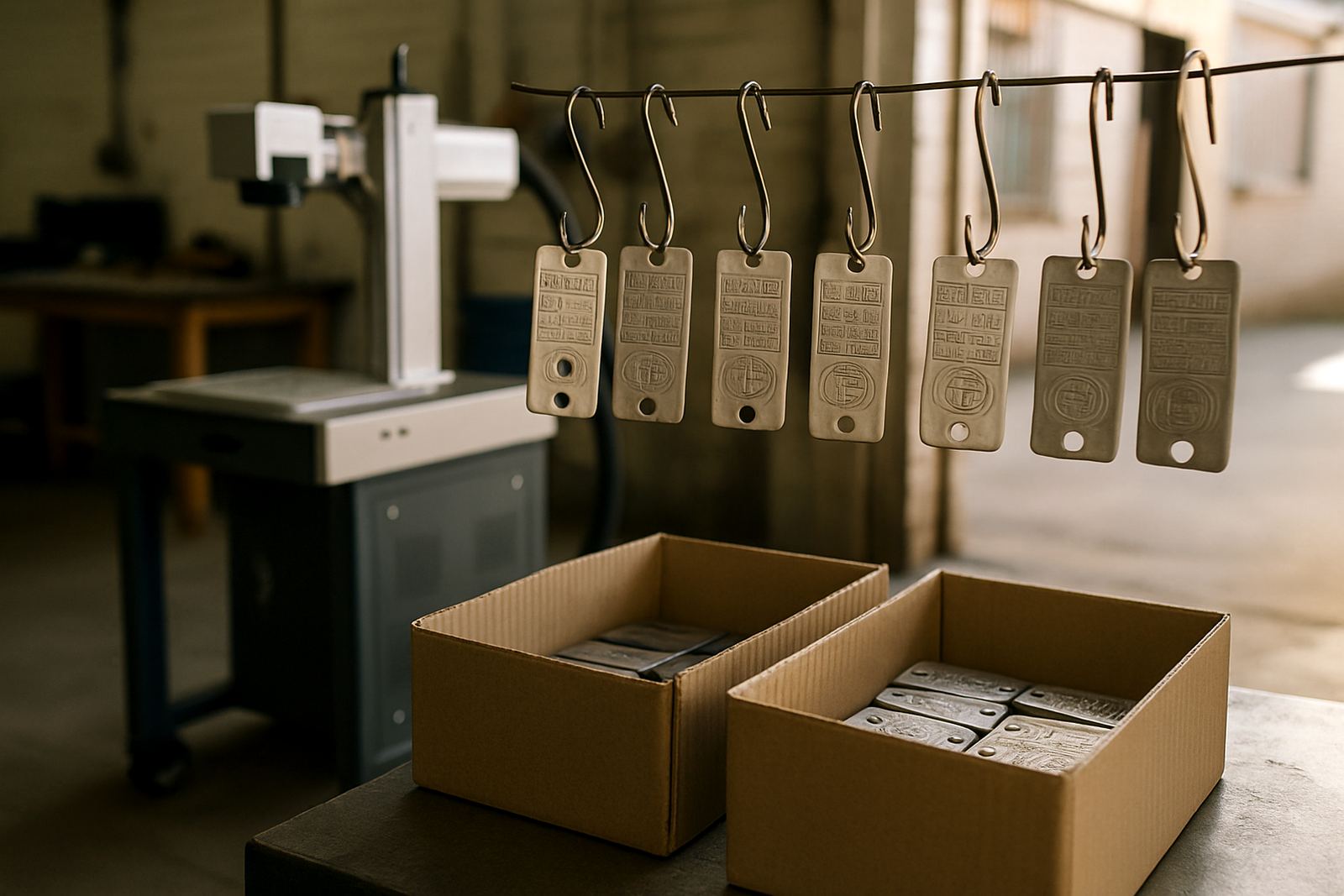
We supplied corrosion-resistant stainless tags with fibre laser marked identification that stayed crisp and easy to read. The client used the tags for asset identification and coded control on production items. Because the information is marked into the surface rather than printed on top, the tags are better suited to a site where moisture and abrasion are part of normal work.
The client reported that the tags made sorting and record keeping easier, especially when items moved between departments. Operators could read the code quickly and maintenance staff could match the tag to internal records without rechecking faded labels. The finish also looked tidy on the equipment, which helps when a plant wants a professional site standard without unnecessary extras. In short, the tags did the job and kept doing it.
- Supply: stainless identification tags
- Mark type: permanent fibre laser coded marking
- Result: easier tracing and faster identification
- Benefit: no peeling labels or smudged print
What we would do again for a similar Durban order
For a similar order, we would use the same sample-first process and keep the marking layout tightly controlled from the start. That saves time and reduces back-and-forth on code placement. We would also confirm the full code list early, especially where the client has multiple departments or changing part numbers, because a clean marking job starts with clean data. It sounds basic, but that is where many projects slow down.
We would also recommend the same material choice for coastal work, with stainless tags and a marking method that does not depend on inks or coatings. If the job needs repeating, we can match the earlier setup and keep the output consistent. For plants in Durban, Richards Bay or along the KZN coast, that consistency is worth a lot. It keeps maintenance simple and avoids the need to replace tags again too soon.
- Best practice: approve one sample before batch work starts
- Data handling: confirm code lists early and in full
- Material choice: stainless for coastal environments
- Repeat order benefit: same setup can be used again with minimal delay
Key facts
| Project location | Durban, KwaZulu-Natal |
|---|---|
| Client type | Industrial manufacturer |
| Material supplied | Corrosion-resistant stainless steel tags |
| Marking method | Fibre laser engraving |
| Timeline | 2 weeks |
| Use case | Asset IDs and coded part tracking |