
Jet Park brief: tags that would survive plant conditions
The client is an industrial distributor in Jet Park, serving maintenance teams and plant operators who need fast identification on valves, panels and equipment. Their earlier tag method was not lasting well in daily use, especially where tags were handled often or exposed to oil, moisture and general wear. They wanted clean marking on metal tags that would hold up for site use and remain easy to read during inspections.
The brief was clear: supply a marking system that could produce small, sharp characters on heavy-duty tags without slowing down the workshop. They also needed a practical setup for staff who were not full-time marking operators. The tags had to suit plant conditions in Gauteng, where dust, vibration and long operating hours are part of the job. In a few areas the tags would also see outdoor exposure, so the marking needed to stay legible through heat and rain.
- Client type: industrial distributor
- Location: Jet Park, Boksburg area
- Use: valve tags, equipment tags and site identification plates
- Material focus: stainless steel tags and anodised metal blanks
Production constraints and the marking standard they needed
We had to work within tight production windows because the client’s workshop could not take a long disruption. The marking system needed to fit on the floor without requiring major electrical changes, and it had to be reliable during load-shedding with the right backup power arrangement. They also wanted markings that would stay visible after cleaning, contact with lubricants, and handling with gloved hands.
Another constraint was legibility. Valve and equipment tags are often small, so spacing, line weight and character depth matter. If the text is too light, site teams struggle to read the tag from a working position. If it is too crowded, the info becomes useless. The client also asked for a consistent marking format so that replacement tags would match old stock and future batches could be produced with no fuss.
- Required marking style: high-contrast, permanent, fine detail
- Typical tag size: from 25 x 10 mm up to 100 x 50 mm
- Typical content: asset number, valve number, service code and site reference
- Operating need: short setup time and repeatable batch marking
What we supplied and how the setup was configured
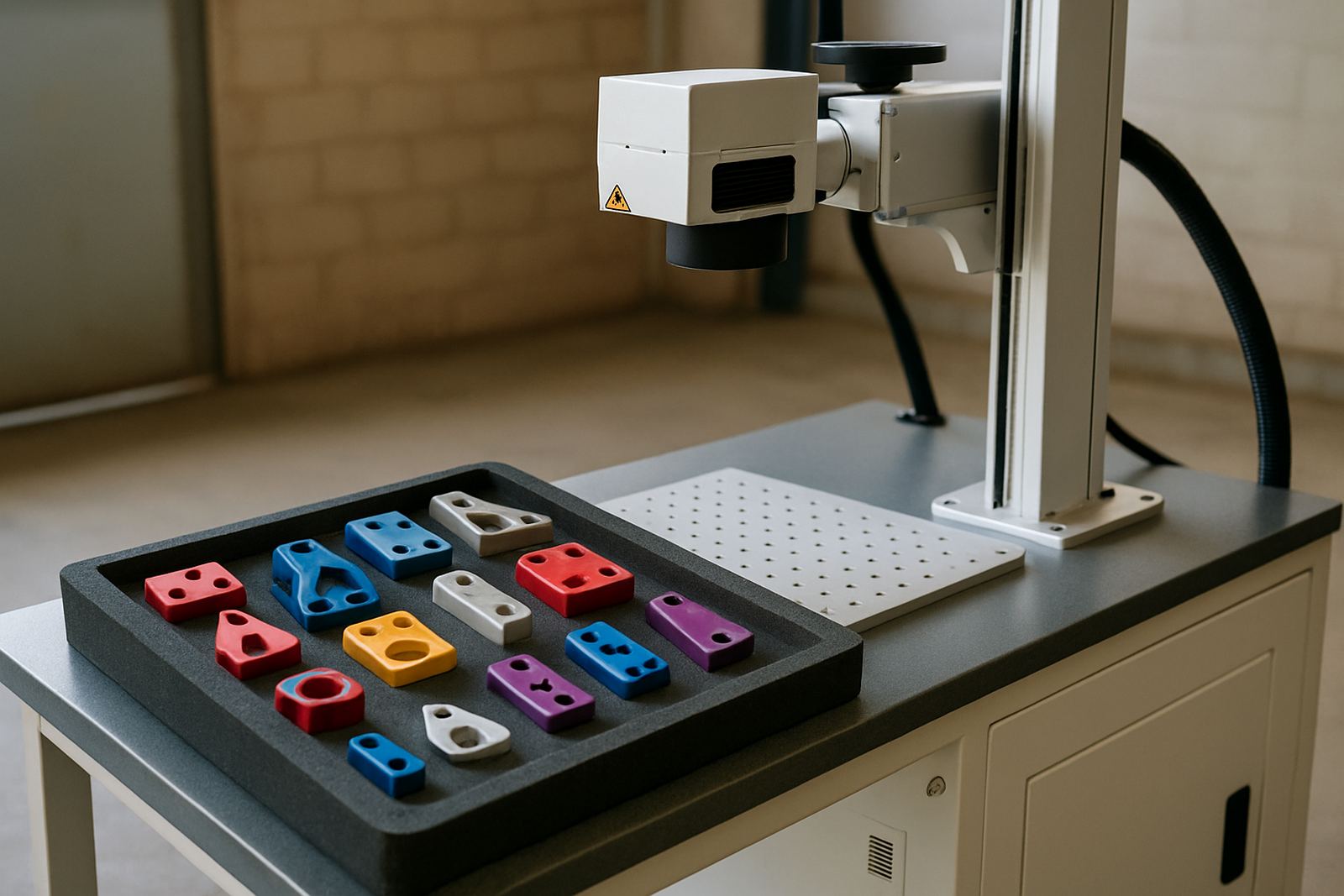
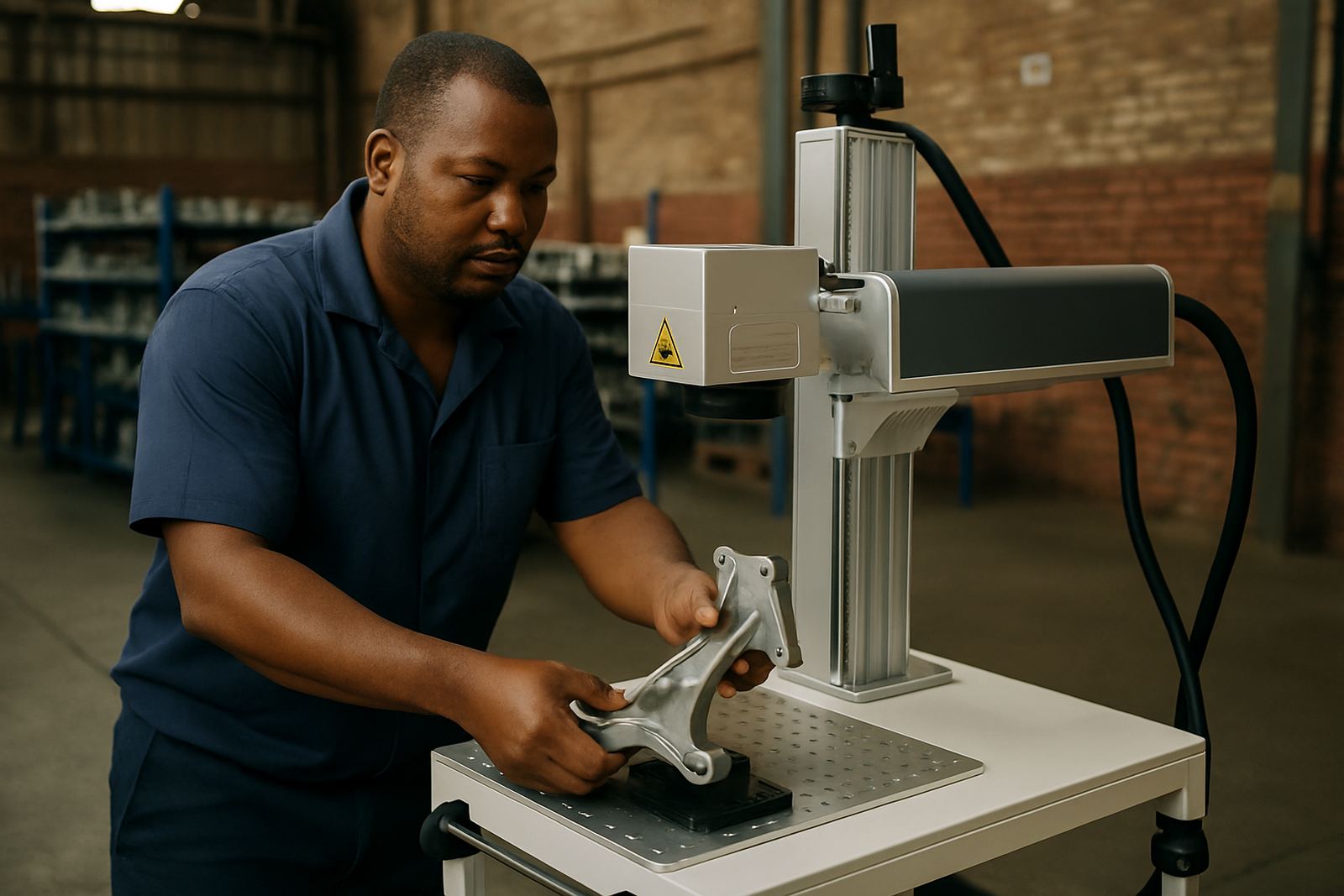
We supplied a fibre laser marking machine configured for metal tag work, with the marking area set up for small components and flat plates. The system was paired with software that allowed the client to store tag templates and repeat common layouts without retyping each line. We also supplied a simple fixturing approach so the operator could place tags quickly and keep them square for accurate marking.
For this job, we carried out sample marking first to confirm character size, line spacing and marking depth on the actual materials the client uses. Once approved, we finalised the settings for stainless steel tags and lighter metal plates. The process was tuned for fast batch work, which is useful when a single run can include dozens or even hundreds of tags. The team also asked for clear training notes so the process could be handed over properly between shifts. There was a small amount of trial and error, but the final result was neat and repeatable.
- Machine type: fibre laser marking system for metal parts
- Supported materials: stainless steel, coated metal and anodised blanks
- Software setup: stored tag templates and repeat jobs
- Fixtures: simple jigs for quick tag placement and alignment
Installation, setup and operator training in Jet Park
The installation was completed on site in Jet Park in one week, with the first part focused on positioning, power checks and alignment. We then set up the machine, tested the marking field and confirmed the tag layout against the client’s sample list. After that we spent time with the operators so they could run live jobs confidently and understand what to check before each batch starts.
Training covered file setup, template selection, focus calibration, safe handling of tags and basic troubleshooting. We also showed the team how to spot issues early, such as a tag that is sitting slightly crooked or a file with missing information. That kind of check saves time later and cuts down on rework. The client wanted a practical handover, not a classroom session, so we kept it hands-on and directly related to their day-to-day work.
- Timeline: 1 week for installation and initial setup
- Training: operator walkthrough plus live batch practice
- Included: focus calibration and sample approval
- Handover: template storage and basic maintenance guidance
The result on the workshop floor
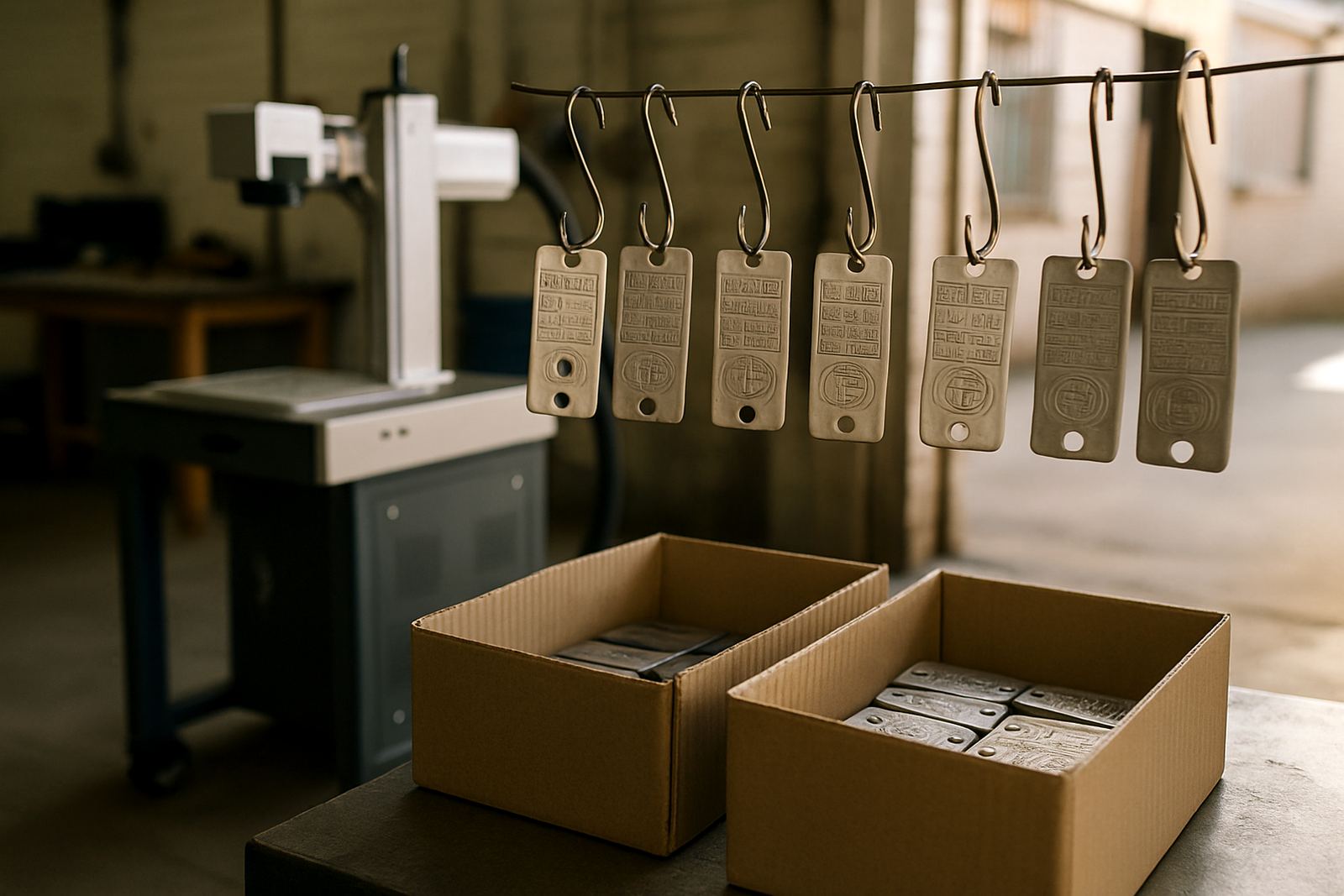
The finished tags came out sharp, consistent and easy to read. The client could now mark valve tags and equipment plates in-house instead of waiting on outside supply for every small batch. That improved their turnaround time and made it easier to respond to urgent site requests. It also gave them better control over numbering and naming, which is important when the same plant has many similar items in service.
Because the marking is permanent, the tags hold up better in ordinary industrial use than printed labels or temporary methods. Staff can now produce small quantities or larger runs without changing the setup every time. The machine also fits the way their workshop works during power interruptions, which matters in South Africa where you cannot always rely on an uninterrupted day. The client reported less wastage, fewer mixed-up tags and a cleaner finish on each batch.
- Better legibility on small tag sizes
- Less time spent outsourcing simple marking jobs
- More consistent numbering across batches
- Improved tag durability for plant use
What we would repeat for a similar Jet Park job
If we were doing this again for another industrial distributor in Jet Park or nearby areas like Isando, Boksburg or Kempton Park, we would follow the same sequence: sample marking first, fixture planning second and operator training before full handover. That order keeps the job practical and avoids surprises once production starts. It also helps when the client has different tag materials in stock, because we can check each one before the main run begins.
For sites with frequent batches, we would again recommend template-based software setup and a tidy fixture arrangement so tags can be loaded quickly. For workshops near the coast or in dusty areas, we would also suggest a maintenance routine that keeps optics clean and the machine protected during idle periods. It is a simple thing, but regular checks save trouble later. This kind of setup is a good fit for businesses that need dependable tag marking without extra faff.
- Best next step: sample approval before bulk marking
- Best practice: store templates for repeat jobs
- Useful addition: preventive maintenance on a schedule
- Good for: valve tags, asset plates and equipment identification
Key facts
| Project location | Jet Park, Boksburg area |
|---|---|
| Client type | Industrial distributor |
| Application | Heavy-duty valve and equipment tags |
| Materials marked | Stainless steel tags and coated metal blanks |
| Timeline | 1 week |
| Service delivered | Installation, sample marking, operator training and software setup |