Boksburg dispatch job, what the client needed
The client was a metal fabricator in Boksburg working on assembled components for industrial use, with final packing done in a busy dispatch area. Their main requirement was simple on paper but strict in practice: every assembly had to carry a part number and batch reference before it left the floor, and the marks needed to stay readable after powder coating, stacking and road transport.
They also needed a process that fit around a regular production line. Parts came through in mixed sizes, some with flat faces and some with formed sections, so the marking method had to cope with variation without slowing the team down. The job had to be repeatable by operators on different shifts, because the client could not rely on one person being present all the time.
- Client type: metal fabrication workshop
- Location: Boksburg, Gauteng
- Requirement: part numbers and batch references
- Material mix: coated steel and aluminium assemblies
Why fibre laser marking was the right fit
For this kind of work, fibre laser marking made sense because it gives a clean, permanent mark without inks, consumables or drying time. That matters when assemblies are going straight to dispatch and there is no room for smudging, label lift or extra handling. It also suits the dust and temperature swings common in local workshops, where adhesive labels can struggle.
The client wanted a practical solution for a factory environment with normal load-shedding risk and a tight packing schedule. We used a marking setup suited to metal parts, with software that lets the operator call up jobs quickly and keep the same layout from one batch to the next. The result was a process the team could trust shift after shift.
- Permanent mark on bare or coated metal surfaces
- Fast cycle times for batch work
- No inks, solvents or label stock to manage
- Readable characters for stock control and traceability
Machine setup and marking details
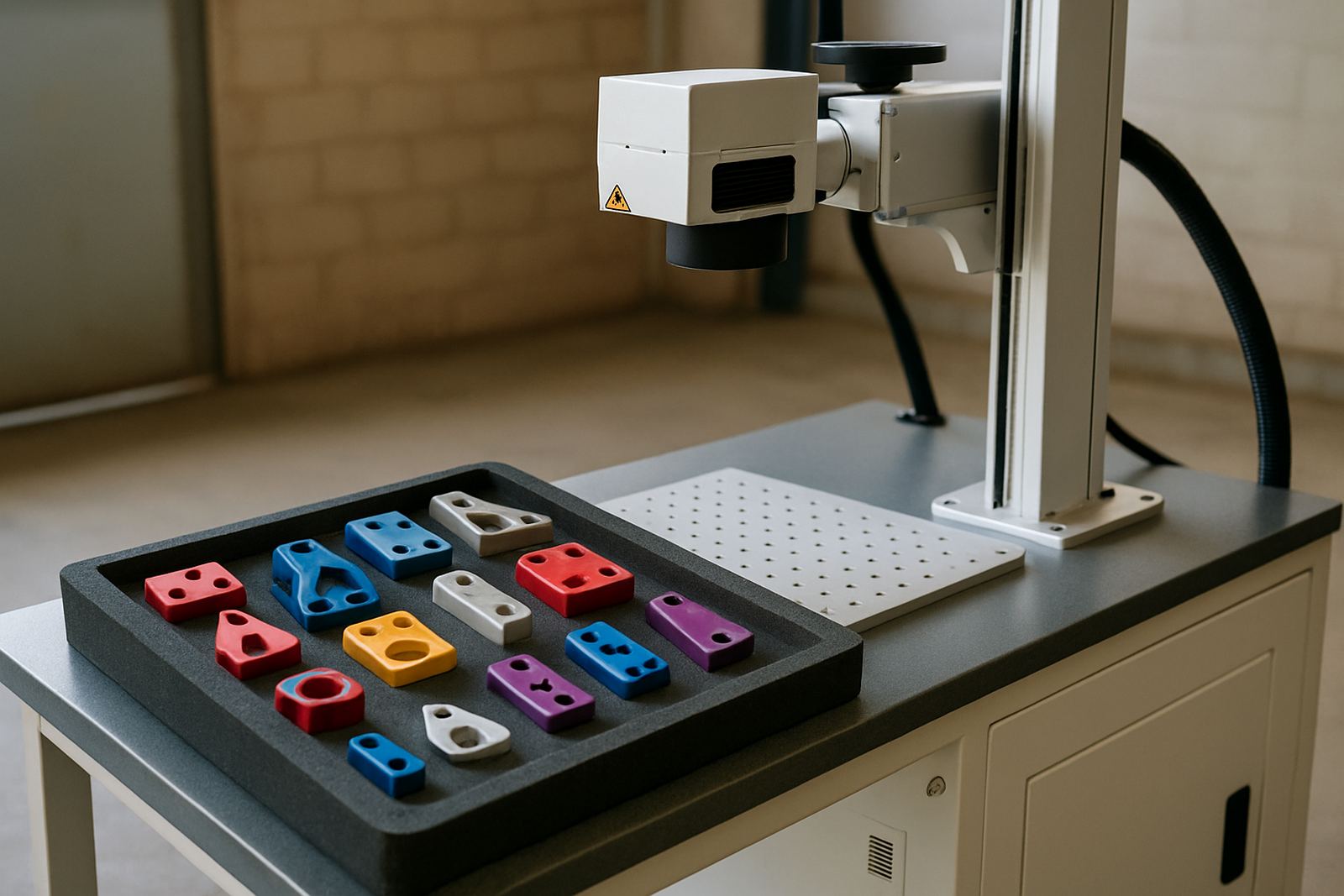
We supplied a fibre laser marking machine configured for part identification on fabricated assemblies. The marking field was set up for the client’s common part sizes, with a fixture arrangement that held smaller pieces square to the beam and reduced the chance of off-centre marking. We also set the software up with saved templates for part numbers, batch codes and line text so the operator could load the right job in a few clicks.
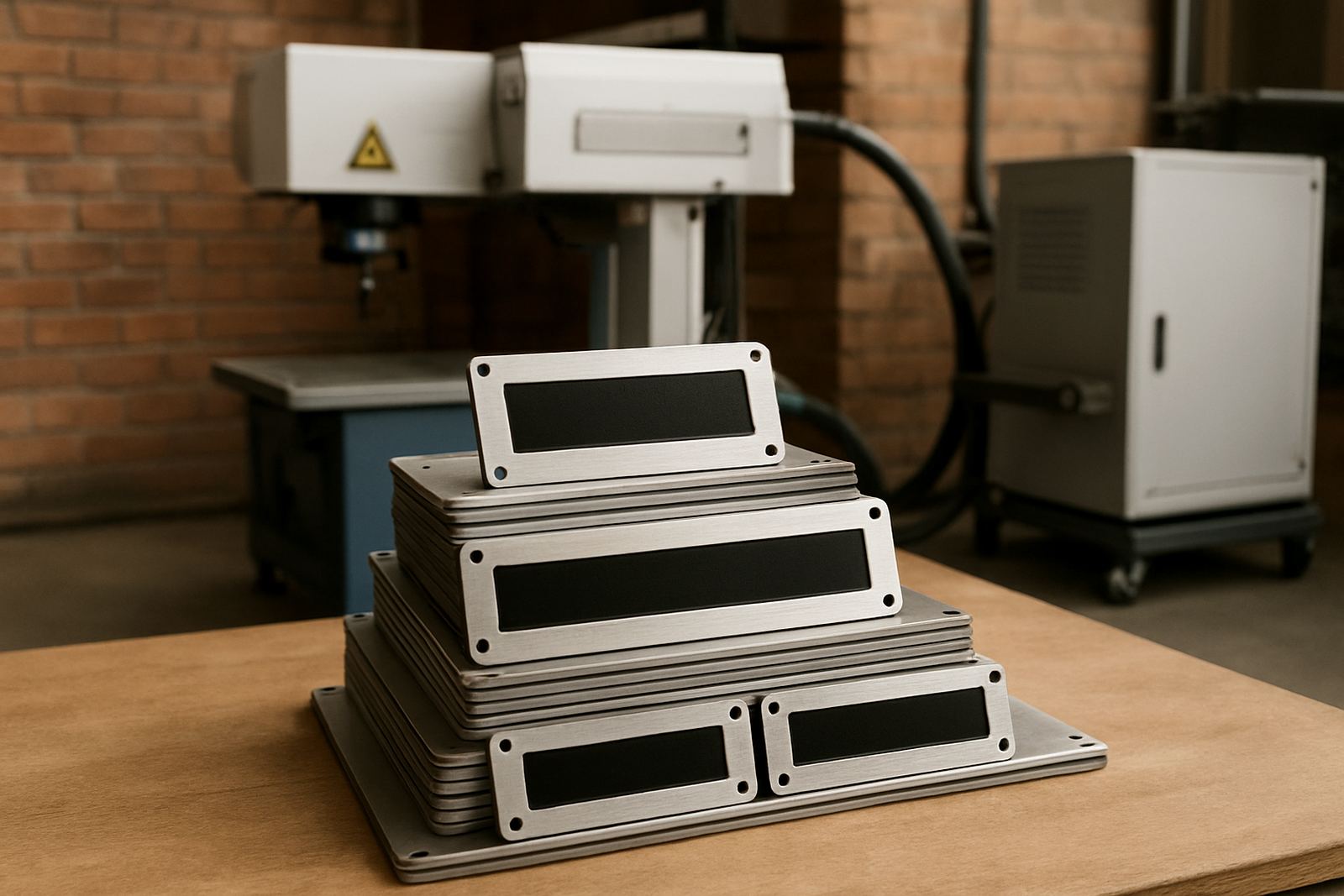
The marking spec was kept practical for production. Most marks used a shallow, crisp engraving depth that gave a clean finish without weakening the part or leaving rough edges. On black-coated material, we tested the contrast first, then adjusted speed and power until the code was clear and easy to read from normal handling distance. On brushed aluminium, we used settings that gave fine detail without excess heat build-up.
- Marking method: fibre laser engraving
- Suitable for steel, stainless steel and aluminium
- Template-based job selection for repeat work
- Fixture support for smaller assemblies
Three week rollout and on-site training
The project ran over three weeks from first assessment to sign-off. In week one, we reviewed the parts, the marking positions and the sequence on the packing floor. Week two covered machine set-up, test marks and software setup for the client’s actual codes. In week three, we completed operator training, final calibration and a live run with production staff before dispatch resumed on the new process.
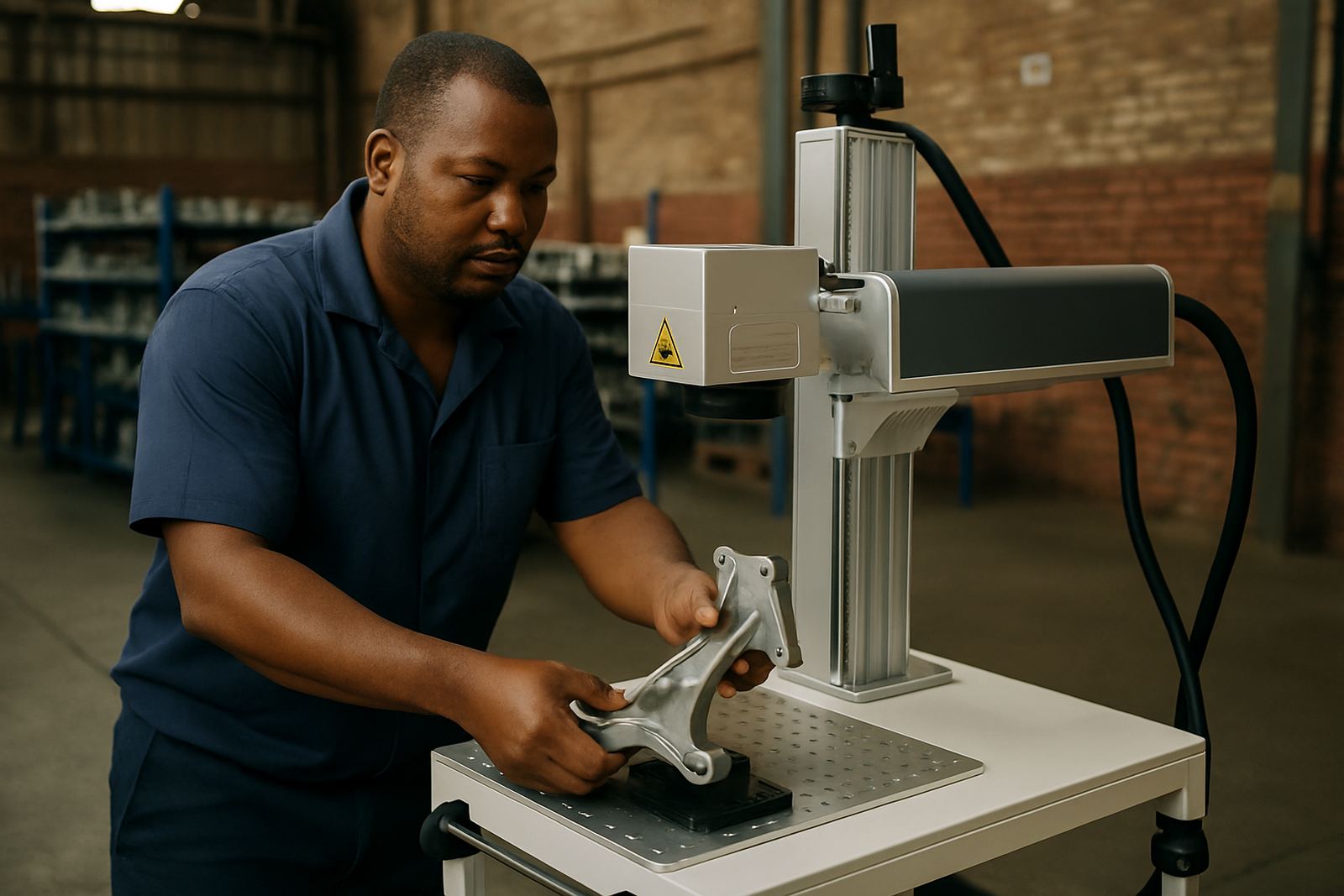
Training was kept hands-on. We showed the team how to load a part safely, check focus height, confirm the right template and inspect the mark before release. That reduced errors and gave the client a process they could repeat without having to call for help on every change. A small thing, but it saved time on the floor.
- Week 1: site review and marking plan
- Week 2: install, sample marking and software setup
- Week 3: operator training and production handover
- Final step: live test on dispatch-bound assemblies
Results on the dispatch line
Once the system was in place, the client was able to mark assemblies before packing without creating a bottleneck. Part numbers and batch references were consistent across runs, which helped with traceability in the store room and on the delivery side. The team no longer had to rely on handwritten tags that could tear or fade.
The finished marks stayed clean after handling, and the client appreciated that the process did not add another consumable to manage. There was also less rework because the right code was applied before the pallet moved out. That kind of control is important when a fabricator is juggling multiple orders at once and trying to keep dispatch on time.
- Clear identification before dispatch
- Better batch traceability
- Less rework from incorrect labelling
- No label stock or ink changes needed
What we would keep the same on the next Boksburg fabrication job
If we were doing the same type of work again for another fabricator in Boksburg or Wadeville, we would approach it the same way: assess the actual parts first, test the mark on the real surface, and set up templates around the client’s daily workflow. That keeps the marking process practical instead of forcing the team to change how they pack and release jobs.
For workshops with a mix of coated steel, aluminium and occasional jewellery or small precision parts, we would also recommend sample marking before full rollout. It gives the team confidence in the finish and helps pick the right settings early. In production, that is often the difference between a smooth week and a lot of backtracking.
- Test on the real material before full use
- Set templates around dispatch codes and batch refs
- Train the operator who will use it every day
- Keep a simple maintenance routine for busy sites
Key facts
| Project | Boksburg fabricator job |
|---|---|
| Location | Boksburg, Gauteng |
| Timeline | 3 weeks from review to handover |
| Marking type | Fibre laser engraving |
| Materials | Coated steel and aluminium assemblies |
| Use case | Part numbers and batch references before dispatch |