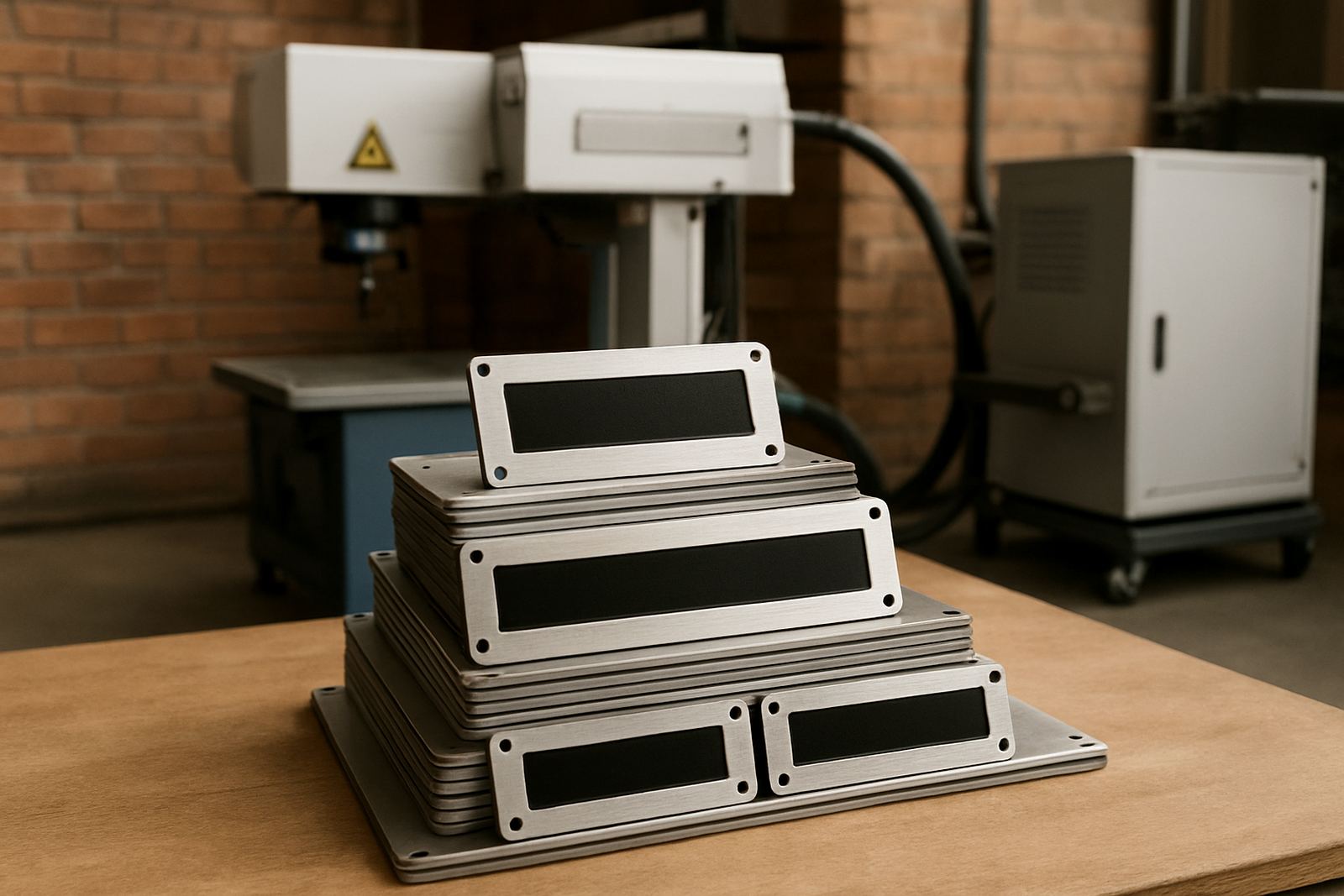
Why the Bloemfontein plates job came in
The client was a machinery refurbisher working in Bloemfontein, mainly on repaired industrial units that needed fresh identification plates before handover. The original plates on several machines had become hard to read, some were missing, and others had inconsistent fonts or sizes from past repairs. Their main issue was not only appearance, but compliance and traceability. A plate that is too small, uneven or badly marked can cause problems later when a machine is serviced, moved, or inspected.
The brief was simple on paper: produce replacement nameplates that could be marked and cut to one standard, then keep that standard across repeat orders. In practice it meant controlling line spacing, logo position, serial number area, and edge finish. The client also wanted a method that would cope with regular workshop use and not need constant fiddling from staff. They needed plates that looked proper, lasted in dusty workshop conditions, and could be read quickly on site.
Job requirements and production constraints
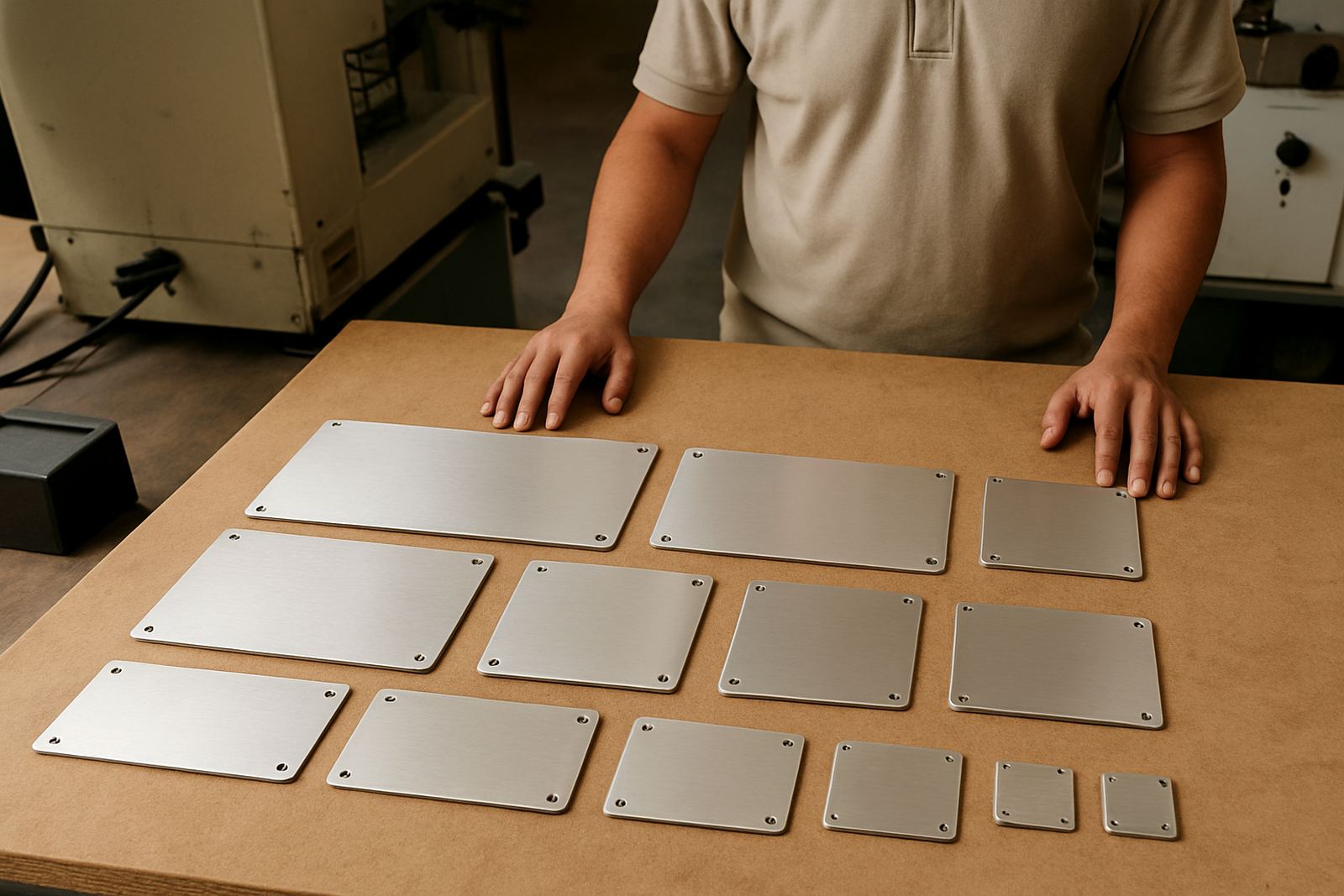
The plates had to work for mixed machinery types, so there was a bit of variation in size but not in quality. Some units needed small plates for tight mounting spaces, while others needed larger plates for clearer model and serial data. The client asked for a process that could handle stainless steel and anodised aluminium, with clean marking on both. The marking had to stay readable after handling, transport, and exposure to oil residue and workshop cleaning fluids.
- Plate sizes used: 60 x 25 mm, 80 x 30 mm, and 100 x 50 mm
- Material options: 1.0 mm stainless steel and 1.5 mm anodised aluminium
- Marking detail: machine name, model, serial field, load data, and service notes
- Finish requirement: smooth edges with no sharp burrs for safe handling
- Repeatability: same layout across batch orders, even when the plate size changed
There was also a practical constraint around turnaround. The refurbisher does not sit on plates for weeks while machines wait in the yard. They needed a setup that could move quickly from sample approval to production, and one that could be adjusted without stopping the rest of the work. That is where the fibre laser marking method made sense. It gave clean detail on metal, and it kept the setup time manageable. In Bloemfontein the dry air helps a bit with storage, but dust is still a factor so the plates had to be easy to keep clean before fitment.
What we supplied and set up
We supplied a fibre laser marking solution configured for marking and cutting replacement nameplates with consistent repeat output. The setup was adjusted for the client’s common plate sizes, and we prepared sample markings before the production run started. The first stage was layout control. That covered text size, line spacing, serial number placement, and the cut outline. The second stage was focus calibration so the markings stayed crisp on different metals. We also checked fixture alignment so each plate sat square during marking and cutting.
To keep the job practical for the workshop team, we set up easy repeat steps for their operators. The process was built so staff could load a plate, confirm the file, and run the job without needing advanced knowledge every time. We also supplied guidance on cleaning the surface before marking, because a thin film of oil or dust can affect the finish and the readability. On the smaller plates we paid extra attention to the corner radius and hole positions, since a millimetre out can make fitting awkward later.
- Sample marking done before full production
- Fixture position checked for square placement
- Serial number fields set up for future batches
- Cut paths tested for clean edge finish
- Operator steps simplified for day to day use
Timeline from sample to delivery
The full job ran over three weeks. Week 1 was sample preparation and approval. We marked test plates in both stainless steel and anodised aluminium, then reviewed the legibility, spacing, and edge quality with the client. A minor adjustment was needed on the smallest plate format, where the text block had to be shifted a little to leave enough margin for mounting holes. Once that was sorted, the layout was signed off.
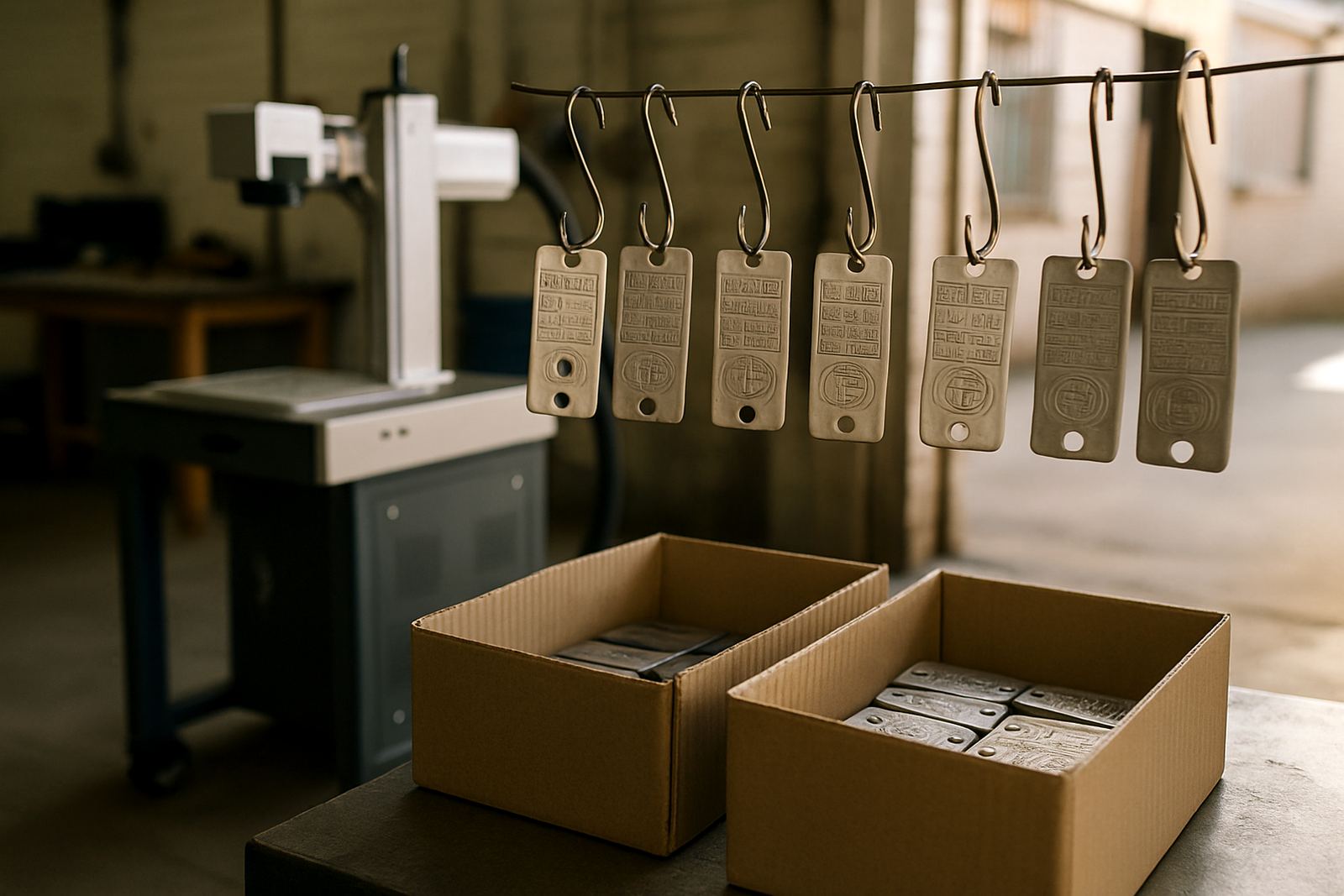
Week 2 was production setup and the first batch. We completed the main plate run and checked each group against the approved sample. Week 3 covered final finishing, packing, and fitment support. A few items were held back for a second pass where the client wanted the serial field aligned more tightly. That was handled without delaying the rest of the batch, which kept the refurbisher moving with their workshop schedule. It was a steady job, nothing flashy, just careful work done the way it should be. The client appreciated that there was no back and forth for the same correction twice.
Results on the workshop floor
The finished plates gave the refurbisher a single standard they could use across different machines and replacement orders. The markings were sharp enough to read at a glance, and the cut edges were consistent from plate to plate. That matters in a busy yard where different technicians may be handling the same equipment over time. If a plate is unclear, it slows the next repair and creates confusion around machine identity.
The client also gained a more reliable process for repeat jobs. Instead of redoing layouts every time, they now had approved settings and sample references to work from. That cut down on mistakes and saved time on smaller batches too. The plates held up well during transport and fitment, and the staff had fewer issues with edge sharpness or misplaced text. In plain terms, the job made their refurbishing work look more organised and made the machines easier to track.
- More consistent branding and machine identification
- Cleaner fitment with fewer on site adjustments
- Better traceability for serviced and rebuilt units
- Less time spent reworking plate layouts
What we would do again on the next plate order
If we repeated this Bloemfontein plates job, we would keep the same approach: start with samples, confirm the smallest plate size first, and only then run the full batch. That method avoids waste and catches spacing issues early. We would also keep the fixture and file settings locked for repeat orders so the client can reorder plates without starting from scratch. For a refurbisher that handles mixed machines, that kind of repeatability is worth as much as the hardware itself.
We would also suggest keeping a small reserve stock of the most common plate sizes. That helps when a machine comes in unexpectedly with missing identification. It is a practical step, especially for a workshop handling work across the Free State and beyond. With the right settings saved and the common layouts ready, the next order can move faster and still meet the same standard. The job showed that a clean plate is not a small detail, it is part of the machine’s working record.
Key facts
| Project town | Bloemfontein |
|---|---|
| Client type | Machinery refurbisher |
| Main deliverable | Replacement nameplates |
| Materials | 1.0 mm stainless steel, 1.5 mm anodised aluminium |
| Plate sizes | 60 x 25 mm, 80 x 30 mm, 100 x 50 mm |
| Timeline | 3 weeks from sample to delivery |