What the Germiston workshop needed
The client was a small jewellery workshop in Germiston working on rings, pendants and a few custom-branded pieces for local retailers. Their main problem was detail. Inner-ring text needed to be clean enough to read with a loupe, and pendant logos had to stay sharp without flattening the metal finish or leaving a burnt edge. They also wanted a setup that could be used by a small team after normal production hours, because load-shedding and mixed order schedules made planning tricky.
For this Germiston jewellery workshop, the job sounded manageable until the part size and finish limited the usable marking area.: mark narrow ring interiors, engrave tiny logos on pendants, and keep every job consistent across batches. The workshop needed a machine that could handle gold, silver, stainless steel and plated items, with repeatable focus and enough control for very small fonts. They also asked for a practical workflow that would not slow down polishing and setting work.
- Inner-ring text as small as 0.8 mm character height
- Pendant logos with clean edges and no visible heat distortion
- Fast changeover between ring fixtures and flat pendant work
- Simple operation for more than one operator
The marking setup we supplied
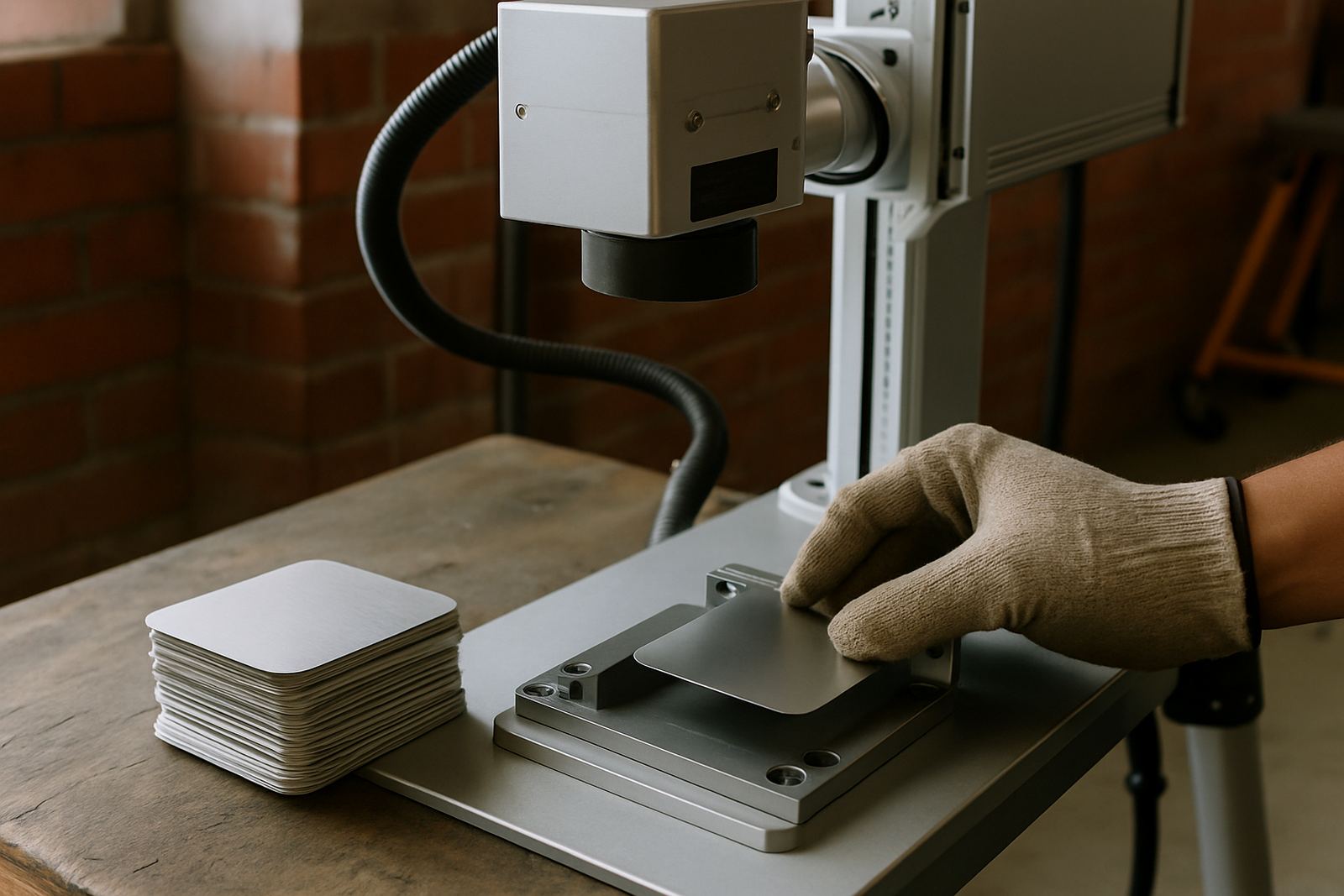
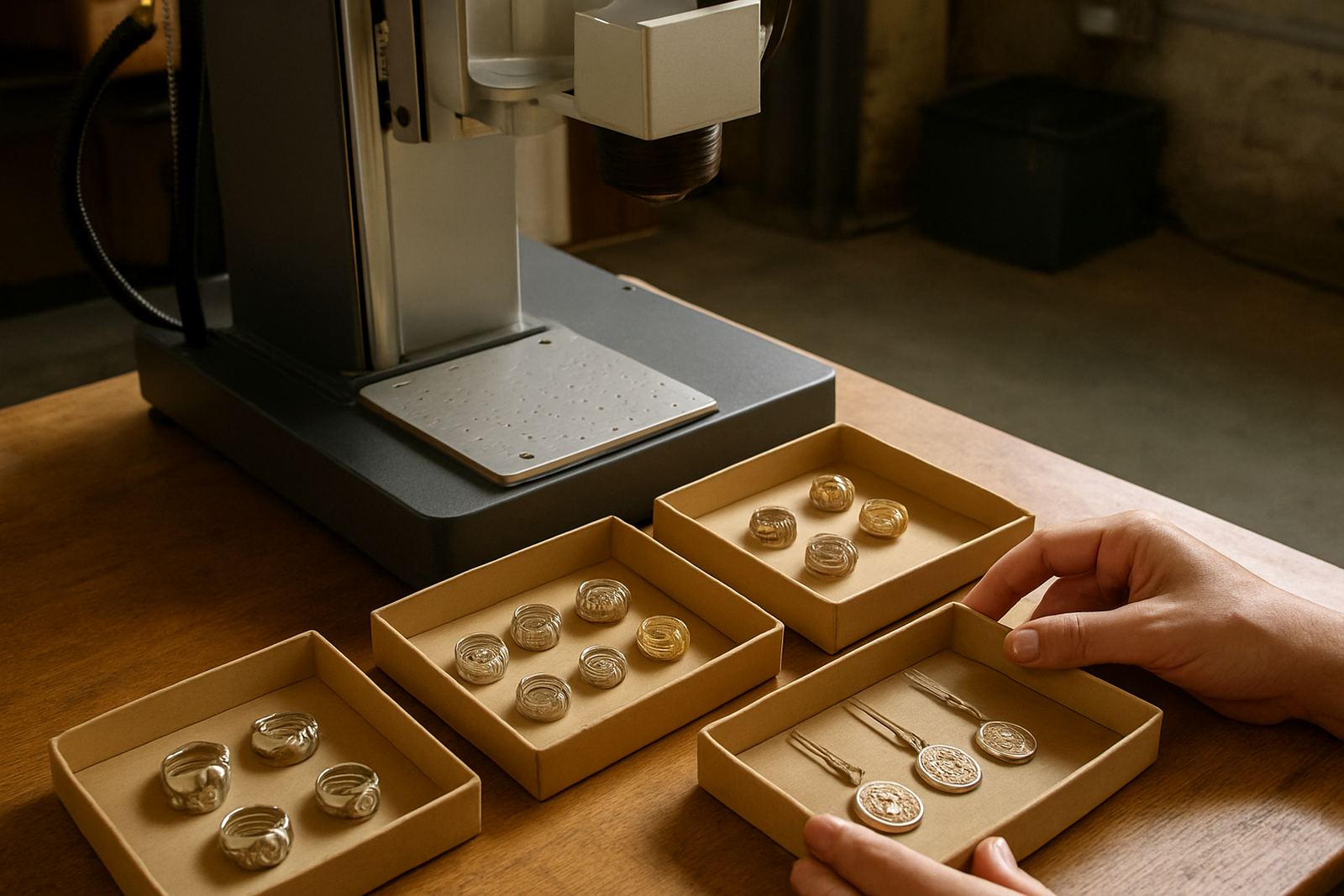
We supplied a fibre laser marking machine set up for fine jewellery work, with a compact marking area, precision focus control and a rotary fixture for rings. The machine was configured for small text, line art and logo fills, with settings tested on sample pieces before full production started. We also supplied a flat holding fixture for pendants so the team could keep pieces secure without scratching polished faces.
For the jewellery range, we set the system up with the following working specs:
- Marking area suited to rings, pendants and small tags
- Fine focus adjustment for curved inner surfaces
- Rotary attachment for consistent ring rotation
- Software preset files for repeat jobs
- Low maintenance fibre source for day-to-day workshop use
Because the workshop had a fairly busy production floor, we also paid attention to cable placement, power stability and operator access. In Germiston, where many workshops run on shared power schedules or backup supply during outages, practical setup matters just as much as the laser itself.
Sample marking and calibration on small jewellery parts
Before the machine went into regular use, we ran sample marking on test rings and pendant blanks. The main aim was to avoid overburn on the inner ring wall and to keep pendant branding crisp on both polished and brushed finishes. We adjusted speed, power, frequency and focus until the marks held their shape and depth without spreading. A small change in focus made a big difference on the inside of narrow bands.
One of the most useful parts of the job was matching settings to the workshop's actual product mix. Thin bands needed a different approach from heavier signet-style rings, and plated pendants required less energy than solid stainless steel. After a few test cycles, the team had a settings library they could return to for common jobs, which saved time and cut down on rework.
- Inner-ring lettering checked under magnification
- Pendant logos tested on polished and brushed surfaces
- Depth adjusted to suit material type and finish
- Settings saved for common product sizes
Training the team for daily workshop use
Training was done on site over two sessions, with enough time for each operator to handle setup, alignment, focus and sample marking. The workshop wanted a system that did not depend on one person, so we made sure the team could move between ring work and pendant work without confusion. We also covered file prep, font choice, safe clamping and basic care of the lens area.
The sessions were practical rather than theoretical. Each operator marked real jewellery pieces, checked the result, then adjusted the setting and tried again. By the end of the second session, the team was comfortable with the rotary fixture and could set up repeat jobs without calling for help every time. The workshop manager said the biggest gain was confidence, because the staff could now complete finer jobs in-house instead of sending them out.
- Operator training for three team members
- File setup for text, monograms and logos
- Safe handling for polished and plated jewellery
- Daily cleaning and basic fault checks
Timeline, installation and aftercare
The full project ran over three weeks from first sample request to sign-off. Week one covered brief, sample testing and material checks. Week two covered delivery, installation and fixture alignment at the Germiston site. Week three covered operator training, setting refinement and live production trials. Because the workshop was active during the day, we planned the install around quieter production windows so the team could keep working.
After handover, we stayed available for remote assistance and follow-up checks. That helped the client settle into daily use faster and keep their marking quality steady during the first batch runs. If needed, we would do the same again: test first, set up the fixtures properly, then train the operators on the actual pieces they make most often. That approach saves time and reduces wasted stock, which matters when every ring and pendant has value.
- Three-week turnaround from brief to sign-off
- Installation completed on site in Germiston
- Remote assistance available after handover
- Fixture alignment checked before live use
Results for the jewellery workshop
The workshop now produces clean inner-ring text and pendant logos in-house, with less dependence on outside engraving services. The marks are sharper, the repeatability is better, and there is less risk of poor alignment on small items. The team also reports less handling time because the ring fixture and pendant fixture make changeover quick. On a small workshop floor, that kind of saving adds up fast.
Most importantly, the client gained control over turnaround times. They can now take on custom engraving jobs with more confidence, including short-run personalisation and matching sets for retailers. For future projects, we would use the same formula: verify the artwork, test on the actual material, set the fixture carefully, then train the operators until the process is repeatable. It sounds plain, but for jewellery work plain is what keeps the detail right.
- Sharper engraving on rings and pendants
- Better consistency across repeat batches
- Faster in-house turnaround for custom jobs
- Less rework on fine lettering and logos
Key facts
| Client type | Jewellery workshop |
|---|---|
| Town | Germiston, Wadeville |
| Project scope | Inner-ring text and pendant logo engraving |
| Timeline | 3 weeks |
| Key equipment | Fibre laser marking machine with rotary fixture |
| Services used | Installation, sample marking, training, calibration, remote assistance |