Start With the Job You Need the Machine To Do
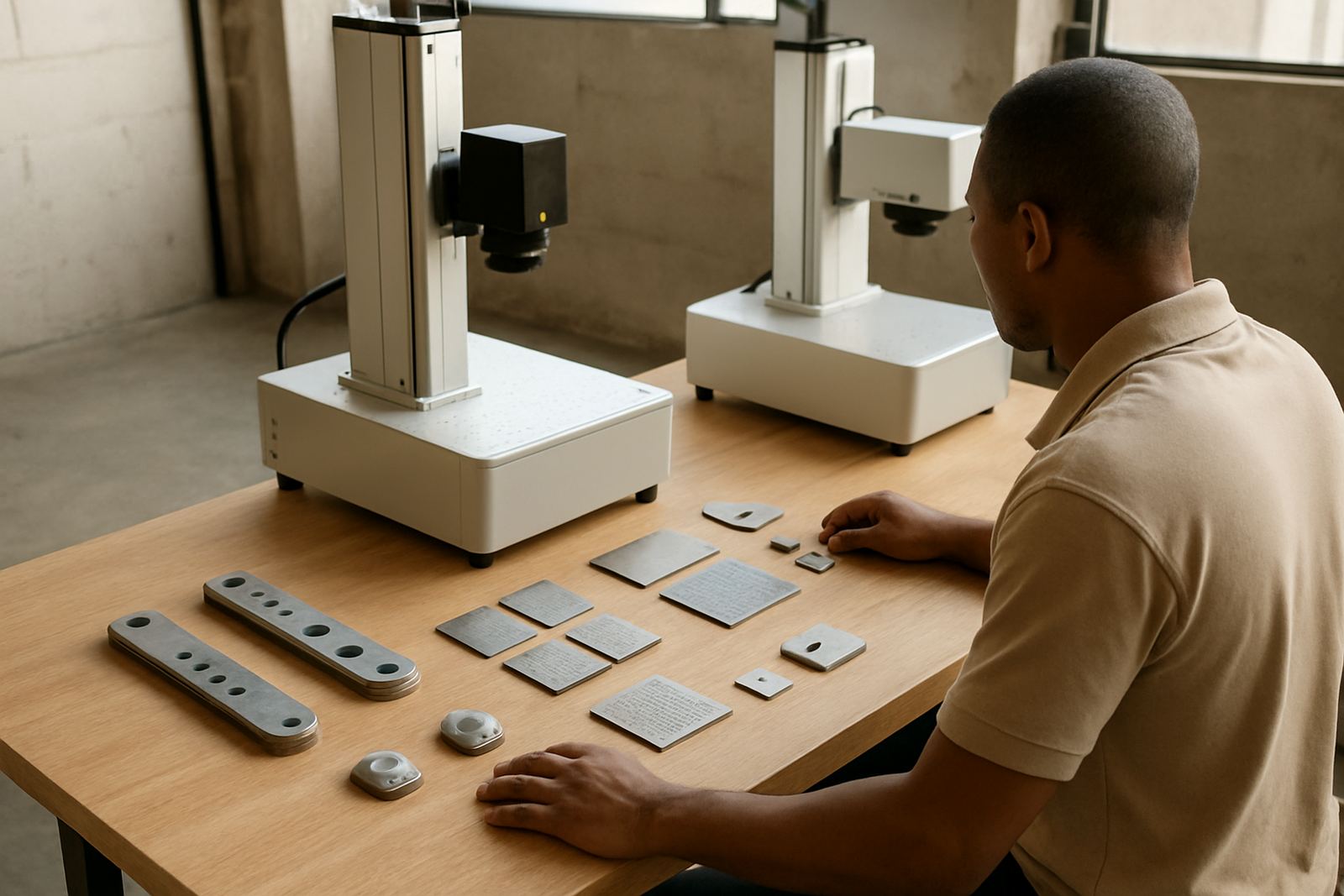
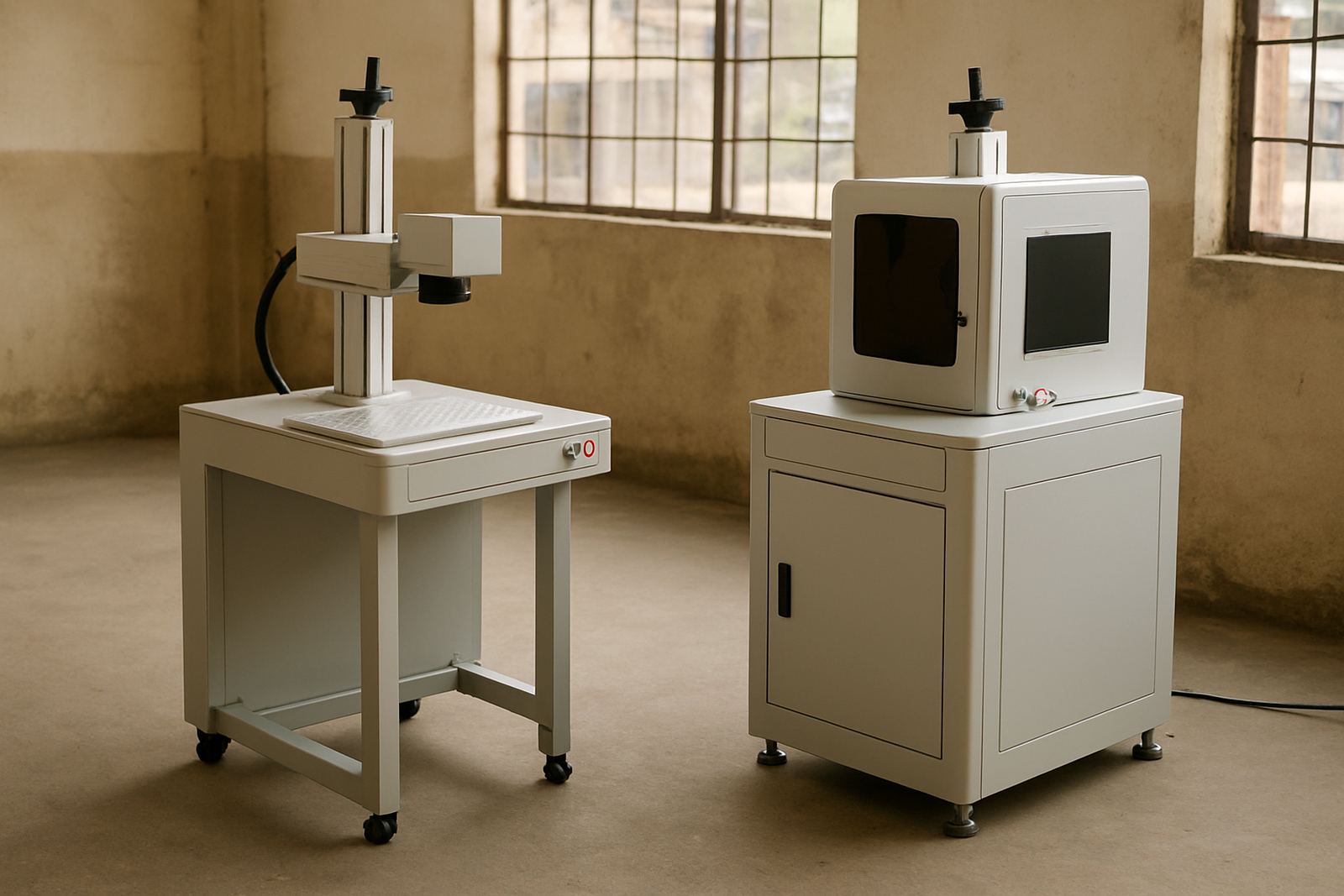
Both formats can mark stainless steel, mild steel, aluminium, brass and many jewellery items, but the best choice depends on the way your parts move through the workshop. A benchtop machine suits operators who load one part at a time, work with fixtures, and need easy access to irregular shapes. An enclosed unit suits repeat work where the part sits inside a fixed bay and the operator wants a set routine.
In Germiston, Boksburg and Wadeville we often see smaller metal shops start with a benchtop unit because it gives flexibility on the same day you receive samples, while larger producers in Jet Park or Kempton Park prefer enclosed machines for steady output and cleaner control of the work area. If you mark rings, tags, small components or serial plates, think about how often the item changes size and finish.
- Check the largest and smallest parts you mark each week
- Confirm if the job needs manual positioning or fixed jigs
- Note whether the marking is cosmetic, traceability based, or both
- Think about how many items the operator handles per shift
Benchtop Machines: Open Access and Faster Changeovers
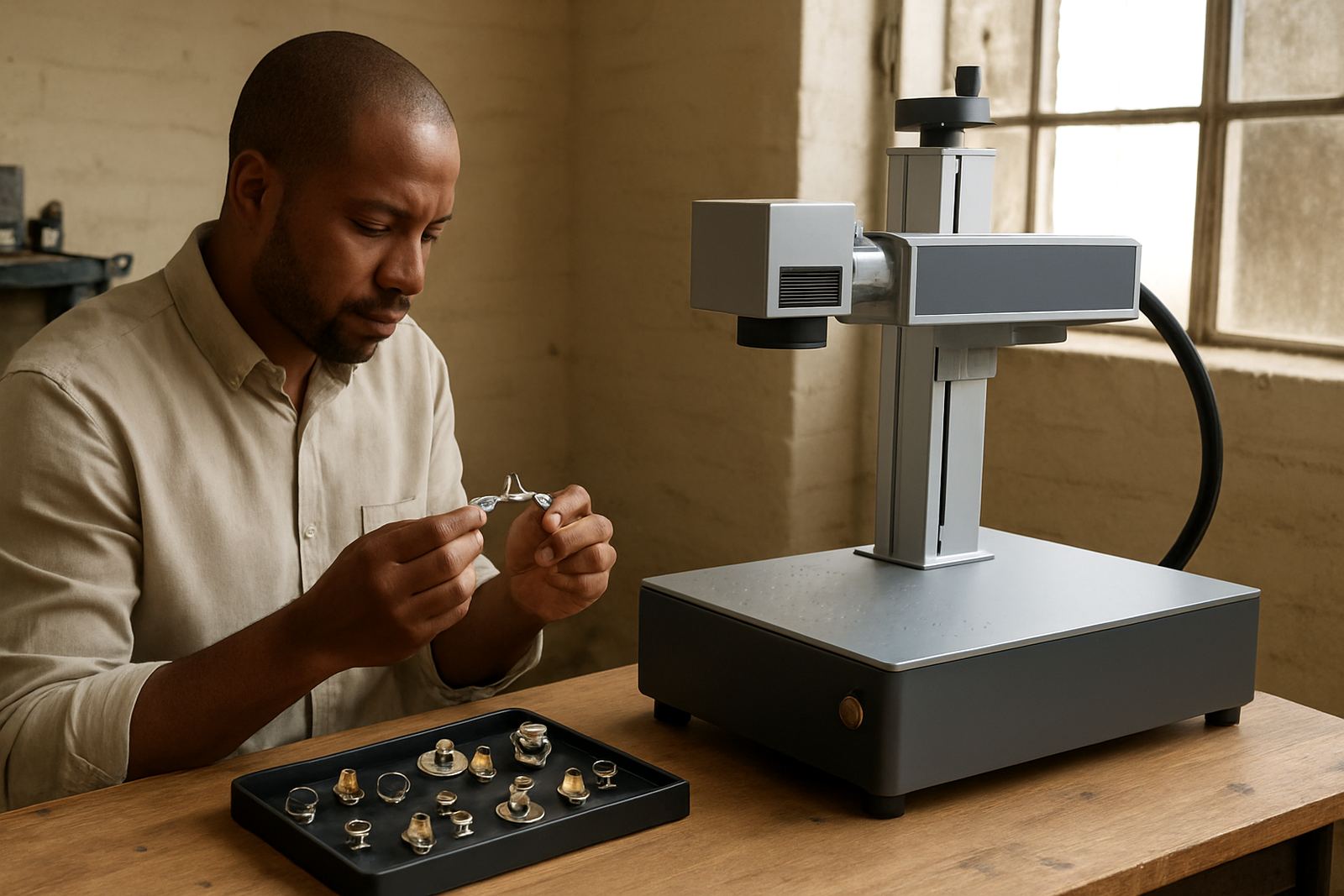
A benchtop fibre laser marking machine gives direct access to the work area. That helps when you need quick sample marking, frequent fixture changes, or custom parts that vary from order to order. It is usually the easier option for a workshop that has limited space and wants a compact setup near packing, inspection or small-scale assembly.
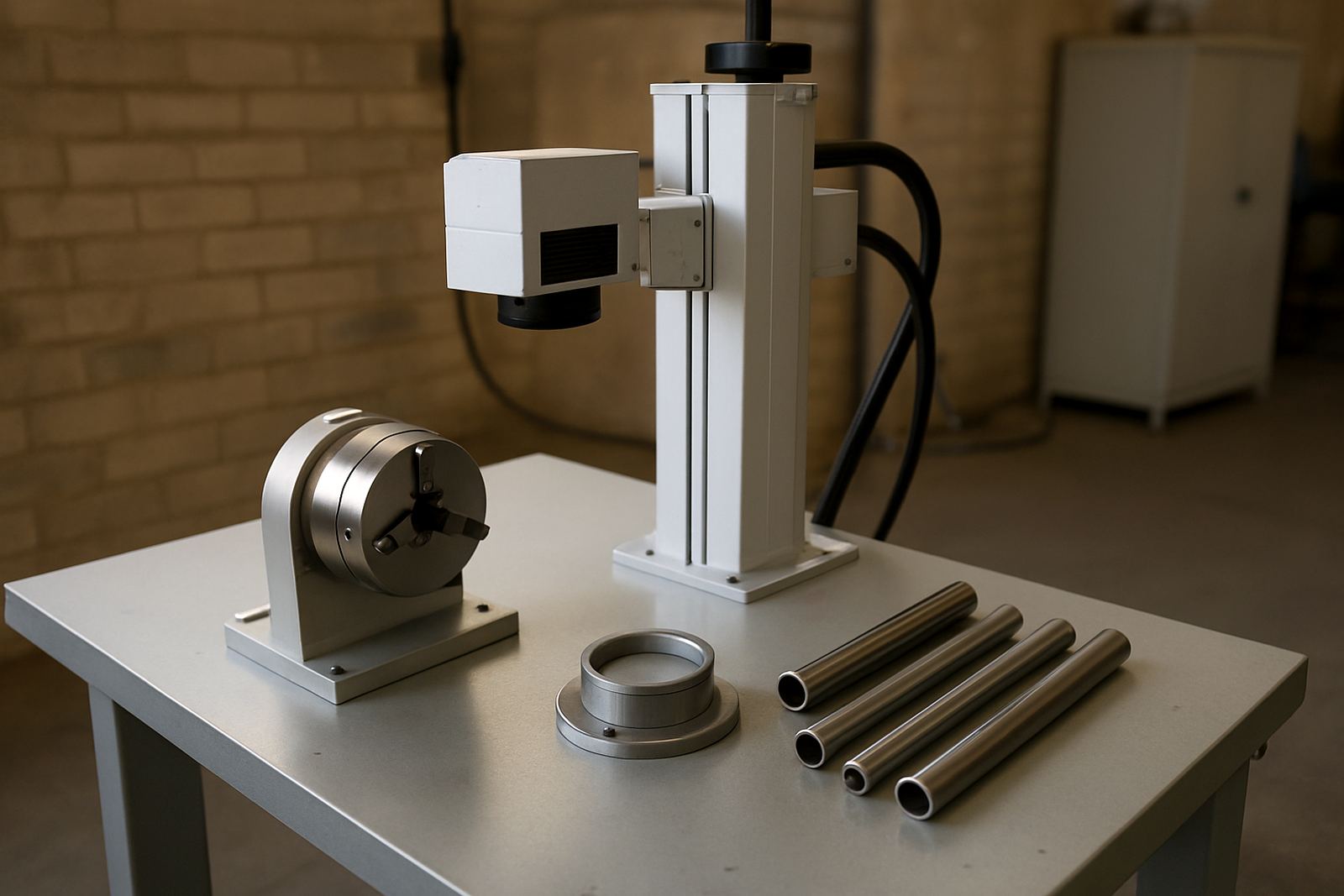
The main advantage is flexibility. You can place a small vice, rotary attachment or custom fixture on the table, line up the part, then move straight into marking. For jewellery, tool parts and short production runs, this can save time because the operator is not waiting for doors or safety cycles. The trade-off is that the open format asks for stronger workshop discipline, because the laser area is not physically enclosed.
- Best for sample work and smaller batch runs
- Easier to reposition fixtures and rotary units
- Fits better in compact workshops
- Needs clear safety controls and trained operators
Enclosed Machines: Controlled Access for Safer Daily Use
An enclosed machine keeps the marking area behind a guard or viewing panel, which helps reduce exposure to the laser beam and limits access while the system is operating. This is useful where more than one person moves through the workspace, or where a factory wants a cleaner rule set for operator safety. It also suits sites where management wants a more controlled process for sign-off and repeat marking.
For businesses working under tighter internal safety rules, the enclosed format often makes supervision simpler. The operator loads the part, closes the chamber and runs the cycle with less distraction from nearby activity. That can matter in busy plants in Alberton or Isando where forklifts, conveyors and other machines are running at the same time. It also helps when the site has visitors or trainees on the floor.
- Better for shared work areas and busier floors
- Reduces incidental contact with moving or laser active parts
- Useful where safety procedures must stay consistent
- Helps keep dust and airflow more controlled around the mark zone
Safety Checks Before You Decide
Safety is not only about the machine format. It is also about the part, the fixture, the operator and the room around the machine. A benchtop unit can be perfectly suitable if the team follows proper controls. An enclosed unit can still need careful setup if the job creates fumes, reflections or awkward loading. The right question is not which one is safer in every case, but which one suits your actual workflow and floor layout.
Before you decide, look at lighting, ventilation, cable routing and power backup. In South African workshops load-shedding can interrupt a marking job halfway through, so stable power planning matters. Coastal humidity may also affect clean electrical storage and part finish, while dusty inland sites may need more frequent cleaning around optics and fixtures. If your site is in Wadeville, Germiston or further afield, the machine must match your conditions, not just the sample part.
- Check emergency stop access and operator visibility
- Confirm ventilation for fumes, smoke and fine dust
- Plan for power interruptions and safe restart procedures
- Keep reflective parts controlled with proper fixturing
Workflow Questions That Show Which Format Fits Better
Ask how the machine will be used on an average Tuesday, not only on the best day in the lab. If the team marks the same part all day, with set positioning and fixed cycle times, an enclosed system may improve consistency. If the team handles one-off pieces, urgent samples and changing work every hour, an open benchtop unit may give better speed and less downtime between jobs.
It also helps to think about the people using it. A trained operator can work quickly on a benchtop machine, but the setup must stay tidy and the fixture repeatable. On an enclosed machine, the learning curve often centres on loading methods, software setup and keeping the chamber clean. Our training team often finds that the strongest results come from a clear process sheet, not just a good machine.
- Measure changeover time between jobs
- List how many different part types you handle
- Decide who may operate the machine and who may not
- Set a simple cleaning and inspection routine
A Simple Buying Checklist for South African Workshops
If you are weighing up benchtop versus enclosed, use a short checklist before you sign off the purchase. First, confirm the marking area size and whether the machine can handle your current part plus the parts you expect next year. Second, check whether you need fixture design, sample marking or focus calibration before production starts. Third, ask how the machine will be maintained if your site is in a busy area like Kempton Park, Boksburg or Alberton and you need quick support.
Fourth, think about after sales service. Installation, operator training, preventive maintenance and breakdown repairs are easier when you work with a team that can visit site nationwide. For some customers, remote assistance is enough for software setup or process changes. For others, a field visit is better when the machine needs relocation or the marking results are not repeating properly. A well chosen machine should fit the work and the workshop, not force the workshop to change too much.
- Confirm part size, fixture needs and marking depth
- Check if the site needs enclosed safety control or open access
- Ask about local support, spares supply and training
- Plan for future jobs so the machine does not become too small too soon