Why Automotive Parts Need Permanent Marking
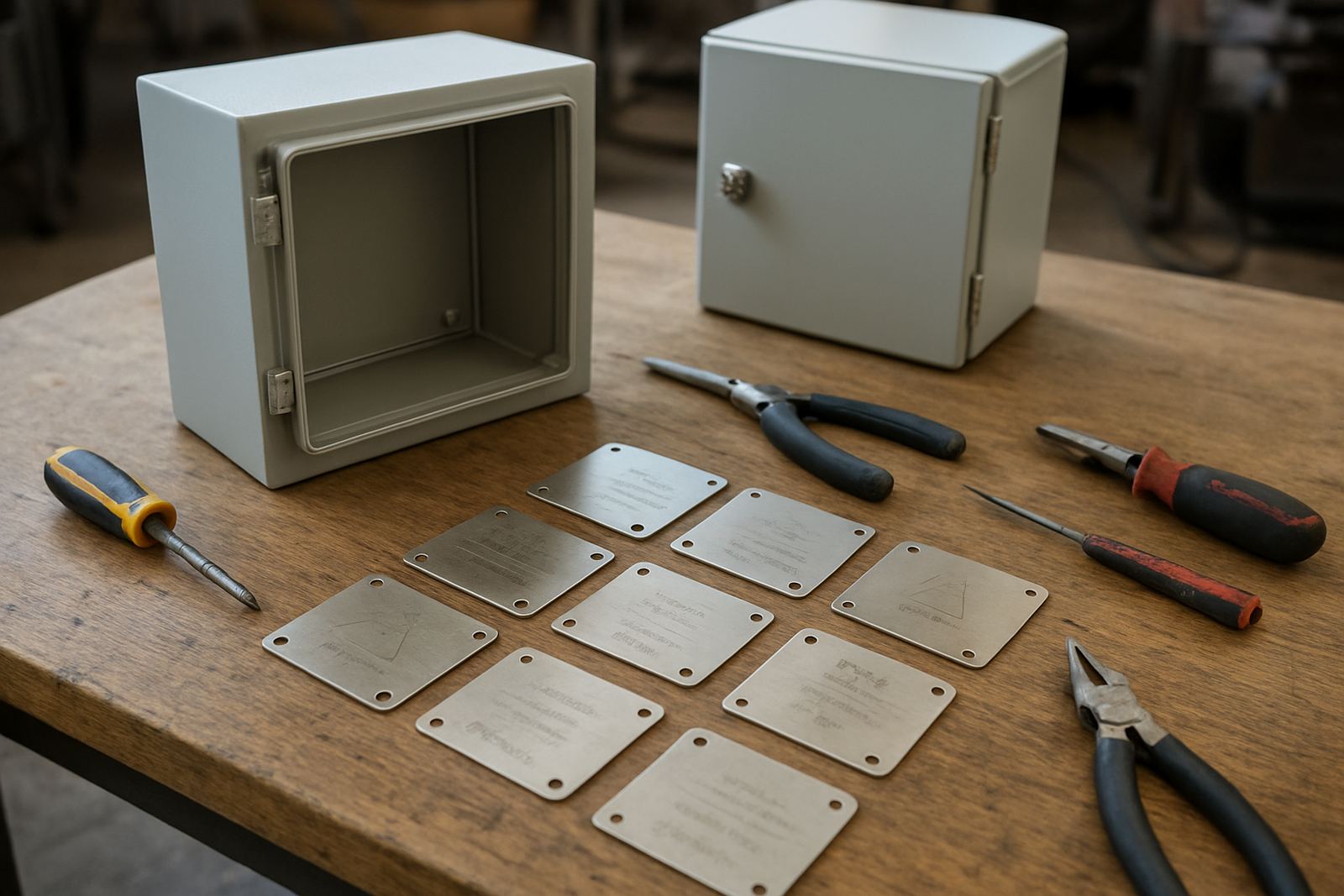
In automotive production, part marking is not just for branding. It supports traceability, batch control, inspection records and after-sales tracking. When a bracket, housing or small metal component leaves the line, the mark must still be readable after machining, powder coating, transport and years of service.
Fibre laser systems suit this work because they create a permanent mark directly on the metal surface. There is no ink to dry, no label to peel off and no consumable ribbon to replace. For Gauteng workshops working with engine parts, suspension components, clamps and precision fittings, that consistency matters every day.
We often see buyers asking for a simple serial number at first, then later needing dates, shift codes, supplier numbers and 2D codes. Planning for that from the start saves rework and keeps traceablity tidy across production runs.
Typical Equipment Set for a Parts Line
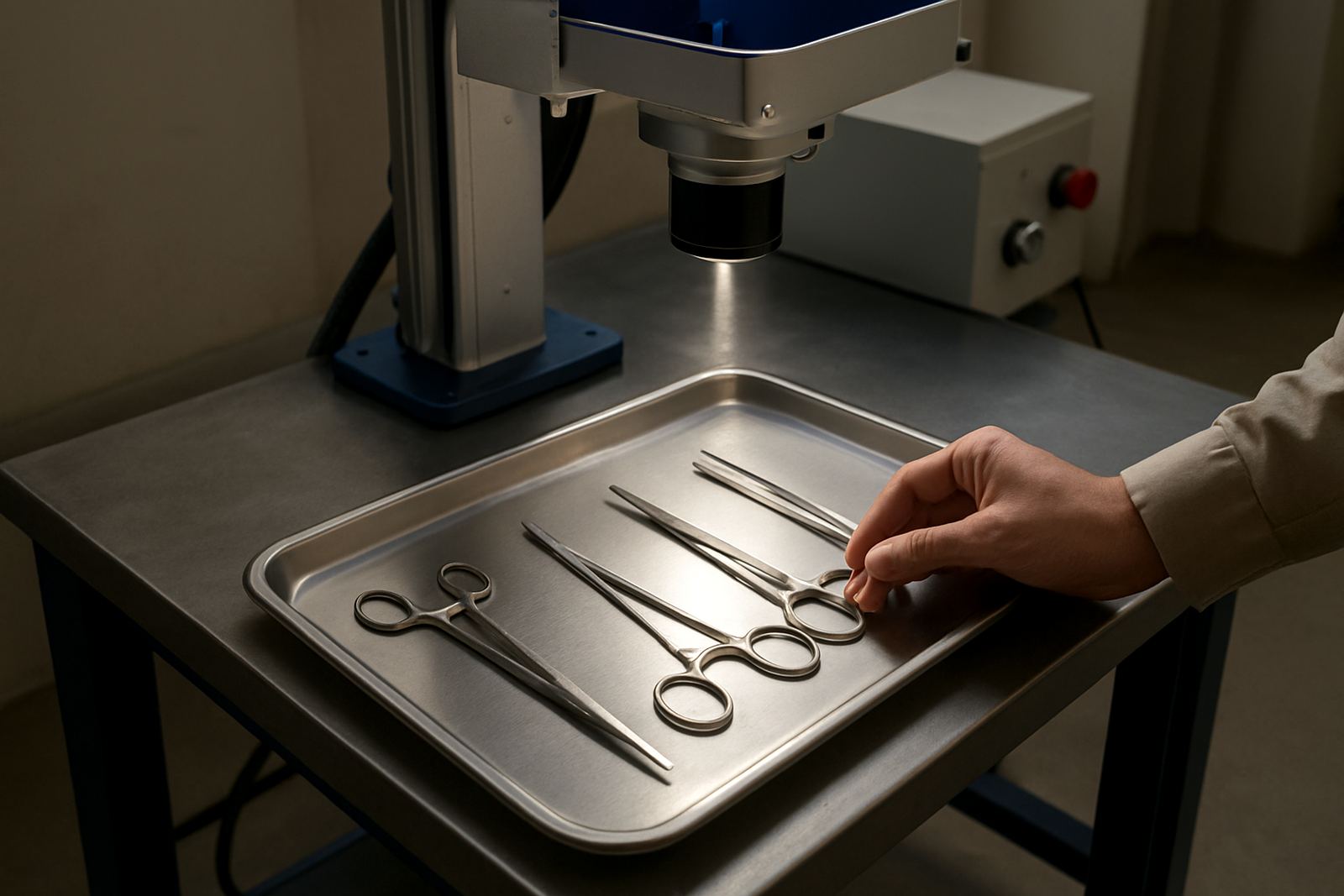
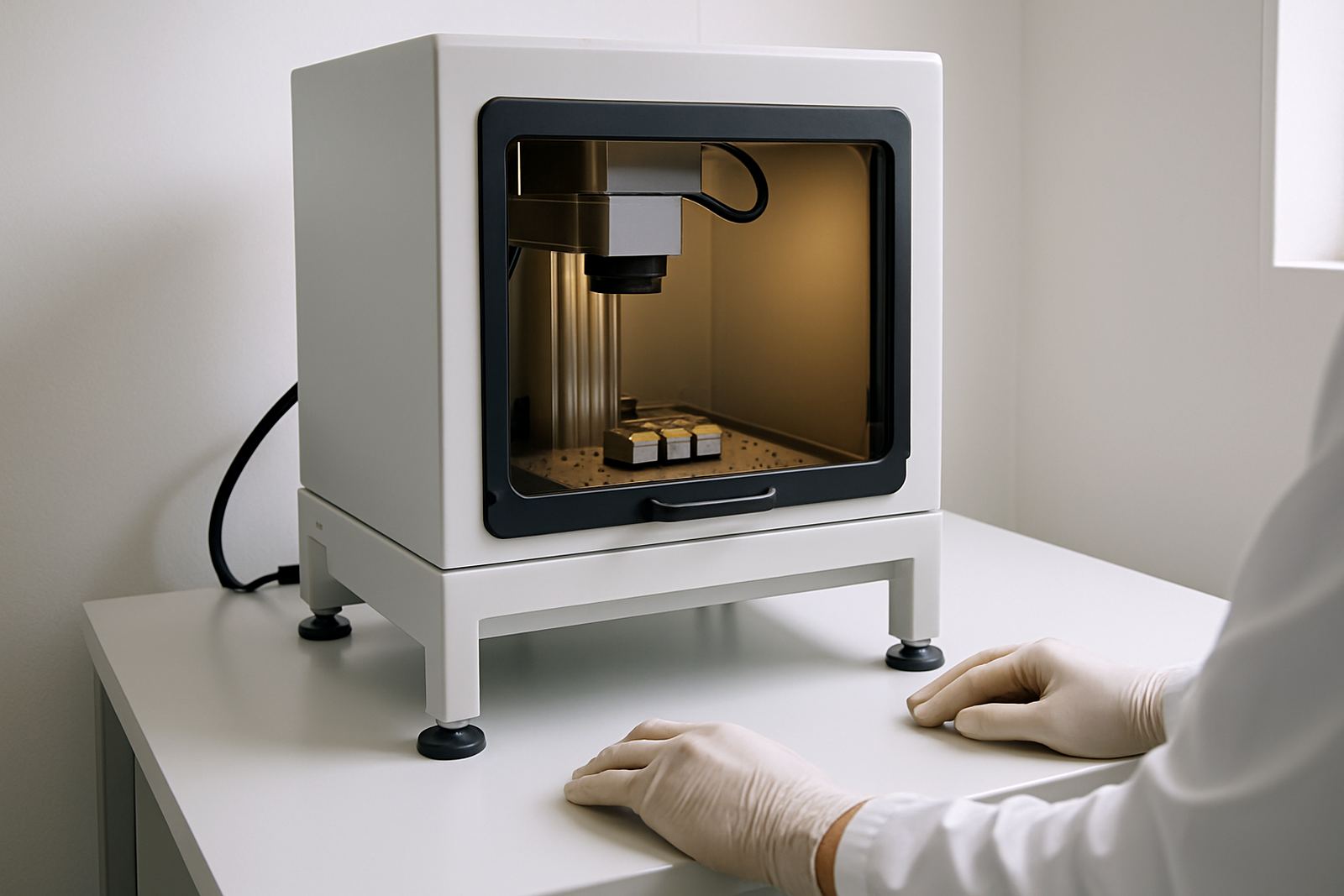
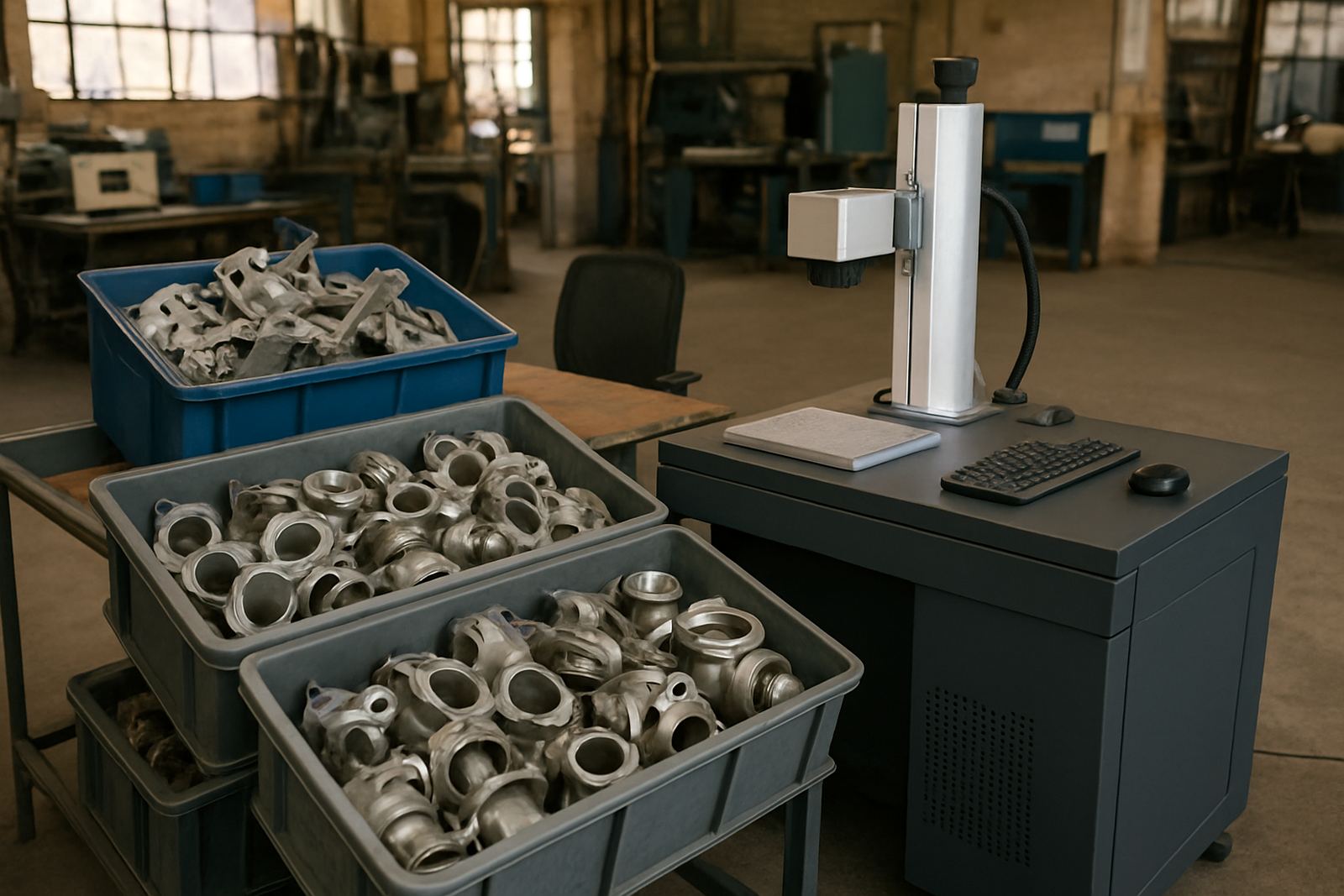
The right setup depends on whether you are marking loose parts, jigs or finished assemblies. A compact fibre laser marking machine is often enough for a workshop that handles brackets, tags, clamps and small housings. For higher volume work, a fixed station with part locating fixtures and a guided marking area makes repeat jobs faster.
Common equipment in an automotive marking cell includes:
- Fibre laser marking machine with the correct power for steel, stainless steel, aluminium and coated metals
- Worktable or custom fixture for accurate part location
- Rotary attachment for shafts, round housings and rings where needed
- Extraction or fume control where coatings or oils are present
- Barcode, serial and 2D code software setup for production data
- Basic safety enclosure or controlled marking area where the cell is manned all day
For parts with curved surfaces or mixed sizes, fixture design becomes important. A good clamp or nest reduces operator error and keeps marking depth, position and size consistent from part to part.
Layout Planning for Workshops and Production Floors
Good planning starts with the part flow. If material comes in from machining, then moves to marking, inspection and packing, the laser station should sit close to that route. In many Germiston and Boksburg plants, space is limited, so the machine has to fit beside a bench, pallet area or quality control point without creating a bottleneck.
We normally look at floor space, power supply, dust, oil mist and lighting before installation. The operator needs enough room to load parts safely and check alignment. If your site has load-shedding, a UPS or backup power plan may be worth adding so the software does not lose jobs mid-run.
Layout should also consider who is using the station. A one-shift workshop may only need a simple table and laptop based control. A larger manufacturer in Alberton or Kempton Park may want a more fixed position with part bins, marked input trays and a clear flow for inspection. That keeps the process orderly and reduces mistakes.
Common Marking Mistakes We Help Clients Avoid
One frequent problem is trying to mark too many part types with one generic fixture. The result is slow changeovers and poor alignment. Another is using artwork that looks fine on screen but is too small once placed on a curved or textured surface. What reads clearly on a drawing may disappear on a black-coated bracket.
Other mistakes we see include:
- Choosing a machine only on price and not on the actual metal type
- Forgetting to allow for oily or heat-treated surfaces
- Using marking text that is too small for post-process inspection
- Placing the station too far from the production line, which adds walking time
- Not training the operator on file naming and job selection
For traceability jobs, a clean data structure matters as much as the laser itself. If the part number, revision and batch code are not set up properly, the mark becomes hard to use later. We help clients avoid that during setup so the process stays practical for the team on the floor.
Budget Ranges in Rand for Automotive Marking Cells
Budget depends on the power required, the size of the marking field, whether you need fixtures and how much integration is involved. A straightforward fibre laser marking setup for small metal parts can start from about R180,000 to R280,000. That suits many workshops marking serial numbers, logos and basic identification.
For a more complete automotive cell with a better fixture set, rotary accessory, extraction and more involved software setup, budgets commonly range from R300,000 to R550,000. If the work needs special nesting, operator guidance, site relocation or multiple stations, the cost can move higher. We usually recommend budgeting a little extra for sample marking and fixture changes, because those items make a real difference once the line starts running.
Smaller buyers sometimes ask whether a cheaper unit will do the job. It may work for light use, but if your parts are moving through shifts in Wadeville, Isando or Jet Park, the machine has to stand up to daily use and keep the mark consistent. It is better to match the system to the work than to keep repairing a shortfall later.
Installation, Training and Support Across South Africa
Fibre Laser Marking installs and trains at sites nationwide, with base support from Wadeville, Germiston. For automotive parts clients, we handle machine installation, software setup, operator training, preventive maintenance, breakdown repairs and remote assistance when needed. That is useful for plants that cannot wait days for a settings issue or a fixture tweak.
Our team also assists with sample marking and process optimisation before a final decision is made. If you are marking mixed parts, we can help test the surface finish, code size and placement so the result suits your inspection rules. For relocated equipment, site relocation support is available as well.
For parts suppliers, the aim is simple: a mark that stays legible, a process that is easy for operators and a setup that fits the space you actually have. When the system is planned well, the marking station becomes part of the production flow rather than another admin headache.