Repeatable marking for mixed production runs
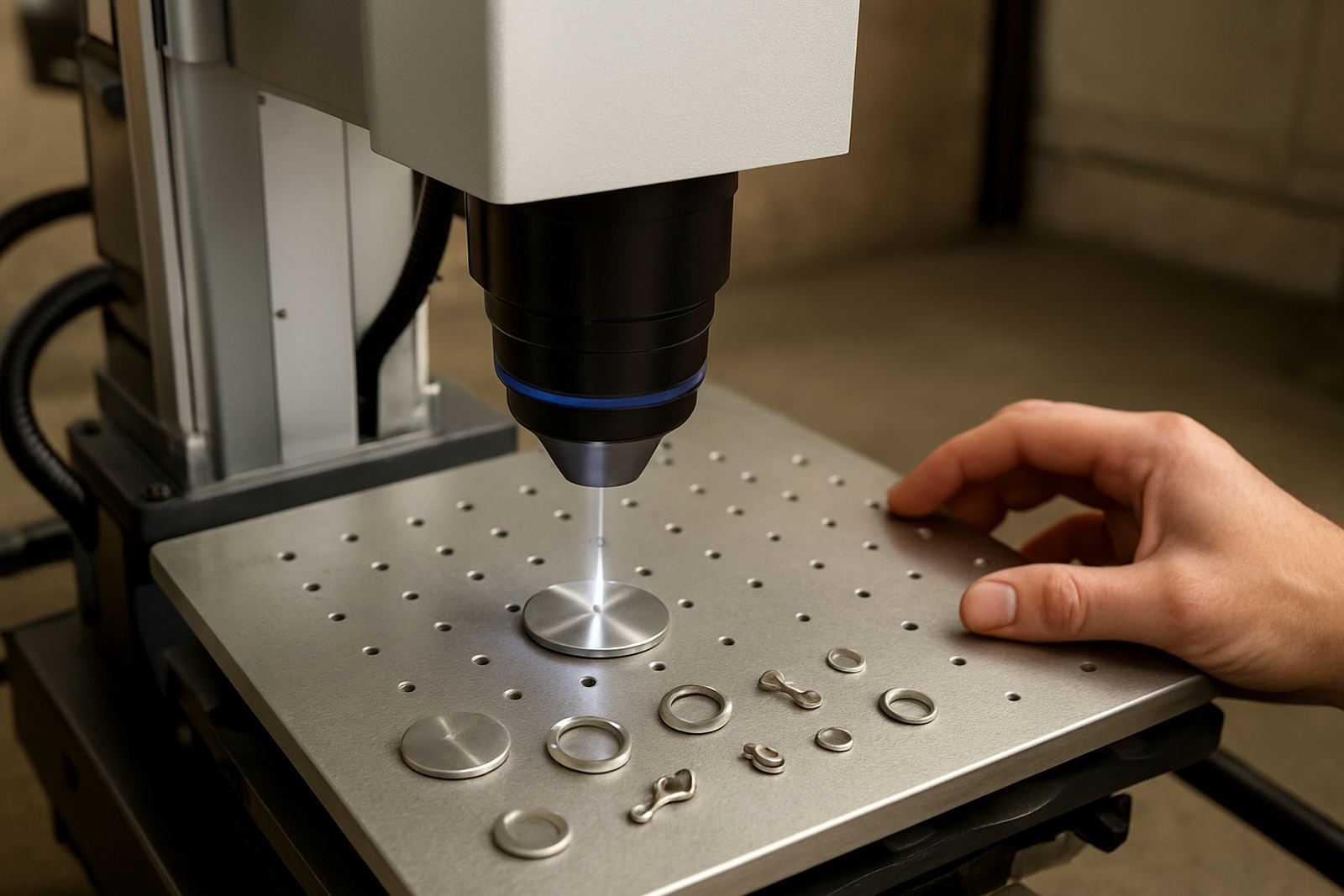
The Component Marker is a general-purpose fibre laser marking machine set up for part identification, traceability, logos, serial numbers, QR codes, batch codes and fine decorative engraving on metal. It suits workshops that handle many different components in a day and need each mark to come out in the same position and at the same depth. That matters when you are moving between short runs, rework jobs and regular production, especially where the customer expects the part to look clean after marking.
Because fibre laser marking is non-contact, there is no tool wear in the usual sense and very little physical force on the part. That makes it a good fit for small brackets, nameplates, housings, rings, tags, tools and machined components. The mark is permanent, and on the right material it stays legible even after handling, cleaning or outdoor use.
- Suitable for stainless steel, mild steel, aluminium, brass, copper and coated metals
- Common in jobbing shops, light manufacturing, jewellery and technical service departments
- Useful where traceability and part coding are needed for quality control
Machine sizes and workholding options
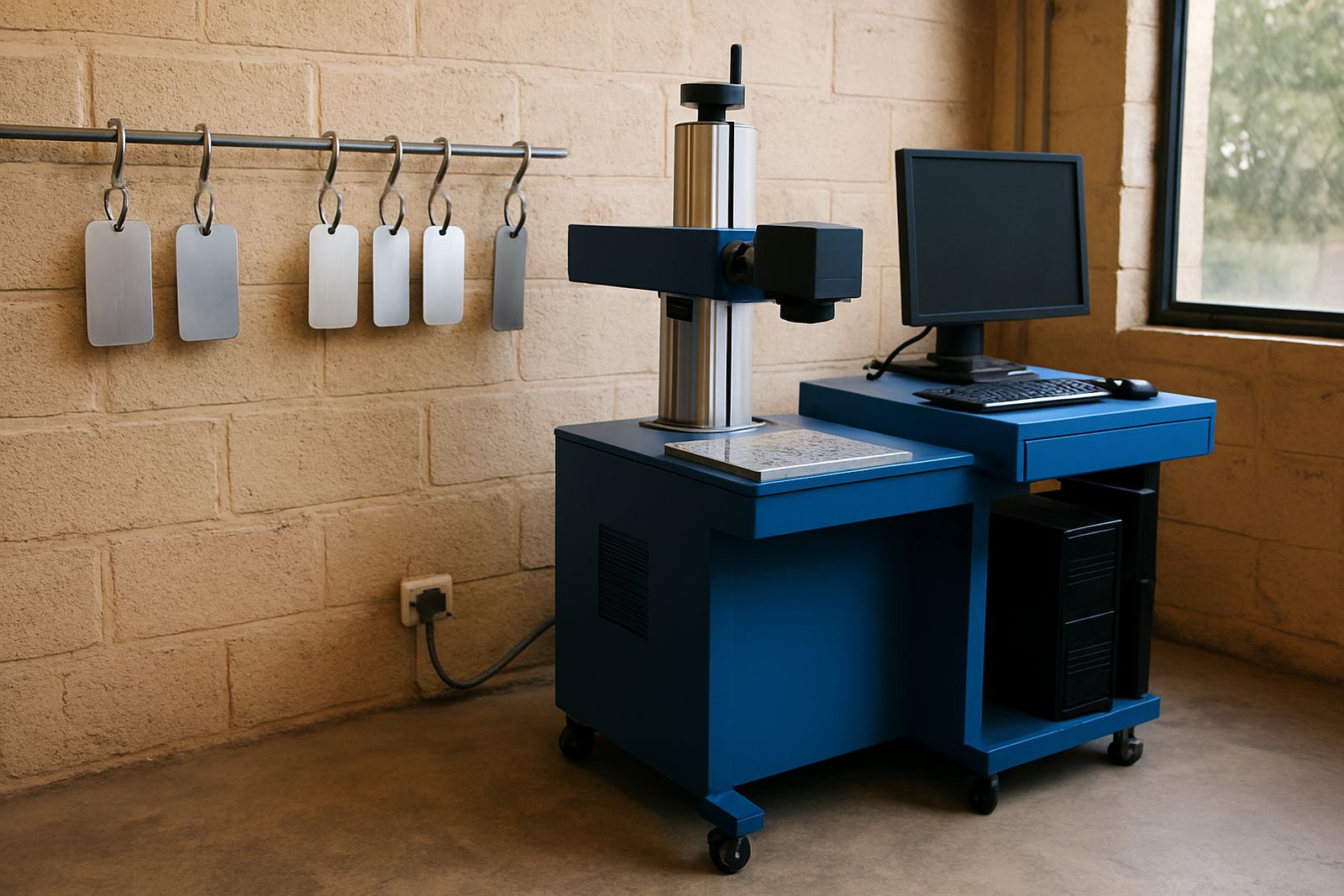
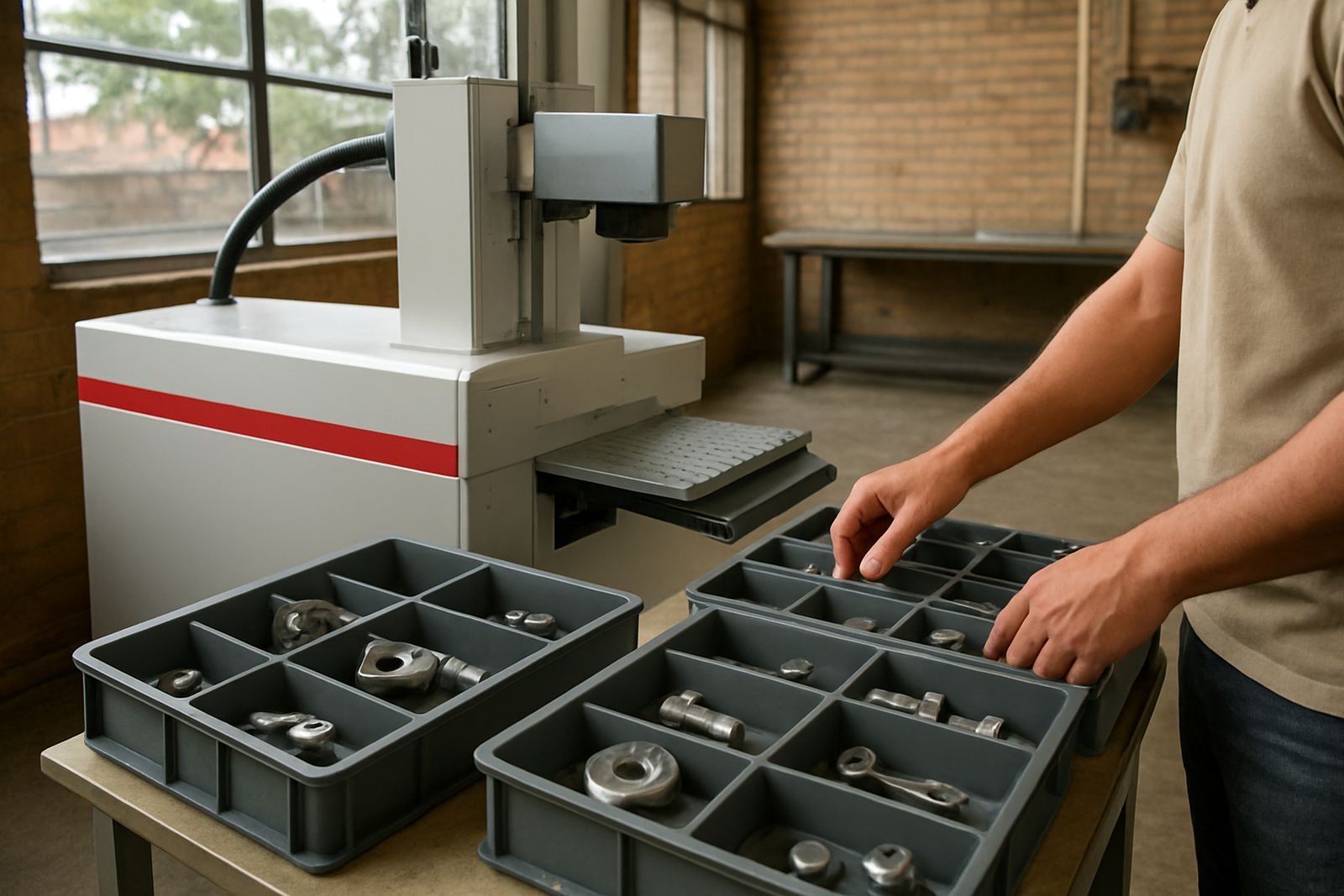
We supply the Component Marker in practical workstation formats to suit different part sizes and marking volumes. Some users only need a bench unit for small components, while others need a larger enclosed setup with more room for jigs and fixtures. The right choice depends on the biggest part you expect to mark, how often you change over between jobs, and whether the operator needs open access or a controlled enclosure.
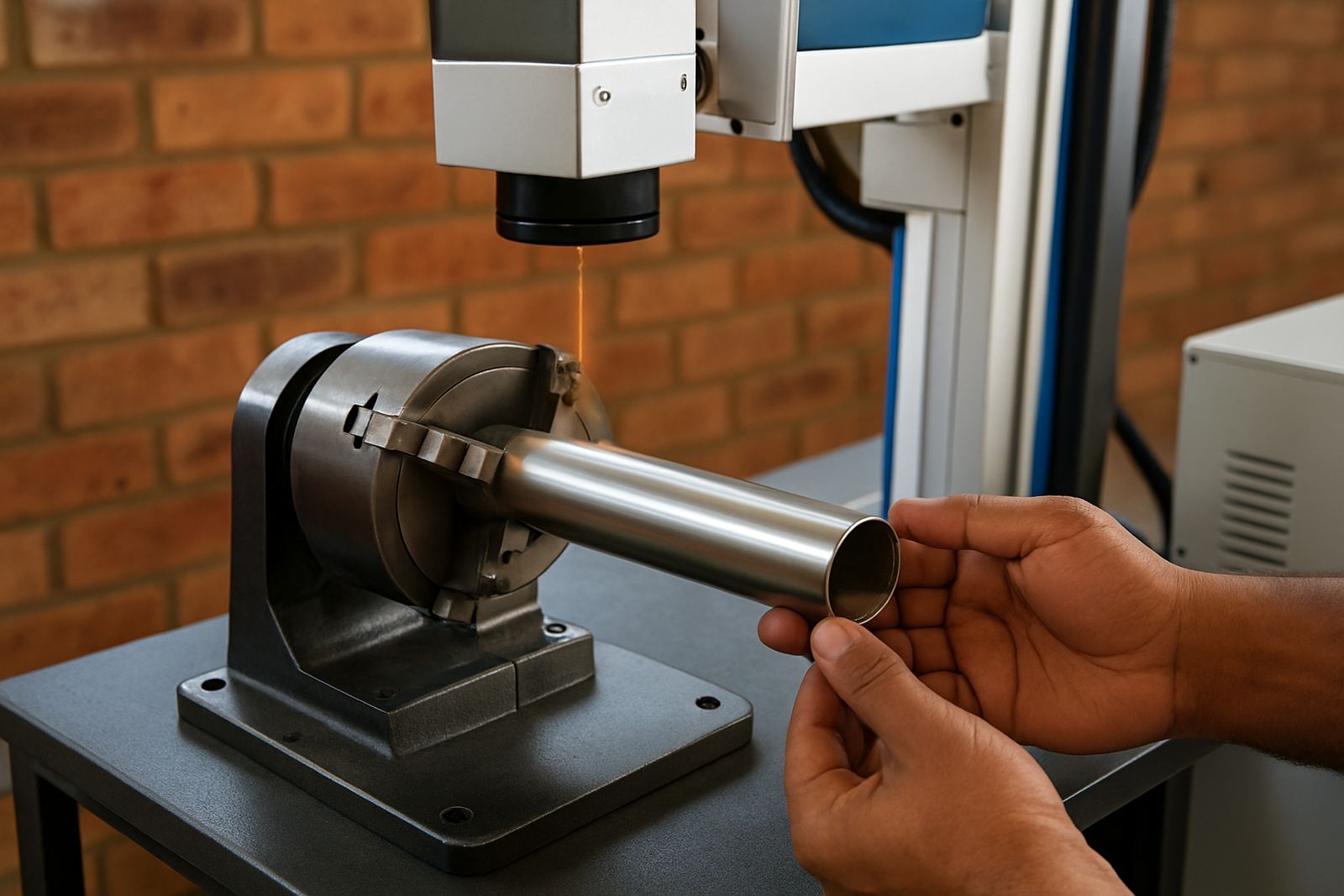
Standard options usually include a compact bench machine, an enclosed cabinet model, and a unit with a motorised Z axis for easier focus adjustment. Rotary fixtures can be added for rings, cylinders and round parts. For repetitive work, custom nests and locators help keep the component in the same place each time, which cuts setup time and keeps the mark where it should be.
- Compact bench format for small workshops and limited floor space
- Enclosed format for safer operation and reduced exposure to stray light and dust
- Rotary and fixture options for rings, tubes, shafts and awkward shaped parts
Where the Component Marker fits best
This machine suits businesses that need reliable marks on metal parts without long setup times. In Wadeville, Germiston and nearby industrial areas, it works well in engineering shops, sheet metal operations, electrical component workshops, tool rooms and jewellery studios. It is also a practical choice for Gauteng sites with repeated short runs, where one operator may need to process many different part numbers in a shift.
It is especially useful when marks must stay readable after powder coating, passivation, cleaning or regular handling. Coastal users also appreciate that the mark itself does not depend on inks or labels that can lift in humid conditions. If you work in a plant with traceability audits, stock control, or customer part approval, the machine helps keep records neat and consistent.
- Part number marking for production and stock control
- Jewellery engraving for names, logos and fine pattern work
- Tool identification and asset marking for workshops and maintenance teams
Installation, power and site needs
Installation is straightforward, but the site still needs the right basics. The machine runs from a stable single-phase power supply in many cases, although the exact requirement depends on the configuration chosen. Because load-shedding and voltage dips are common in some areas, we recommend a proper surge protector and, where needed, UPS support for the control side so jobs do not stop mid-mark. The machine should be placed on a firm, level bench or stand, away from vibration, grinding dust and direct sunlight.
No gas is normally required for standard fibre laser marking. Some applications may use an assist setup or fume extraction, depending on the material and marking process. Good extraction is worth planning for, especially if you mark coated parts, plastics in mixed jobs, or work in a small enclosed room. During installation we check focus, machine alignment, software setup and the first sample marks so your team can start with the correct settings.
- Allow a stable power supply and protection against surges and dips
- Plan for extraction where fumes or fine smoke may be produced
- Leave enough bench space for the machine, laptop or controller, and part loading area
Care, servicing and everyday upkeep
The Component Marker needs regular care, but not heavy day to day maintenance. Keep the lens area clean, check the working surface for dust and swarf, and make sure fixtures stay tight and square. If the machine is used in a dusty workshop, a short daily wipe-down goes a long way. On busy lines, it helps to have one person responsible for basic checks and another for scheduling service work when needed.
Preventive maintenance usually includes optical checks, focus calibration, software review, cable inspection and a general condition check of the moving parts and enclosure. If the machine is moved between sites, or after a power event, it is worth checking alignment and sample marks before returning it to full production. Our support team handles breakdown repairs, remote assistance and site visits across Gauteng and nationwide, so issues can be dealt with without long delays.
- Clean the lens window and working area regularly
- Check fixtures, cables and focus before long production runs
- Schedule preventive maintenance rather than waiting for a fault
What to confirm before you order
Before ordering, it helps to bring the sample parts, artwork and marking requirements together. The first thing to check is the material type and the size of the mark area. Then confirm whether you need plain text, variable data, logos, barcodes or 2D codes. If the component is curved, reflective or very small, mention that early so the correct lens and fixture can be proposed. A short sample marking session usually clears up any questions before delivery.
You should also think about operator access, available floor space, power at the site and whether the machine needs to move between branches. For clients in Alberton, Boksburg, Kempton Park, Isando, Jet Park and further afield, we can plan installation around your production times and train the operators on site. If you are comparing options, ask what level of enclosure, rotary support and fixture design is included, because that can affect both speed and mark quality.
- Part size, material and surface finish
- Type of mark needed, including text, codes and logo detail
- Space, power, extraction and whether the unit must be relocated later
Key facts
| Laser type | Fibre laser marking system for metal parts |
|---|---|
| Typical work materials | Stainless steel, mild steel, aluminium, brass, copper and coated metals |
| Mark types | Text, serial numbers, part codes, QR codes, barcodes, logos and fine engraving |
| Work format | Bench, enclosed or rotary-supported setup depending on application |
| Power needs | Generally single-phase supply with surge protection recommended |
| Support | Installation, operator training, software setup, maintenance and breakdown repairs |