
What a jewellery ring marker is used for
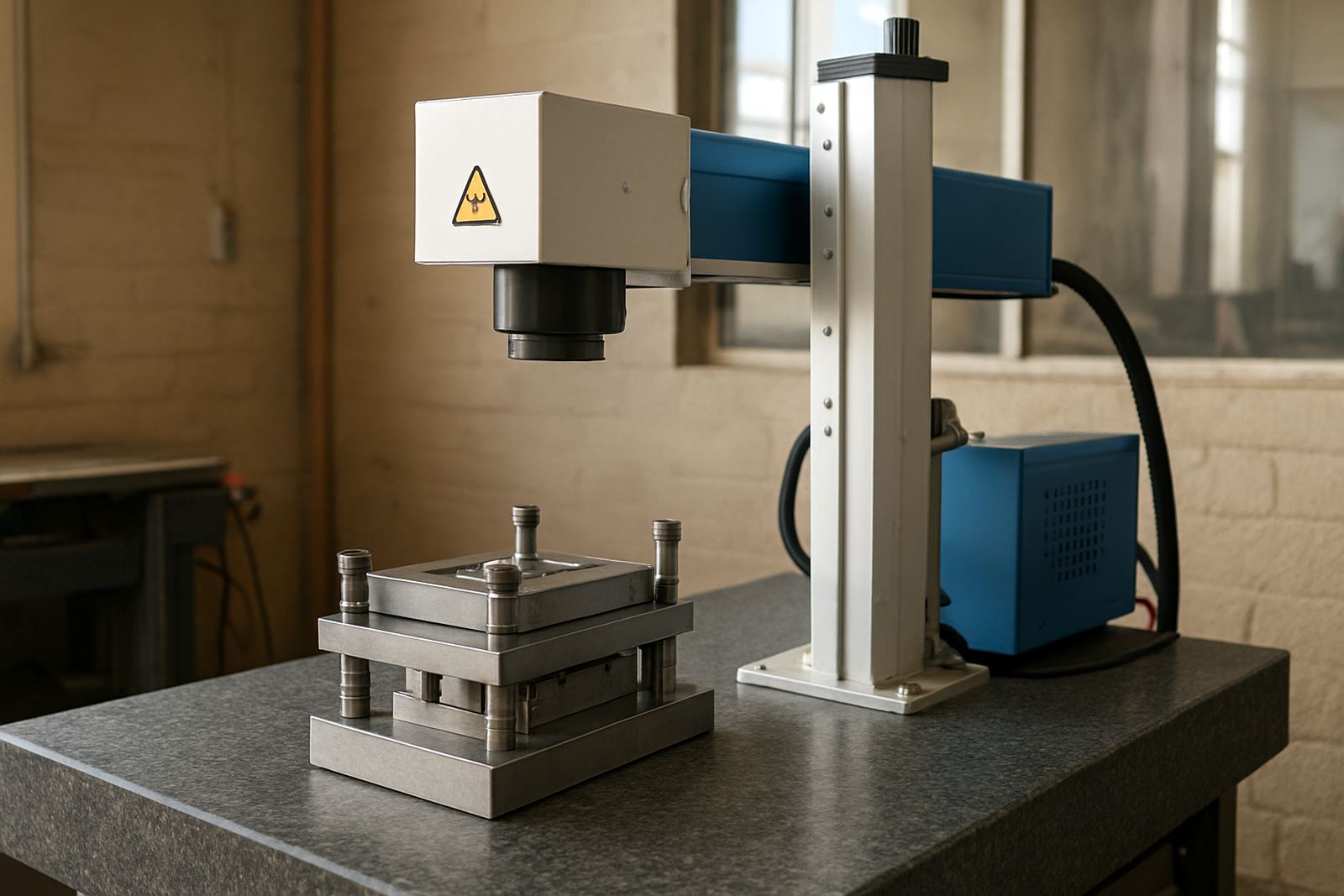
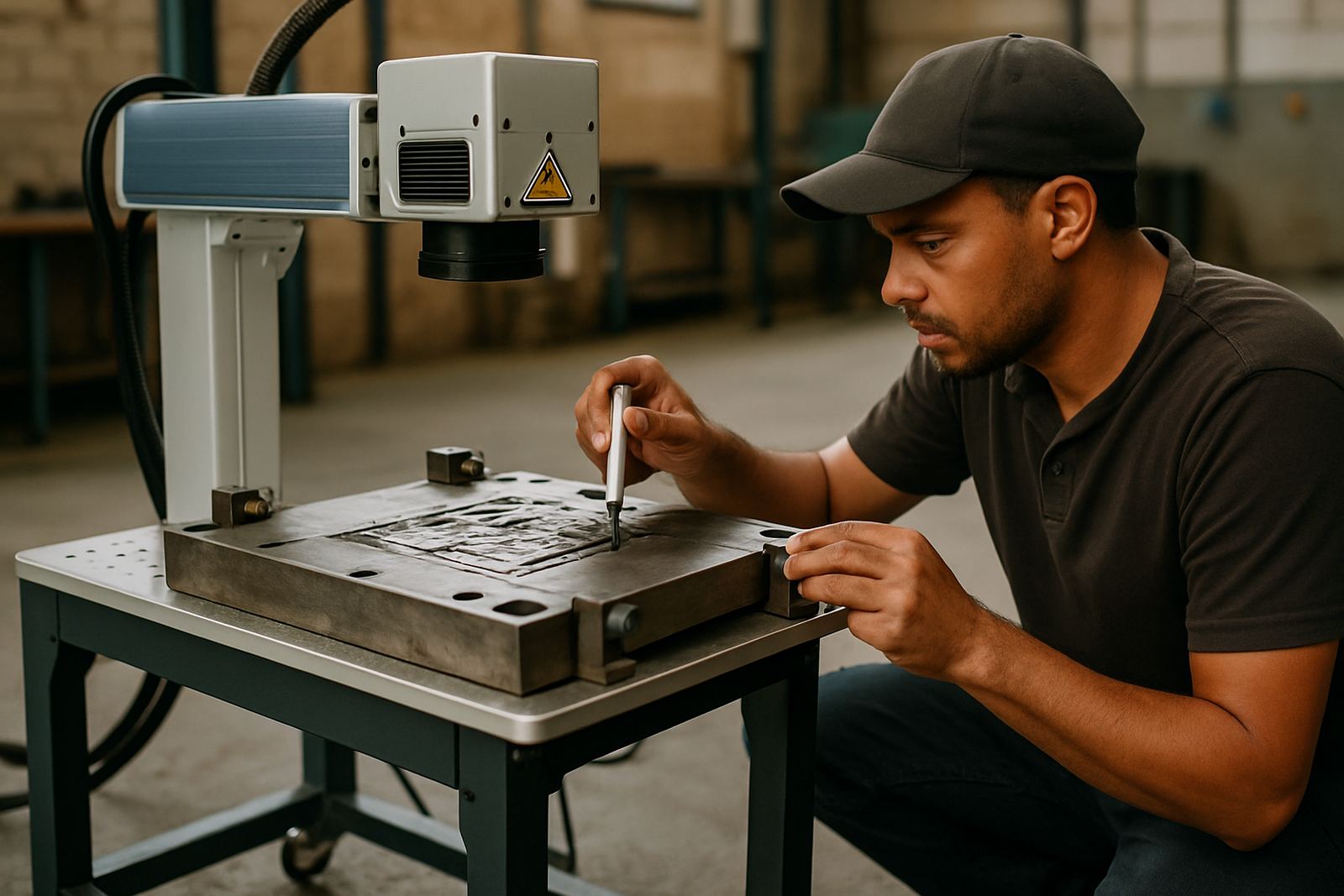
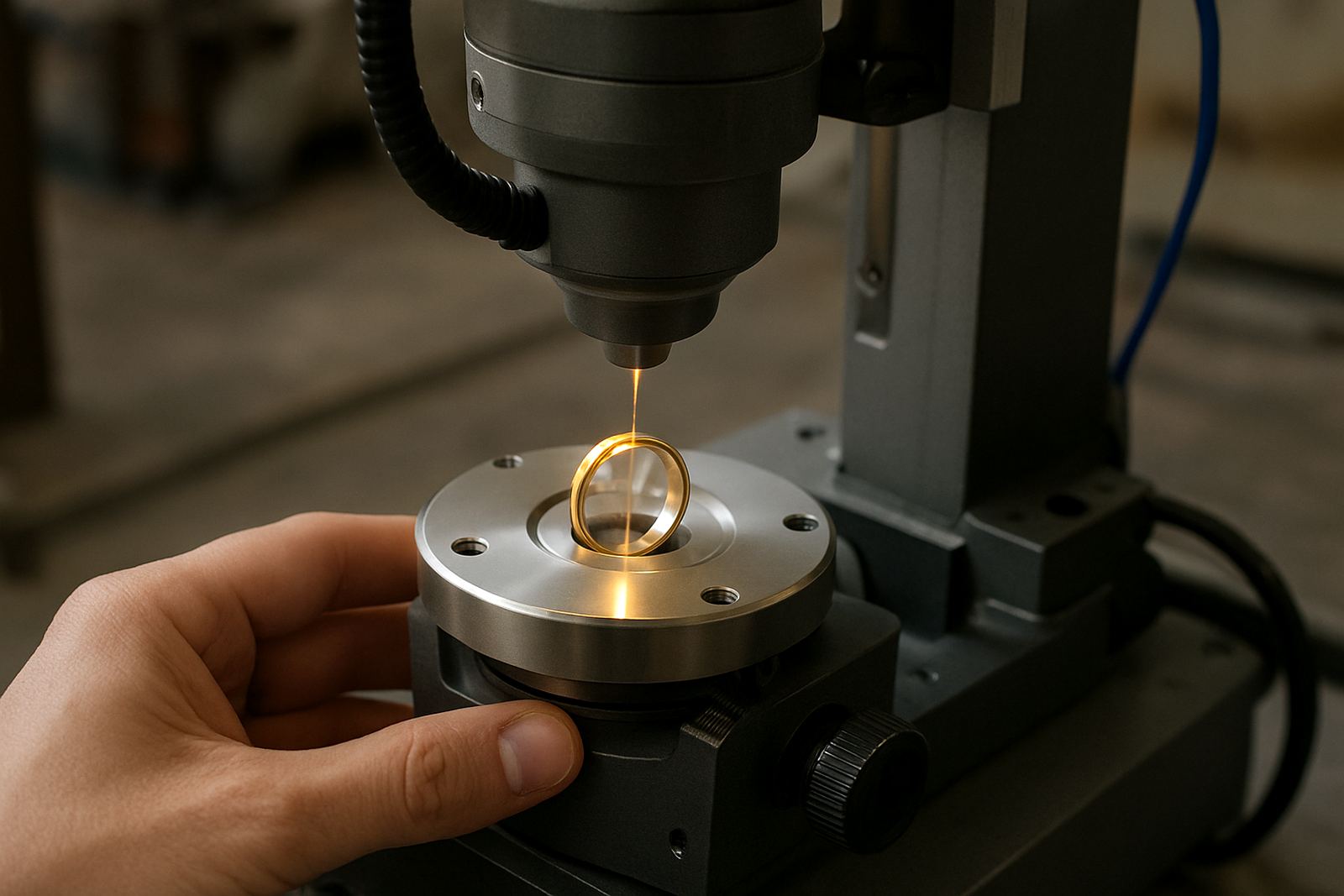
A jewellery ring marker is a fibre laser marking machine configured for circular, small-diameter parts, mainly rings and bands. It is used where the mark must stay sharp on a curved inside surface, with very small character sizes and tight placement control. For wedding bands, signet rings, class rings and custom pieces, it gives a neat finish that holds up to wear, polishing and handling.
Typical work includes initials, dates, batch codes, carat references, logo marks, serial numbers and fine decorative lines. Because the marking is non-contact, there is no tool pressure on delicate workpieces, which helps when the ring wall is thin or the finish is already polished. For small workshops and larger jewellery lines alike, this saves time on repeat orders and reduces reject pieces.
Marking area, ring sizes and setup options
Ring work needs the right holding fixture, focal height and rotation control. A good setup allows the ring to sit true while the beam follows the inside band evenly. This is where the fixture design matters most, because a ring that shifts even slightly can spoil the mark or make the text uneven.
Common setup options include a rotary attachment for round parts, a custom ring jig for different band widths, and adjustable holders for varying inner diameters. Typical ring sizes handled are from about 10 mm inner diameter for small bands up to 35 mm or more depending on the fixture fitted. Marking area is usually compact, often 110 x 110 mm to 150 x 150 mm, though the exact field depends on the lens and application.
- Fine text for the inside band, usually 0.5 mm to 2 mm high
- Simple line art, symbols and hallmark style marks
- Serial numbers and batch codes for traceability
- Optional rotary control for repeatable ring positioning
Materials it suits in jewellery work
This type of machine suits metals that need crisp detail and low heat input. It is widely used on precious and non-precious jewellery metals, as well as stainless pieces for branded or personalised ranges. For plated items, the operator needs to test depth carefully so the top layer is marked without marking too deep into the base metal.
It works well on gold, silver, platinum, stainless steel, titanium, brass and some coated metals. Marking results depend on the alloy, polish level and the finish required. For high-gloss rings, some customers want a light surface mark while others want a deeper contrast mark that remains visible after everyday wear. A sample marking test is always the safest way to confirm the look before production starts.
Power, cooling and installation needs
Most fibre laser ring marking systems run from standard single-phase electrical supply, making them practical for jewellery workshops, factory floors and retail production rooms. In many cases a 220 V supply is enough, though the exact current draw depends on the laser source, control cabinet and any extraction or rotary equipment fitted. The machine does not need gas for the laser process itself, which keeps running costs lower and helps where gas supply is inconvenient.
There is no water chiller on many compact units, but the machine must still be placed in a clean, stable room with good airflow and low dust. For coastal areas, humidity control is worth considering because moisture can affect optics, connectors and storage of delicate ring stock. In load-shedding areas, clients often add UPS backup for the control computer and power conditioning for cleaner shutdowns. We handle installation, software setup and operator training on site, with support from Wadeville in Germiston and nationwide travel for installs.
- Single-phase power on many models
- No marking gas required
- Clean indoor setup with stable bench or stand
- UPS recommended where power interruptions are common
How to check the right machine before ordering
Before ordering, it helps to confirm exactly what you mark, how fast you need to mark it, and what finish the customer expects. A ring marker for one-off personalised pieces is not always set up the same way as a unit used for production batches. The right lens, fixture and software options depend on the ring style and the amount of variation in your work.
Useful checks include ring diameter range, band width, mark depth, line thickness and whether you need internal marks only or also external marks. Ask whether the machine must handle curved text, logos or variable data. If the rings are very small or very polished, you may need a more stable holder and fine focus control. For shops that do repairs or remakes, sample marking is worth doing before you commit.
- Ring inner diameter and band width range
- Metal types and finishes you work with most often
- Required text height, depth and clarity
- Need for rotary fixture, custom jigs or barcode style marking
Care, servicing and daily use
Daily care is straightforward, but it should be done properly if you want consistent output. Keep the lens clean, check the fixture alignment, and make sure the work area stays free from dust, polishing compound and ring residue. Small bits of dirt can cause a faint mark, uneven focus or scatter on the inside band. If the machine is used all day, a short clean-down at the end of each shift helps prevent issues later.
Preventive maintenance usually includes optical checks, calibration, software verification and inspection of moving parts. If a rotary attachment is used often, its bearings and clamps should be checked for wear. We also advise periodic focus calibration and sample marking, especially after the machine has been moved or relocated. For busy workshops, breakdown repairs and spares supply are available through our Wadeville, Germiston support team, with remote assistance where practical.
Key facts
| Laser type | Fibre laser marking system |
|---|---|
| Typical marking area | 110 x 110 mm to 150 x 150 mm depending on lens |
| Ring size range | Approximately 10 mm to 35 mm inner diameter with suitable fixture |
| Power requirement | Commonly 220 V single-phase, subject to model |
| Marking styles | Text, serial numbers, logos, patterns and batch codes |
| Installation and support | Nationwide installs, training, setup and maintenance from Wadeville, Germiston |