Built For Repeat Jobs On Busy Shop Floors
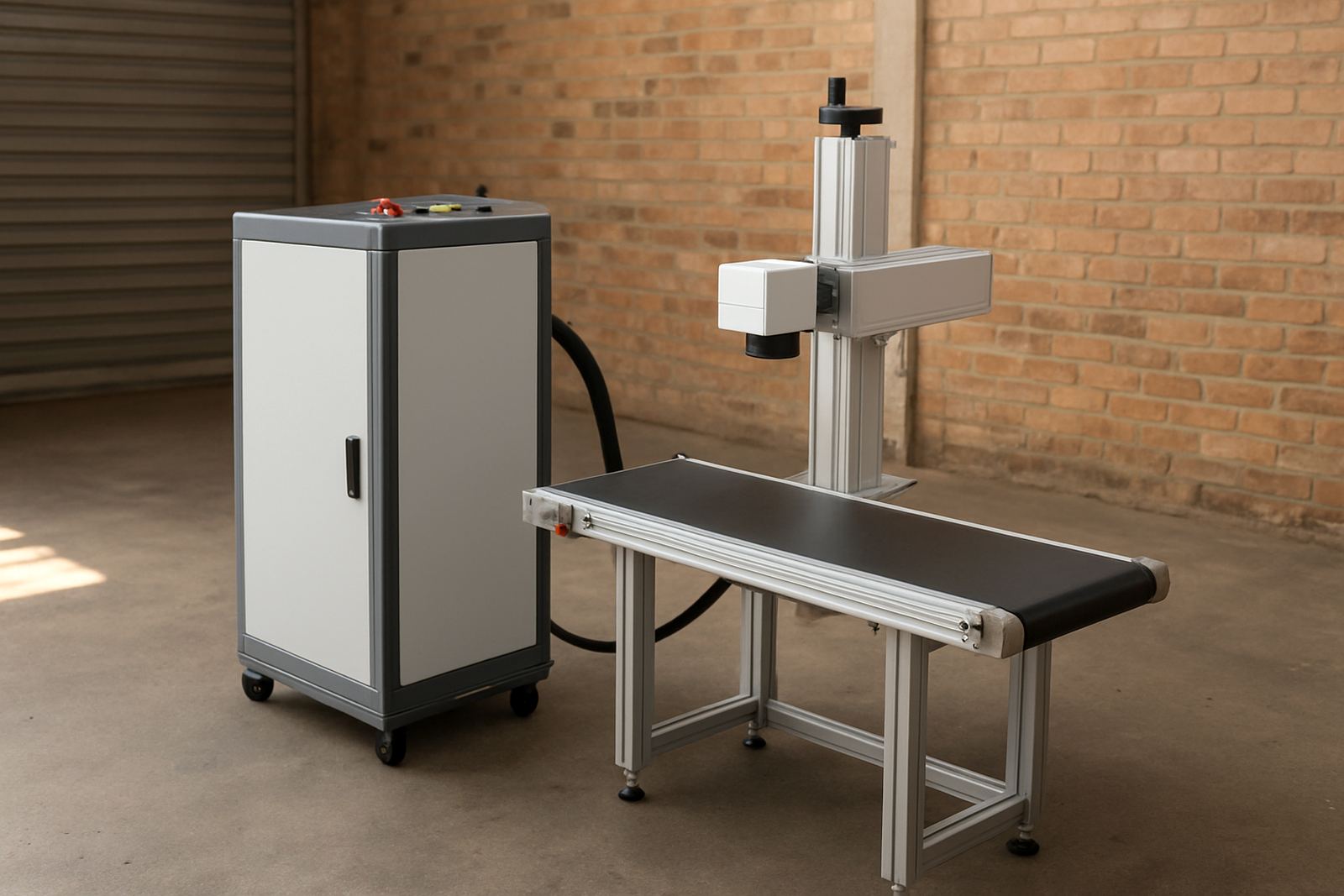
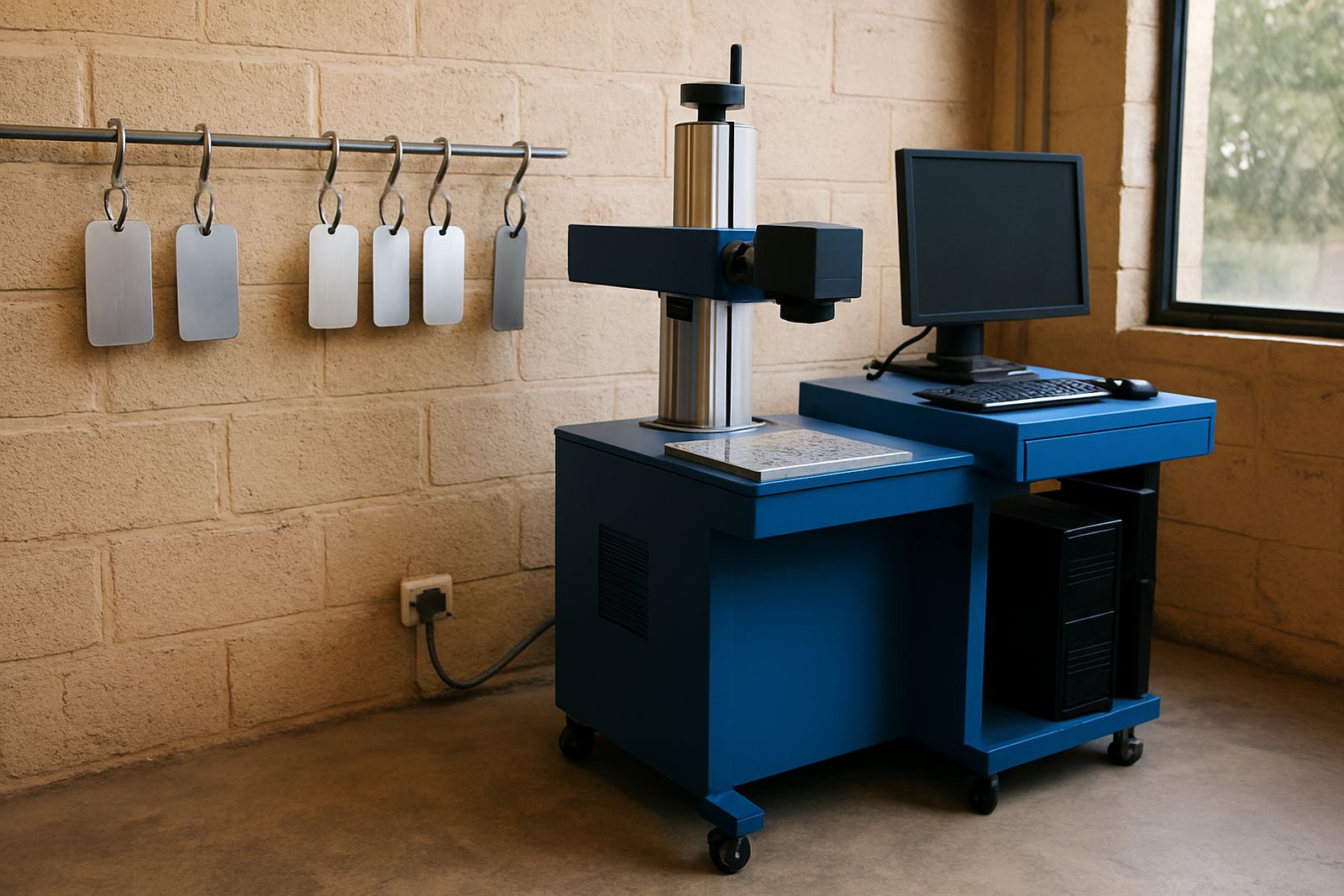
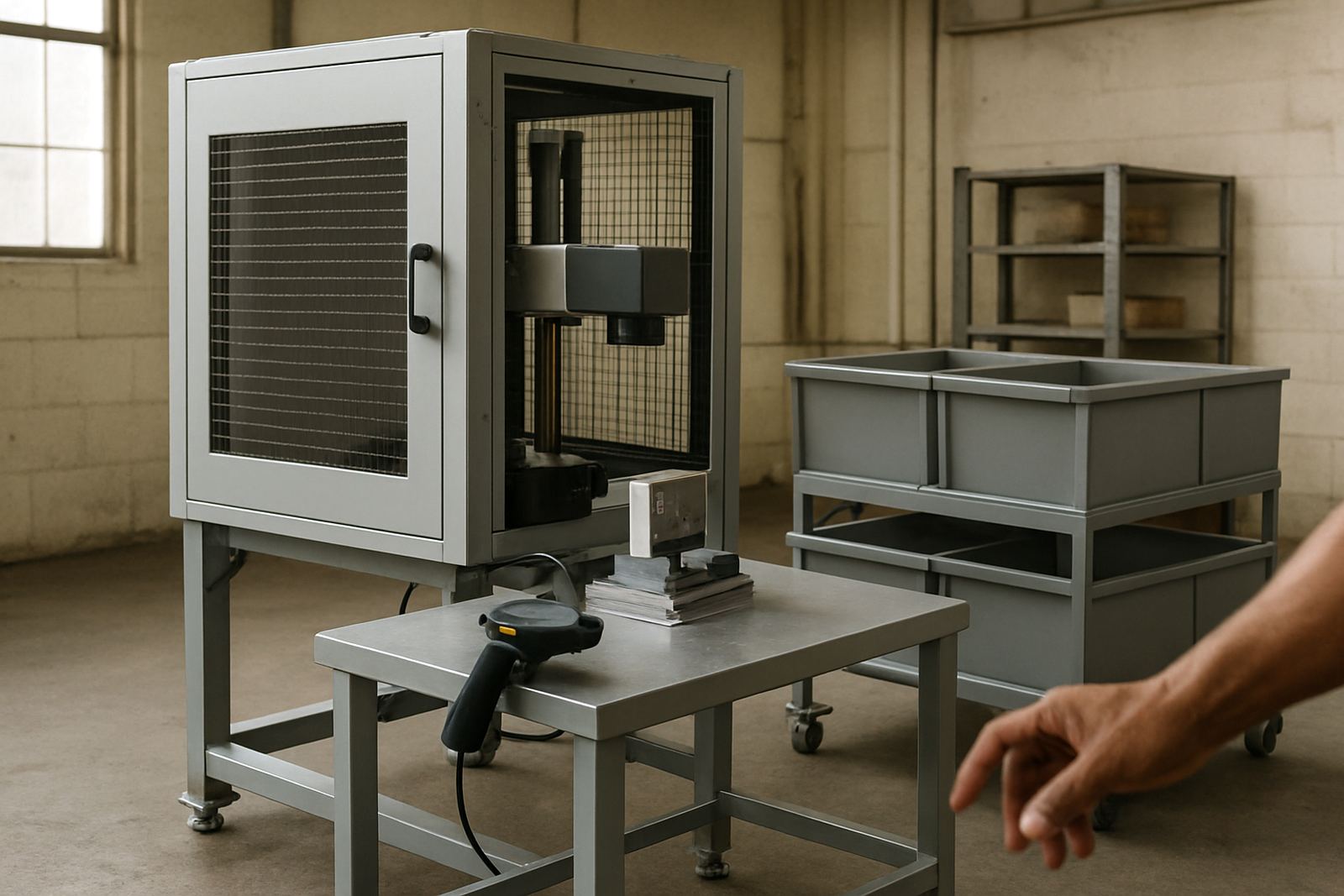
The Production Cell Marker is made for workshops and production lines that need the same part marked again and again, with the same result each time. It combines the laser source, work area, control system and operator access into one organised station, so the job is easier to manage and quicker to repeat. That matters when you are marking serial numbers, batch codes, part numbers, logos or fine jewellery details and you need the output to stay consistent across a full shift.
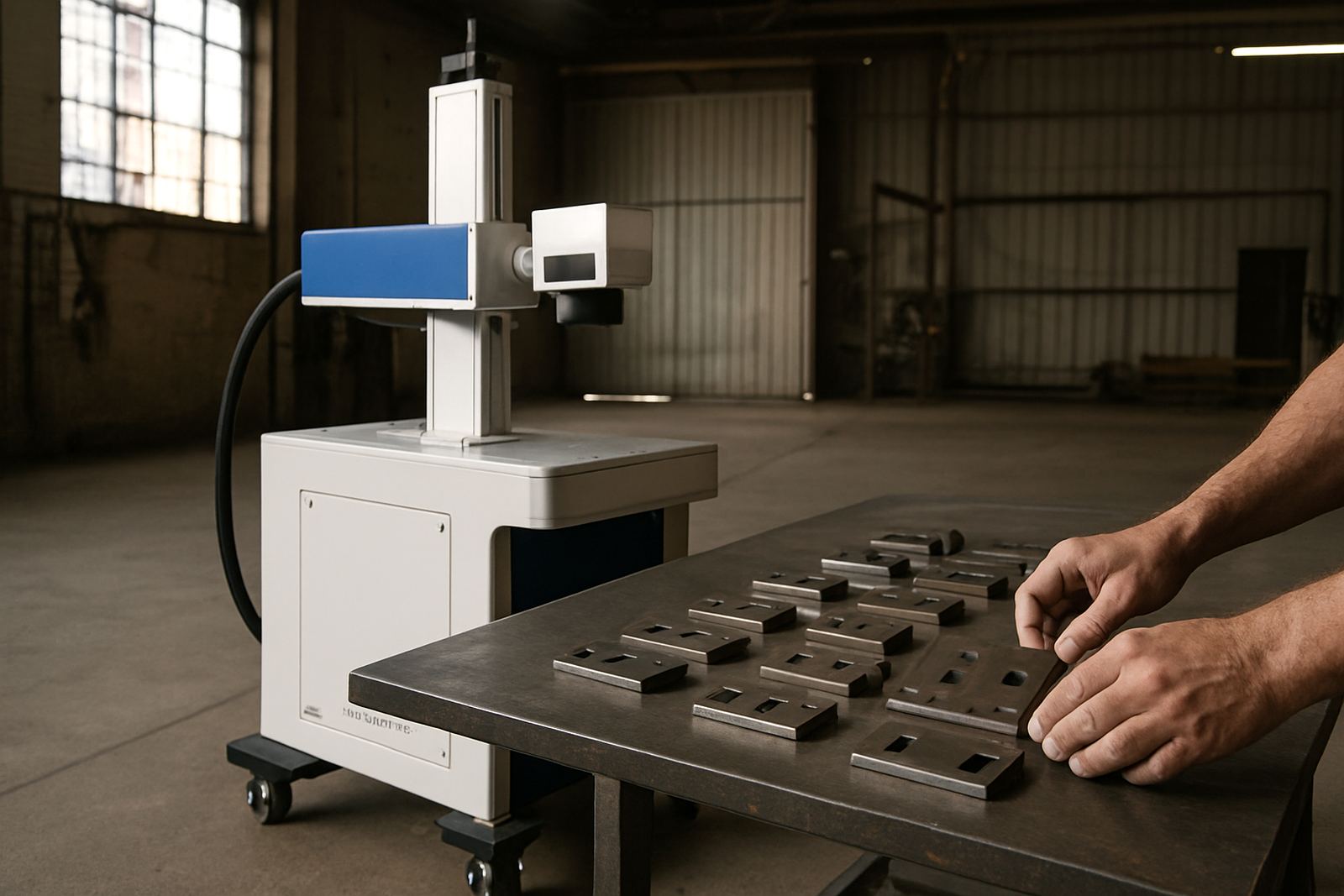
In metal parts work, the main benefit is repeatability. Once the fixture, focus height and marking file are set, the operator can load a part, run the cycle and move to the next one with very little fuss. The station is also useful where traceability is important, since the mark remains sharp after handling, packing, cleaning or light abrasion. For jewellery pieces, the same precision helps with delicate text, small symbols and personalisation on items where neat finishing counts.
Station Layout And Size Options
We supply the Production Cell Marker in practical configurations to suit different floor spaces and production volumes. A compact cell suits smaller workshops or a dedicated marking corner, while a larger enclosure and worktable setup suits higher throughput and more frequent fixture changes. The exact footprint depends on the table size, enclosure style and whether you add rotary tooling, drawer storage or a manual loading zone.
- Compact cell for small parts and jewellery items
- Standard cell for general manufacturing and traceability work
- Extended table option for larger fixtures or grouped parts
- Rotary attachment option for rings, cylinders and round components
- Custom fixturing for repeat jobs with awkward shapes
If you are working from Wadeville, Jet Park, Isando or Kempton Park, space is often at a premium and a compact layout can save you a lot of rearranging. In larger plants around Germiston, Boksburg or Alberton, the same machine can be integrated into a marking bay or quality control cell with a fixed loading routine. The key is to match the station size to the parts you actually run, not the other way around.
Where The Marker Fits Best
This product suits businesses that want clean, permanent marking without slowing the line down. It works well in metal fabrication, automotive parts, electrical components, tools, engineering spares, custom fabrication and jewellery workshops. It also fits traceability jobs where a customer or spec sheet calls for clear codes on stainless steel, mild steel, aluminium, brass or coated parts.
Because fibre marking is precise and fast, the station is useful for short production runs as well as ongoing batch work. A small workshop can use it for one-off orders and replacements, while a larger manufacturer can place it into a daily workflow with set-up sheets and standard operating steps. For sites dealing with load-shedding, the low power draw and quick start-up are practical advantages, especially when you need to get back to work without waiting on long warm-up times.
- Serial numbers and batch codes
- Company marks and part identification
- QR codes and traceability data
- Fine text on jewellery and small components
- Surface marking where durability matters
Installation, Power Supply And Site Needs
Installation is handled nationwide, with setup and training available from our Wadeville base and support into nearby industrial areas and beyond. The machine needs a stable work surface, enough clear space for safe loading, and access to standard electrical power. In most cases, no gas supply is needed for the marking process itself, which keeps the setup simpler than many workshop systems.
For a proper install, we check the floor layout, power point position, lighting, extraction needs if any marking residue is present, and the safest operator flow around the station. If the site has frequent voltage dips or generator changeovers, we can advise on protection and process planning so the system is not interrupted more than necessary. In coastal or humid areas, it is sensible to keep the station in a clean, dry room and avoid open exposure to salt air and dust.
- Standard single-phase or suitable site power depending on the configuration
- Clean indoor location with limited vibration
- Stable bench or frame for accurate focus and repeat marking
- Basic extraction or ventilation if your process creates residue
- Space for safe part loading and finished part handling
Care, Servicing And Ongoing Support
Routine care is straightforward, which is one reason this station suits busy production teams. Keep the lens area clean, check fixtures for wear, confirm focus settings before a run and make sure the marking file is correct before bulk production starts. Dust, metal fines and oily residue can affect output over time, so a light daily clean-up and weekly inspection go a long way.
We provide preventive maintenance, focus calibration, software setup, breakdown repairs, spares supply and remote assistance where it makes sense. If a site in Germiston, Boksburg or Alberton needs a quick check, our field service team can assist on site. For businesses that relocate a line or move into a bigger factory, we also help with site relocation and re-commissioning so the marking station goes back into service with minimal delay.
What To Check Before You Order
Before ordering a Production Cell Marker, it helps to look closely at the parts you need to mark and the pace at which you need to run them. The wrong fixture, table size or lens choice can slow the process down, even if the laser itself is suitable. A short sample marking test is often the best starting point because it shows how the finish will look on the actual material, not just on paper.
- Part size, shape and whether the item needs a rotary fixture
- Material type and surface finish
- Mark size, text height and any barcode or QR code requirement
- Daily volume and whether the job is batch or one by one
- Available floor space and operator access
- Power supply stability and any site restrictions
It is also worth checking who will operate the unit, how much training they need and whether the job will change later. If your marking needs may grow, it is better to choose a station with a bit of room for expansion now. That saves time and money later, and it avoids having to rework the whole cell after installation.
Key facts
| Laser type | Fibre laser marking system |
|---|---|
| Primary use | Metal parts marking and jewellery engraving |
| Marking styles | Text, numbers, logos, serials, batch codes, 2D codes |
| Workholding | Flat fixtures, custom jigs and optional rotary attachment |
| Power needs | Standard site electrical supply, final spec depends on configuration |
| Support | Installation, training, maintenance and repairs nationwide |