What A Split Type Marker Does On The Shop Floor
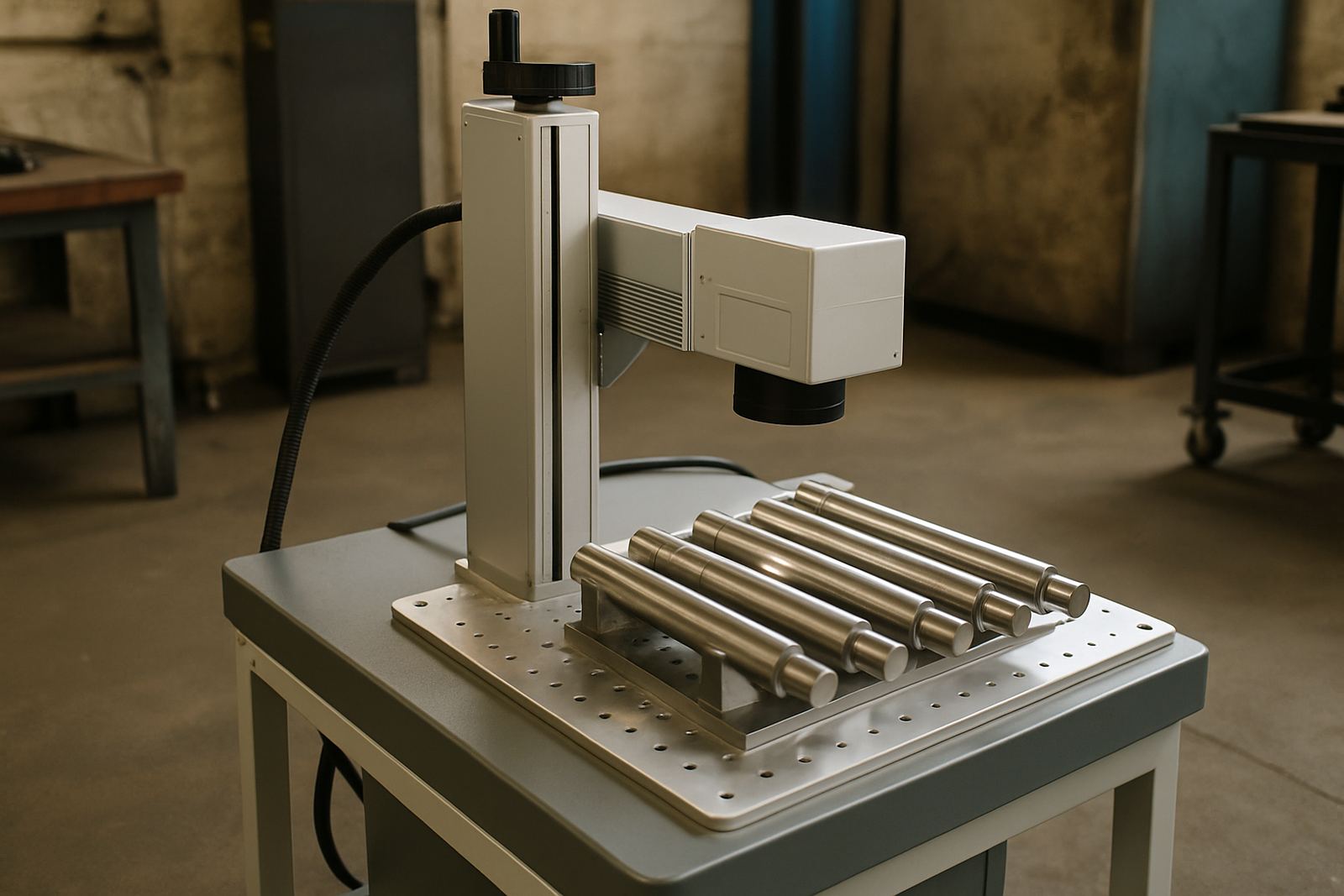
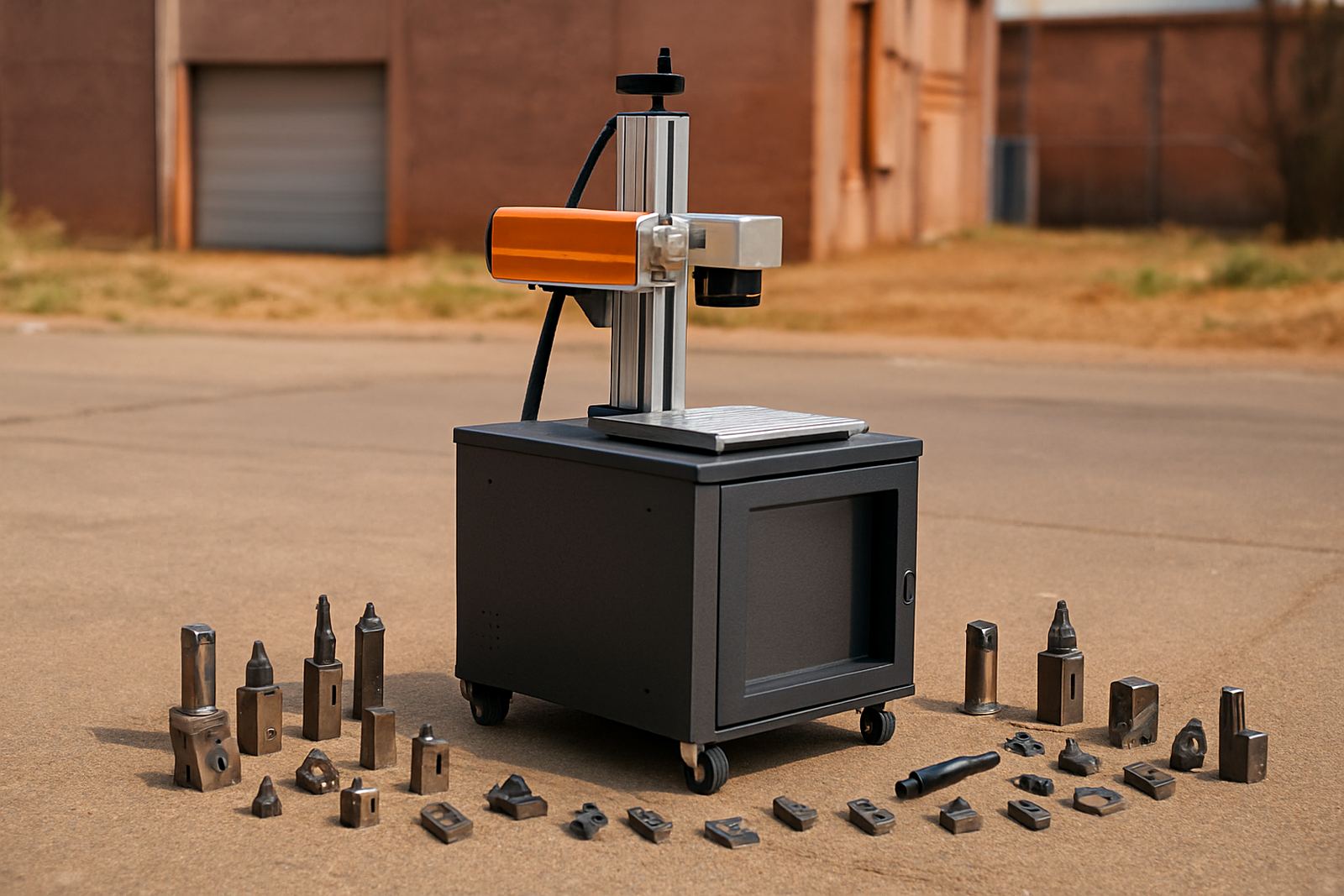
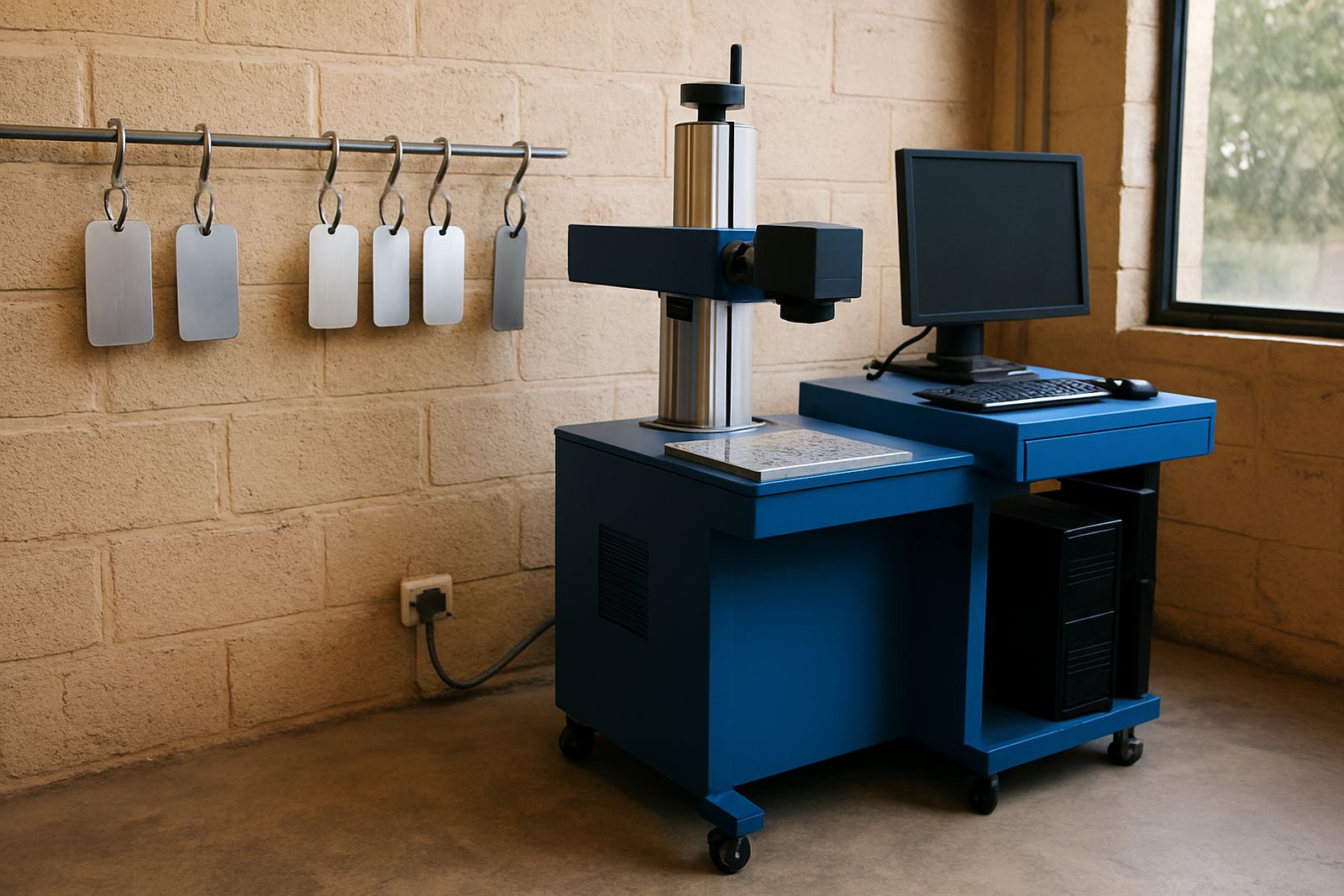
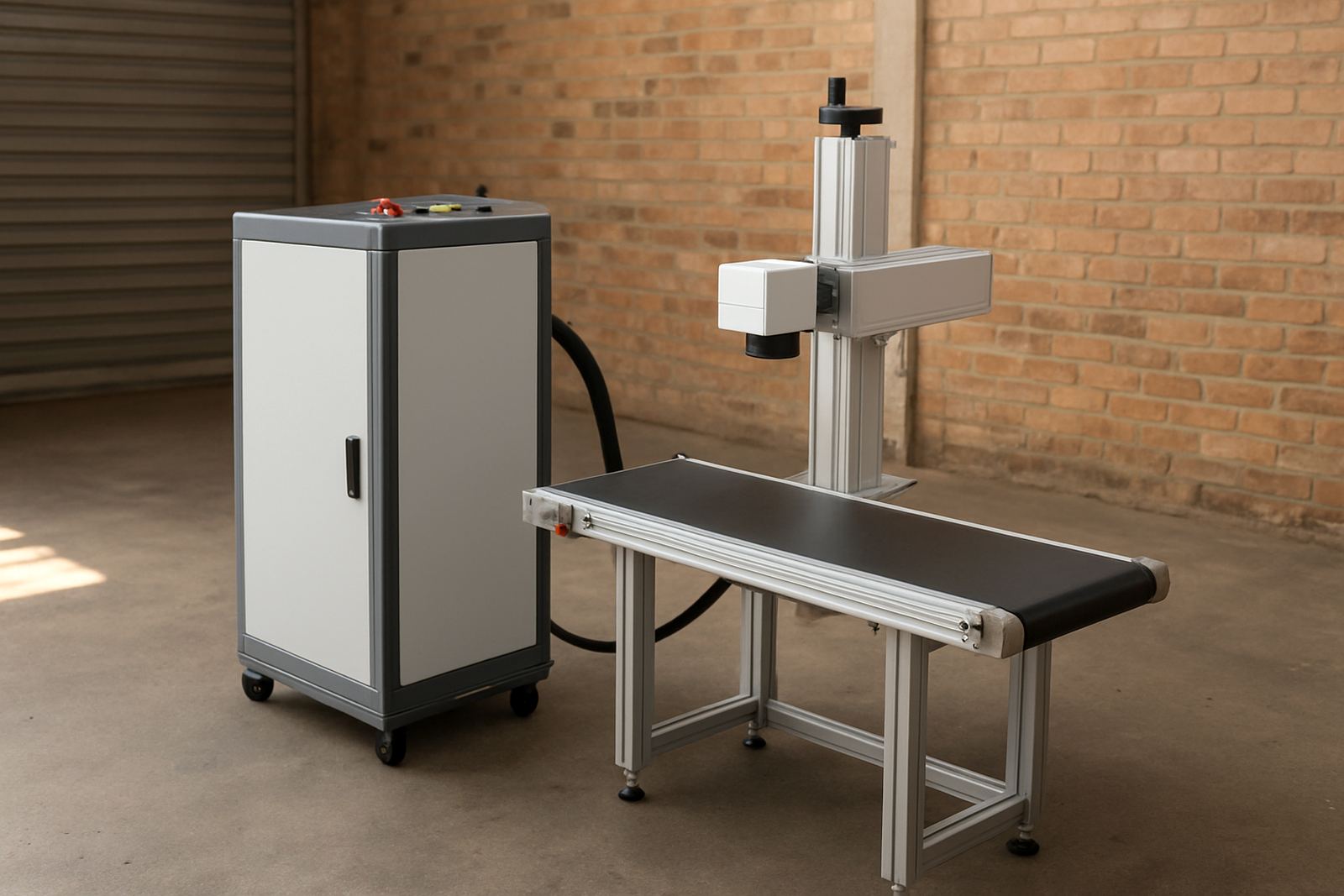
A split type marker keeps the laser head on the work area and places the main electronics in a separate cabinet or enclosure. That layout helps in tight spaces, around fixtures, and near existing inspection or assembly lines where a single-cabinet machine would feel cramped. For many South African workshops, that matters when floor space is already shared with cutting, packing, and dispatch.
The fibre laser source is used for precise engraving and marking on metals and selected coated surfaces. It is commonly used for serial numbers, batch codes, logos, data plates, QR codes, small parts identification, and jewellery work. Because the marking process is non-contact, there is no tool wear from touching the part, and the mark stays readable through handling, cleaning, and general use. The split design also makes it simpler to position the head over a jig or fixture while keeping the control components in a safer, cleaner area.
Sizes, Configurations And Typical Marking Areas
Split type markers are available in several working field sizes, depending on the lens and the job. Smaller fields suit fine detail on jewellery and small components, while larger fields suit nameplates, tooling, and grouped parts. We help match the field size to the smallest text height and the largest part you expect to process so you do not end up with a machine that is too small or unnecessarily large.
- Typical marking fields: 70 x 70 mm, 110 x 110 mm, 150 x 150 mm, 175 x 175 mm, and 200 x 200 mm
- Common marking depth: surface marking through to shallow engraving on metals, depending on material and power setting
- Positioning options: manual table, fixed stand, rotary attachment, or custom jig setup
- Control options: standalone software interface with part file storage and repeat-job recall
- Beam delivery: split head with linked cabinet for cleaner integration in tight areas
For jewellery and fine instruments, a smaller field with a stable fixture often gives the neatest result. For general manufacturing, a mid-size field is usually more practical because it allows part variation without constant lens changes. If you mark mixed parts, we can also advise on fixture height and focus range so the setup stays easy for operators.
Where It Suits Best
This type of marker suits workshops and factories that need reliable marking but do not have room for a full bench footprint. It works well in Germiston, Wadeville, Jet Park, Isando, Boksburg, Alberton and Kempton Park environments where production space is shared and jobs change often. It is also a good fit for coastal operations where humidity can affect storage and equipment handling, as the split arrangement can keep sensitive components in a more controlled area.
It is often used in metal fabrication, electrical component marking, toolrooms, motor spares, medical device coding, security tagging, and jewellery production. Because it is compact and quick to position, it can sit beside an inspection point or a packing station. That makes it practical for businesses that need one operator to manage marking without moving parts across the workshop many times.
- Best for tight production spaces and inspection benches
- Useful for repeat batch work and short changeover jobs
- Suitable for serial numbers, barcodes, logos and traceability marks
- Fits workshops needing clean, permanent marks on metal parts
- Works well where parts must stay in a fixed jig for accuracy
Power, Setup And Site Requirements
A split type marker normally runs from standard single-phase mains power, with the exact load depending on the source and control package supplied. In most cases, a clean 220 V supply is enough, but we always check the site first, especially where load shedding, voltage dips or unstable supply may affect a sensitive production area. If your workshop uses a generator, inverter or backup system, the capacity should be confirmed before installation.
These systems do not need process gas for the laser itself. Some setups may use compressed air for part cleaning, smoke control, or a fixture accessory, but that is job dependent. Good extraction or local fume handling is still important when marking coated materials, oily parts, or items that give off fine smoke. For municipal compliance and general workshop safety, we also recommend a tidy cable route, a stable table or frame, and a clear operator zone around the marking head.
- Power: usually 220 V single-phase, subject to final machine specification
- Gas: no laser gas required for normal fibre marking
- Air: optional compressed air for certain fixtures or smoke clearing
- Environment: dry, dust controlled area with stable bench or frame
- Protection: voltage management recommended where supply quality is poor
Installation, Training And Remote Support From Wadeville
We handle machine installation, operator training, software setup, focus calibration and sample marking from our Wadeville base, with support across South Africa. For local clients in Germiston and nearby industrial areas, on-site commissioning can be arranged to check focus, field size, fixture position and first-job settings before the machine goes into regular use. For national customers, we support install plans, relocation, and guided setup where practical.
Training covers safe operation, job loading, basic parameter changes, file handling, and routine checks that reduce mistakes during busy shifts. If you are marking a high volume of parts, we can also look at fixture design and process optimisation so the same operator gets consistent results with less rework. When faults do happen, breakdown repairs, spares supply and remote assistance help keep the machine in service without unnecessary delays.
- Machine installation and site setup
- Operator training and software setup
- Focus calibration and sample marking
- Preventive maintenance and breakdown repairs
- Site relocation and remote assistance
What To Check Before You Order
Before ordering a split type marker, confirm the material list, part size, marking size, and whether the job needs surface marking or deeper engraving. It also helps to know if the work is flat, cylindrical, or irregular, because that affects fixture choice. If the part must stay readable after polishing, handling, or exposure to moisture, that should be stated early so the test samples can be set up properly.
Useful ordering details include the exact text height, logo file type, serial format, cycle time target, and whether you need manual loading or a more guided fixture. If your workshop serves a mine, plant, machining line or jewellery counter, please also note the throughput expected per day. That lets us advise on lens size, focus range, software workflow and any extra accessories needed. A short sample marking run before final sign-off is always a good idea, particularly where appearance and legibility matter.
- Material type and finish
- Part dimensions and available workspace
- Mark size, depth and legibility requirements
- Fixture needs and rotation requirements
- Power supply quality and backup arrangements
Key facts
| Laser type | Fibre laser marking system |
|---|---|
| Machine format | Split type head with separate control cabinet |
| Typical power options | Commonly 20 W to 50 W, depending on application |
| Marking field | Usually 70 x 70 mm up to 200 x 200 mm |
| Input power | Typically 220 V single-phase, subject to final build |
| Application | Metal parts, tools, tags, plates and jewellery |