
Why the Midrand team needed a cleaner mark
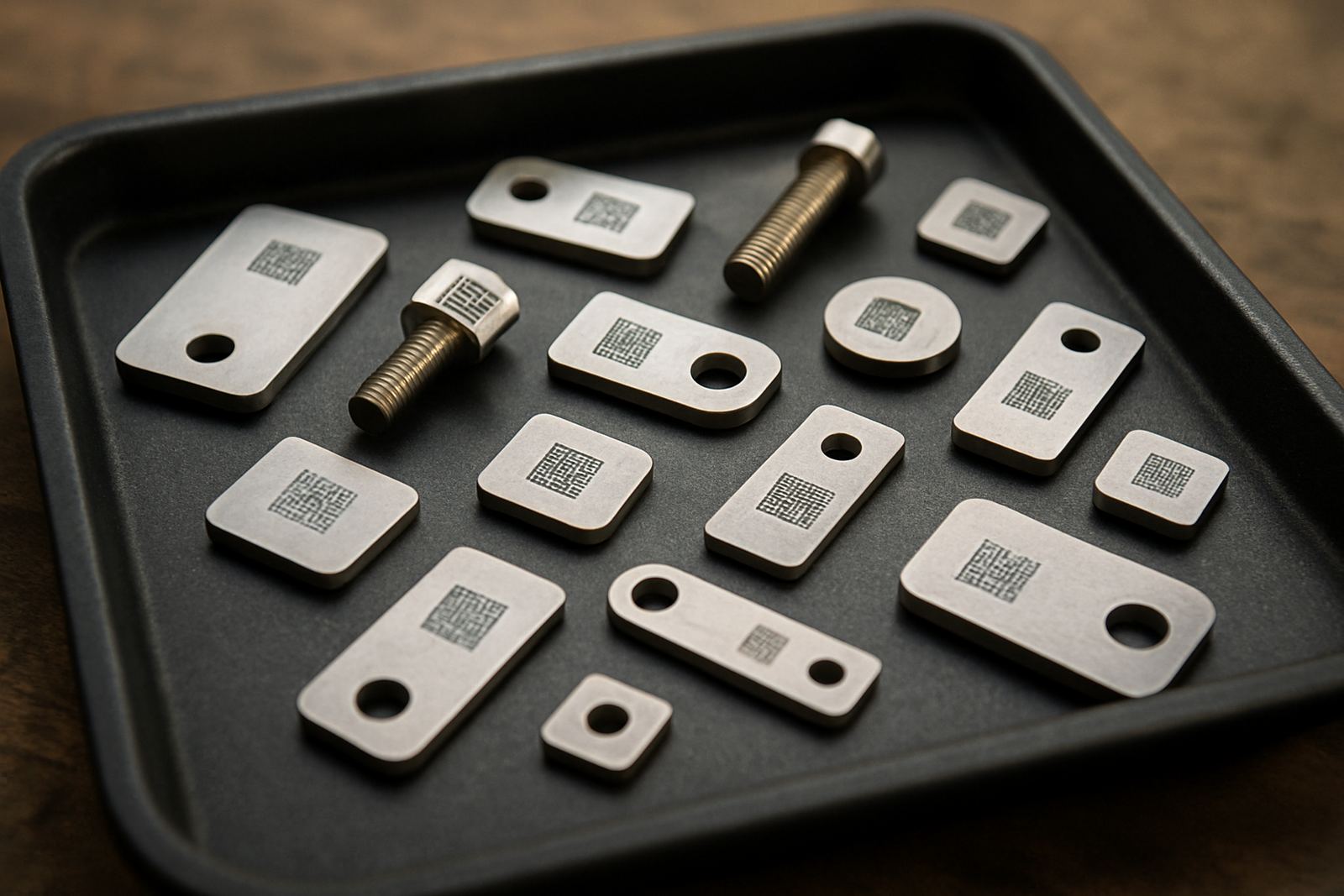
The client was a parts supplier in Midrand working with small stainless components for traceability and stock control. Their internal team needed a QR code that could be scanned quickly, stay legible after oil, wiping and general workshop handling, and fit into a tight marking area without affecting the finish of the part.
The brief was simple on paper, but the details mattered. The parts were thin, the surface was reflective, and the production area had normal factory movement around it, which meant the marking process had to be repeatable and not fussy. They also wanted something that one operator could run after short training, without relying on a separate specialist for every batch.
- Client type: precision parts supplier
- Town: Midrand
- Material: stainless steel components
- Mark type: QR code marking for traceability
The marking constraints we had to work around
Stainless steel gives a clean result, but on small components it also shows up every small setup error. The code had to stay within a limited marking zone, with enough contrast for a handheld scanner and enough spacing so the modules did not close up during marking. The client also needed a process that could cope with mixed part sizes and repeat batches without constant rework.
We also had to factor in normal South African workshop conditions. Load-shedding was part of the planning, so the client wanted a setup that would recover cleanly after power interruptions. In a Midrand industrial area, dust and handling are part of the day too, so the machine had to stay stable and the fixture had to hold the part square, even where there is a bit of vibration from nearby equipment.
- Small mark window with strict placement tolerance
- Reflective surface requiring careful focus and power balance
- Power interruptions considered during setup
- Need for repeatable marking across batches
What we supplied and commissioned on site
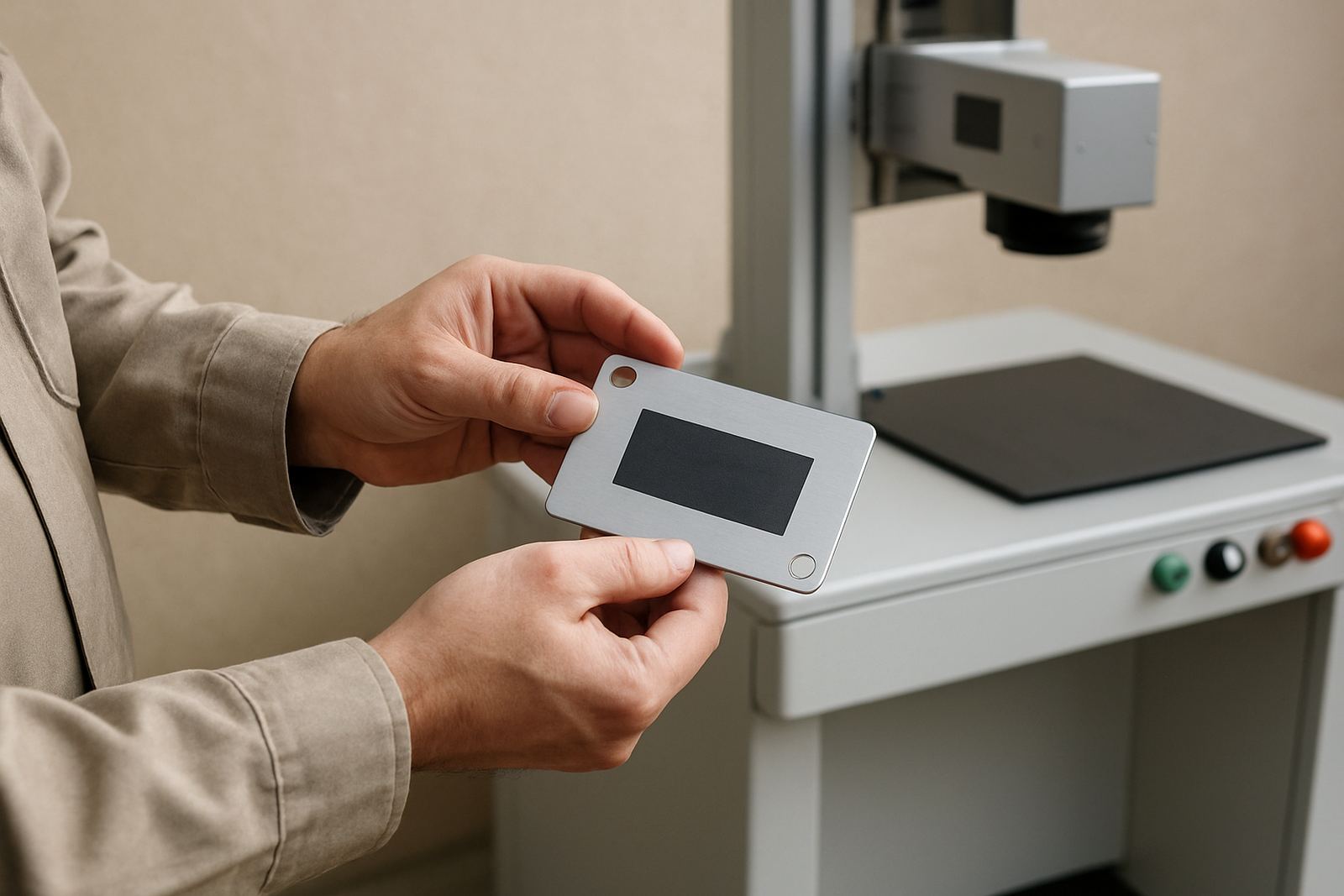
We supplied a fibre laser marking machine suited to metal parts, together with a fixture arrangement for small stainless items and a software setup that allowed the client to generate and place QR codes accurately. The mark field was matched to the part geometry so the code would sit in the same position every time, and we adjusted the settings for the best balance between depth, contrast and marking speed.
Our team also carried out sample marking before the handover. That included checking code readability, confirming edge sharpness and testing the parts under normal workshop lighting. We refined the focus height, pulse settings and marking speed until the code scanned reliably first time. It took a bit of back and forth, but once the settings were right the marks were tidy and consistent.
- Fibre laser machine for stainless marking
- Custom fixture for small components
- QR code file setup and software guidance
- Sample marking and scan testing
Install and training over two weeks
The job ran over two weeks from first sample to final handover. In week one we did the sample marking and confirmed the mark size, then set up the fixture and software workflow. In week two we returned for operator training, process checks and a final run with the client’s own production pieces. That second visit was important because the team could see how the machine behaved with real parts, not just test coupons.
Training covered machine start-up, focus checks, marking file preparation, basic fault finding and routine care. We showed the operators how to spot a poor focus setting before it became scrap, how to keep the lens area clean, and how to repeat a setting once a good result had been saved. The client had a decent grip on the process by the end of the session, which meant the learning curve was short.
- Week 1: sample marking and fixture setup
- Week 2: operator training and final verification
- Handover on site in Midrand
Results on the first production batch
The result was a cleaner, more reliable QR code on each stainless component. Scanning improved at the first pass, and the client no longer had to fight with inconsistent marks from batch to batch. Because the fixture held the parts in the same position each time, the mark sat neatly in the same place and the production team could move through the job faster.
There was also less waste. When the code is correct on the first mark, there is less need to reject parts or spend time reworking them. For a supplier handling small items in volume, that matters more than people think. It saves time, keeps stock moving and makes the process easier for the next person on shift. The client told us the change felt practical rather than dramatic, which is usually a good sign in this kind of work.
- Consistent QR readability
- Better part-to-part repeatability
- Less rework and fewer rejects
- Faster handling on batch jobs
What we would carry into the next similar marking job
If we were doing the same type of job again, we would start with the part geometry and the scan requirement before talking about machine settings. On small stainless components, the size of the code and the available flat area decide a lot of the process. We would also build in extra sample time early on, because one small change in focus or contrast can make the difference between a scannable code and a stubborn one.
We would repeat the same practical approach: test on real parts, train the operators on the exact workflow they will use, and save the settings once the result is right. That saves time later, especially when the client is working around other production tasks and cannot stop for long. For jobs in Gauteng and beyond, that mix of planning and hands-on setup tends to give the most reliable outcome.
- Start with the scan requirement and marking area
- Test on actual production parts early
- Save the working settings for future batches
Key facts
| Client type | Precision parts supplier |
|---|---|
| Town | Midrand |
| Material | Small stainless steel components |
| Mark type | QR code traceability marking |
| Timeline | 2 weeks from sample to handover |
| Service scope | Installation, sample marking, training and process setup |