
Why batch marking is about repeatability, not just speed
When a workshop marks 20, 200 or 2 000 parts in one run, the real challenge is not firing the laser faster. It is keeping the mark position, depth and readability the same from the first part to the last. That matters on serial numbers, part codes, batch IDs and branding on metal items where customers expect a neat finish and traceable record.
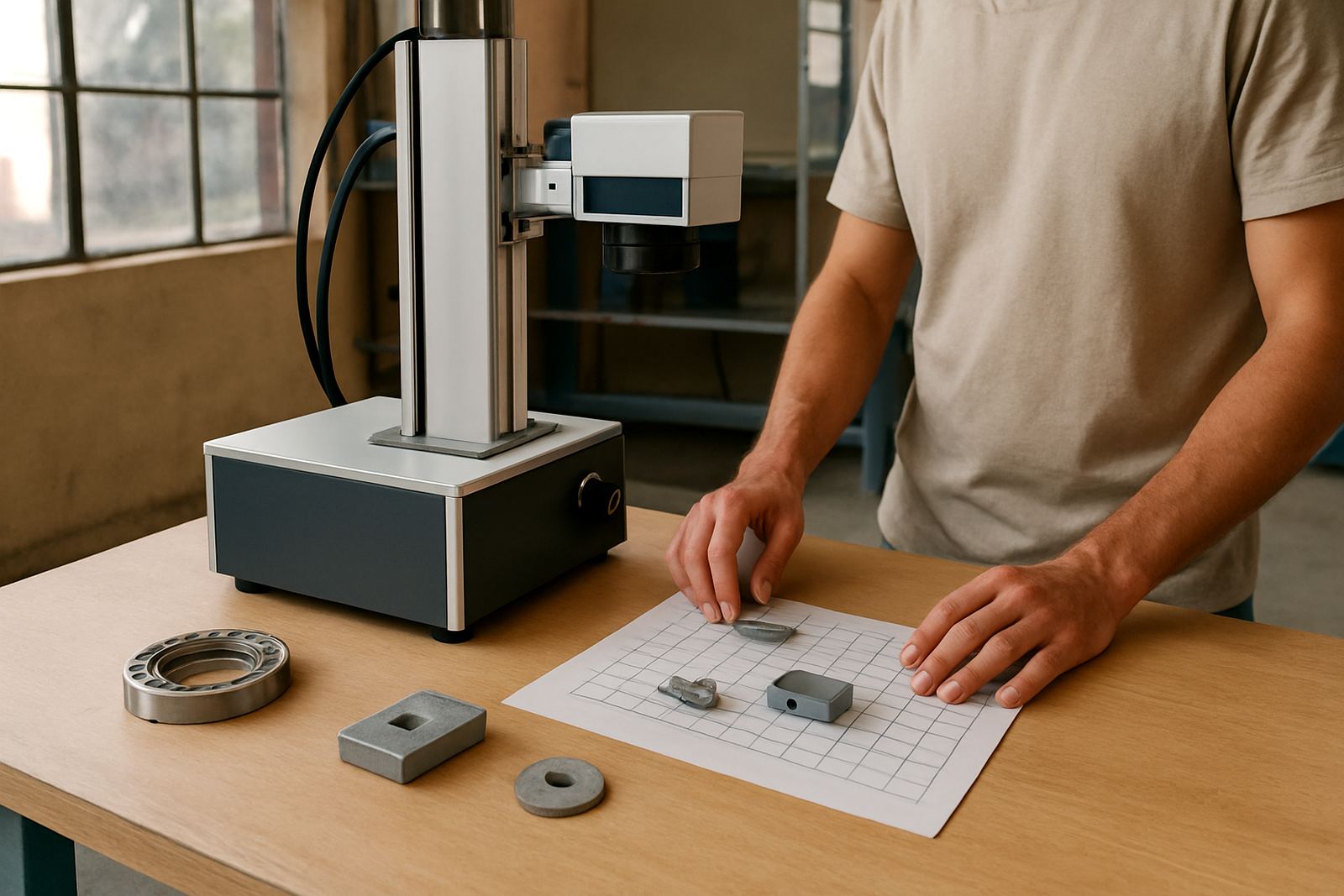
In Germiston, where many shops work with short deadlines and mixed jobs, batch marking often sits between manual handling and proper fixture work. If each part is loaded by hand, the operator can still do good work but the chance of small shifts increases. A few millimetres off on a small jewellery tag or a machined insert can mean rework. On stainless steel, aluminium, brass and coated metals, the mark may also look different if focus changes across the tray.
Choose the loading method that matches the part shape
There is no single batch method that suits every job. Flat parts, curved items, rings and mixed small components each need a different loading approach. The trick is to reduce movement without slowing the line so much that the job becomes expensive.
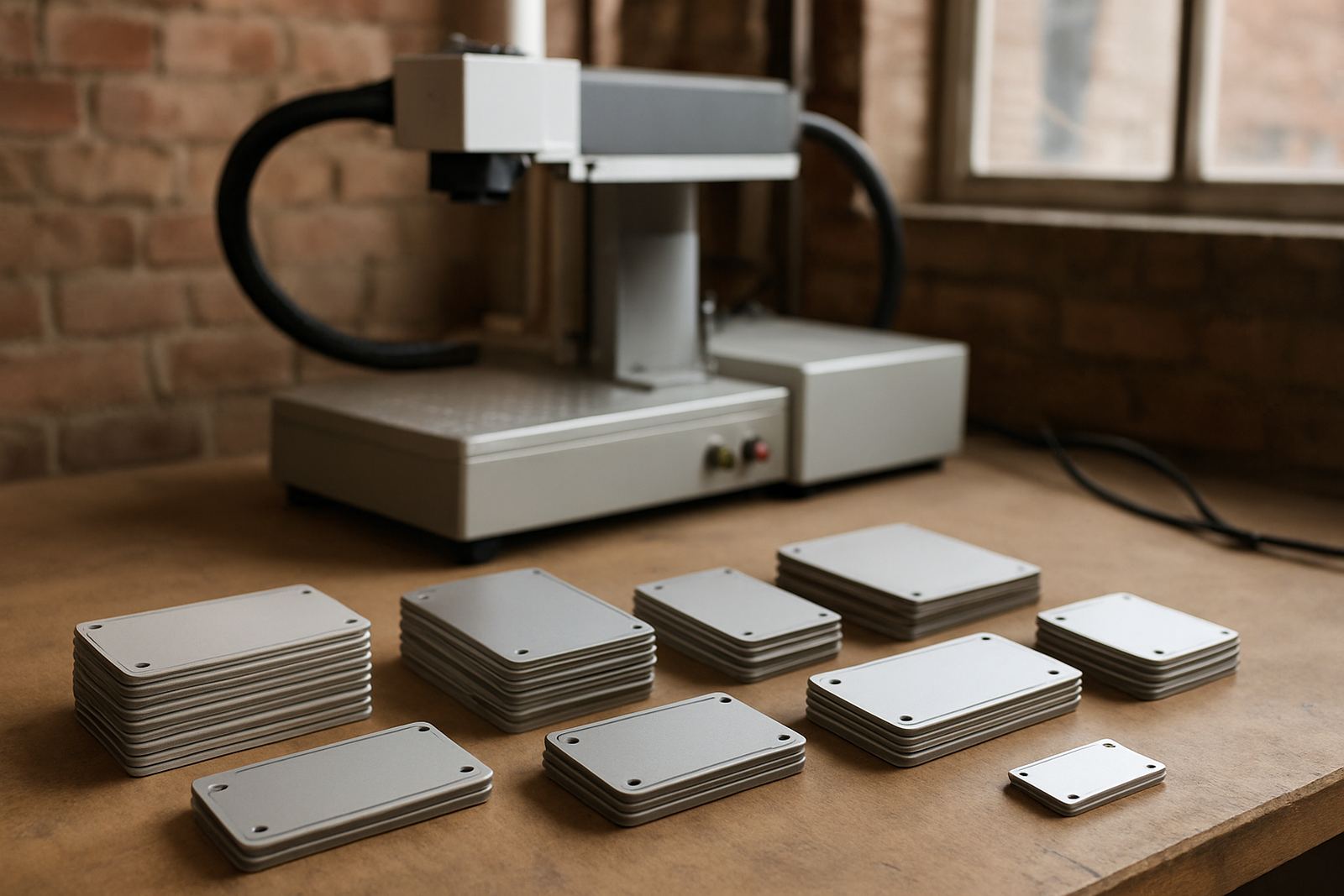
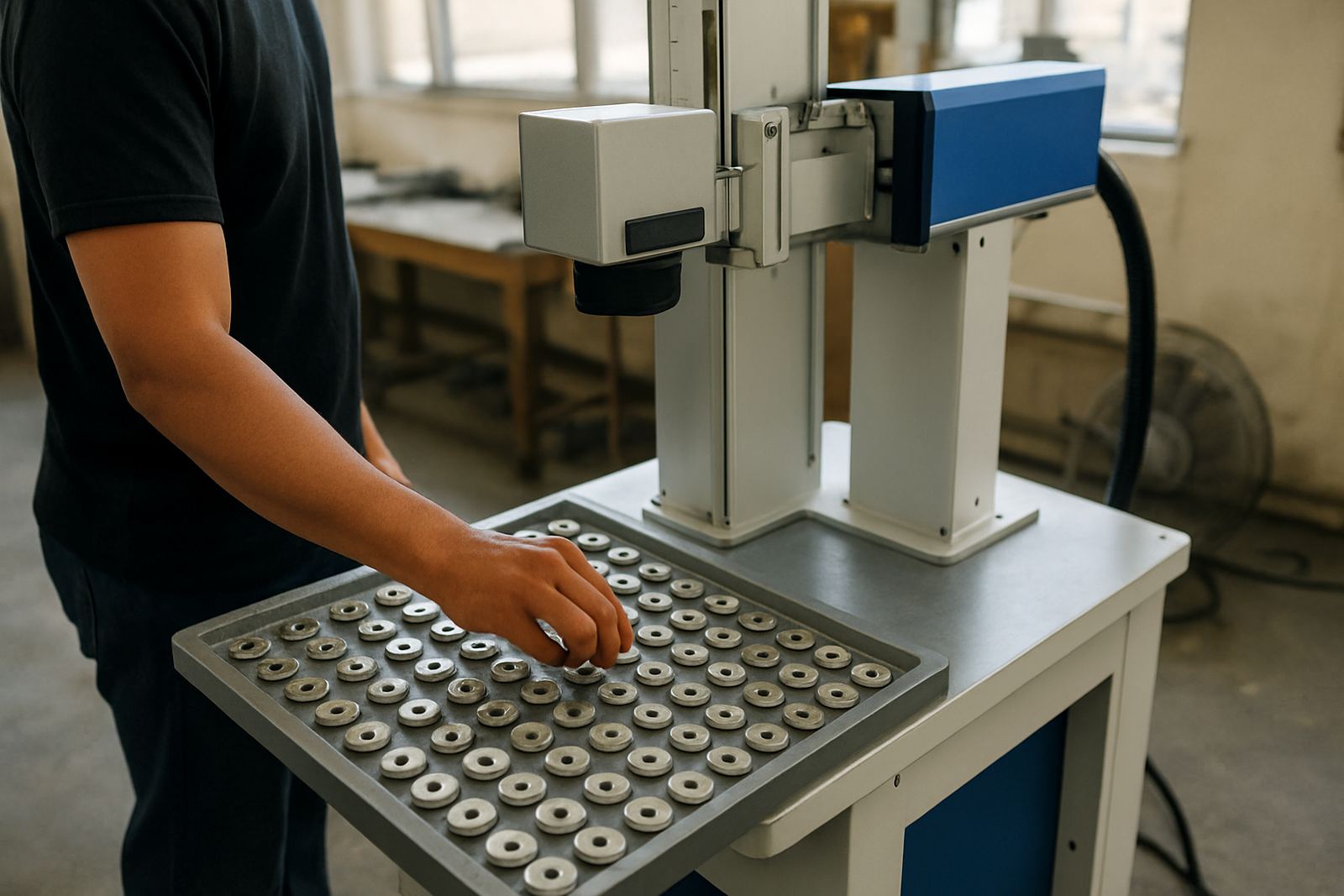
- Flat tray loading: Best for tags, plates and laser-ready blanks that can sit in a fixed grid.
- Dedicated jigs: Useful for repeat jobs where the same part comes back week after week.
- Pin or pocket fixtures: Good for small parts that need a positive stop so they do not rotate.
- Rotary holding: Suits rings, tubes and round parts where the mark must wrap neatly.
- Multi-cavity fixtures: Help when one cycle must mark several pieces at once with the same content.
For jewellery workshops, a small pocket fixture can save a lot of time because delicate items are loaded in the same orientation every time. For an engineering shop in Wadeville or Jet Park, a grid tray with hard stops may be better because it handles larger batches and heavier parts. The right loading method also makes operator training easier, since the process becomes repeatable instead of relying on feel.
Fixture design keeps the mark in the same place
A proper fixture is not just a holder. It is part of the marking system. It should locate the part, protect the finish and allow the operator to load fast without forcing or bending the component. If the part can twist, lift or sit skew, the laser focus will move and the mark will look lighter on one side or double on another.
Good fixture design usually starts with three checks: where the datum point is, how the operator loads the part, and how often the job repeats. If a customer needs the same code on 500 stainless tags every month, the fixture should guide the part into one exact position. If the job changes daily, a modular fixture with adjustable stops may be better. This is especially useful in South African workshops where one machine often handles a wide mix of work, from nameplates to small machined fittings.
It also helps to think about heat and dust. In coastal areas, humidity can affect clamps and stored parts, while in busy inland shops fine dust from grinding or packaging can settle on the fixture. A quick wipe before loading is a small thing but it saves a surprising number of marking faults.
Software setup and sample marking before production
Before a batch starts, the marking file should be checked on a sample part. This confirms the mark size, line spacing, placement and any variable data fields. If the part has a curved or polished surface, sample marking is even more important because the contrast and focus point can change from the flat on the screen.
Software setup should make it easy to lock the job details so the operator does not accidentally change text size or position halfway through the run. A clear naming system for jobs, batches and part families helps too. When a workshop in Alberton or Kempton Park handles several customers in one day, the last thing anyone wants is to mix up two similar part numbers.
- Check the first off sample under normal shop lighting, not only under the machine light.
- Confirm that serial numbers or date codes increment correctly.
- Verify mark depth on a spare part if the job needs abrasion resistance.
- Keep one approved sample with the batch record for later comparison.
Preventive maintenance matters when the run is long
Batch marking exposes machine problems quickly. If the focus drifts, the lens is dirty or the software settings shift, the fault repeats across every part. That is why preventive maintenance is worth more than emergency repair after a bad shift. A fibre laser marking machine is built for accuracy, but it still needs clean optics, secure cabling and regular focus checks.
For workshops working through load-shedding, power stability also matters. A clean shutdown procedure and a proper restart check can prevent corrupted settings or missed marks after an outage. In practice, that means the operator should confirm the software file, test the focus and run a sample before returning to the batch. In high-volume work, five minutes of checking can save an entire tray of rejects.
If a machine is moved between sites or from one bay to another, calibration should be checked again. A small change in bench height or surface level can affect focus enough to show up on fine text. That is why relocation and calibration go hand in hand, especially for businesses serving more than one factory floor.
A Germiston example: turning mixed small parts into one clean workflow
Take a local metal shop in Wadeville that needs to mark 150 small steel components before dispatch. The parts arrive loose in bins, with a job card showing serial ranges and a customer logo. If the operator loads them one by one by eye, the run can still be done but the mark position will wander. Instead, the shop uses a pocket fixture with a fixed stop, a saved software template and a quick sample check at the start of the shift.
That setup lets the operator load in rows, mark each row, then inspect every tenth part for position and contrast. If the parts are coated, the team adjusts the focus once before the run instead of changing settings midway. For a job like this, the best batch method is not the fanciest one. It is the one that keeps the mark aligned, the loading fast and the scrap bin quiet.
For businesses across South Africa, that is usually the real win: fewer handling errors, cleaner traceability and a process that can be repeated by another operator tomorrow.