Why fibre laser marking suits metal work
Fibre laser marking is popular for metal because it gives a fine, controlled mark without touching the surface. That is useful when you need small text, QR codes, serial numbers or logos that stay readable after handling, cleaning or outdoor use. In many cases the mark is made by changing the surface colour or texture rather than cutting deep into the part.
For local manufacturers, engineers and jewellers, that means less rework and fewer rejected items. It also helps in Gauteng workshops where dust, heat and power interruptions can interrupt slower processes. Once the machine is set up correctly, the mark is repeatable from one part to the next, which is what most production teams want.
Metal response does vary. Some surfaces go dark, some turn light, and some need a few test runs before the result is right. The good news is that most common metals used in South Africa respond well enough for clear marking, as long as the right lens, speed and power settings are used.
Stainless steel gives strong contrast and clean detail
Stainless steel is one of the best metals to mark because it usually gives good contrast with very fine detail. It is common on machine plates, medical tools, kitchen equipment, valves and industrial tags. For many users, stainless is the first material where fibre laser marking really shows its value.
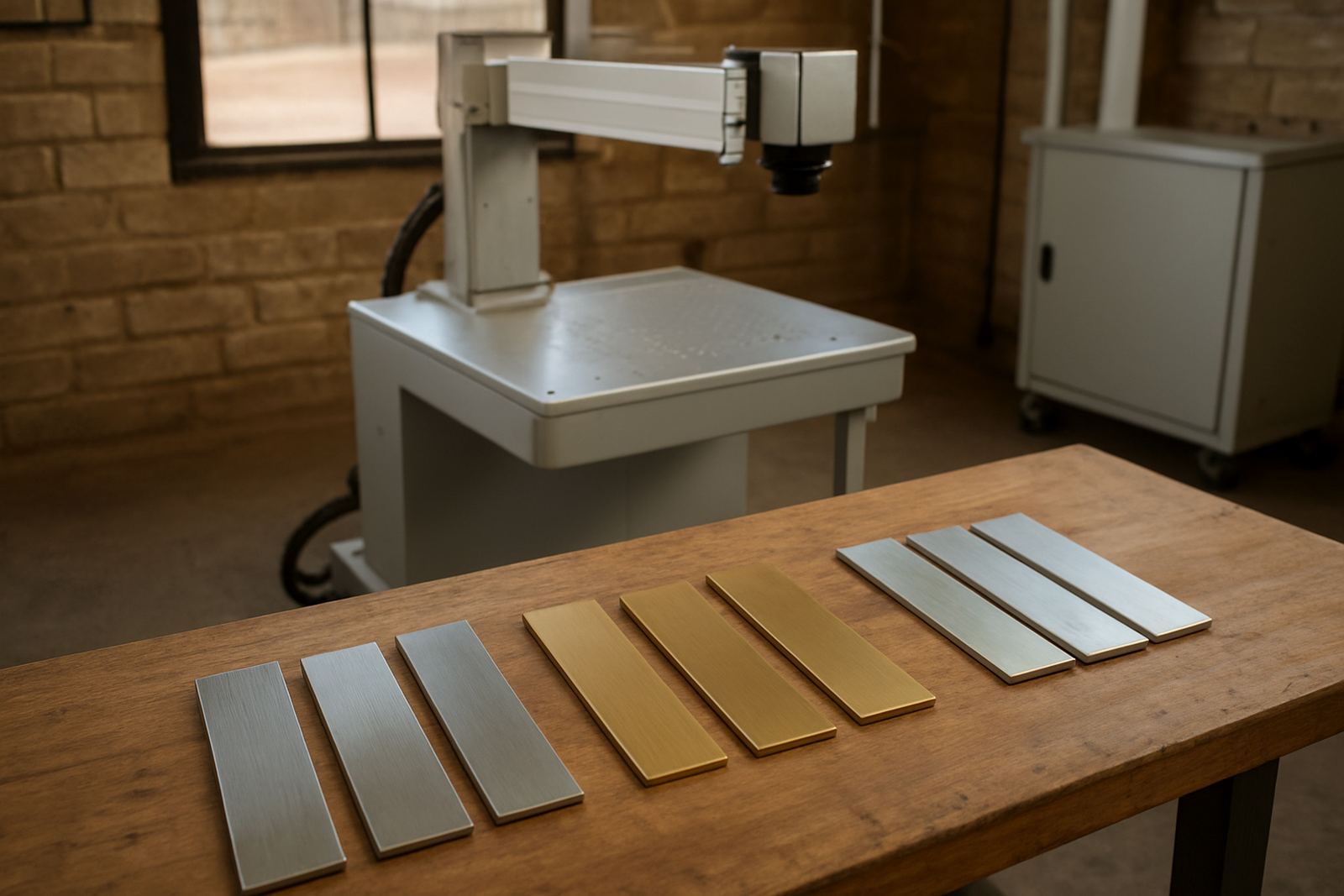
Depending on the finish and grade, you can get a bright white mark, a dark annealed mark or a slightly textured result. The smoothness of the surface matters. A polished sheet may show crisp detail, while a brushed finish can give a softer look. Either way, stainless tends to hold the mark well and stand up to cleaning and daily handling.
- Good for serial numbers, compliance plates and logo work
- Useful when the mark must remain legible after washing or solvent contact
- Often marks well without coatings or extra prep
For a Wadeville fabrication shop marking stainless tags all day, the main gain is consistency. Once the setup is right, the same text height and contrast can be carried through a batch with little variation.
Carbon steel and mild steel need the right settings
Carbon steel and mild steel also mark well, but the result depends more on surface condition and the finish required. Bare steel can show dark marks, light etching or slight discolouration. Painted or coated steel is different again, and the operator must decide whether the top layer should be removed or only marked for identification.
These metals are common on brackets, machine components, tools, fixtures and general engineering parts. They are practical because they accept marking quickly, which helps with throughput. If the part will later be painted, plated or oiled, the mark position and depth should be planned first so the code remains visible after final finishing. A quick sample marking run saves time and scrap.
- Great for batch codes and workshop identification
- Mark before or after finishing depending on the final use
- Test for rust protection requirements if the mark breaks a coating
In coastal areas like Durban or Gqeberha, operators sometimes ask whether the mark will rust. The answer is simple: if the laser exposes raw steel, the mark area needs the same corrosion care as the rest of the part. That is a process decision not a marking fault.
Aluminium marks well, but finish and alloy matter
Aluminium is widely used in South Africa for housings, name plates, panels and lightweight parts. Fibre lasers can mark aluminium very cleanly, but the final look depends on the alloy and surface treatment. Anodised aluminium is especially popular because the mark can remove the coloured layer and reveal a bright contrast underneath.
Raw aluminium may show a lighter engraved mark or a frosted finish. Some alloys respond better than others, so it is worth checking the exact grade before committing to a production run. If the part has a brushed or bead-blasted finish, the code or logo may need a slightly different setting to stay clear.
For many installers, the biggest benefit is speed. Aluminium parts for control panels or equipment labels can be marked quickly and read easily. That is useful for firms in places like Kempton Park or Jet Park where small parts move through dispatch fast and there is little time for manual labelling.
Brass and copper need a careful hand
Brass marks nicely for decorative plates, jewellery components and small signage parts. It can produce a clean, sharp result, though the brightness of the metal means the mark must be planned carefully for best visibility. For jewellery work, this matters because fine lettering and patterns need neat edges not heavy burning.
Copper is a bit more demanding. It reflects strongly and can be more sensitive to setup, so getting a good mark often requires more testing than stainless or mild steel. That does not make it a poor choice, only a material that benefits from proper focus and stable settings. In practice, experienced operators can still get excellent results on copper fittings, electrical parts and custom items.
- Use trial pieces to confirm contrast before full production
- Check whether the part is polished, brushed or coated
- Keep the lens clean, as reflective metals show setup errors quickly
Where jewellery makers need small, elegant marks, brass is often the easier of the two. Copper may be chosen for technical parts, but it rewards patience and proper process control.
Tool steel, coated metals and plated parts
Tool steel is commonly marked on dies, cutters, punches and workshop tooling. Fibre laser marking is useful here because the identification must stay readable even after repeated use. Depending on hardness and surface condition, the mark may be etched or colour shifted, but it usually remains sharp enough for traceability.
Coated and plated parts are where users often need advice. Zinc plating, powder coating, anodising and paint all react differently. Sometimes the job is to remove only the top layer for a clean contrast. Other times the goal is to leave the coating mostly intact and add a small code or serial that survives handling. A good sample saves arguments later.
In busy shops around Alberton or Boksburg, this is where preventive maintenance and focus calibration matter. If the beam is off by even a small amount, the mark may look patchy on coated surfaces. That is why sample marking and process optimisation are worth doing before a full production run.
Choosing the best metal for your job
If you need the shortest answer, stainless steel and anodised aluminium are usually the easiest metals to mark well. Mild steel follows closely, while brass, copper and plated parts need a bit more attention. The best choice depends on the part, the finish and how the mark will be used after marking.
Use this simple checklist before you start:
- Will the mark need high contrast, or only traceability?
- Will the part be cleaned, oiled, painted or handled often?
- Is the surface polished, brushed, coated or bare?
- Does the code need to survive heat, friction or weather?
- Is the batch small, or are you marking hundreds of parts a day?
A local example: a Wadeville workshop making stainless brackets for a mining client may need deep, readable part numbers that survive grease and handling. A jewellery maker in Germiston may want tiny decorative marks on brass without damaging the finish. The metal is not the whole story, but it is the place to start.
With the right setup, most common metals can be marked cleanly and reliably. The key is to match the material to the job, test before production and keep the machine properly calibrated so the result stays consistent from one part to the next.