What deep engraving means on real production work
Deep engraving is used when a surface mark must last through handling, cleaning, heat, oil and general wear. On metal parts it is common for serial numbers, part IDs, logos, tooling marks and compliance details. On jewellery the aim is often finer, with a controlled recess that still looks sharp and neat under close inspection.
The first thing to understand is that depth is not made in one move on most jobs. A fibre laser removes material in layers. Each pass takes a little more away, and the final result depends on how those passes overlap. If the settings are too aggressive, the mark can get rough edges, heat tint or a shallow crater at the bottom. If they are too light, you waste time and still do not reach spec.
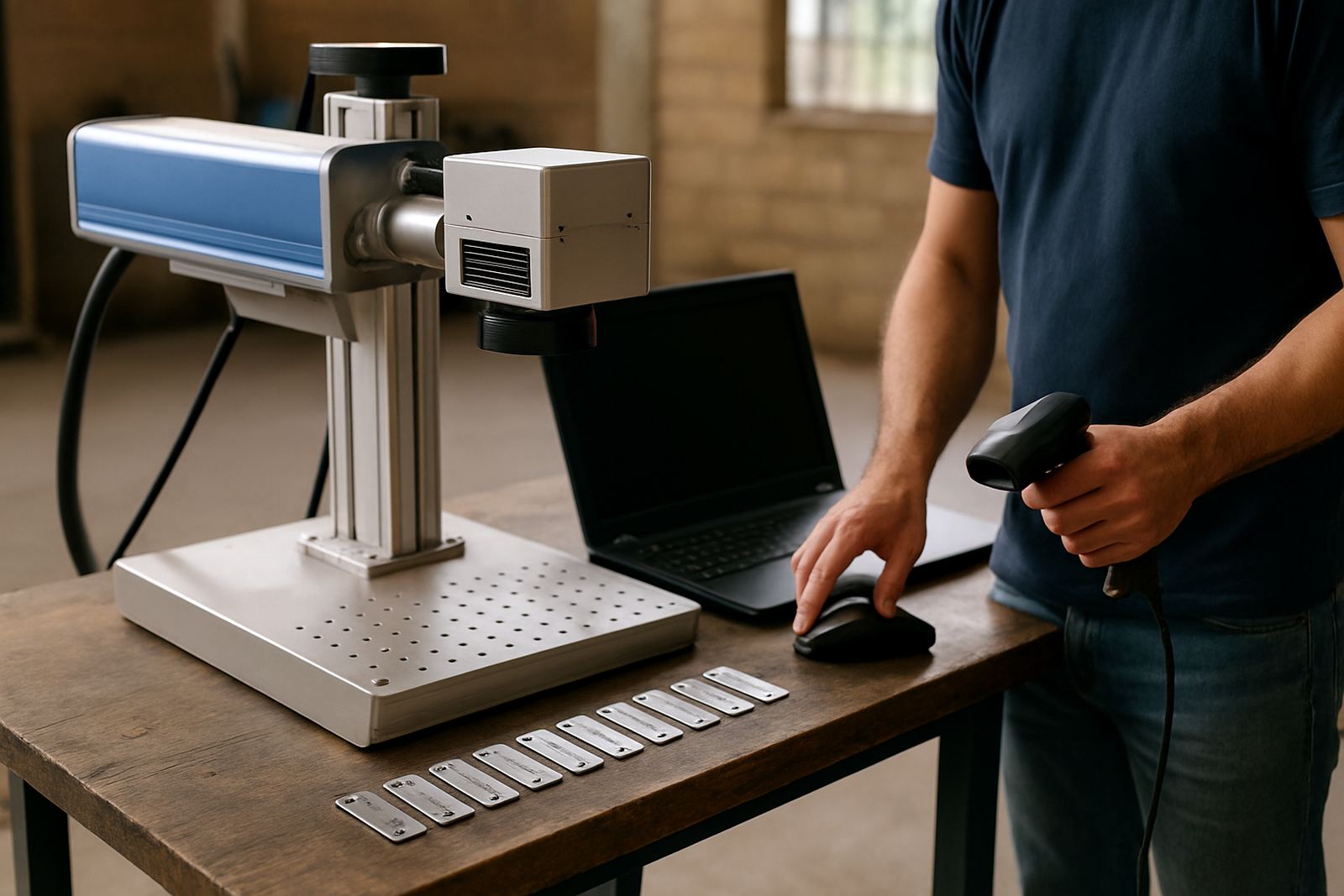
In a workshop in Wadeville or a small plant in Boksburg, the job is often not just to engrave but to engrave repeatably. That means the same depth on every part, even when the batch changes from stainless to brass or anodised aluminium.
Power, speed and pass count must work together
People often ask for a deeper mark by increasing power alone, but that is only one part of the picture. If the speed is too high, the beam does not stay on the metal long enough to remove enough material. If the speed is too slow, heat spreads further than needed and the edge can widen or soften. The better approach is to treat power, speed and pass count as one set.
- Higher power can improve material removal, but only if the focus and speed are also correct.
- More passes can produce cleaner depth than one heavy pass.
- Lower speed helps on hard metals, but may increase heat affected marks if pushed too far.
- Short pauses between passes can reduce build-up on some parts.
For many steel parts, a moderate pass with good focus gives a cleaner wall than one extreme pass. On softer materials, the settings may need to be eased back so the engraving does not blur. The real answer comes from test marking on the actual component, not just a guess from the drawing.
Focus position changes edge quality more than many expect
Depth is often measured in microns, but edge quality is judged by eye and by touch. That is where focus makes a big difference. If the beam is slightly above the surface, the mark may be wider but less deep. If it is too deep into the material, the centre may cut aggressively while the edge picks up slag or roughness.
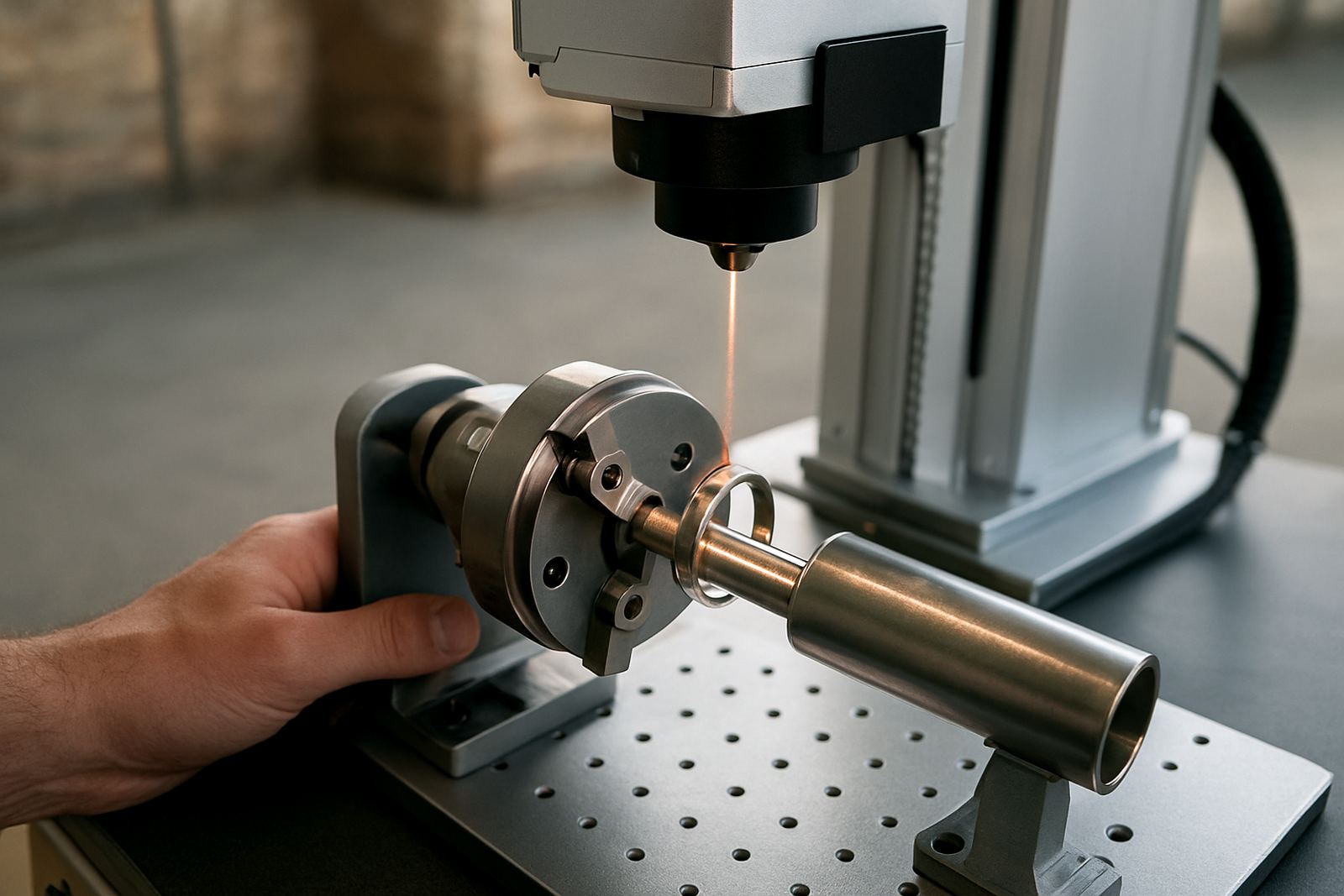
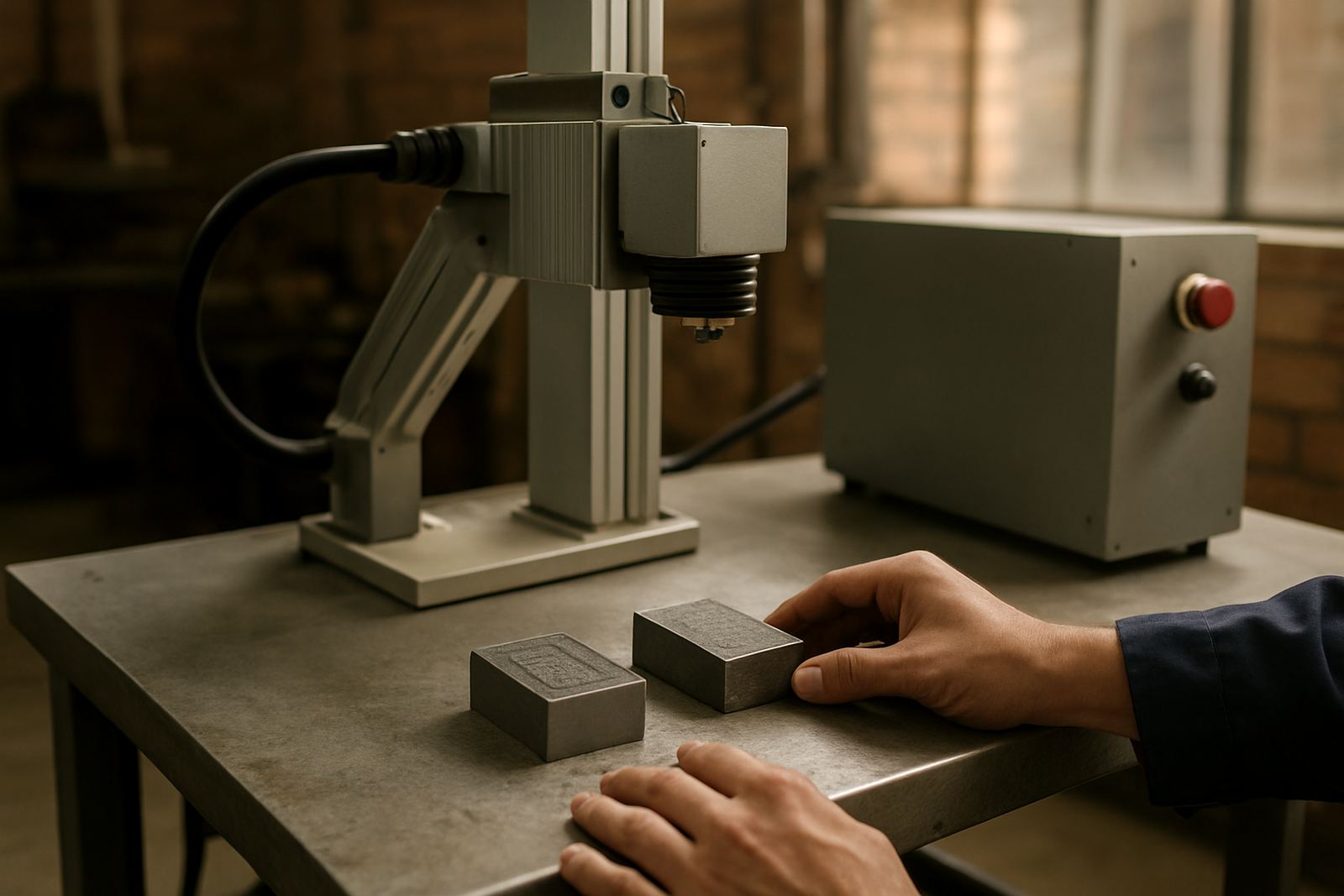
On curved parts, pressed tags, rings or small tools, focus changes across the surface if the part is not fixtured properly. Even a slight tilt can turn a sharp engraving into an uneven one. That is why fixtures matter. A simple jig can keep a batch square to the lens and save a lot of rework.
For deep marks on stainless steel, many operators do better by stepping the focus down gradually across passes rather than forcing one setting through the full depth. This keeps the sidewalls tidier and helps avoid that burnt look around the top edge.
Material type decides how the laser behaves
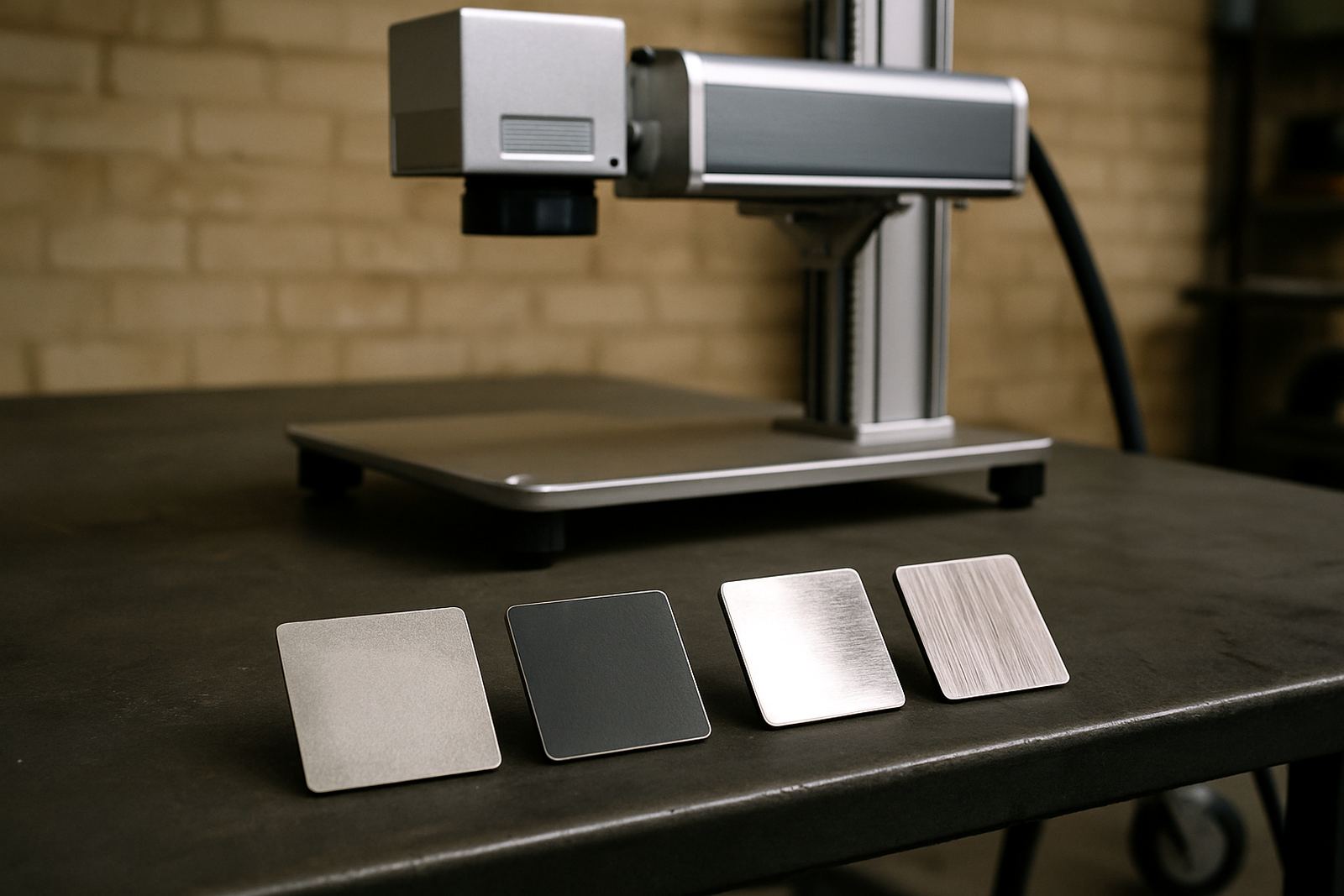
Not all metals respond the same way. Stainless steel tends to hold detail well, but it can show heat tint if the process is too hot. Mild steel is generally more forgiving, though the surface condition can vary from one supplier to the next. Aluminium can engrave quickly, but it may reflect and smear if the parameters are not balanced. Brass and copper need special care because they conduct heat fast and can give a shallower result than expected.
- Surface finish matters. A polished surface may show more reflection, while a mill finish can take the mark differently.
- Coatings can change removal rate and edge sharpness.
- Thickness is important if the job requires deep serials or cleaning after engraving.
- Jewellery alloys often need finer control to protect the finish.
A sample mark on the real material is worth more than a setting copied from a different job. Even the same grade can vary by batch, especially when the stock came through different supply chains. That is where sample marking and process optimisation pay off.
Why fixturing and sample marking save time on repeat jobs
On a one-off job you can sometimes get away with minor variation. On repeat production you cannot. Every part should sit the same way, with the same face height and the same clamp pressure. If the part shifts between passes, edge quality drops and depth becomes patchy. That causes rework, scrap and delays in packing.
Good fixture design helps keep the work stable without blocking the mark area. It also helps when parts need to be loaded quickly after load-shedding or when a busy shop floor is trying to catch up after a power interruption. In Germiston and Jet Park, many workshops run tight shift schedules, so having the fixture right the first time matters.
Sample marking is also the best way to agree on what the customer actually wants. Some want a deep black-looking recess. Others need a clean functional mark that can still be painted, plated or cleaned later. A test piece shows the depth, the edge and the clean-up effort before the full batch starts.
A local example from Wadeville to the shop floor
A small engineering client in Wadeville needed part numbers engraved onto stainless brackets that would be used outdoors near the coast. The first thought was to go very deep so the numbers could not wear off. But the deeper test marks held too much heat and left a rough shoulder on the edge. After adjusting the pass count, slowing the scan slightly and refining focus, the mark became cleaner and easier to read after passivation and handling.
The useful lesson was simple. Depth by itself is not the goal. The goal is a mark that stays legible, does not interfere with the part and can be produced batch after batch without drama. That is why proper training, software setup and preventive maintenance matter as much as the machine itself.
For shops working across Gauteng, from Germiston to Kempton Park and Alberton, the most reliable setup is the one that gives you the same result on Monday morning and Friday afternoon. That takes a machine that is well aligned, a fixture that holds the part correctly and a process that is tested on the actual metal, not just on paper.