
Why flat parts still move under the beam
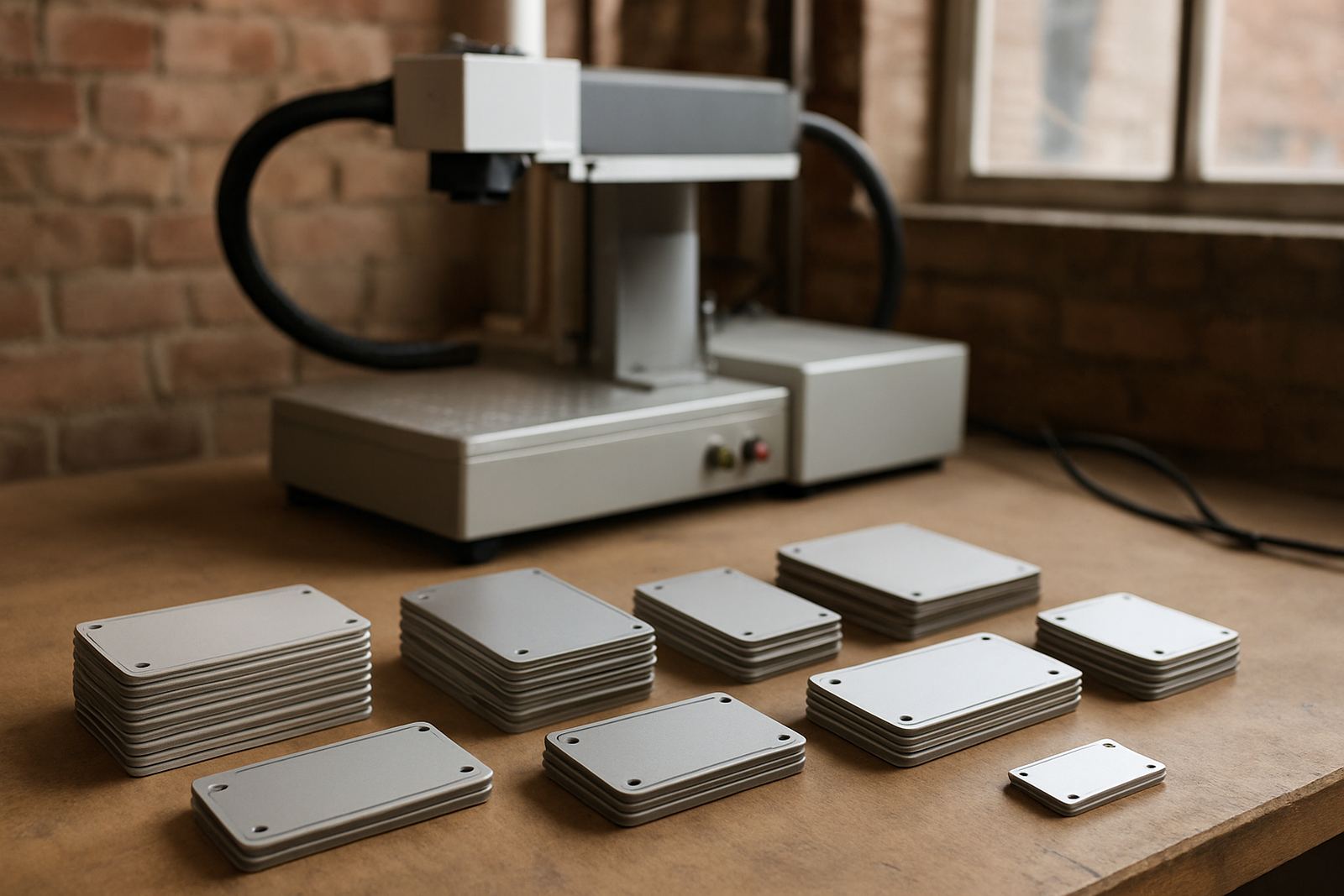
Flat does not always mean stable. Sheet metal, cut blanks, tags, washers and jewellery plates can rock on a table, sit on burrs, or shift when an operator loads them fast. Even a small lift at one corner changes the focus distance and that is enough to throw off a serial number, logo or fine text.
In a busy Germiston workshop, this often shows up on parts that arrive oily from cutting, or with light scale from laser cutting and bending. On stainless, mild steel and aluminium alike, the goal is the same: hold the part in one repeatable position so every mark lands in the same spot. That matters when you are processing batches of 20, 200 or 2 000 pieces.
Simple fixture ideas that work on a shop floor
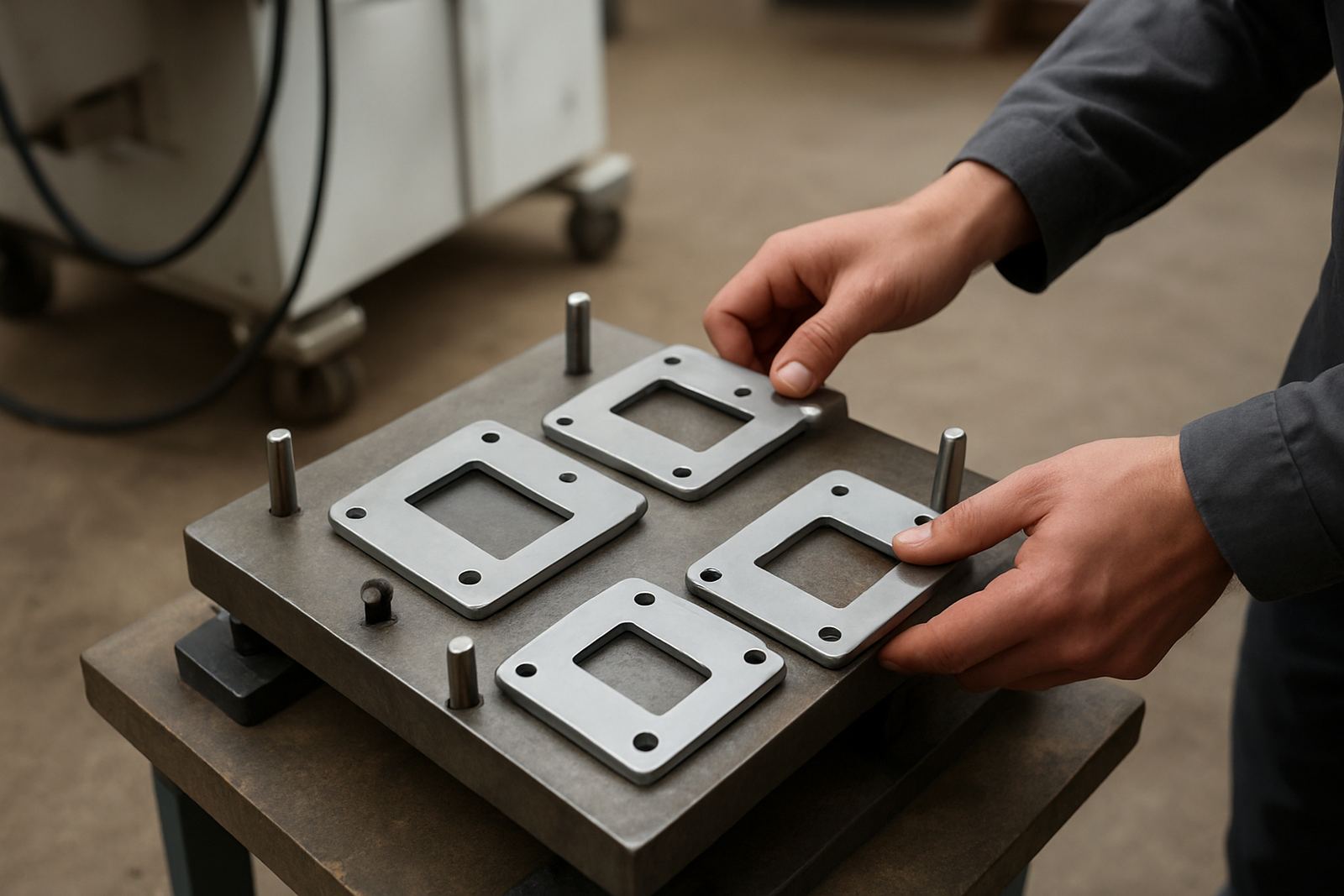
You do not always need a complex custom jig. For many flat parts, a plain baseplate with stops, pins or clamps gives better repeatability than a loose operator setup. The best fixture is the one that loads quickly and keeps the marking face level without fighting the operator.
- Corner stops: Good for rectangular plates, tags and nameplates where the part can sit against two fixed edges.
- Datum pins: Useful when parts have punched holes or slots and must be located from a known point.
- Low-profile clamps: Helpful on thin sheets that would spring or lift if only held by hand.
- Nesting pockets: Best for repeat parts where the outline can drop into a shallow cut-out for fast loading.
- Soft contact pads: Handy for polished jewellery components where scratching must be avoided.
For lighter jobs, a simple magnetic hold-down can help, but only where the material and marking surface suit it. On very small parts, avoid over-clamping. If the fixture distorts the part, your mark will follow the distortion.
Getting the focus and marking plane right
Flat part fixturing is not only about holding the job. It is also about keeping the marking plane within the machine's focus range. If one side of the part sits higher than the other, the beam may still mark, but the depth and edge clarity can change across the surface.
A practical setup starts with a level base, then a quick height check on the first part. If your fixture is for mixed batches, make the contact points consistent and keep the top face clean. Dust, swarf and sticker residue all change the sit of the part. In coastal areas, humidity can also leave light surface film on stored parts, so a wipe-down before loading helps more than people think.
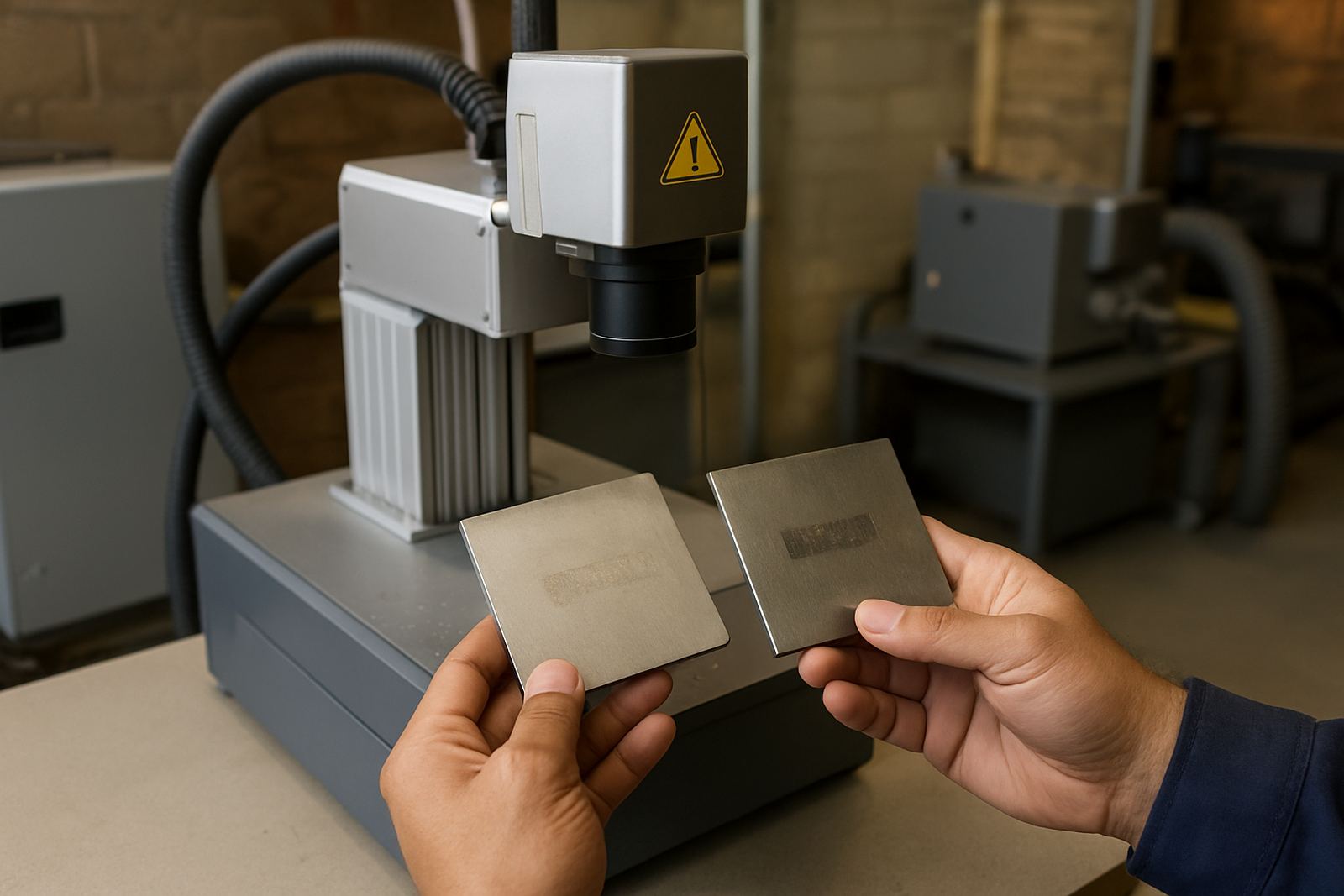
Where the mark must sit within a tight tolerance, use sample marking during setup to confirm position. This is especially useful for small serial plates, medical parts and jewellery components where even 0,5 mm matters.
Fixture design for speed, not just accuracy
Many workshops lose time because each operator loads the part differently. A good fixture removes that variation. It should show the correct orientation at a glance, make the loading path obvious, and let the operator clear the job without fumbling around the laser area.
In practice, that means building in simple visual cues and avoiding unnecessary steps. If the part needs to be rotated, mark the fixture itself. If it needs a specific side up, use a shallow pocket or a relief cut that only accepts the correct face.
- Keep loading points open and easy to clean.
- Leave enough hand space for gloves if the part is hot from a previous process.
- Use wear-resistant contact points where the same fixture will see daily use.
- Allow for small changes in part size where cutting tolerances vary.
- Make sure any clamp or stop does not block the mark area or laser access.
For high-volume jobs, a second interchangeable fixture plate can reduce downtime. While one plate is in use, the next batch can be preloaded beside the machine and swapped in seconds.
When jewellery needs a gentler touch
Jewellery and small decorative components need a lighter approach than industrial plates. The challenge is to hold the item still without marking the item itself. For rings, pendants, charms and thin blanks, the fixture often needs small locating features, soft support points or removable carriers that prevent movement during marking.
Gold, silver, stainless and plated pieces all behave differently under the beam and under pressure. A fixture that works for one metal may not suit another. That is why sample marking matters before full production starts. It also helps check whether the item is reflecting too much light, or if the focus needs adjusting for a curved or polished face.
For delicate jobs, less pressure is usually better. If the part is very light, a gentle vacuum hold or a well-fitted insert may be enough. The aim is repeatability without distortion, and that takes a bit of testing upfront.
Local workshop conditions that affect repeatability
In and around Wadeville, Jet Park, Isando and Boksburg, many workshops deal with mixed power conditions, dust from adjacent processes and shifts that move quickly. During load-shedding or generator changeover, operators may restart work in a hurry, and that is when fixturing mistakes creep in. A part placed one way in the morning can be loaded another way after lunch if the fixture is not obvious.
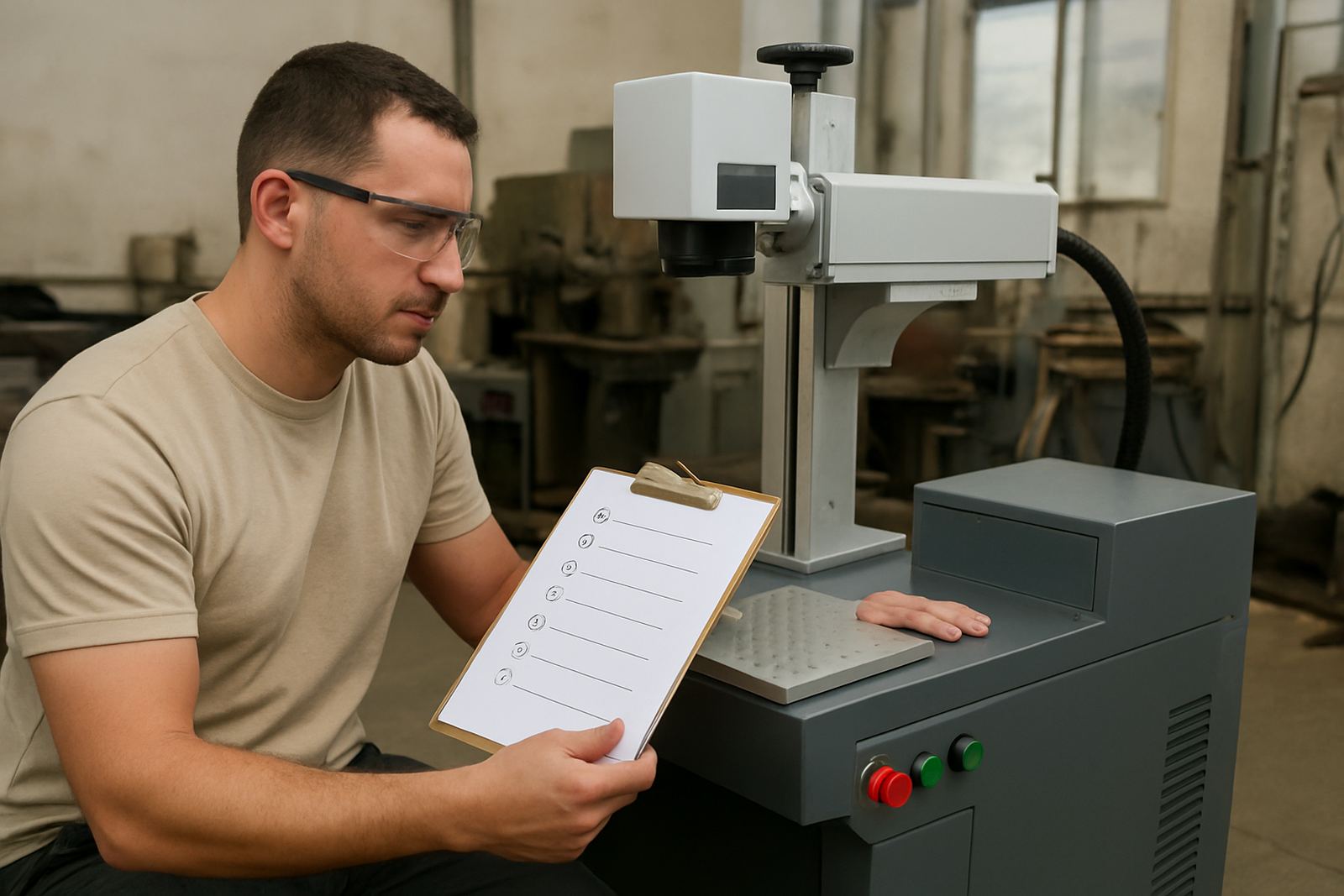
Regular maintenance also matters. A worn stop, a loose screw, or a fixture plate that has picked up burrs will slowly reduce accuracy. Preventive maintenance should include checking fixture faces, clamp pressure and alignment with the machine table. If parts are being moved between rooms or to another site, site relocation should include a proper re-check of the fixture set-up before production resumes.
A practical example from a Germiston batch run
A small Germiston manufacturer marking flat stainless tags was getting slight variation in logo position across batches. The machine was fine, but the parts were being placed by hand against a loose edge guide. The result was wasted parts, extra checks and frustration for the operator.
The fix was simple. A baseplate was fitted with two datum stops, a shallow pocket for the tag outline, and a removable clamp bar for the thinner pieces. After that, the operator could load each part the same way every time. Setup was quicker, the mark sat in the same spot, and the team spent less time sorting out rejects. The biggest gain was not the laser itself, it was the repeatable fixturing around it.
That is the real value of a good flat part fixture. It does not need to be fancy, only consistent. Once the part sits where it should, the marking process becomes easier to run, easier to train, and easier to trust.