Why marking fumes are more than a comfort issue
When a fibre laser marks metal, plated parts or coated surfaces, the beam changes the top layer of the material. That change can release very fine particles and vapour. In small quantities it may not look serious, but over time it can affect the air around the machine, the lenses inside the unit, and the finish on nearby parts.
In a workshop environment, especially where machines run near polishing, cutting or assembly stations, extraction is not just about smell. It is about keeping the marking area stable and reducing the chance of residue settling on guides, lenses and fixtures. If the marking window becomes dirty, you can end up with inconsistent contrast, slower cycle times and extra cleaning work.
For businesses in Germiston, Wadeville, Jet Park and the wider East Rand, this matters even more in summer when doors are open for airflow and dust from outside can mix with fumes inside. A small problem becomes a bigger one once the room is warm, humid, and there are several machines running at once.
Materials that need proper extraction from day one
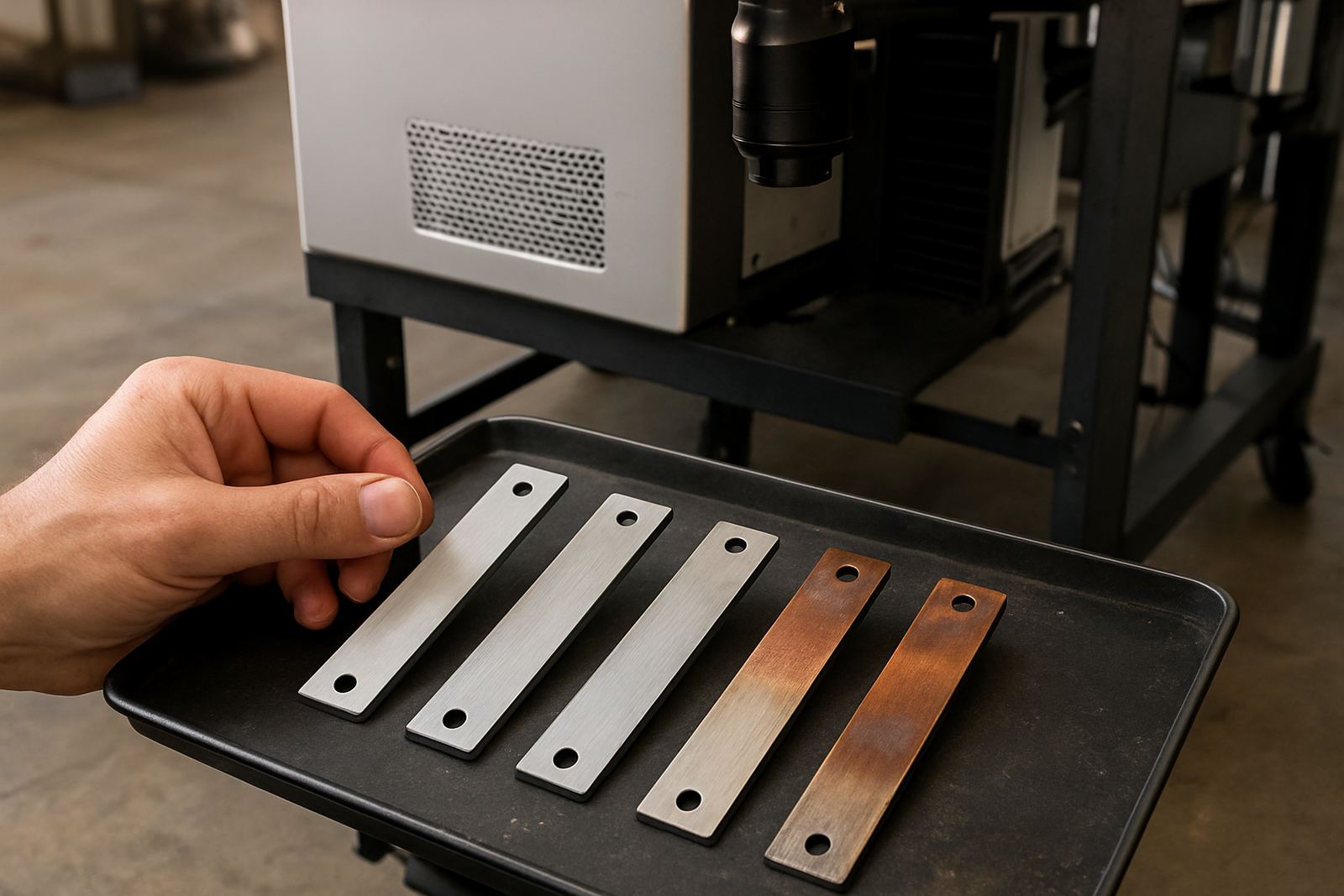
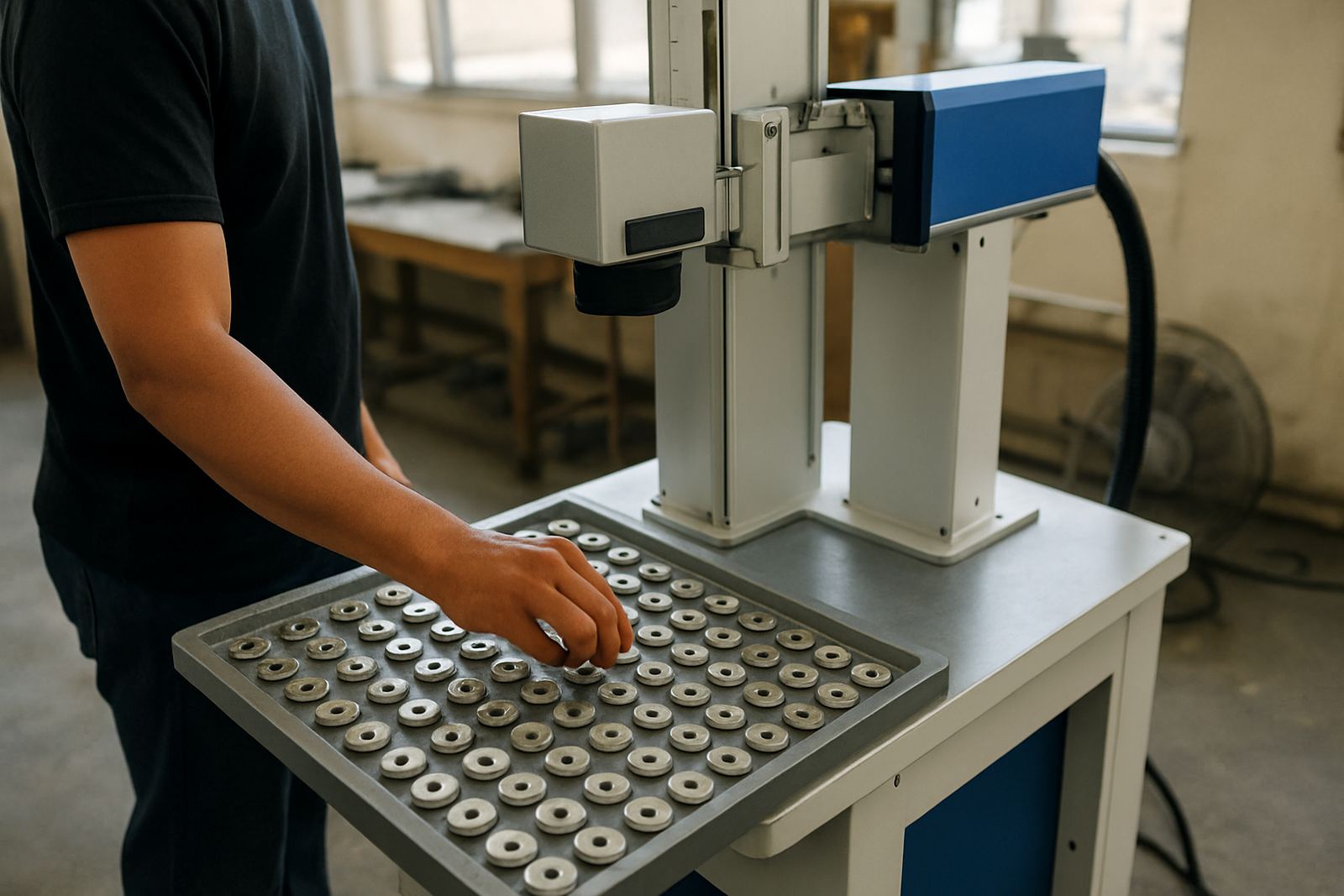
Some jobs need more attention than others. Stainless steel, mild steel, anodised aluminium and plated components can all produce residue that settles quickly if the extraction is weak or badly positioned. Jewellery work also needs care because smaller pieces are often marked in batches, which means repeated exposure in a confined area.
Coated and painted items are the biggest concern. If a coating burns off during marking, the smoke can be heavier and the smell stronger. The same applies to parts with grease, cutting fluid or polishing compound still on the surface. Clean the part first, then mark it. That simple step reduces smoke and helps the mark come out sharper.
- Uncoated metals can still throw off fine dust and vapour.
- Plated and painted finishes often need stronger local capture.
- Jewellery batches create repeated exposure in a small space.
- Oily or dirty parts increase smoke and leave residue on optics.
What good fume control should do in a South African workshop
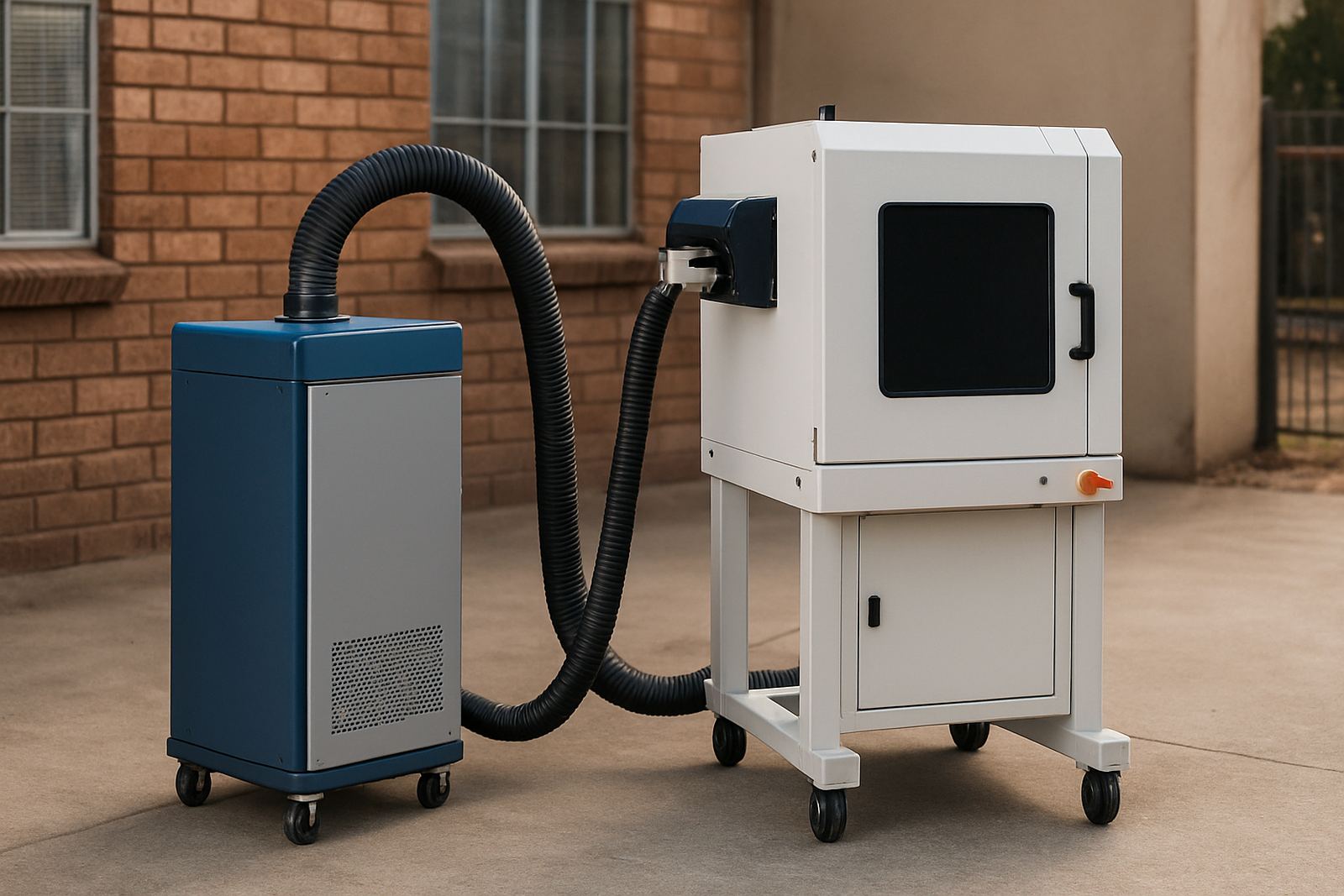
A proper extraction setup should pull fumes away from the marking point before they spread across the room. It should also help keep the machine bay cleaner, because fine residue can collect around the lens area and on nearby surfaces. That means less downtime for cleaning and fewer interruptions when production is busy.
The setup does not need to be complicated, but it must match the type of work you do. A small bench unit used for serial numbers on tool parts has different needs to a system marking nameplates all day. If you are working in a factory in Alberton or Boksburg, you may also need to think about how extraction behaves during load-shedding or generator changeover. A machine that loses airflow mid-job can leave fumes hanging around the operator for longer than expected.
- Capture fumes close to the mark point.
- Keep filters accessible for regular inspection.
- Choose a unit sized for your daily duty cycle.
- Allow for power interruptions and safe restart.
Local conditions change how the machine behaves
South African workshops do not all run in the same way. A clean room in Kempton Park is not the same as a metal shop in Wadeville or a jewellery bench in a back office near town. Dust levels, humidity, part preparation and ventilation all affect how well extraction works.
Coastal moisture can make residues cling more easily, while inland dust can block filters sooner than expected. In winter, closed windows may keep fumes inside longer. That is why installation and training matter just as much as the machine itself. The operator must know where to place the part, when to clean the filter, and how to spot when airflow has dropped off.
We often see businesses focus on mark quality first, then only think about extraction when the lens starts needing constant cleaning. It is better to plan for fumes from the start. That way the machine stays cleaner, the work area stays more comfortable, and the mark quality remains steady through the day.
Simple checks that save time and keep marks consistent
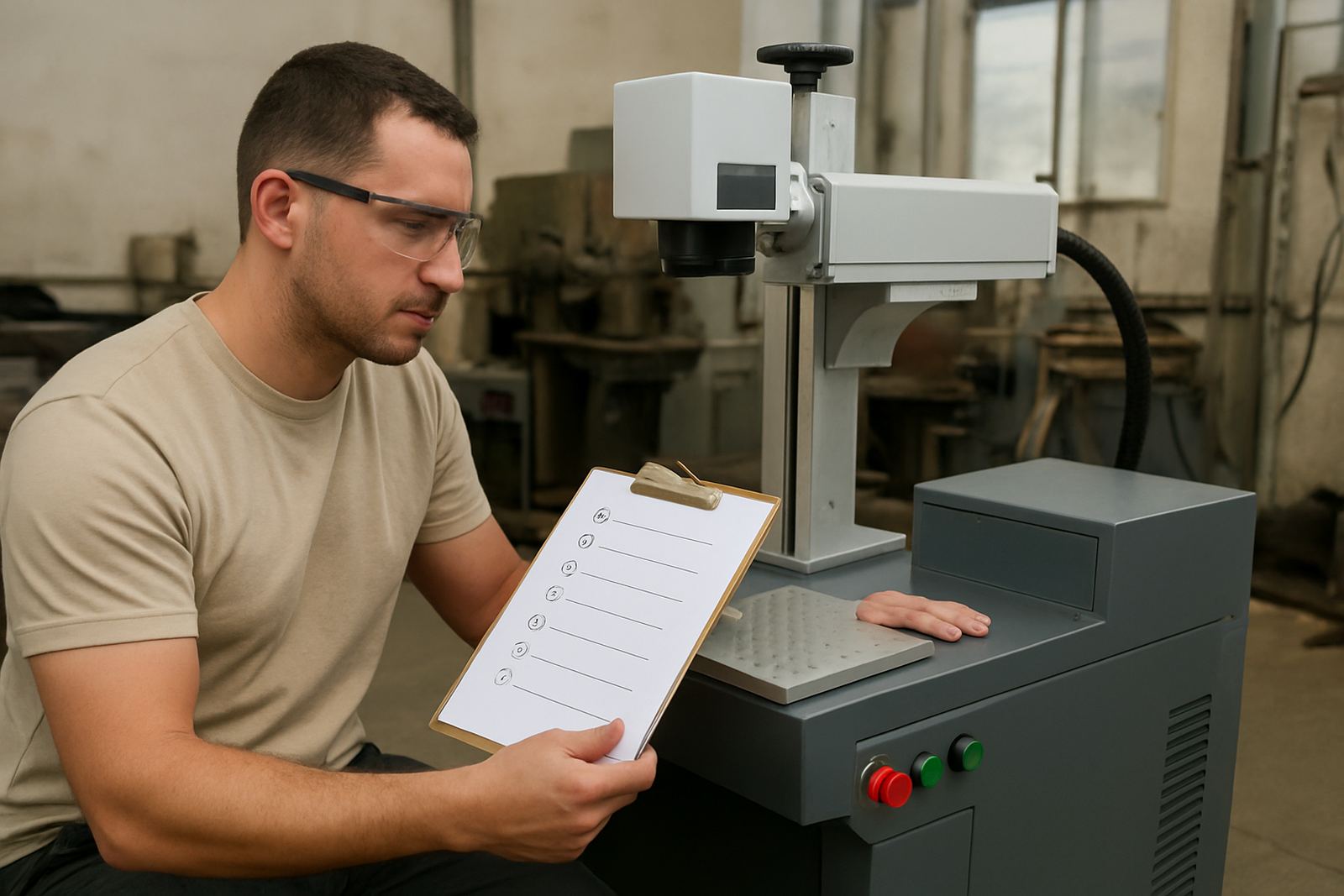
You do not need a full technical audit every week, but there are a few checks that should become part of your normal routine. They take minutes, yet they can prevent avoidable stoppages and poor marks.
- Check airflow before the first batch starts.
- Look for smoke drifting back over the work area.
- Inspect filters on a set schedule, not only when there is a problem.
- Clean part surfaces before marking where possible.
- Watch for changes in smell, noise or marking contrast.
- Keep the extraction hose and intake position fixed unless a technician advises otherwise.
If a mark begins to look dull or patchy, the problem is not always the laser settings. Sometimes the issue is poor air movement over the part, or residue building up on the optics. A quick check can save you a costly pause in production.
A practical example from the East Rand
A small metal workshop in Wadeville was marking serial numbers on coated brackets for a local manufacturer. The team had set the machine up well, but the marks started to look less even after a few weeks. The operator also noticed a stronger smell and a light film on the inside cover. The root cause was simple: extraction was too far from the marking point and the filter had not been checked often enough.
After repositioning the capture point, cleaning the machine and putting a maintenance routine in place, the marks became cleaner again. The operator could work longer without discomfort and the lens needed less frequent cleaning. That kind of change does not always need major equipment changes, just a better setup and some discipline on the floor.
For businesses across Germiston, Isando, Jet Park, Boksburg and Alberton, this is often the difference between a machine that merely works and one that supports day to day production properly.
When to ask for help with extraction and setup
If you are marking a new material, moving the machine to another site, or seeing smoke where there should be little to none, it is worth getting the setup checked. The right advice can cover machine installation, software setup, focus calibration, fixture design, sample marking and process optimisation so the extraction works with the job, not against it.
For businesses that need installs and training nationwide, the safest approach is to test the marking process on your actual parts before full production starts. That is the best time to see whether fumes are being captured properly, whether the operator needs extra guidance, and whether the workstation layout is practical for everyday use. A bit of planning upfront saves time later, and keeps the workshop safer too.
If you want to discuss your marking material or get help with a current setup, send your enquiry through the contact page and the team can advise on the next steps.