Why the difference matters on a real production line
In a workshop, factory or jewellery studio, the marking method has to suit the job, not just the artwork. A serial number on a valve body, a logo on a stainless tag, and a ring size inside a band all ask for different results, even if the same laser machine can do both.
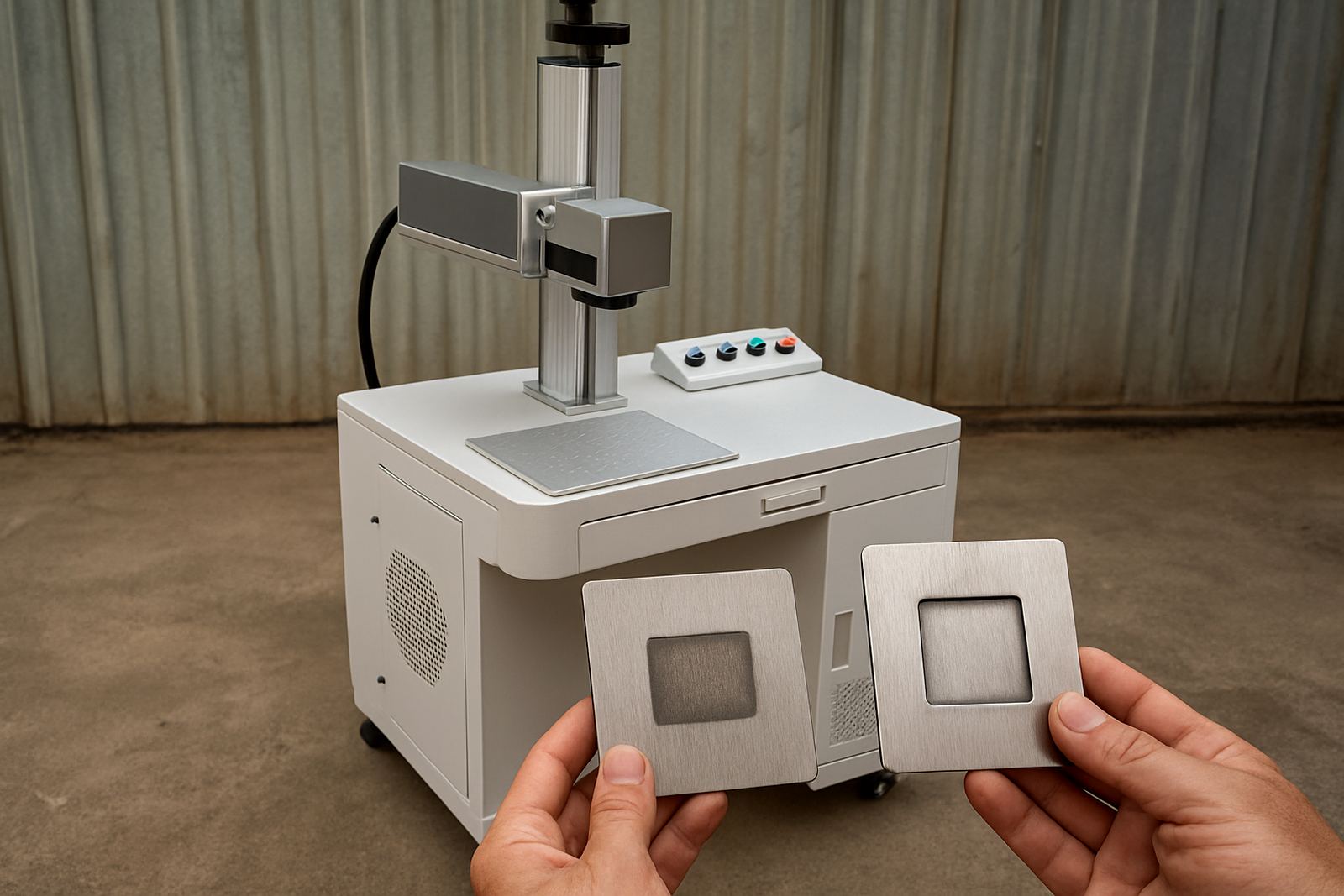
Surface marking changes the top layer of the metal. Engraving removes material and leaves a groove. That extra depth can help when the part will be handled often, blasted, cleaned, or exposed to heat and moisture. But deeper is not always better. If the mark only needs to stay readable and neat, a clean surface mark can be faster and gentler on the part.
For businesses in Germiston, Jet Park, Isando and the wider East Rand, this choice affects throughput, power use and maintenance too. During load shedding, shorter cycle times and correct setup can make a real difference to what you get through in a shift.
Surface marking: when a clean top layer is enough
Surface marking is often the better option when you want a fine, readable result without cutting deep into the metal. It is commonly used for data plates, QR codes, logos, batch codes and jewellery details where the finish must stay neat and controlled.
Because the laser changes the surface rather than carving it out, the process can be quicker and causes less stress on thin items. That matters on small components, polished pieces and parts that must keep tight tolerances.
- Best for stainless steel, anodised aluminium, brass and coated metals
- Suitable for serial numbers, logos, barcode fields and compliance data
- Useful where part weight, balance or fit must not change
- Often preferred for high-volume runs with repeat layouts
On jewellery, surface marking is often used inside rings, on pendants, on clasps and on packaging inserts. It gives a crisp result without making the item look overworked.
Engraving: when depth gives you more staying power
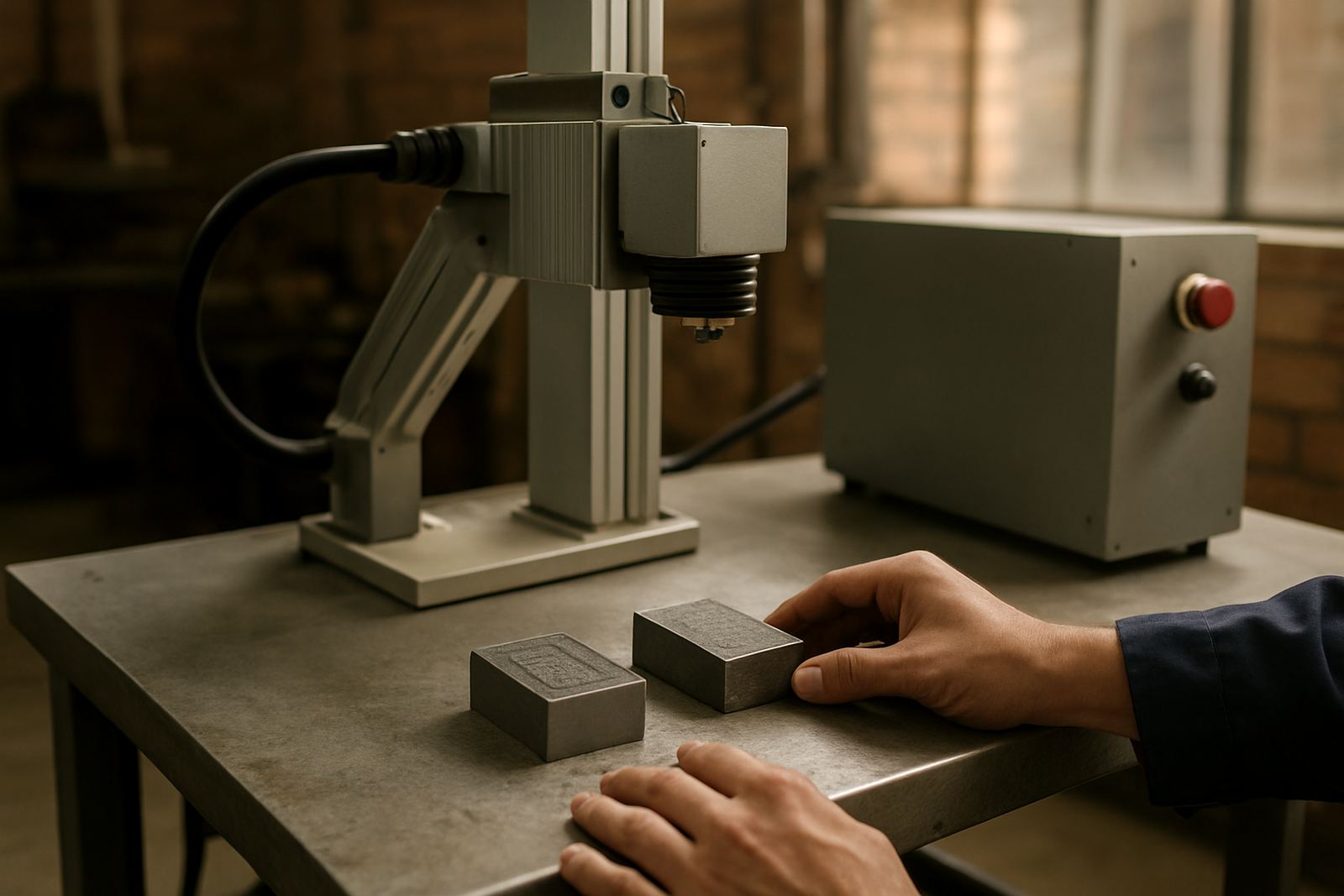
Engraving goes deeper and leaves a visible cut in the material. That depth can help the mark survive abrasion, repeated cleaning and outdoor exposure. It is a strong choice for industrial parts that will be handled by fitters, transported around sites or used in humid coastal conditions where a light surface mark may wear quicker.
Engraving also gives a different visual feel. It looks more tactile and can stand out better on thick nameplates, tools, dies and certain gift or jewellery items. The trade-off is that it usually takes longer and may need more careful setup to keep depth consistent across the whole batch.
For a workshop in Wadeville making identification tags for machinery, engraving may be the safer call if the tag will be bolted onto equipment, cleaned with chemicals or exposed to vibration. For a jeweller in Kempton Park, engraving can be the right answer for a bold message inside a wide band, but it is not always the best choice for very thin rings or delicate finishes.
- Best when long-term wear resistance matters
- Good for thick metal tags, tools and industrial plates
- Useful for a deeper visual effect on premium items
- Needs careful control on thin or heat-sensitive parts
What to check before choosing a method
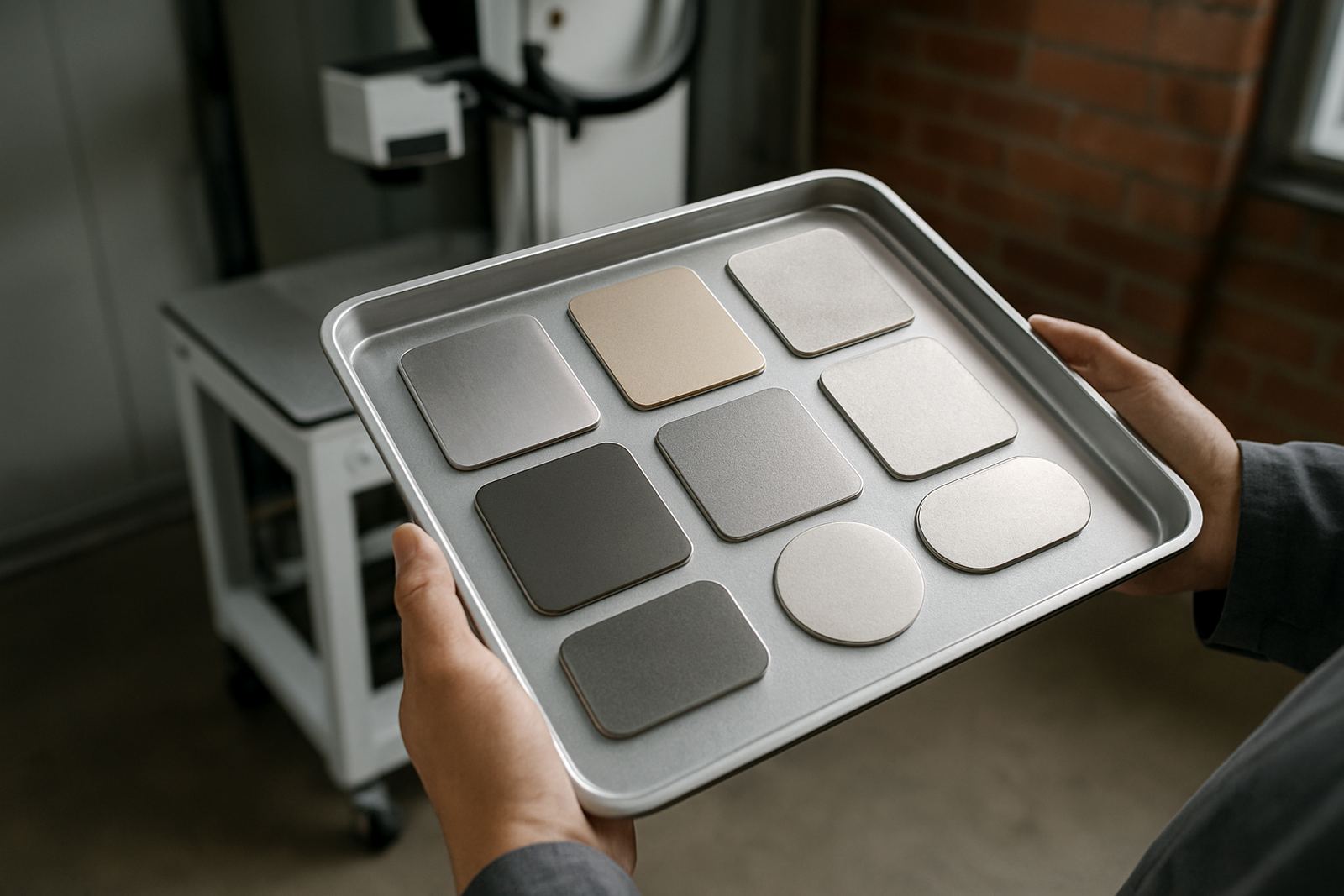
The part itself should decide the method. Material, thickness, finish and where the item will go all matter. Stainless steel behaves differently from brass. Powder-coated surfaces respond differently from bare metal. Jewellery also needs a different touch from a heavy machine component, because one small mistake can show immediately.
Before you choose marking or engraving, ask these practical questions:
- Will the item be handled daily, washed, polished or exposed to weather?
- Does the mark need to stay readable after years of wear?
- Is the part thin, shaped or sensitive to heat build-up?
- Do you need speed for volume, or depth for durability?
- Will the same layout be repeated many times or changed often?
If you are unsure, sample marking helps. Testing one or two parts before full production can save a batch from being too shallow, too deep or simply hard to read. A good sample tells you whether the finish is right for the material and the actual use.
Setup, software and fixture choices change the result
In fibre laser work, the final outcome is not only about power. Focus height, speed, fill pattern, lens choice and fixture design all affect whether the job ends up as a light mark or a deep engraving. That is why two parts marked on the same machine can still look completely different.
When the part must be repeated every day, proper fixture design helps keep the position steady. That reduces variation and saves time. It is especially useful for small components, irregular shapes and jewellery items that can shift with the slightest touch.
Software setup matters too. Batch files, naming rules and the right marking parameters help operators run the job without guessing. If the settings are wrong, you may end up with a mark that looks fine on day one but fades too quickly or cuts deeper than needed.
A good local setup also has to suit the environment. In parts of Gauteng, dust and temperature swings can affect optics and alignment. Near the coast, humidity adds another layer of care. For businesses that move machines between sites, or relocate a line, keeping the setup repeatable is part of the job.
A Germiston example from the shop floor
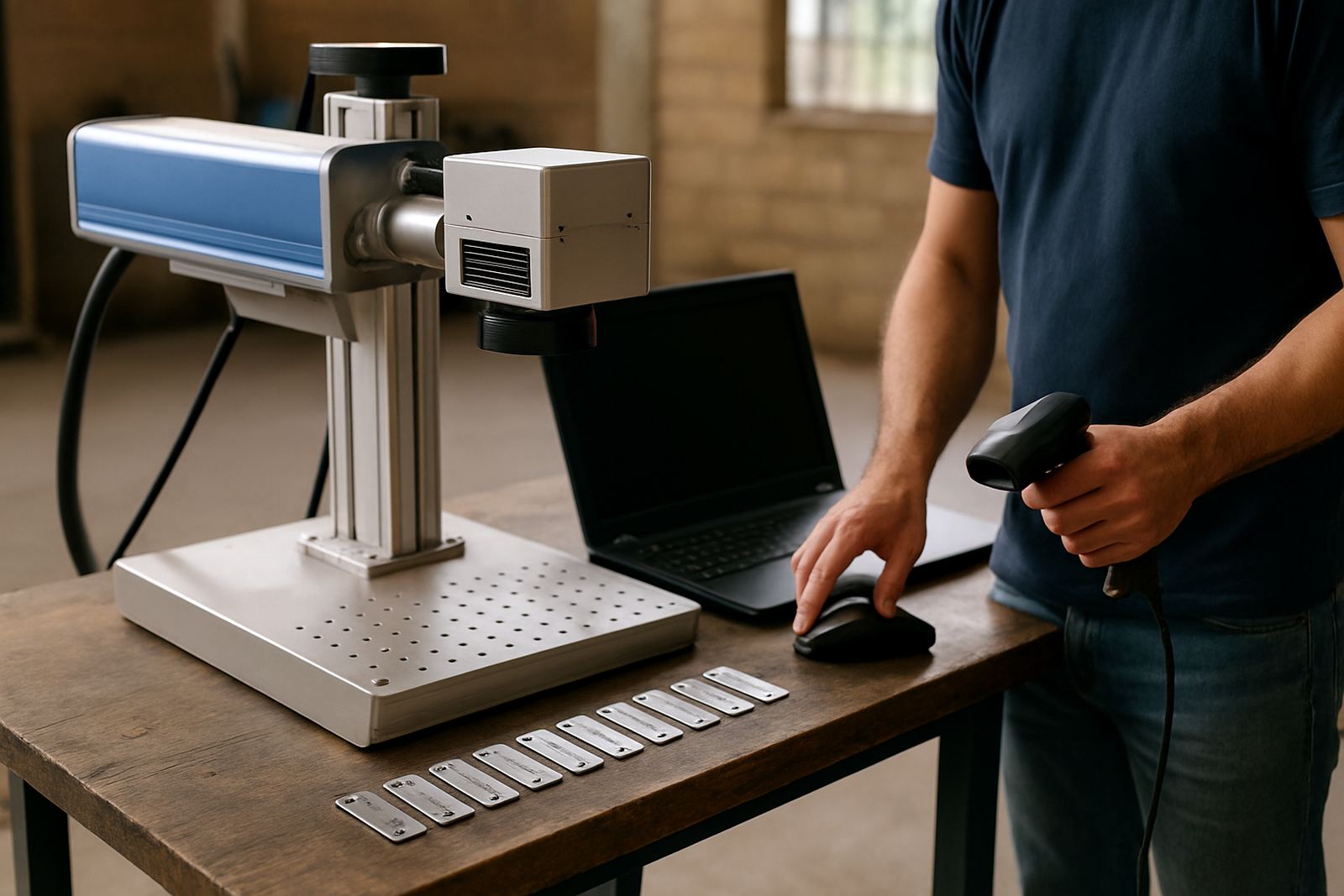
Say a Wadeville workshop is making stainless identification plates for a fleet of service trolleys. The plates need serial numbers, a logo and a code that stays readable after repeated cleaning. In that case, a clean surface mark might be enough if the plates are sheltered. But if the plates sit on outdoor equipment or get rubbed by hands and tools every day, a deeper engraved result is safer.
Now compare that with a jewellery maker in Alberton engraving inside a silver band. The goal is usually a neat personal message or size detail, with no distortion to the ring shape. Here, depth has to be controlled very tightly. Too much engraving can leave a rough finish, too little and the text will not last. That is where sample marking and focus calibration pay off.
This is the practical difference: surface marking is often about speed and clean presentation, while engraving is about staying power and depth. The right answer depends on the actual part, not the assumption.
When to ask for training or a process check
If your team is changing from one material to another, or from simple logos to traceability work, it is worth checking the process before full production starts. A machine can be capable of both marking and engraving, but operators still need the right settings and safe habits.
Training is useful when the work includes repeated batches, mixed part sizes, or compliance markings that must be readable under inspection. Preventive maintenance also helps keep results consistent, especially where a machine runs daily in a busy workshop and cannot afford avoidable downtime.
For businesses across South Africa, from Germiston to Boksburg, Isando and beyond, the best result usually comes from matching the method to the part, then confirming it with a sample. That keeps scrap down and helps you choose between a light surface mark and a deeper engraved finish with confidence.