What Our Breakdown Repair Service Covers
Our breakdown repair service is for fibre laser marking and engraving machines that have stopped working properly, are producing weak marks, or are giving inconsistent results on stainless steel, aluminium, brass, gold, silver and coated metals. We attend jobs from our Wadeville base in Germiston and support clients in Jet Park, Isando, Kempton Park, Boksburg, Alberton and further afield nationwide.
The service is aimed at getting you back into production with the least possible disruption. That includes fault finding on the laser source, galvo head, control PC, software settings, interlocks, power delivery, cooling, fibre alignment, lens condition and marking parameters. We also check fixture stability and job setup, because a lot of repeat faults start with small process issues rather than major hardware failure.
- Machine fault diagnosis and repair planning
- Laser, optics and motion system checks
- Controller, software and parameter review
- Power, cooling and safety interlock inspection
- Replacement of worn or damaged parts
How We Handle A Breakdown Callout
Every repair starts with a clear fault report. We ask what happened, when it started, what material is being marked and whether the issue is constant or intermittent. That first step saves time on site and helps us bring the right tools, spares and test parts.
- Log the fault and confirm the machine model, control type and symptoms.
- Carry out remote checks where possible to rule out simple software or setup issues.
- Schedule a site visit or bench inspection, depending on the fault and urgency.
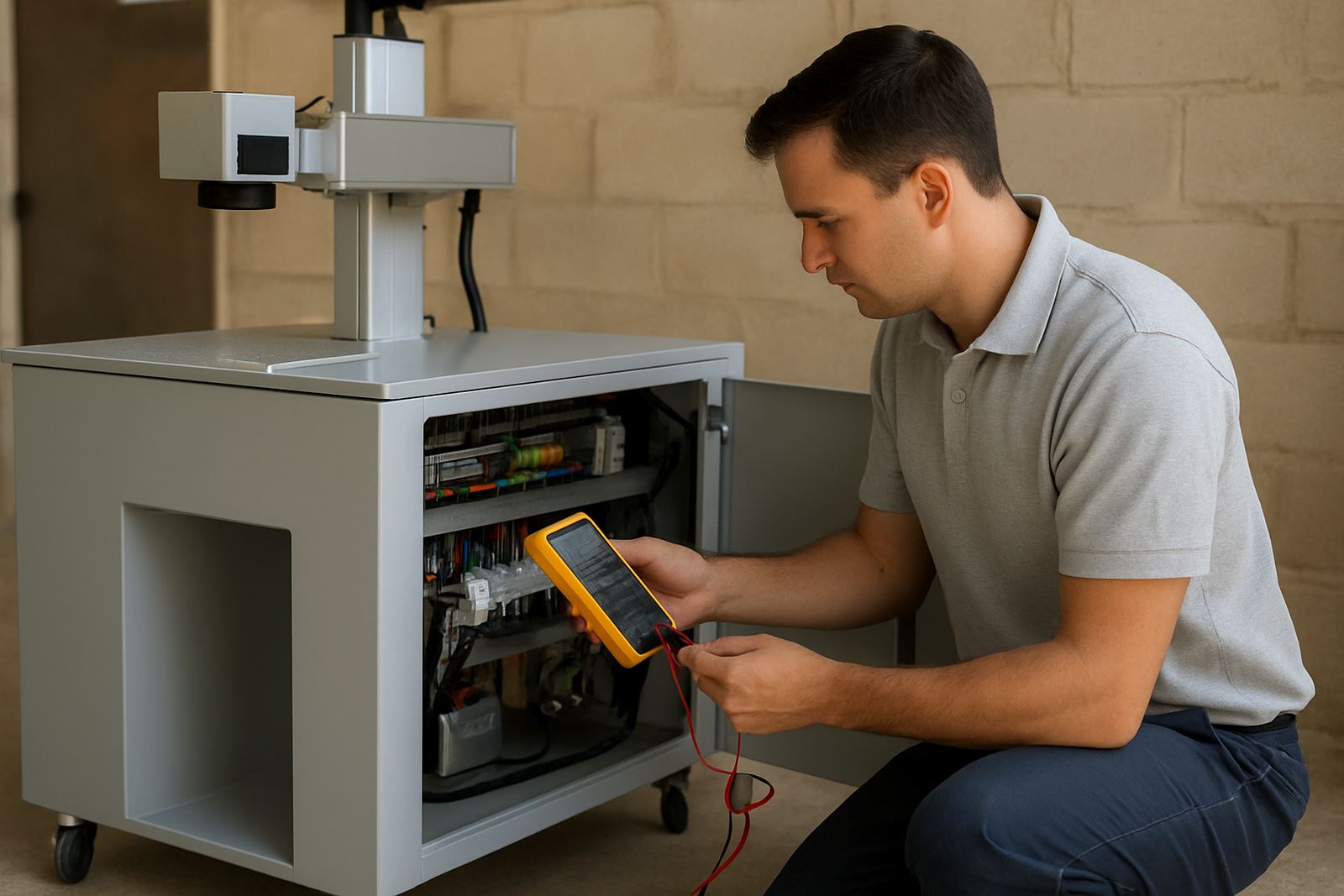
- Test the laser marking output, verify alignment and check the electrical and cooling systems.
- Repair, replace, calibrate and retest before handing the machine back.
For some faults we can fix the issue during the first visit. More complex failures may need a component order or a workshop bench test. We will always explain what is practical, what the likely downtime is, and whether continued running could make the problem worse. That kind of honest feedback matters when every shift counts.
Typical Faults We See On Fibre Laser Markers
Most breakdowns on fibre laser marking machines fall into a few common groups. Some are electrical, some are mechanical, and some are caused by wear, dust, heat or poor setup. In industrial areas around Germiston, Boksburg and Kempton Park, we often see issues linked to dust ingress, vibration, unstable power and machines that have not had routine checks for months.
- Weak or faded marks on metal parts
- No laser output or intermittent output
- Communication errors between controller and marking software
- Galvo head vibration, drift or poor repeatability
- Cooling alarms, fan failure or overheating
- Lens contamination, damaged focus settings or beam distortion
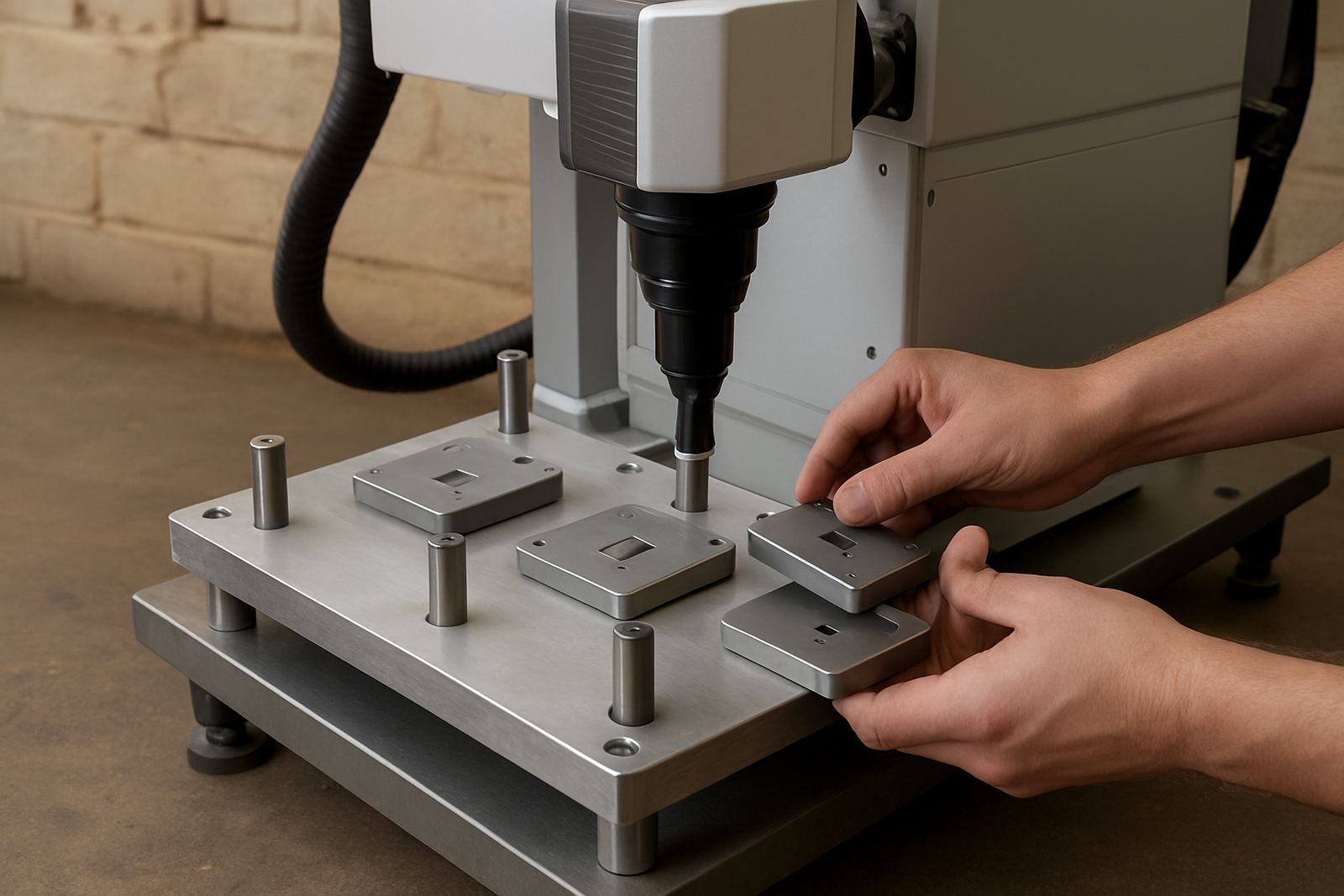
- Fixture movement causing inconsistent depth or position
On jewellery work, the problems are often finer and more sensitive. Small focus changes can affect line clarity, especially on rings, pendants and small components. On general manufacturing jobs, the issue is often cycle time, marking consistency or a part that has become harder to read after a tooling change. We test against real samples where possible so the result is measurable, not guessed.
Turnaround Times And Response Planning
Breakdown repairs are handled according to urgency, location and the type of fault. For clients in Wadeville, Germiston and the surrounding industrial areas, response is usually faster because we are already local. Nationwide, timing depends on travel, access arrangements and whether the machine needs on-site or workshop attention.
We aim to give a realistic turnaround estimate before work starts. Simple setup faults can sometimes be resolved the same day. Component-level repairs may take longer if parts need to be matched to the machine specification. If a business is under pressure to meet dispatch deadlines, we can prioritise the highest-value work first so at least critical jobs keep moving while the machine is fully restored.
- Support for many software, focus and setup faults
- On-site diagnosis for urgent production stoppages
- Workshop repair for deeper electrical or optical faults
- Remote assistance for checks that do not require travel
We also help clients plan around shift patterns, stock levels and courier collections, because production interruptions do not happen in a vacuum. A short site visit on a Tuesday morning may be better than a long stop on a Friday afternoon if that keeps your output on track.
Pricing Approach And Spares Supply
Repair pricing is based on the fault found, the labour involved, the travel required and any replacement parts needed. We prefer to quote clearly after diagnosis rather than guess at a price before seeing the machine. That keeps the cost fair and avoids surprises once the unit is opened up.
Where possible, we will repair the existing component instead of replacing the whole assembly. If a part is beyond repair, we source a suitable replacement and confirm compatibility before fitting it. This is especially important on older systems or imported machines with mixed control parts. We can also advise if repeated failure suggests a larger issue like poor ventilation, unstable power or a fixture that is out of tolerance.
- Diagnosis first, then a clear repair plan
- Labour charged according to task complexity
- Parts quoted separately when replacement is required
- Options for urgent callouts and planned workshop repairs
For regular production sites, we can combine breakdown work with a preventive maintenance visit so the machine is not repaired and then left untouched for another year. That saves money in the long run and helps avoid the same fault coming back.
Keeping The Machine Reliable After Repair
Once the machine is running again, we look at what needs to happen to keep it that way. Most fibre laser systems do best with routine checks every 6 to 12 months, depending on duty cycle, dust exposure and how often the machine is moved. High-usage shops in warm or coastal conditions may need shorter intervals because heat and humidity can affect cooling, lenses and electronics.
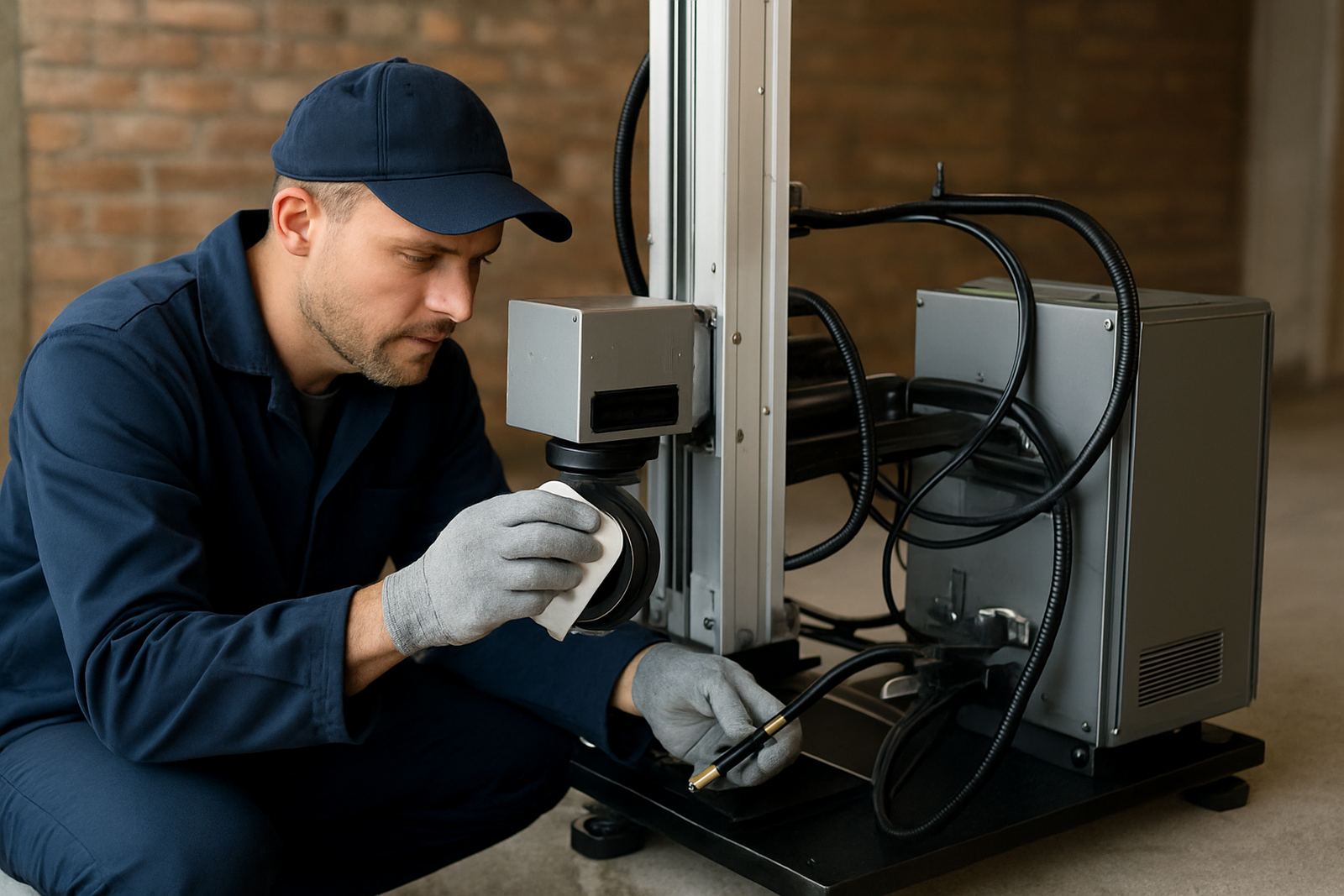
Recommended maintenance after a repair usually includes cleaning the optics, checking cable routing, verifying focus and beam position, inspecting fans and filters, confirming software settings and testing repeatability on a sample part. If the unit is mounted on a poor table or shared with other equipment, we may also suggest a better fixture or base to reduce vibration. It is a small thing but it makes a real difference to mark quality.
We keep the focus on practical uptime. That means less trial-and-error, fewer repeat breakdowns and a better chance that the machine will hold its settings through normal production use, even during power interruptions and busy shifts.
Key facts
| Service type | Breakdown repairs for fibre laser marking and engraving machines |
|---|---|
| Typical response | Support where schedule and location allow |
| Coverage | Wadeville, Germiston and nationwide site support |
| Common faults | Weak marking, no output, alignment drift, overheating, software errors |
| Repair format | On-site callout, workshop bench repair or remote assistance |
| Maintenance interval | Every 6 to 12 months, depending on duty cycle and environment |