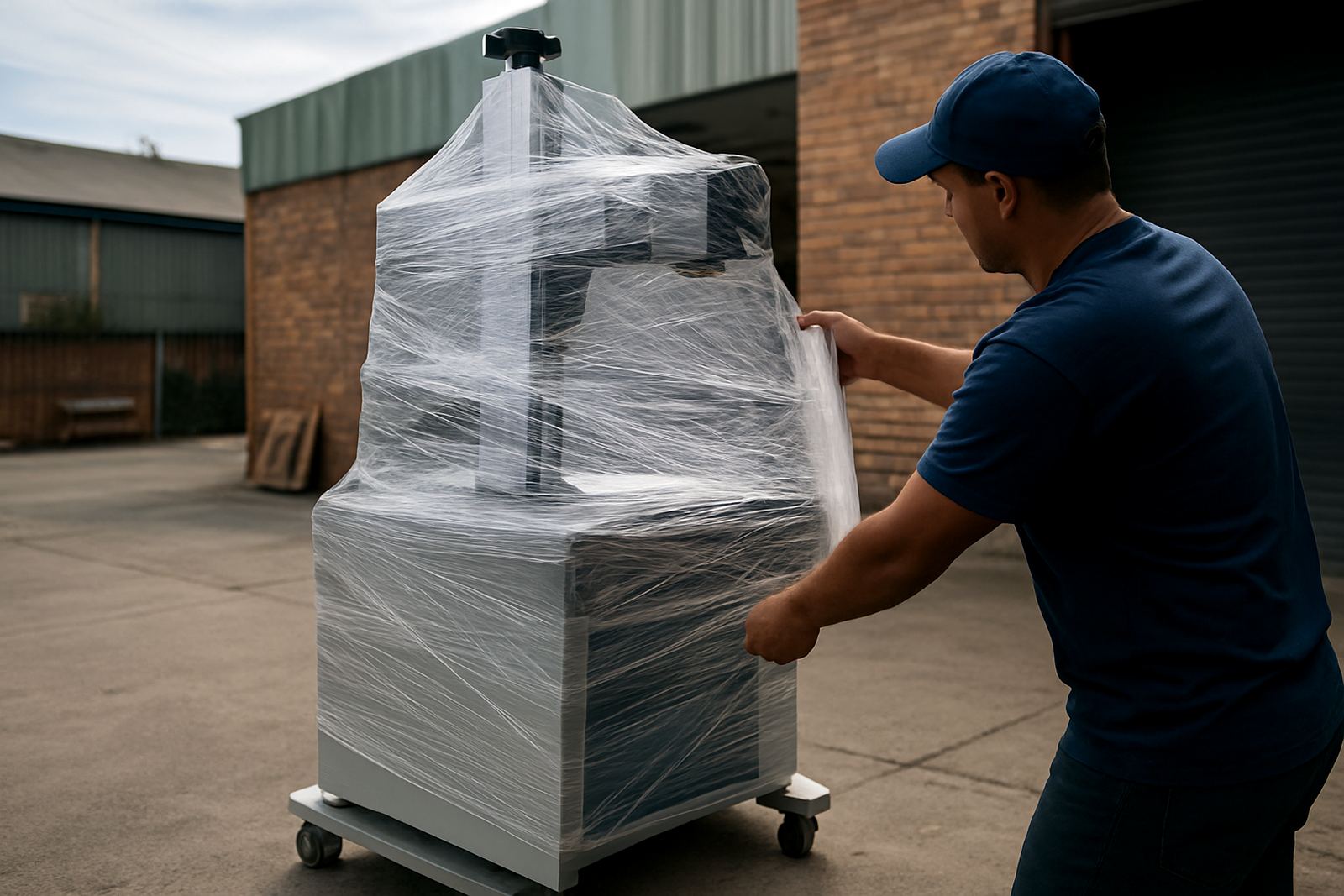
What site relocation covers for laser marking equipment
Site relocation is for businesses that need to move an existing fibre laser marking or engraving machine to a new workshop, factory, or production line. The work is planned around the machine build, the marking software setup, the power supply at the new site and the condition of the fixture so the unit can go back into service properly.
For metal parts, nameplates, tools and jewellery work, the detail on the marking head, lens and axis system must stay aligned through the move. We prepare the machine for transport, protect the optics, secure loose parts and check the cable routing before the unit leaves Wadeville, Germiston or any other site nationwide. That way you are not paying for avoidable damage or a long recovery after the move.
- Controlled disconnect of the laser unit, PC, controller and accessories
- Transport preparation with labelling, packing and vibration protection
- Reinstallation and functional checks at the new premises
- Software, focus and fixture verification after setup
How we move the machine without damaging the optics
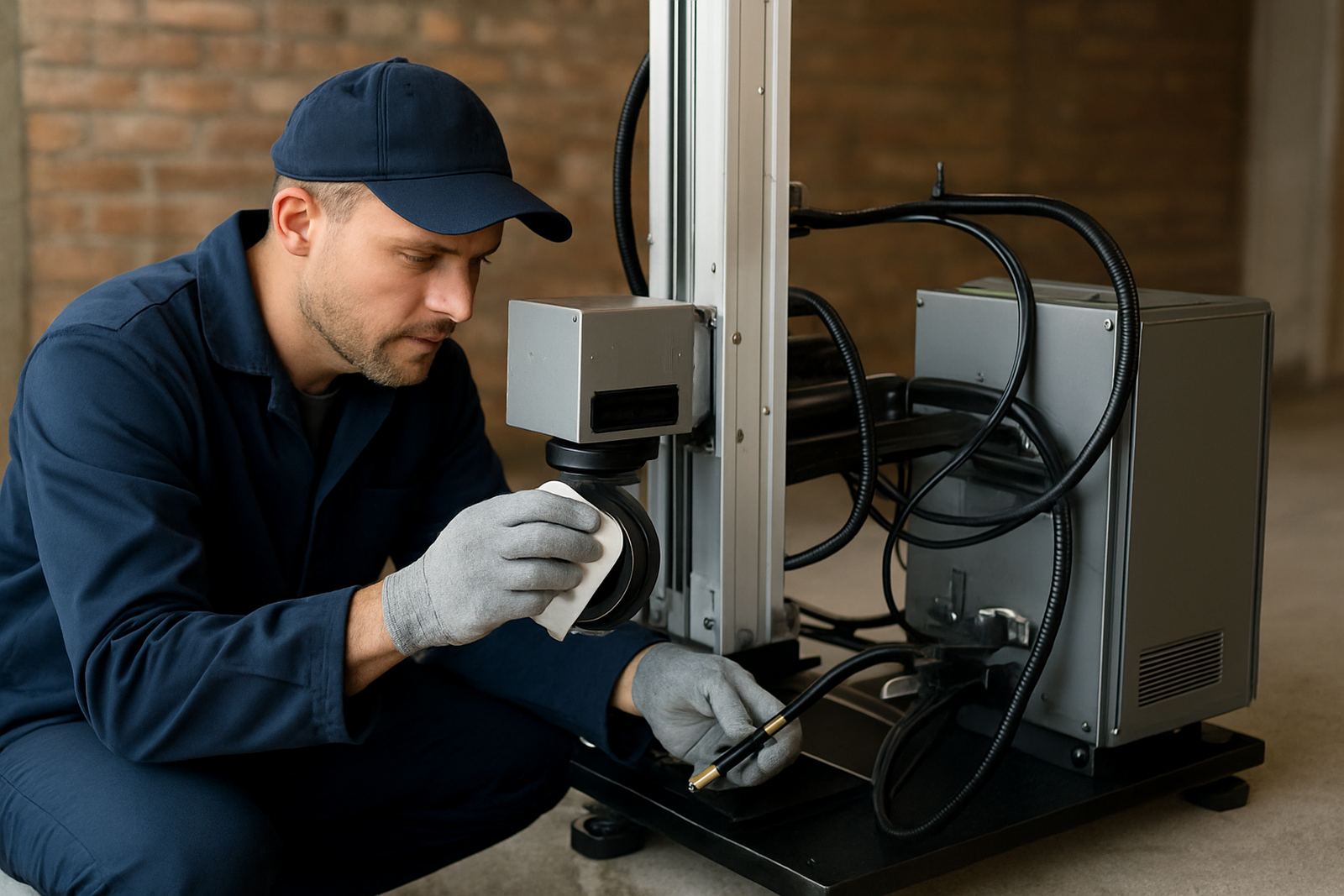
The first step is to isolate the machine properly. We shut down the marking system, save the current settings, back up job files where needed and disconnect the equipment in the correct order. Sensitive parts such as the lens, galvanometer head, rotary fixture and controls are then secured for transport. If a custom jig is fitted, we record its position so it can be returned to the same working height and angle.
Transport preparation matters because fibre laser equipment does not like rough handling. Even a short trip across Germiston, Kempton Park or Boksburg can shift alignment if the machine is not packed well. On site, we use a practical sequence that keeps the unit steady and reduces the chance of the beam path moving out of spec.
- Lens and marking head protected against dust and knocks
- All cables, foot switches and accessories tagged and packed separately
- Fixture, rotary and sample holders recorded for correct refit
- Machine base checked for levelling after placement
Recommissioning, focus checks and sample marking
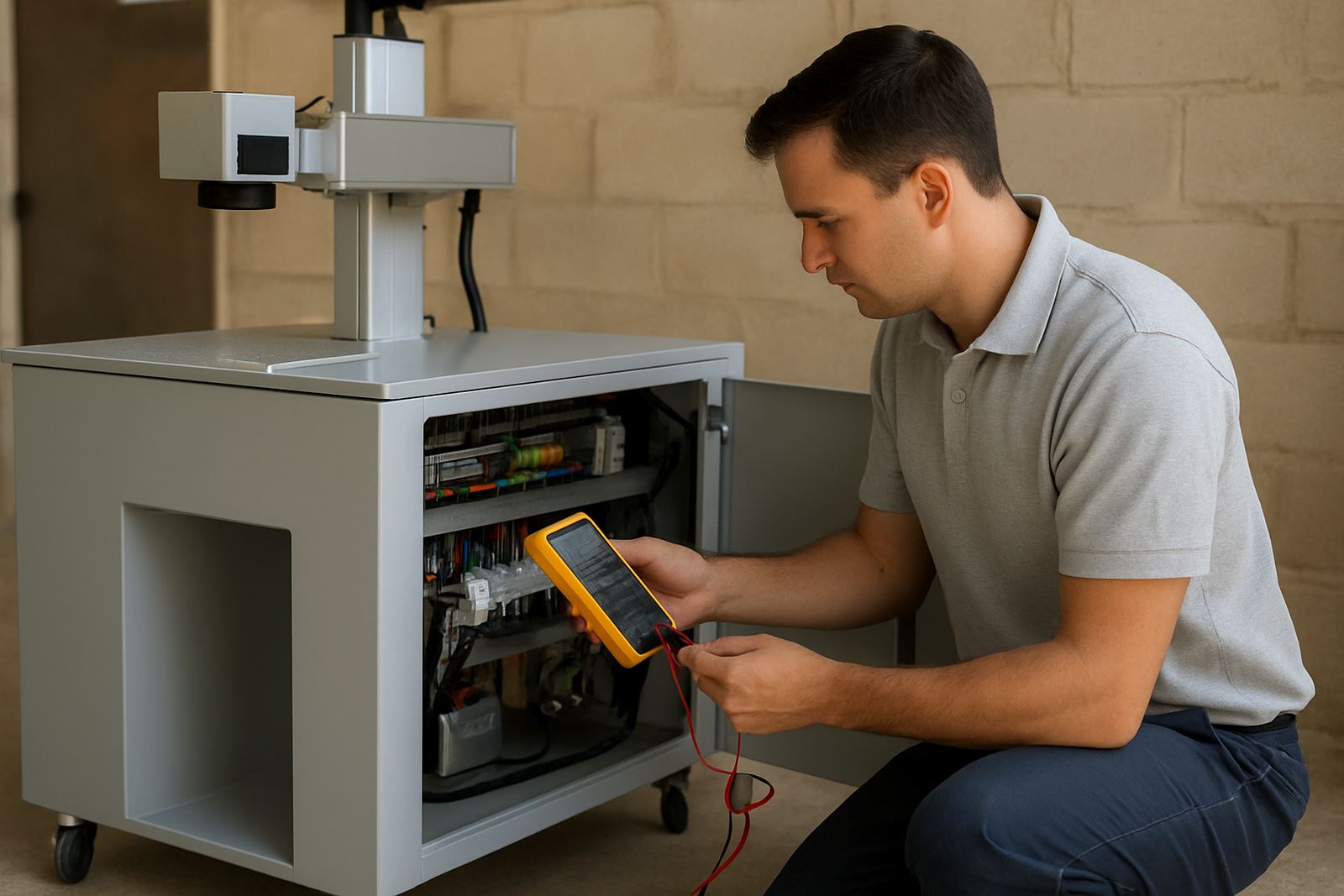
Once the machine is in place, recommissioning starts with power, earth and safety checks. We confirm that the supply is stable, the emergency stop works, the enclosure closes correctly and the marking area is clear. After that we carry out focus calibration, test burns and sample marking on the actual material you use, such as stainless steel, aluminium, brass, plated parts or jewellery components.
This is the stage where small issues show up quickly. If the fixture sits too low, the mark depth may change. If the lens was disturbed in transit, edge definition can soften. If the operator profile was not transferred properly, the job setup can take longer than it should. We sort those points on site, not later after production has already been disrupted.
- Power on and safety verification
- Focus calibration and beam position check
- Sample marking on customer material
- Operator handover once output is consistent
Turnaround times and what affects them
Turnaround depends on machine size, distance, access at both sites and whether we are moving one unit or several. A straightforward relocation inside Gauteng can often be completed in a day if the new site is ready, while a larger move that needs packing, careful transport and more setup time can take longer. Jobs outside Gauteng are planned around travel and on-site availability so the changeover stays controlled.
Delays usually come from things we can plan for early. If the new workshop still needs power points, a bench, air extraction or a better earth connection, the recommissioning step must wait. If the unit is going into a dusty factory or a humid coastal site, we may recommend extra protection or a maintenance check at the same time.
- Local relocation: often same day or next working day
- Long-distance relocation: scheduled in advance with site readiness confirmed
- Multiple machines: staged move to limit downtime
- Rush moves: subject to technician availability and access times
Pricing approach for relocation work
Pricing is based on the real scope of the move, not a flat guess. We look at the machine model, the number of items to be disconnected, the distance between sites, the packing required, any accessory relocation and whether extra setup such as software, fixtures or calibration is needed. If the unit requires special handling because it is installed in a tight space or on a raised platform, that is included in the quote before work starts.
Clients usually prefer a clear breakdown so they can budget properly. That may include labour for disconnection and reinstallation, transport preparation, recommissioning, testing and any spares found to be needed during the visit. If a machine has been idle for a while before the move, we may advise a preventive service at the same time rather than sending it into production with worn parts or dirty optics.
- Quoted according to scope, distance and equipment condition
- No hidden add-ons for agreed tasks
- Optional maintenance or calibration can be bundled
- Useful for one-off relocations and multi-site changes
Maintenance after a move keeps the machine steady
After relocation, a machine should not just be switched on and left. We recommend a follow-up check after the first few production runs, especially if the machine has been moved across provinces or into a different environment. Changes in vibration, dust, temperature and power quality can affect marking consistency over time, and it is better to catch that early.
Typical maintenance intervals depend on duty cycle and site conditions. A busy workshop may need a monthly visual inspection and a quarterly preventative service, while lighter use can stretch the interval out. In coastal areas, or places with fine metal dust, the lens area and exterior should be checked more often because contamination builds up faster.
- Monthly: visual check, cleaning and cable inspection
- Quarterly: focus verification, fixture check and software review
- After relocation: recommissioning review after the first production batch
- Annually: deeper service if the machine runs daily
Key facts
| Service type | Controlled disconnection, transport preparation and recommissioning |
|---|---|
| Machine types | Fibre laser marking and engraving machines for metal parts and jewellery |
| Typical wattage range | 20 W to 100 W units commonly handled, depending on setup |
| Material scope | Stainless steel, aluminium, brass, plated components and precious metal parts |
| Coverage | Germiston base with installs and training nationwide |
| Support options | Remote assistance, onsite setup, focus calibration and sample marking |