
What Preventive Maintenance Covers
Preventive maintenance is planned care for your fibre laser marker before a fault slows production. We inspect the laser head, optics path, beam delivery components, motion system, electrical connections and software settings, then make the adjustments needed to keep marks clean and repeatable.
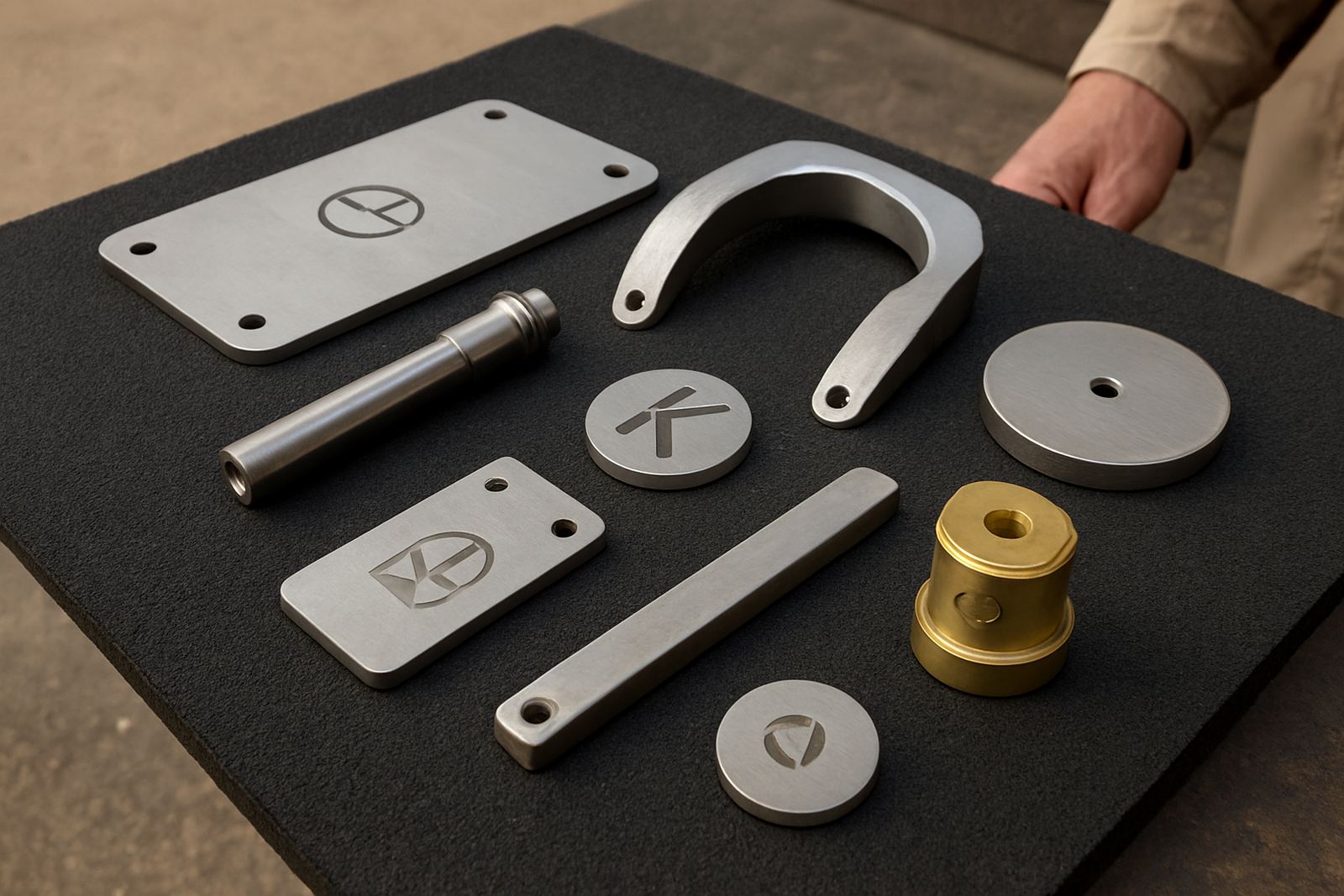
For metal part marking, small shifts in focus or fixture height can change depth and contrast. On jewellery work, where pieces are smaller and more detailed, even a slight drift can cause inconsistent engraving. That is why we treat maintenance as part of production control, not just a repair visit.
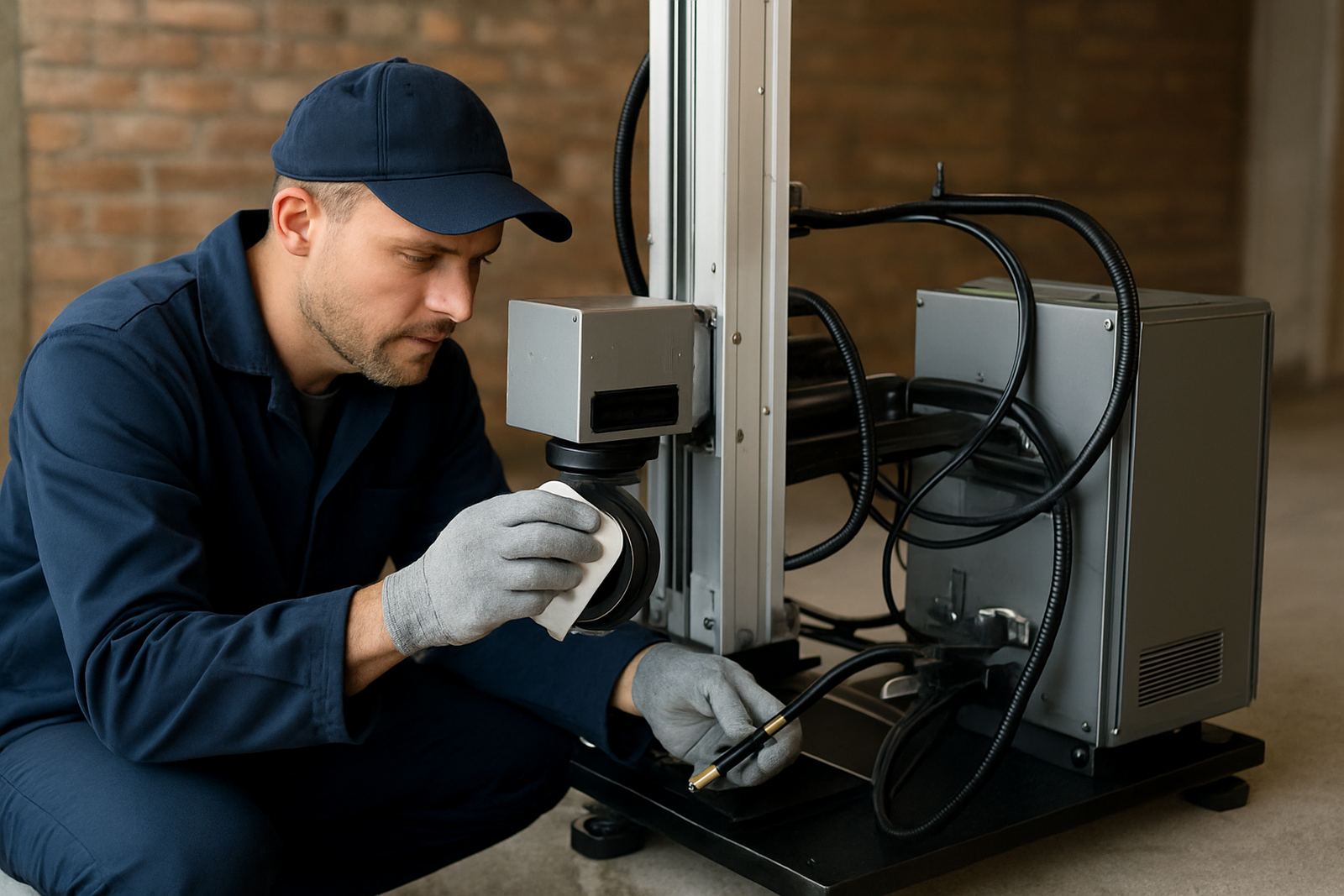
- Inspection of lens, mirrors where fitted, and protective covers
- Cleaning of optics housing, filters and machine surfaces
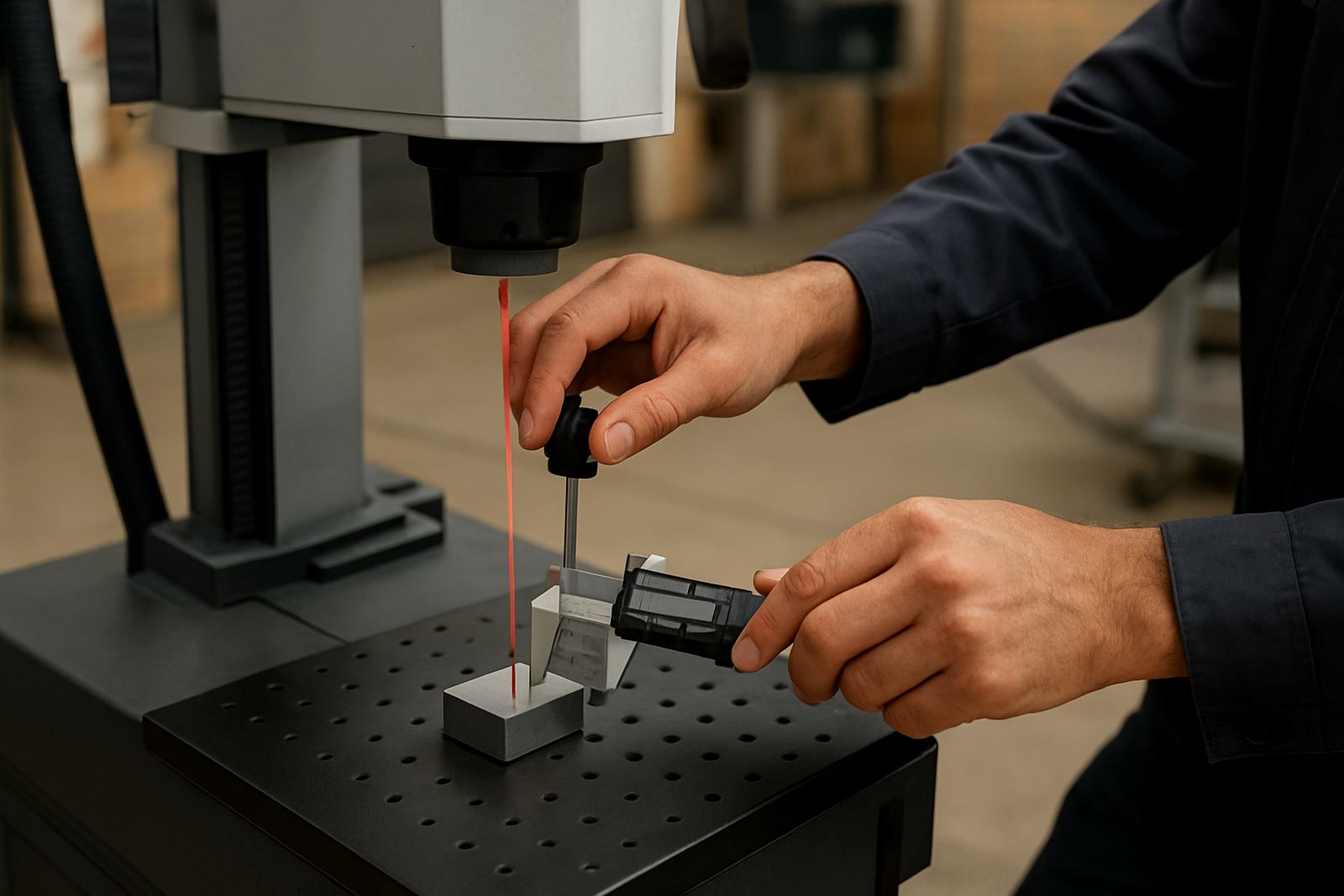
- Checking focus height, beam alignment and marking field accuracy
- Review of cabling, earth points and control cabinet condition
- Backup of key software settings and user parameters
Typical Maintenance Intervals for South African Workshops
The right interval depends on shift pattern, dust levels, part handling and whether the machine runs in a clean indoor space or a busier workshop. In Wadeville, Jet Park, Isando and similar industrial areas, airborne dust and daily use often mean more regular checks are worth the cost.
As a general guide, many customers book a light inspection every 3 to 4 months, with a fuller service every 6 months. High-volume sites, coastal areas with humidity, or shops running long shifts may need shorter intervals. If load-shedding has caused repeated shutdowns, it is also sensible to check power protection, backups and connection points after outages.
- Low to moderate use: every 6 months
- Daily production use: every 3 to 4 months
- Coastal or high-humidity sites: every 2 to 3 months
- After relocation or repeated power interruptions: immediate inspection
What We Check During a Service Visit
Our process is practical and geared to real production work. We start with a quick discussion about machine behaviour, marking quality, any recent alarms and whether you have changed material, fixtures or software settings. Then we test the machine under normal operating conditions and compare results against the required mark quality.
Depending on the machine and setup, the visit may include cleaning, calibration, software checks and minor corrections on site. If a part is worn or failing, we advise on replacement before it causes downtime. We always aim to leave the machine ready for normal work, not just passing a visual inspection.
- Pre-service check of machine history and current symptoms
- Functional test on your common workpieces or sample material
- Optical and focus verification for marking consistency
- Parameter review for speed, power and hatch settings
- Final test mark and handover notes for your team
Our Service Process From Booking to Handover
Most customers contact us through the enquiry form on our contact page and tell us the machine model, location and the problem they want to prevent. From there we confirm the scope, timing and whether the visit is for a single unit or a small group of machines at one site.
For Gauteng sites such as Germiston, Alberton, Boksburg, Kempton Park and Isando, we can often plan work around your shift pattern. For out-of-town installs and ongoing support, we schedule travel carefully so that one visit covers inspection, corrections and a quick operator briefing where needed.
- Job scope confirmed from your machine type and usage
- Scheduled visit arranged around production hours
- On-site inspection, cleaning and calibration
- Testing with your own parts or samples
- Handover notes with next recommended service date
Turnaround, Downtime and What to Expect
Preventive maintenance is usually quicker than breakdown work because the machine is still functioning when we arrive. A standard visit for one machine is often completed in a few hours, though older equipment, hard-to-reach installations or added training may extend the job. If several units are booked in one visit, we will stage the work to reduce production interruption.
We recommend allowing a clean work area, steady power supply and access to any samples or fixtures used for production. If the machine is in a location with unreliable supply or frequent outages, we may advise a short shutdown window so settings and test marks can be checked properly, instead of rushing the job.
- Single machine service: often same day
- Multi-machine site: planned across one or more visits
- Extra time may be needed for worn fixtures or calibration issues
- After service, you receive clear notes on what was done and what to watch
Pricing Approach and Parts Planning
Pricing depends on the machine type, site location, number of units, level of wear and whether calibration, software setup or minor repairs are needed during the visit. We quote on the actual scope, so you are not paying for work you do not need. For regular customers, planned maintenance is usually better value than waiting for a breakdown and then calling for urgent repair.
If a service uncovers worn lenses, cabling, fixture issues or software problems, we will explain the options before proceeding. That makes budgeting easier and helps you plan around production. It also reduces surprise costs later, which is especially useful for small workshops balancing jobbing work with scheduled orders.
- Fixed scope quotes for routine maintenance
- Separate pricing if parts or deeper repairs are required
- Travel considered for outlying areas and nationwide work
- Maintenance plans can be aligned to your production cycle
Key facts
| Service type | Preventive maintenance for fibre laser marking machines |
|---|---|
| Typical visit time | 2 to 4 hours for one machine, depending on condition |
| Recommended interval | Every 3 to 6 months, based on usage and site conditions |
| Site coverage | Wadeville, Gauteng and nationwide |
| Machine types | Fibre laser markers for metal parts and jewellery |
| Support included | Inspection, cleaning, calibration, software checks and handover notes |