Why sample marking matters before full production
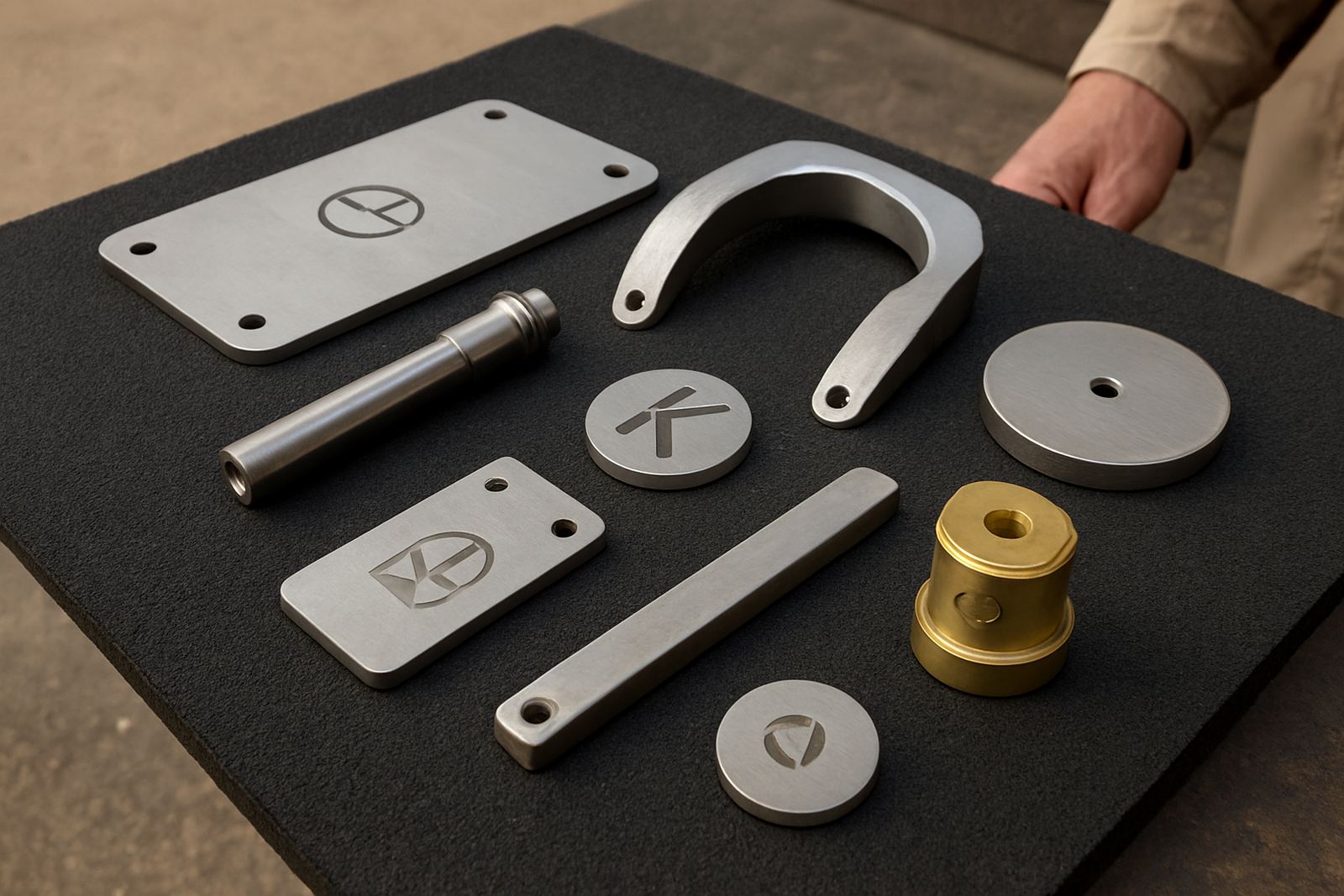
Sample marking is the practical way to check if a marking will suit the part, the material and the end use. A mark that looks fine on screen can behave differently on stainless steel, anodised aluminium, brass, mild steel or plated items, especially where the part has curvature, oil residue or a polished finish. We use trial pieces to confirm legibility, depth, contrast and cycle time before you order a full machine setup or move into regular production.
This is useful for job shops, engineering firms, manufacturers and jewellers who need repeatable results with traceable detail. It also helps where the client has a spec sheet, barcode requirement, serial number format or logo that must hold its shape at small size. For local work in Gauteng and across South Africa, sample marking saves time, reduces scrap and helps avoid rework when the final batch arrives.
- Check mark quality on your actual part or a close sample
- Confirm minimum line width, font size and fill pattern
- Test readability under workshop light and inspection lighting
- Review mark depth for wear resistance and handling
What is included in a sample marking run
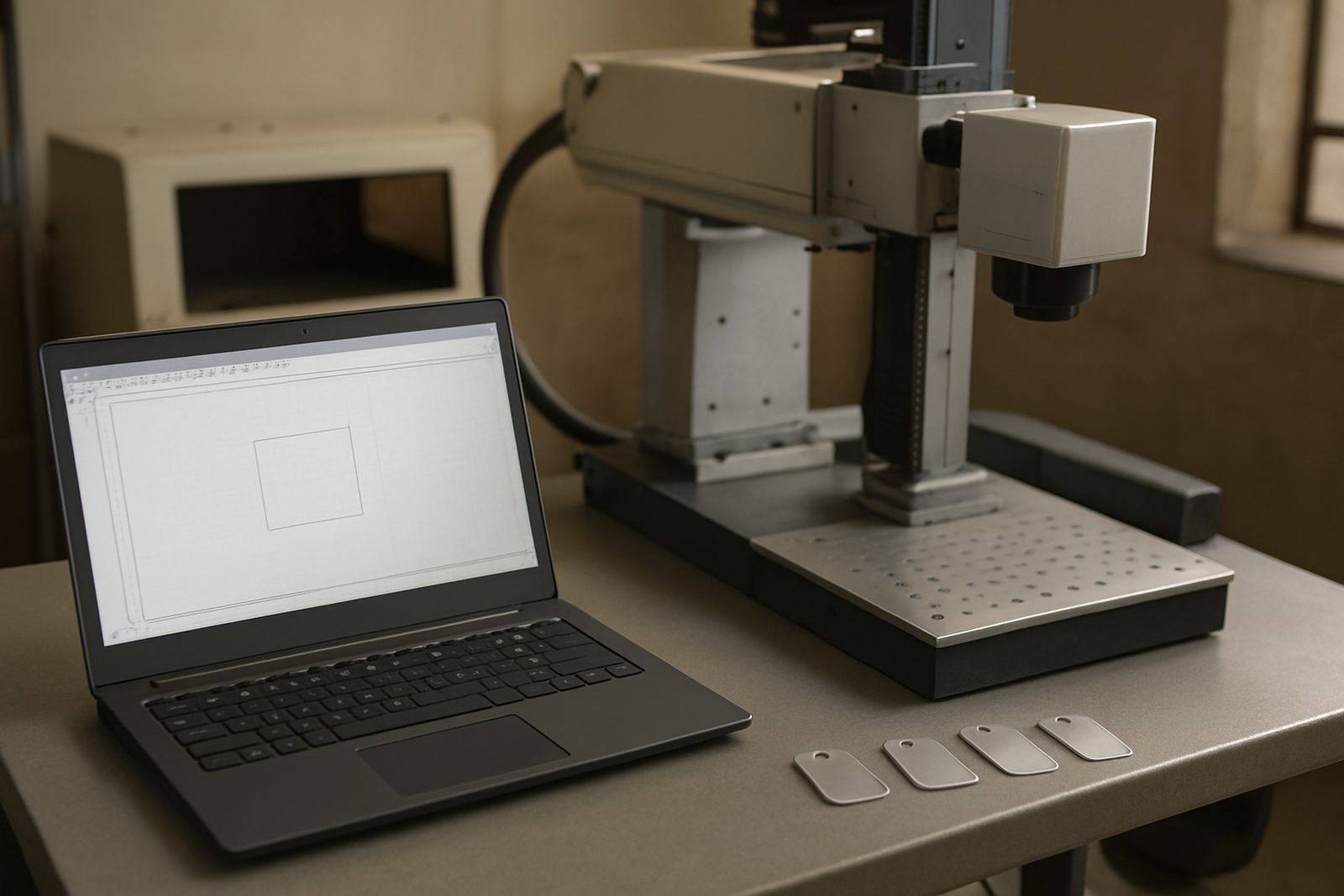
We take your part, artwork or marking requirement and set up a practical test on suitable fibre laser settings. The aim is not just to make a mark, but to make a mark that can be repeated without drama on the line. We can test text, numbers, serials, QR codes, Data Matrix codes, logos, batch marks and jewellery personalisation details.
Where needed, we test more than one set of parameters so you can compare the result side by side. That may include power, speed, frequency, hatch spacing, focus height and marking passes. If your part needs a fixture to hold it steady we can advise on simple clamping or a custom holder. For small rings, tags and irregular components, we check alignment first so the sample run is clean and the mark lands where it should.
- Trial markings on customer supplied parts or test coupons
- Parameter checks for depth, contrast and edge sharpness
- Simple fixture advice for round, flat or awkward parts
- Review of mark size, position and scan speed
- Sample files set up for repeat use later
How the sample marking process works
The process is straightforward. First we confirm the material, finish, size and what the mark must achieve. Then we look at the artwork or data you want marked and agree on the target result. After that we run the sample, inspect it and adjust the settings if needed. In many cases one round is enough. If the part is tricky, we may do a second or third pass to compare options before you sign off.
We work with businesses from Wadeville, Germiston, Jet Park, Isando, Kempton Park, Boksburg and Alberton, and we also support jobs sent in from further afield. If you need the sample to match a production line or a customer approval sheet, we can document the settings used so your operator can repeat the job later. Turnaround depends on part availability and queue, but small sample jobs are often completed within 1 to 3 working days after receipt of the parts and clear instructions.
- Send part details, material type and marking requirement
- We confirm the best test method and likely settings
- Sample marking is carried out and checked for quality
- Results are shared for approval or adjustment
- Final settings can be stored for future production
Typical specs we test during sample marking
Every material behaves a bit differently, so sample marking is where we verify the specs that matter in real use. Fibre laser systems are commonly chosen because they give fine detail on metals with good repeatability, and they handle small text well without using consumables like inks or solvents. For jewellery and precision parts, that consistency is often the deciding factor.
We can test marks on flat plates, cylindrical pieces, tags, nameplates, tools, housings and small components. The final result depends on surface condition and the required finish, whether you want a light surface mark, a deeper engraving effect or a darkened contrast mark. Coastal humidity, workshop dust and handling wear can also affect the outcome, so we check the mark in the conditions it will actually face, not just on a clean bench.
- Mark sizes from fine character text to larger batch codes
- Support for logos, serial numbers, QR codes and Data Matrix codes
- Material checks on stainless steel, aluminium, brass, mild steel and coated metals
- Calibration for flat, curved and small-format parts
- Focus and contrast checks for readable results under workshop lighting
Pricing approach for sample marking
Sample marking is usually priced as a service job based on the number of parts, the time needed to set up, and whether there are multiple test variations. A simple one-off sample on a standard metal part will cost less than a job that needs several mark options, custom holding, or detailed approval images for a customer sign-off. If you already have a clear file and a suitable sample piece, the process is usually quicker and cheaper.
We quote fairly and practically. If the sample work is likely to lead to a larger machine order, production setup or training session, we can separate the test marking cost from the rest of the project. That way you know exactly what you are paying for. Where the job needs additional development, such as fixture design or process optimisation, we will explain the extra time before continuing. No one likes surprises on the invoice, especially when production is waiting and the freight is already booked.
Maintenance intervals after sample approval
Once your marking result is approved, the next step is keeping it repeatable. A fibre laser marking machine is low maintenance compared with many other marking methods, but it still needs regular checks to stay accurate. For typical workshop use, we recommend a basic operator check daily, a more complete inspection monthly and a focused service interval every 6 to 12 months depending on dust levels, shift count and how hard the machine is working.
On busy sites in Gauteng, especially where the machine runs near grinding, cutting or packaging areas, fine dust can settle on optics and guides faster than expected. In coastal environments, humidity and corrosion risk may call for closer attention to stored parts and fixtures. If load shedding affects the site, it is also worth checking UPS health, software settings and shutdown procedure so the system comes back cleanly after power returns.
- Daily: clean work area and check part positioning
- Monthly: inspect focus, cabling, extraction and alignment
- 6 to 12 months: full preventive maintenance and calibration review
- After any move or impact: recheck focus and mark position
Sample marking for businesses in South Africa
Clients use sample marking when they need certainty before they commit. That might be a small workshop in Alberton, a production line in Boksburg, or a jewellery business that needs very fine personalisation with consistent depth. Because we install, train and support fibre laser systems nationwide, we understand what happens after the sample is approved and the real job begins. The sample should not just look good, it should be easy to repeat by the operator on a normal production day.
Our Wadeville base means we can handle local support quickly across Germiston and the East Rand, while also assisting customers further out with remote guidance, install planning and practical mark testing. If you need sample marking before a machine purchase, before a new product launch, or after changing a part material, we can help you decide on the right settings and the right process without guesswork.