Workholding That Matches Your Part, Not the Other Way Round
Fixture design starts with the part on the table, not with a one-size-fits-all clamp. We look at the shape, material, finish, mark position and batch size, then recommend a holding method that suits your process. That may be a simple nest for flat components, a rotary fixture for cylindrical parts, or a multi-cavity setup for repeat jobs.
The aim is steady placement and quick loading. If operators are re-aligning every part by eye, throughput drops and marks can wander. A proper fixture reduces handling, protects finished surfaces, and helps your marking remain in the correct place even on small or awkward parts.
- Fixtures for stainless steel, aluminium, brass, copper and plated parts
- Support for small jewellery items, medical components, tools and industrial tags
- Workholding that keeps the laser window clear for a clean mark
- Options for manual, semi-automatic and batch loading
What We Include in a Fixture Design Job
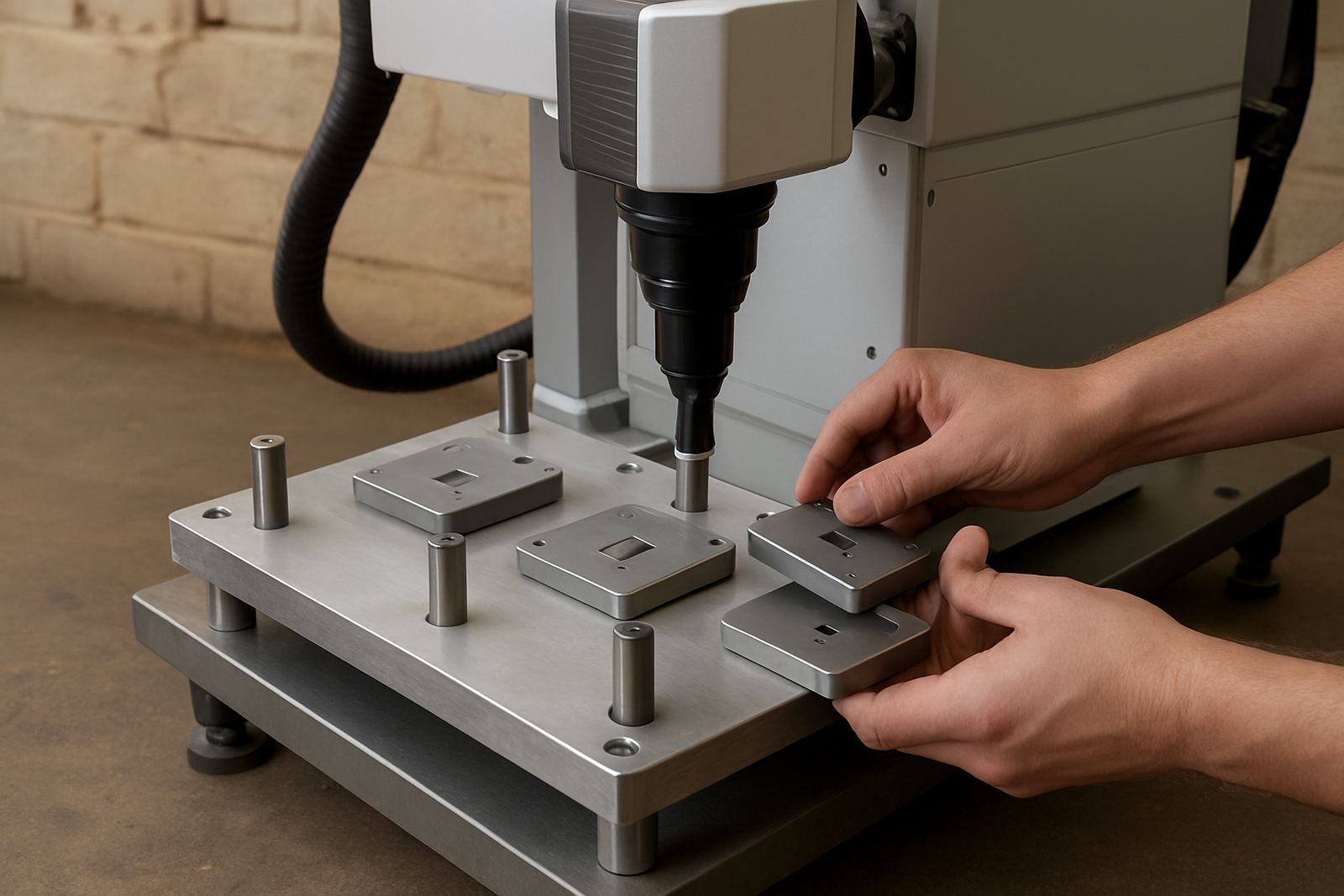
We provide practical recommendations rather than over-engineered solutions that are hard to use on the shop floor. A fixture may be built as a simple machined plate, a modular nest with locating pins, or a custom jig with quick-release clamps. Where needed, we also check if the part needs rotation, tilt or multiple faces marked in one cycle.
Fixture design can be supplied as part of a new machine installation or as an upgrade to an existing marking setup. We work with your sample parts, your operator process, and your target cycle time. If you are in a high-volume plant in Gauteng or a smaller workshop in the Western Cape, the same question applies: how do we keep the part still, safe and easy to load?
- Part assessment and marking position review
- Fixture concept and holding method recommendation
- Locating, clamping and operator access checks
- Compatibility with focus height and field size
- Advice on finish protection for polished or coated items
How the Fixture Design Process Works
We keep the process straightforward. First, you send sample information through the enquiry form on our contact page. Then we review the part, the mark content and the production target. If needed, we request photos, dimensions or a sample batch so we can see where variation occurs.
After review, we advise on the fixture layout and any related items such as a rotary unit, stop block or adjustable nest. In many cases, we can also test sample marking on similar material before finalising the layout. Once approved, we assist with setup and operator instruction so the team can use the fixture correctly from day one.
- Step 1: Part review and application discussion
- Step 2: Fixture concept and placement checks
- Step 3: Sample marking and adjustments
- Step 4: Installation, operator guidance and handover
Turnaround, Pricing and What Affects the Cost
Turnaround depends on the part complexity and whether the fixture is for a single item or a family of parts. Simple nests can often be completed quickly, while multi-part or rotary fixtures need more detailed checking. We always try to give a realistic lead time up front so your production planning is not caught out.
Pricing is based on the work required, the accuracy needed and the materials involved. A straightforward holding plate costs less than a fixture with adjustable features, fine location stops or special surface protection. We quote according to the job, not by guesswork, so you know what is included before anything is made. For businesses in areas with load-shedding or unstable supply, we also consider how the fixture will work when power is interrupted and restarted, because that can affect setup consistency.
- Simple fixture concepts: shorter lead time
- Complex multi-position fixtures: longer design and check period
- Special materials and finish protection: higher cost
- Repeated batches may justify a more advanced setup
Specs and Design Parameters We Check
Every fixture must match the machine, the part and the way your team works. We look at the laser field, focus range, part tolerances and operator access so the fixture is suitable for daily use. On jewellery jobs, we also consider how to hold small items without marking the visible surfaces. On industrial parts, we check if the fixture needs to handle heat, burrs or oil.
- Part size range: from small jewellery pieces to larger industrial components
- Material compatibility: metals, plated items and coated parts
- Location accuracy: repeatable placement for consistent mark position
- Loading method: manual, batch, rotary or multi-cavity
- Surface protection: soft contact points, pads or non-marking supports
- Environment suitability: workshop dust, coastal humidity and daily production use
We also check whether the fixture will still be practical for your operators during shift work. If a setup takes too long or needs too much force it becomes a bottleneck. A good fixture should feel natural to use, even during a busy production run.
Maintenance Intervals and Ongoing Support
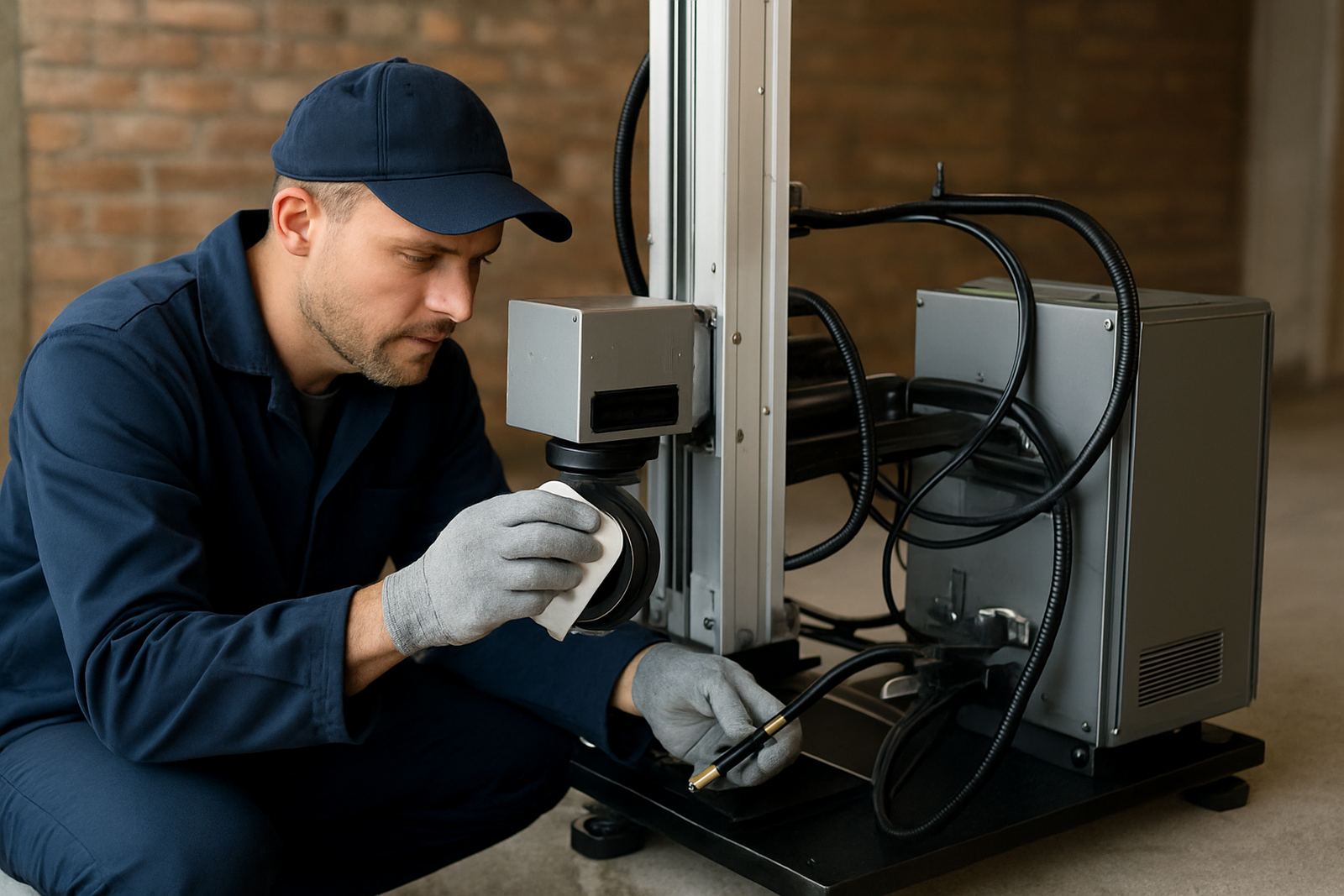
Fixtures do not need a lot of attention, but they do need routine checks. We recommend a quick inspection weekly for wear, clamp condition and location accuracy, with a more detailed review every three to six months depending on use. In dusty inland workshops or coastal areas with humidity, moving parts and contact points may need more frequent cleaning and light protection.
If a fixture starts to loosen, marks begin drifting or operators are forcing the part into place, that is usually a sign the setup needs adjustment. We can assist with preventive maintenance, site checks, replacement parts and minor rework. If your production changes later, the fixture can often be modified rather than replaced, which helps control cost.
- Weekly visual checks for wear and looseness
- Three to six month review for higher-use fixtures
- Cleaning and lubrication where moving parts are fitted
- Adjustment after tooling changes or new part revisions
Local Support from Wadeville to Nationwide Sites
Our base in Wadeville, Germiston gives us easy access to Gauteng sites in Germiston, Jet Park, Isando, Kempton Park, Boksburg and Alberton. We also travel nationwide for installs, training and support, so fixture design can be matched to your actual machine and production space. If your workshop has limited bench space, mixed part sizes or shared operators, we design with those constraints in mind.
That local, practical approach matters. The best fixture is not the fanciest one, it is the one your team can load quickly, use correctly and maintain without trouble. If you need a fixture for a new job or want to improve an existing marking line, we can help you get the part positioned right and keep it there.
Key facts
| Service name | Fixture Design |
|---|---|
| Base | Wadeville, Germiston |
| Coverage | South Africa wide installs and training |
| Typical use | Consistent part placement for fibre laser marking |
| Supported parts | Metal parts, jewellery, tags and small components |
| Maintenance interval | Weekly checks, with 3 to 6 month review |