
Why planned maintenance protects output
Fibre laser marking machines work best when optics, motion parts and cooling systems stay clean and correctly set. In a busy workshop, dust, oil mist and vibration can creep in slowly, then show up as faded marks, missed characters or uneven engraving depth.
Preventive maintenance is about keeping those changes under control before they affect quality. For metal parts, jewellery and small components, even a slight shift in focus or beam path can mean rework, scrap, or a batch that no longer meets customer spec. Regular service checks help you keep marks sharp, repeatable and traceable.
What we check during a maintenance visit
Our planned service visits are practical and specific to the way fibre marking systems are used in South African shops, factories and contract marking rooms. We look at the machine condition, how the software is behaving and whether the marking result still matches the sample that was approved.
- Optics and lens condition, including dust build-up and alignment
- Focus position, beam consistency and marking depth
- Cooling and ventilation around the unit
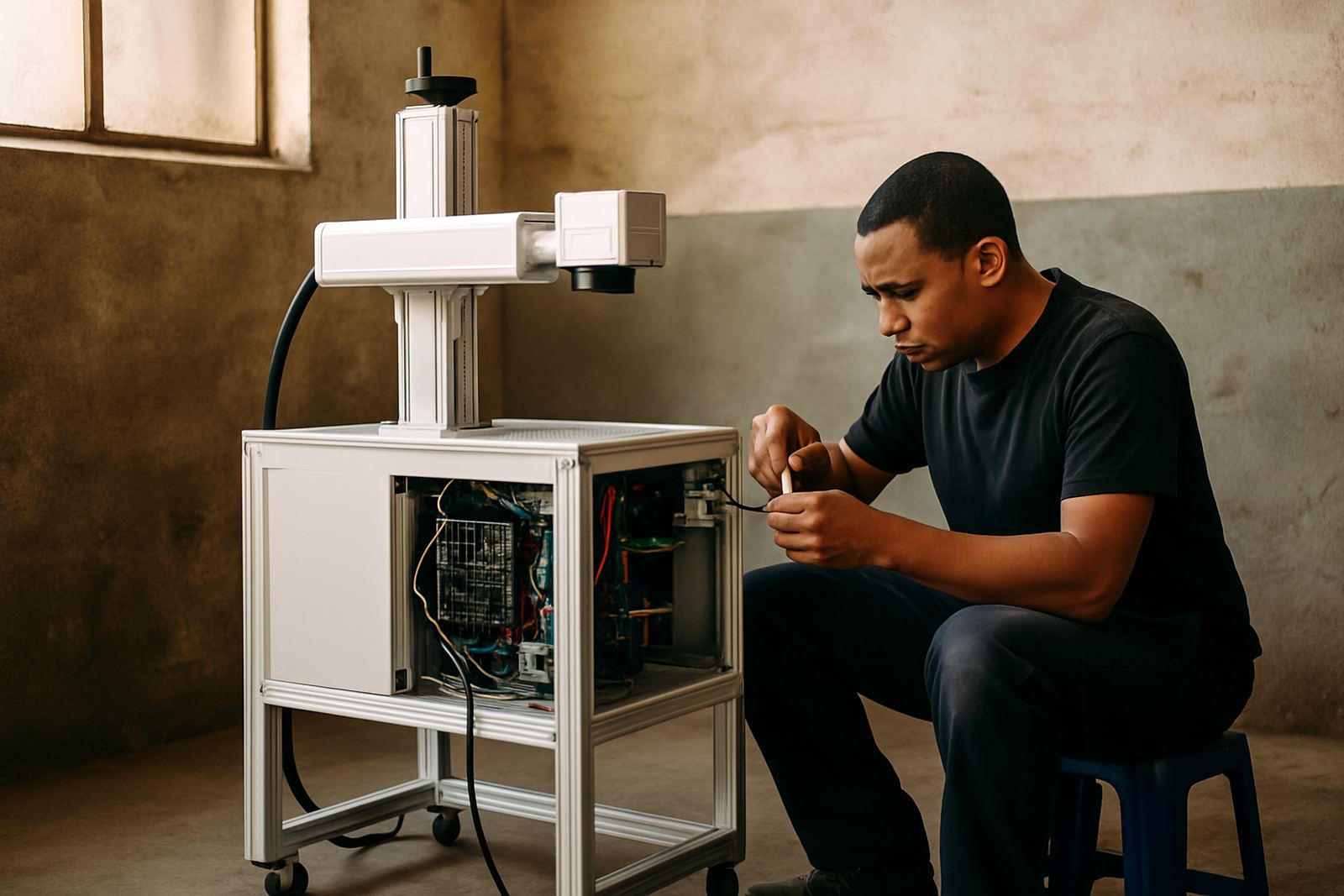
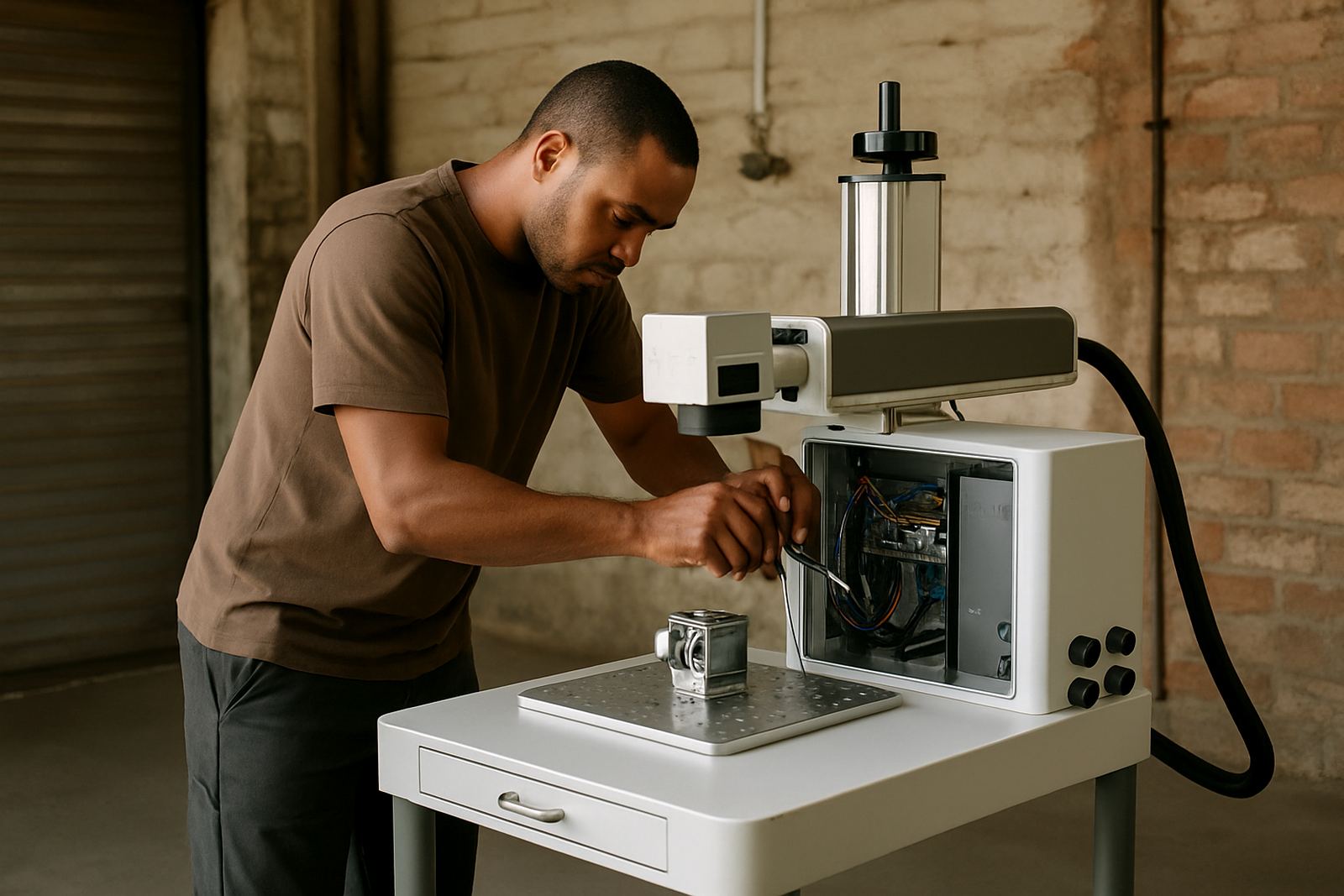
- Cabinet cleanliness, cable condition and connectors
- Galvo performance, motion response and basic calibration
- Software settings, font files and saved marking jobs
- Fixture condition where parts are held or positioned
If your machine is in a warm workshop, near grinding equipment or in a coastal area with humidity, we pay extra attention to contamination and corrosion risk. Those conditions can shorten service intervals if left unchecked.
A simple maintenance schedule that works
Different sites need different intervals, depending on hours of use, dust levels and the type of work being marked. A small workshop doing short runs will not need the same plan as a plant running every shift. We help set a schedule that fits the machine and the production load.
- Daily: wipe down external surfaces and check the marking area
- Weekly: inspect lenses, fixtures and cable routing
- Monthly: review software settings and sample quality
- Quarterly: full preventive check with calibration and service notes
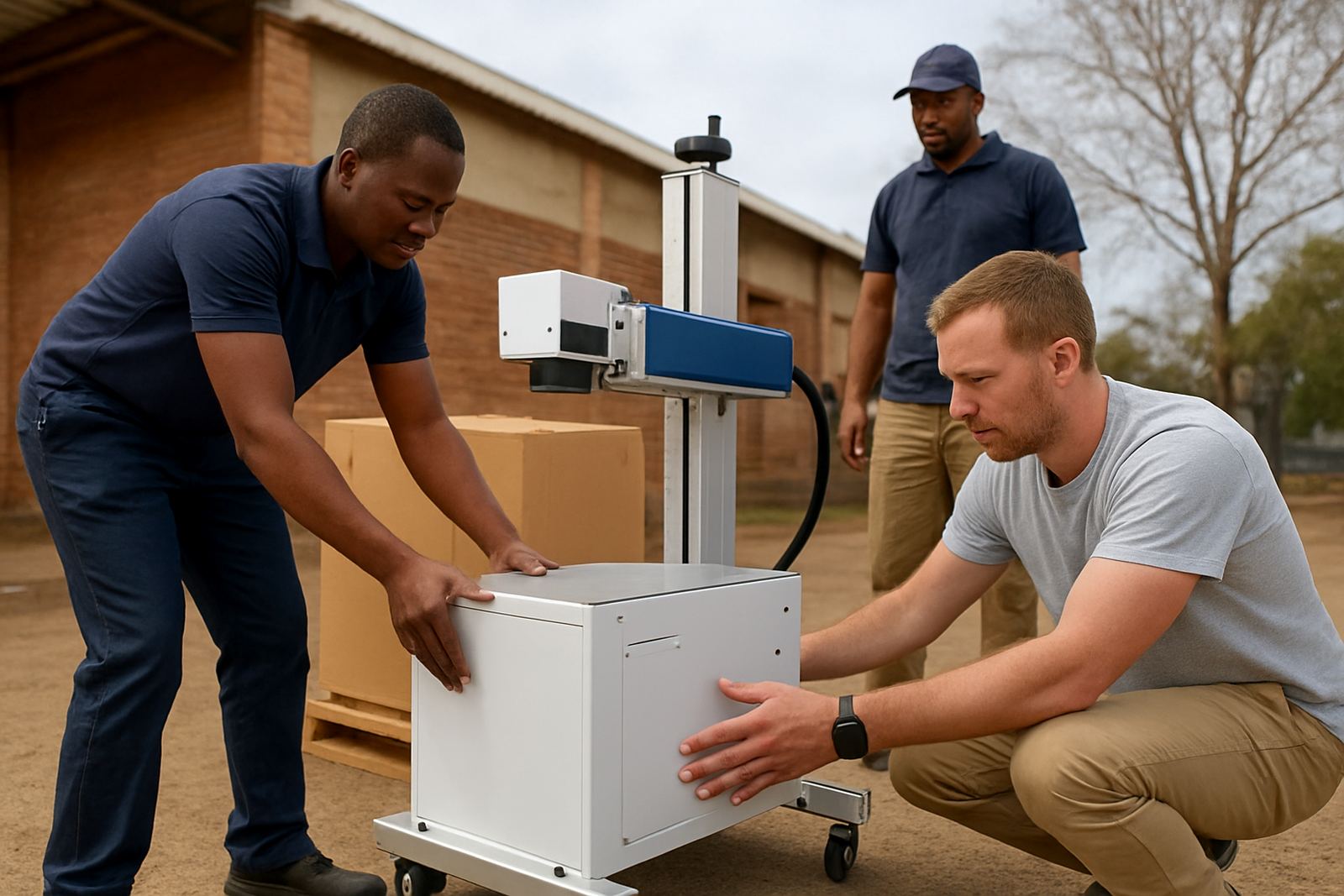
- After relocation: verify alignment, power quality and test marks again
For sites affected by load-shedding or generator changeovers, we also check whether power fluctuations are affecting startup, cooling or saved settings. It is better to inspect those points early than to chase faults after a stoppage.
How to prepare your machine before we arrive
Good preparation saves time on site and helps us get straight to the real work. Before a scheduled visit, clear the marking area, save any active job files and make sure the machine is accessible. If there are samples that show a recent quality change, keep them aside for comparison.
- Back up important marking files and parameter sets
- Note any recent faults, alarms or inconsistent marks
- Make sure fixtures, cables and part holders are available
- Provide sample parts from the current production run
- Tell us if the unit has been moved, dropped or powered from a different supply
If you run multiple shifts, ask one operator to be present with the most current setup information. That helps us check the system against how it is actually being used, not just how it was configured months ago.
What happens during and after service
We work through the machine methodically so each check has a clear result. If a part needs cleaning, tightening, calibration or replacement, we explain what was found and what action was taken. Where sample marking is needed, we verify the result before we close the visit.
After service, you should have a cleaner machine, steadier marking and a better idea of when the next check is due. We also leave practical notes for your team, including any settings to watch and any wear points that need attention between visits.
- Service findings and corrective actions
- Quality notes on test marks and sample parts
- Recommended follow-up interval
- Any spares or consumables that should be kept on hand
Support from Wadeville across South Africa
Our base in Wadeville, Germiston supports scheduled maintenance in Jet Park, Isando, Kempton Park, Boksburg, Alberton and wider Gauteng, with installs and training nationwide. If your machine is in a production line, a tool room or a small marking room, we can plan visits around your operating hours so downtime stays limited.
For businesses that need fewer surprises and tighter quality control, planned maintenance is a practical way to protect output. It keeps the machine ready, the marks readable, and the team from losing time to faults that could have been caught earlier.